My birthday is coming up! Here's my fundraiser: https://t.co/8nE6iU0jek
Many thanks to all past and present supporters of my participation in the #Baltimore Walk to #EndAlz.
New findings from a large, national clinical trial found that research volunteers aged 65 and older who participated in speed of processing training, together with follow-up “booster” sessions, were 25% less likely to be diagnosed with dementia up to 20 years later, compared with the control group.
In the computer-based speed training, participants completed visual search challenges that split their attention between identifying an object in the center of the screen and simultaneously the location of another object on the outer portion of the screen. The training adapted in difficulty, becoming harder if the person performed well.
This study, known as the Advanced Cognitive Training for Independent and Vital Elderly (ACTIVE) study, is the first and largest of its kind in the US, and includes multiple research centers throughout the nation, including the Johns Hopkins University.
JHADRC Director Dr. Marilyn Albert observed: “Seeing that boosted speed training was linked to lower dementia risk over two decades later is remarkable because it suggests that a fairly modest nonpharmacological intervention can have long-term effects. Even small delays in the onset of dementia may have a large impact on public health and help reduce rising health care costs.”
The NIH-funded ACTIVE study originally enrolled 2,802 diverse older adults in 1998–1999. Participants were randomized to three different types of cognitive training—memory, reasoning, and speed of processing—and a control group. This 20-year follow-up study compared the three training groups to the control group, who received no training, and examined the likelihood of a diagnosis of dementia in Medicare claims. Notably, only those who received speed training with booster sessions showed a meaningful difference in 20-year dementia risk compared to the control group.
To read more about the study, visit: https://t.co/bGGR3CTiCo
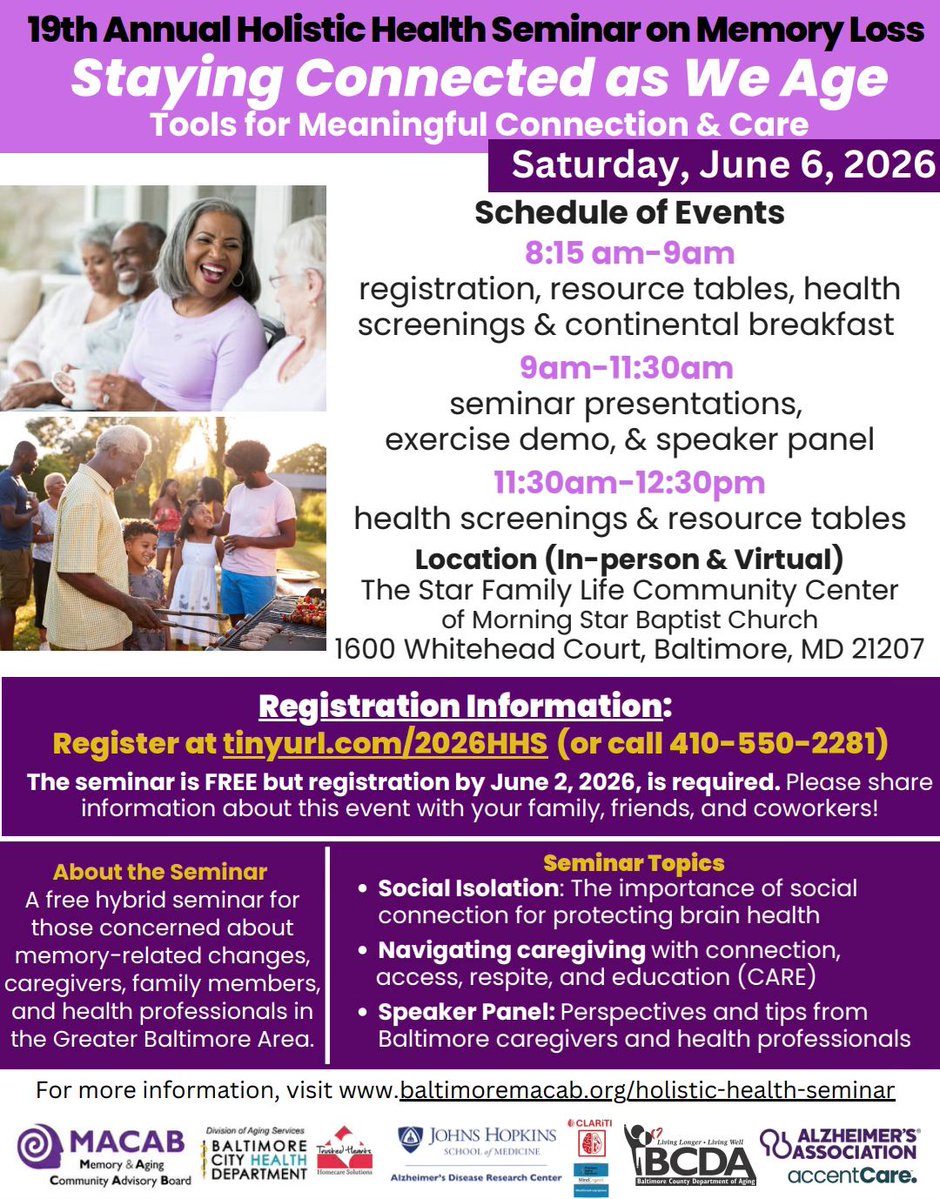
The 19th Annual Holistic Health Seminar on Memory Loss will be held as a HYBRID event on June 6th!
This year’s theme is Staying Connected as We Age: Tools for Meaningful Connection & Care.
Featuring presentations on the importance of social connection for protecting brain health & navigating the caregiving journey, as well as a fitness demonstration. In-person attendees will additionally have access to health screenings and resource tables.
When: Saturday, June 6th
In-person location: The STAR Family Life Community Center (1600 Whitehead Court, Baltimore, MD 21207)
Virtual location: Zoom
Register online: https://t.co/L2rxHkOViH (or call 410-550-2281).
For more information, visit https://t.co/z5ylzaeZn1
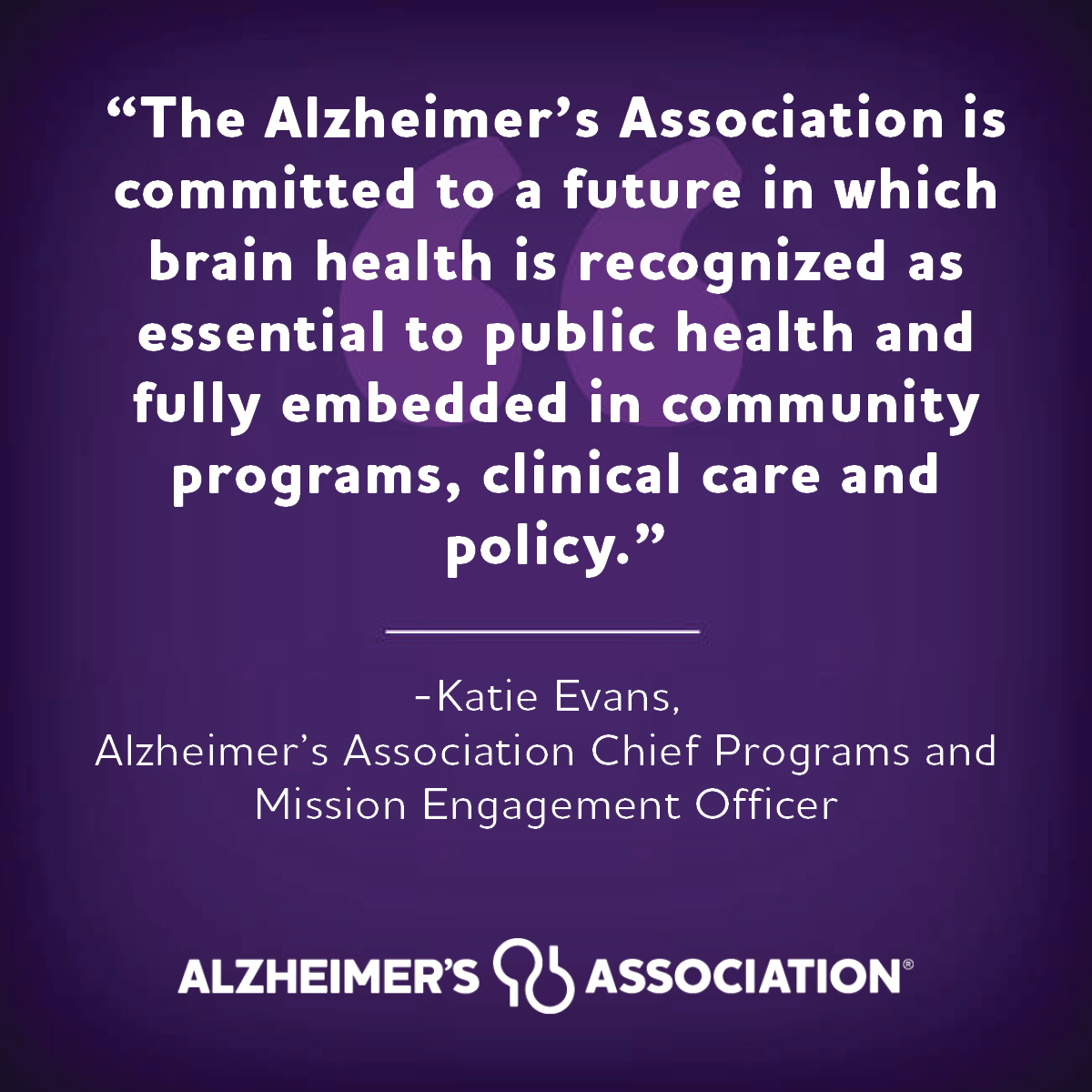
The science is clear, lifestyle interventions can protect brain health and lower dementia risk. 🧠 That’s why we’re excited to announce the launch of the Alzheimer’s Association Brain Health Roundtable.
The Roundtable brings together leaders from health systems, disease‑specific organizations, employer coalitions, public health groups and other partners committed to advancing brain health nationwide. Through collaboration, the coalition will identify shared priorities, align strategies and translate emerging science on risk reduction into meaningful action.
The Association is dedicated to making brain health a public health priority. We look forward to working with Roundtable members to ensure individuals across all communities have access to clear, actionable information to support lifelong brain health.
Learn more: https://t.co/jlvcgoUj8J.
Using NLP to explore veteran health, #LGB vets had greater odds of CVD than straight peers even when adjusting for traditional risk factors. #AHAJournals@cjstreed@BUMedicine@BU_Tweets https://t.co/xG801BPCD7
Allan's caregiver, Jessie, informed me of this sad news today. I met Allan in grad school while researching Harvey Milk. A friendship began & we kept in touch. Many thanks for being a strong ally.
Former Teamsters official and LGBTQ ally Allan Baird dies https://t.co/HJzvEA1GNG
Had a great conversation with @dmgorenstein about aging, health, my NYT column and other stuff for the @tradeoffspod podcast. Give a listen https://t.co/ekbOxBt932