BREAKING: Elon Musk has become the world's first trillionaire.
After SpaceX raised a record $75 billion in its IPO, Musk’s net worth shot up to top $1.1 trillion when the stock began trading Friday, putting him in an economic class of his own.
Elon just created 4,400 millionaires in a single day.
400 of them are now worth over $100 million.
These aren't VCs. They're SpaceX employees, and the list includes welders, technicians, and cafeteria staff, because for two decades the company paid every level of the workforce in stock instead of higher salaries.
Juan Hernandez immigrated from Mexico and took a $28 an hour contractor welding job in 2015. He says he didn't even know what SpaceX was. The company gave him a $10,000 equity grant and let him buy more shares through payroll deductions. That stake is now worth $880,000.
Trevor Hise's parents wanted him to take a stable job at General Electric. He picked SpaceX instead, stayed 12 years, and accumulated over 100,000 shares. At the $135 listing price that's $13.5 million. He's 37 and semiretired. His words: "The magnitude of this has been ridiculous."
The most telling detail came before the listing. Over 100 employees quietly banded together and negotiated a group wealth management deal covering up to $5 billion, because none of them had ever needed a wealth manager before.
Software IPOs have minted millionaires for 30 years. This is the first one where the money went to the factory floor.
Today, I’m releasing never before seen intelligence revealing new evidence of past US government funding for more than 120 biolabs in over 30 countries, including Ukraine.
In support of President Trump‘s Executive Order to end federal funding of dangerous gain of function research around the world, and increase transparency and accountability, ODNI will continue working with partners across the Administration to identify where these labs are, what pathogens they contain, and what “research” is being conducted.
https://t.co/pLMD0krc69
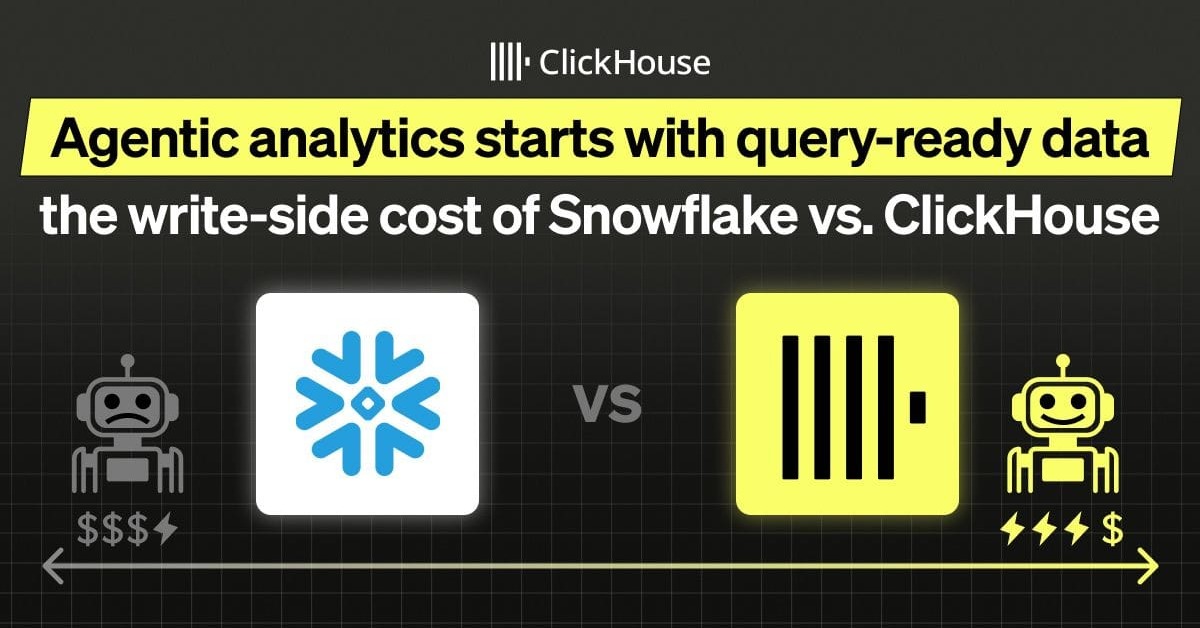
ClickHouse obtains query-ready data at 22× lower cost and delivers 28× better write-side cost-performance, using Snowflake as a measured contrast point.




![bts_bighit's tweet photo. [#2026BTSFESTA]
20130613 Congratulations BTS🎉
#BTS #방탄소년단
#BTS13thAnniversary https://t.co/HZXALKi0tF](https://pbs.twimg.com/media/HKnwB50aYAAjQ2_.jpg)