@davidshor It sounds interesting! Thank you for your sharing results! Have these results been arxiv or journal article? Please provide the link, thank you 😁
PhD Year 1 hasn’t even started yet and my schedule’s already packed:
📑 2 journal papers
📝 1 research proposal
🔬 Dissertation pilot + data collection
📚 2 courses
👩🔬 Lab recruitment help
📑 Taiwan TPA prep
👨🏫 TA for R lab
➕ Teach math (evenings & Sat AM)
🏫 Mentor a HS club
Every paper tells a story:
→ We didn't understand X. ⤵︎
We thought Y might be true. ⤵︎
We tested it. ⤵︎
→ Here's what we found. ⤵︎
Here's what it means. ⤵︎
→ Here's what we should explore next. 🛑
If your paper doesn't follow this arc:
Your readers will get lost.
Good writing matters in academia! This small study finds that higher quality writing is linked to higher impact factors. And what makes writing good? The list of 11 elements of good paper writing used in the study is a place to start. https://t.co/gTAG3B1Han
Through 7-year follow-up, people with average sitting time = 13 hr/day may get more slower cognitive process.
Research students using computer like me: 😂
Sitting for hours daily shrinks your brain, even if you exercise.
New 7-year study (n=404):
→ Faster hippocampal atrophy
→ Worse memory performance
→ Slower processing speed
87% met exercise guidelines but STILL declined.
私が實驗心理学の研究生だからといって、私が相手の心や脳を読めるというわけではない!草
Just because I'm a master student in experimental psychology doesn't mean I can read your mind or brain! (laugh)
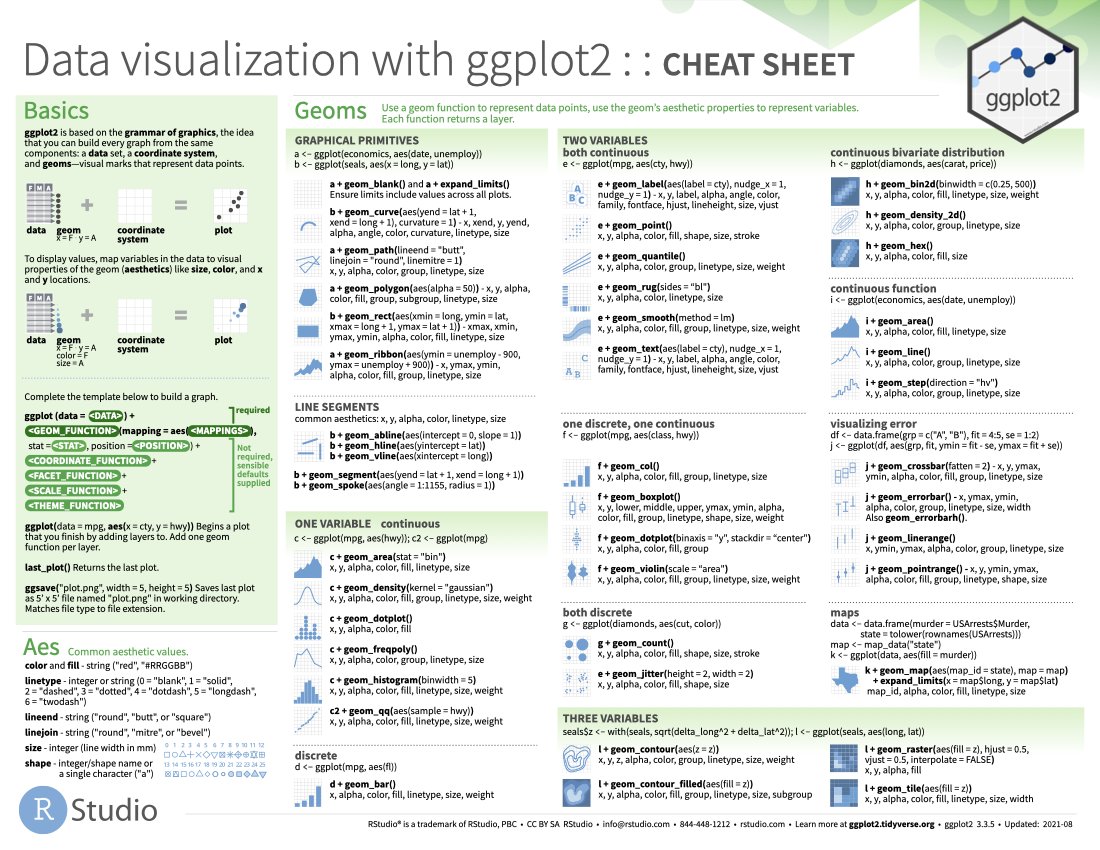
Recently, I realized I need to level up my data visualization skills in R (still defaulting to Excel sometimes, haha). Now I'm the TA of a statistics class. I will use the ggplot2 package in students' class to practice visualizing our class survey results.
In brief, when we feeling the shapes (e.g., rounded, angular; simple, complex) by seeing or touching alone, there exists different color matching tendencies between the visual and haptic shapes. (e.g., visual angular shapes with yellow; haptic angular shapes with red)
Here is my first abroad poster presentation, about shape-color correspondences across visual and haptic modality, in #APCV2024, Singapore. Many thanks to all listeners.
(Photo by @abenomeisei)
Many thanks to Prof. @AkiyoshiKitaoka and @kohske for providing their meticulously crafted optical illusion artworks. I'm very glad to see their wonderful artworks!!! 素晴らしかったです!!!
By the way, Professor Kitaoka's well-known work "Rotating Snakes" previously sparked a myth in Taiwan media that "the more it spins, the greater your stress level, and you may even need to see a doctor." We make sure to debunk this myth during every explanation (/ω\).
@AkiyoshiKitaoka@kohske This video is the 1st day of the off-campus exhibition, held by "ILLUSIONS: THEORY, PRACTICES, AND EXHIBITION" class, Dept. Psychology of National Cheng Kung University in Taiwan (Teachers: Prof. Kung, Chun-Chia & Huang, Pi-Chun; Teaching Assistant: me).