Your bid waits. Your SOL stays staked.
Torii is being built around toriiSOL, our planned liquid staking token.
The design keeps deposits, project proceeds and refunds in toriiSOL, with the underlying SOL delegated through Torii’s own stake pool.
How much yield does a $10M escrow generate during a 72-hour token sale?
On every other platform: $0.
On Torii: ~$3,500+.
The first launchpad on Solana where the escrow keeps earning while the sale clears. Zero price advantage for arriving first. Total capital efficiency.
⛩️
You must seek the narrow gate.
The broad gate is wide and noisy.
The narrow gate is built on valuation conviction. DUTCH UNIFORM clearing. Yield-bearing quotes. Zero price advantage for arriving first.
Speed is not conviction.
StonkFun proved there is demand for launchpad innovation beyond basic SOL pairs.
But tokenized stock pairs don't fix liquidity physics: bonding curves still trigger MEV gas wars and idle escrow.
StonkFun innovates on the asset pair. Torii innovates on the math.
A gas war is not price discovery. It is an infrastructure tax paid to blockbuilders.
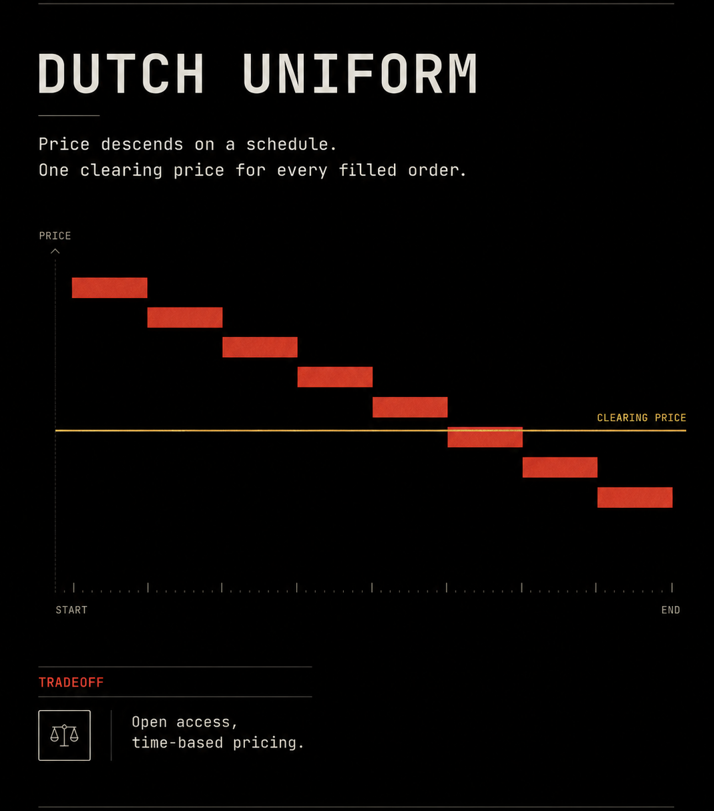
Under DUTCH UNIFORM, everyone pays the exact clearing price when the sale closes.
Being early costs nothing.
A gate is a threshold you can see through.
Most launchpads hide reserve math off-chain and burn priority fees in the mempool.
Torii is open arithmetic. Every mechanism and fee path is on-chain before you commit.
Transparency is not a feature. It is the structure.
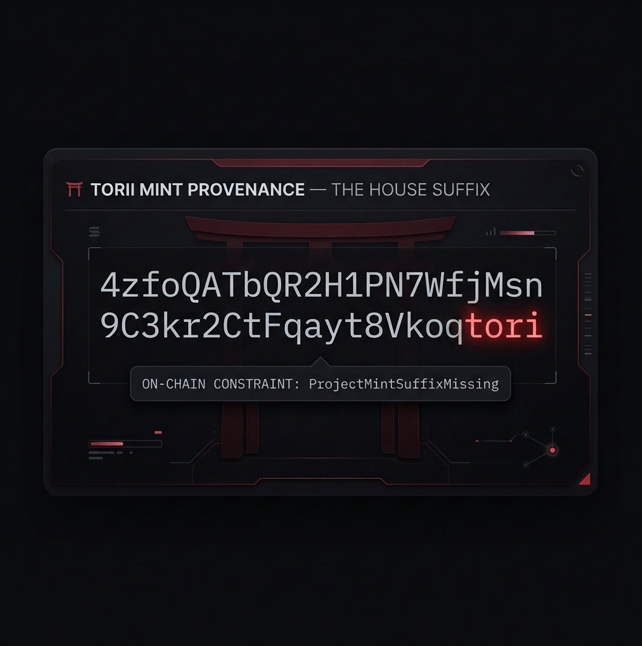
Every token launched through Torii.
Auction or curve, has a mint address whose base58 string ends in tori.
Enforced on-chain (ProjectMintSuffixMissing). If a mint address does not end in tori, the smart contract refuses the launch transaction.
Some numbers: 93.5k https://t.co/8OJNsAhE91 tokens had graduated by Feb 2025 with 2.87M SOL locked in burned LP. 74.6% of those pools were already dead, sitting on 1.38M SOL.
That was 19 months ago. Call it ~80k SOL/yr of staking rewards the network never collected.
The unit of account is the part nobody touches.
Quote a pool in SOL and its liquidity is dead weight to the network. Quote it in an LST and the security budget rides along with the volume instead of competing with it.
That's the bet with Torii. Auctions in JitoSOL, not SOL.
Yeah monetary policy changes (as long as you’re not dealing with large chunks of insider overhang) are actually very marginal compared to radical increases in demand side activity.
Assets moon the hardest when the network asset is being used to buy things, is getting locked up in AMMs and Vaults and there is high volume on-chain activity.
There is no getting away from it, usage is king. Every network needs what I call “high engagement transactions.” That is, you can fill a blockchain with spam, sybils, wash and a tiny number of arbitrageurs waring over atomic scraps. But real transactions have a human (or increasingly, agent) on the other end of it buying things. Memes, NFTs, RWAs, permissionless networks don’t care.
This piece is about ETH, but tracks to all networks.
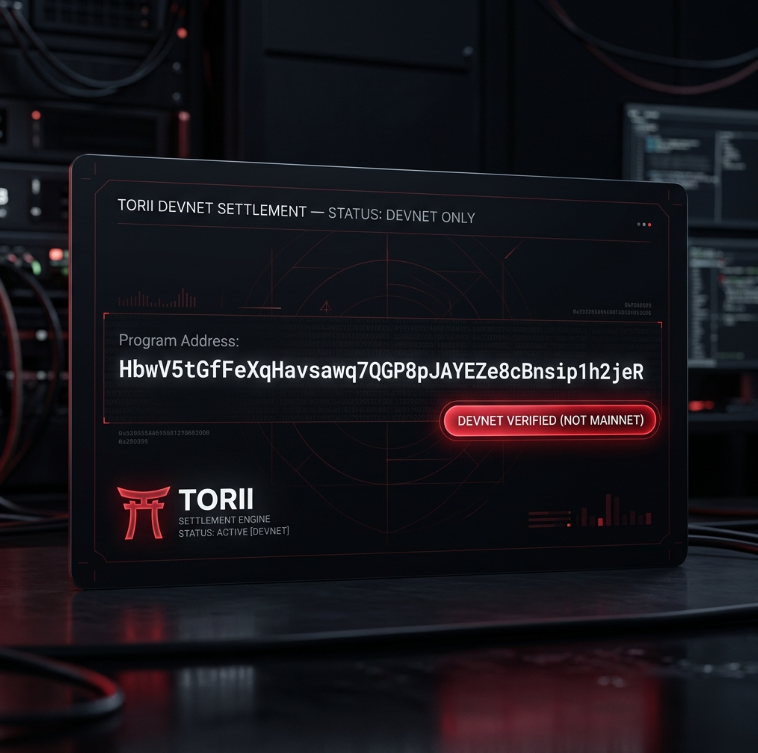
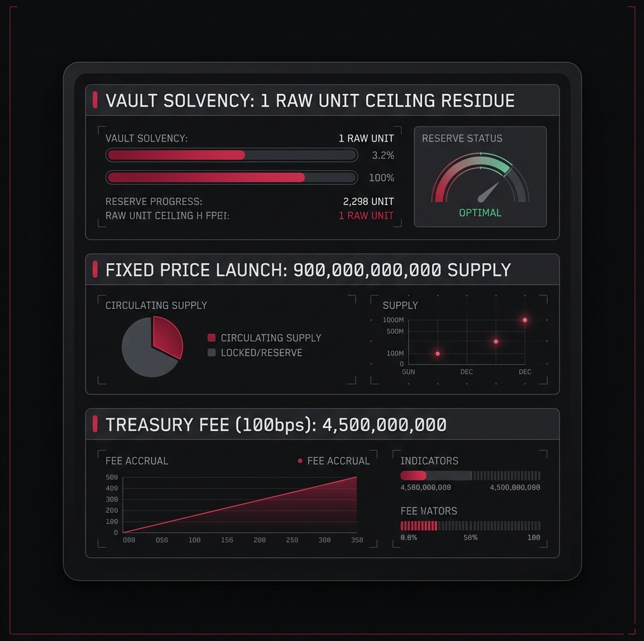
Vault solvency check: exactly 1 raw unit of ceiling residue remained post-settlement.
FIXED PRICE: 900000000000 raw supply at 500000. Subscribed by 3 bidders. Treasury fee collected: 4500000000 (exact 100bps).
What does FAIR actually mean?
In crypto, "fair" used to mean "first-come, first-served." But when speed decides allocation, fairness becomes a latency contest won by whoever has the best infrastructure and the largest validator tips.
True structural fairness means speed confers zero execution advantage.
DUTCH UNIFORM achieves this by ensuring everyone pays the exact same clearing price at settlement, regardless of when their transaction landed. Early buyers are refunded the difference automatically.
Being early costs nothing. Being fast buys nothing. That is the Narrow Gate.
A Dutch auction where the first buyer pays less than the last one means the instant price crosses fair value, everyone wants the same block.
That is not price discovery.
There is a mechanism where being early costs nothing, and everyone pays the exact clearing price.
You don't fix a broken launch ecosystem by hiding the fracture. You repair it with gold.
Torii shifts the paradigm from speculative gambling to productive capital formation.
From casino extraction to real network utility.
You don't fix a broken launch ecosystem by hiding the fracture. You repair it with gold.
Torii shifts the paradigm from speculative gambling to productive capital formation.
From casino extraction to real network utility.
One settlement layer. Five launch mechanisms.
Token launches shouldn't rely on a single price-discovery model.
Torii lets deployers match execution mechanics directly to their tokenomics