Life is short, dream big but execute small. MBA & MFin. CMO @arionkoder @etermax @TriviaCrack Dridco @LaNacion @ZonaProp @ZonaJobs @GlobalLogic @Submarino
Demis Hassabis just said something that should unsettle every scientist alive.
Hassabis: “I do think that, ultimately, underlying physics is information theory. So I do think we’re in a computational universe.”
The CEO of Google DeepMind is telling you reality runs on code.
Not metaphorically.
Structurally.
AlphaFold didn’t approximate protein structures.
It solved them.
Not because DeepMind built a better guesser.
Because proteins were never physical objects.
They were always data.
Hassabis: “The fact that these systems are able to model real structures in nature is quite interesting and telling.”
He said telling.
Not impressive. Not promising. Telling.
As in the results reveal something about what reality actually is.
AlphaGo found patterns in a 3,000-year-old game no civilization ever noticed.
AlphaFold decoded biology in hours that took researchers decades.
These systems aren’t approximating nature.
They’re reading it fluently.
Because nature was always written in a language machines understand better than we do.
Hassabis: “Maybe at some point I’ll write up a scientific paper about what I think that really means in terms of what’s actually going on here in reality.”
The man running the most advanced AI lab on Earth thinks he’s found something fundamental about existence itself.
And he’s not ready to say it yet.
Every era thinks it knows what the universe is made of.
Atoms. Waves. Strings.
Hassabis is suggesting the answer was never matter.
It was always math.
And the machine he built to fold proteins might have accidentally proved it.
The question that should keep you up tonight isn’t whether AI can simulate reality.
It’s whether reality was the simulation first.
I’ve always believed the No.1 application of AI should be to improve human health.
That work started with AlphaFold, and now at @IsomorphicLabs with the mission to reimagine drug discovery and one day solve all disease!
We are turbocharging that goal with $2.1B in new funding.
Vercel planea su IPO para 2027: la empresa de infraestructura digital fundada por Guillermo Rauch, sobre la cual se alojan y nutren Calude y Meta AI planea salir a la bolsa en los próximos años y su CEO habló con Bloomberg Línea sobre los planes.
https://t.co/ZGfZLtfRPE
Peter Steinberger, creator of OpenClaw, on why AI agents still produce "slop" without human taste in the loop:
"You can create code and run all night and then you have like the ultimate slop because what those agents don't really do yet is have taste."
Peter is direct: raw capability without direction still produces mediocre output.
"They are spiky smart and they're really good at things, but if you don't navigate them well, if you don't have a vision of what you're going to build, it's still going to be slop. If you don't ask the right questions, it's still going to be slop."
Great AI-assisted work is defined by the human guiding it.
@steipete describes his own creative process when starting a new project:
"When I start a project, I have like this very rough idea what it could be. And as I play with it and feel it, my vision gets more clear. I try out things, some things don't work, and I evolve my idea into what it will become."
Most people skip this part entirely, front-loading everything into a single prompt and wondering why the result feels hollow.
"My next prompt depends on what I see and feel and think about the current state of the project."
Each step informs the next. The work itself is the feedback loop.
"But if you try to put everything into a spec up front, you miss this kind of human-machine loop. And then I don't know how something good can come out without having feelings in the loop — almost like taste."
The agentic trap is what happens when you remove yourself from the process too early.
This 70-minute Yale lecture by John Geanakoplos teaches you more about hedge funds than actually working at one ever would
Bookmark this & watch, no matter what
It's the most productive start you can give your week, then read the article below
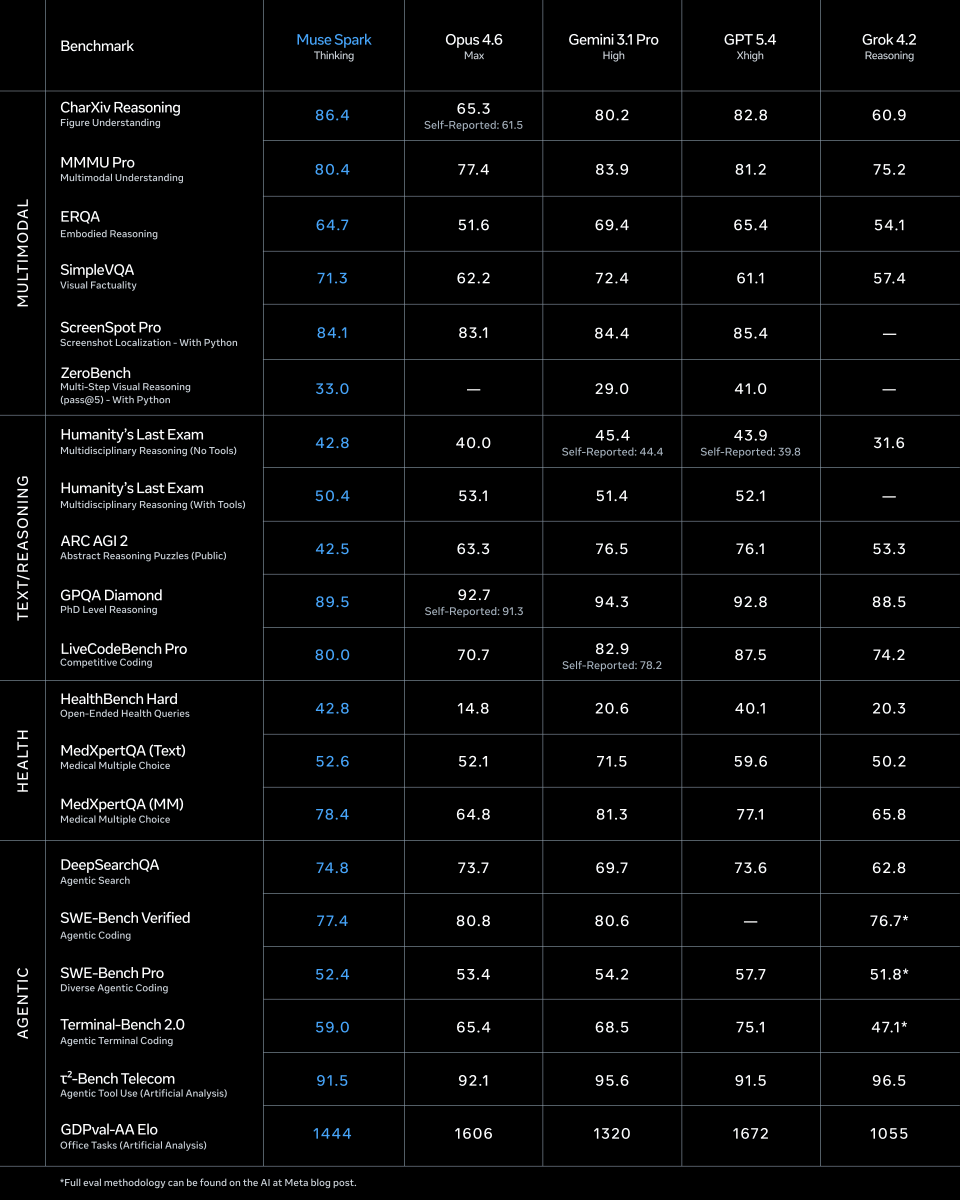
1/ today we're releasing muse spark, the first model from MSL. nine months ago we rebuilt our ai stack from scratch. new infrastructure, new architecture, new data pipelines. muse spark is the result of that work, and now it powers meta ai. 🧵
Introducing Project Glasswing: an urgent initiative to help secure the world’s most critical software.
It’s powered by our newest frontier model, Claude Mythos Preview, which can find software vulnerabilities better than all but the most skilled humans.
https://t.co/NQ7IfEtYk7
Thanks for the great conversation @cleoabram (and some competitive Jenga)! Really enjoyed talking about all the amazing ways AI is helping to advance science & the incredible future it will enable!
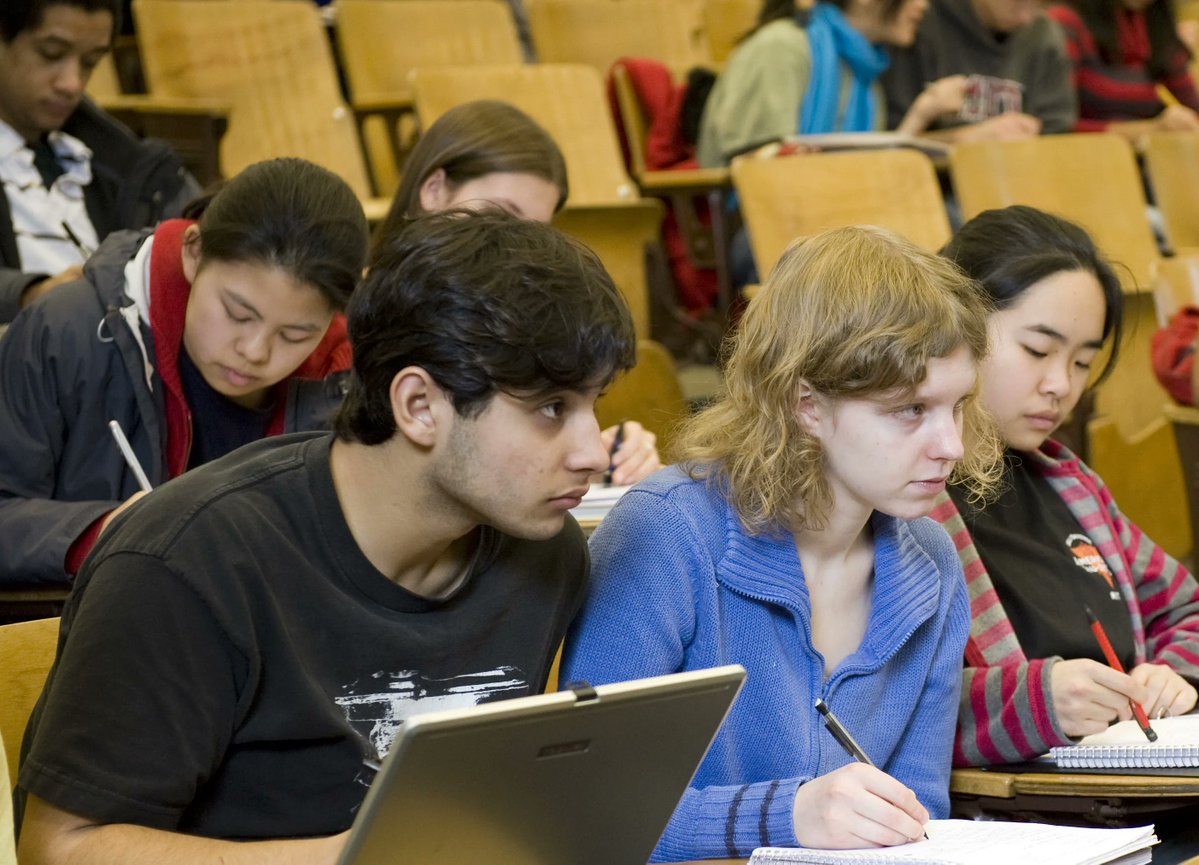
A MIT student figured out how to compress an entire semester of lecture content into one 90-minute study session.
He calls it "context stacking," and it's the most unfair thing I've seen done with NotebookLM.
I asked him to walk me through it. He did. I haven't studied the same way since.
Here's exactly what he does.
Two days before each lecture, he uploads everything into NotebookLM. The assigned readings, the previous week's slides, 3 or 4 related papers he finds himself, and any problem sets that are still open.
Most students wait for the lecture to explain the material. He walks in having already built a mental model of it.
That's step one. But it's not the move that makes it unfair.
The first prompt he runs across all of it:
"What are the 5 core concepts this week's content is built on, and how do they connect to what I studied last week?"
Not summarize. Not define. Connect.
NotebookLM pulls threads across everything he uploaded simultaneously. It surfaces relationships between ideas that would take a normal student weeks of review to notice. He gets that map before the lecture even starts.
Then he runs the prompt that does most of the work.
"What would I need to genuinely understand about this material to be able to teach it to someone with zero background in this subject?"
That question is doing something most students never force themselves to do. It exposes exactly where his understanding is solid and exactly where it's hollow. The gaps show up immediately, and he spends the rest of the 90 minutes filling only those gaps.
Not reviewing what he already knows. Only fixing what he doesn't.
The final prompt is the one that separates context stacking from every other study method I've heard of.
"What question could a professor ask about this material that would expose a student who understood the surface but missed the underlying logic?"
He's not studying for the exam he expects. He's studying for the exam designed to catch people who only think they understood it.
By the time he sits in the lecture hall, the professor is not teaching him anything new. The professor is confirming what he already mapped, filling in a few details, and occasionally surprising him with something he didn't anticipate.
That surprise is the only thing he writes down.
Most students leave a lecture hoping the material will eventually click.
He walks in with it already clicked, and uses the lecture to find out what he missed.
That's not a study hack. That's a completely different relationship with learning.
"Estoy trabajando con robots de rescate simulados"
La joven argentina de 16 años Martina Talamona representará a la Argentina en la RoboCup Internacional, el Mundial de Robótica que se realiza en Incheon, Corea del Sur.
In 2013, Nassim Taleb gave a 53-min Stanford masterclass on why chaos makes some businesses stronger.
His ideas:
- The coffee cup that survives 4 million hits
- Why helicopter engineers ride their own machines
- The country where nobody knows the president
12 lessons on risk:
AI in robotics gets all the attention right now, but sometimes the most interesting work is very practical.
Viet built a small vision system that counts potatoes on a conveyor belt. No giant dataset. No huge model. Just a clear problem and a smart setup.
He used Ultralytics’ ObjectCounter, trained a tiny YOLO11 nano model, and because there was no potato dataset, he annotated a single frame with SAM 2 and trained from that. One frame. Still works across the whole video.
It is a good reminder that useful AI in industry often looks like this.
Focused. Lightweight. Solves a real task.
If you work in manufacturing or robotics, these small systems are usually the fastest wins. They save time, reduce errors, and do not need massive infrastructure.
Nice work, Viet.
His projects:
https://t.co/1TSrwcKGCW
—-
Weekly robotics and AI insights.
Subscribe free: https://t.co/dsa6wcvq6n
Perspective is everything when observing the cosmos.
The phases of the moon aren't caused by the Earth's shadow, but by our shifting vantage point of the lunar surface as it orbits our planet.
It's a continuous, 29.5-day cosmic dance of light and geometry; a profound reminder that half the moon is always bathed in sunlight, we just happen to be watching the transition.