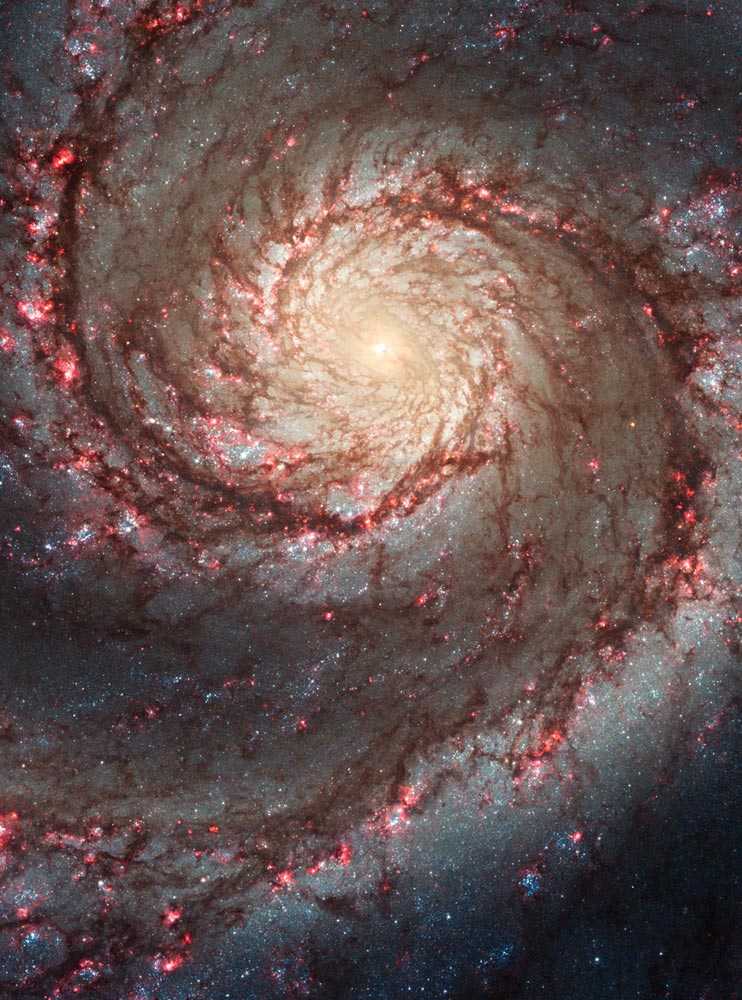
Visible ➡️ Near-infrared
These #HubbleClassic views of the Whirlpool Galaxy show off different aspects of the galaxy! The visible image highlights its spiral arms and star-forming regions, while the near-infrared image shows its skeletal dust structure: https://t.co/ggxQqnBkEh
#OTD in 2012, @NASAHubble's Wide Field Camera 3 captured this photo of Planetary Nebula NGC 5189. The unique structure of NGC 5189 was formed by a dying star shedding its outer layers.
This glimpse of the Crab Nebula’s “beating heart” was released #OTD 5️⃣ years ago!
Spinning 30 times a second, the neutron star at its center shoots out detectable beams of energy that make it look like the nebula is pulsating: https://t.co/MtyWvP85VY
The star cluster in this #HubbleFriday image has been known by many names: Dun 538, H 3688, and Pismis 25.
Why? Different astronomers “rediscovered” it multiple times. But these days, it’s known reliably as simply NGC 6380 (NGC = New General Catalogue): https://t.co/nW9XLwZhkT