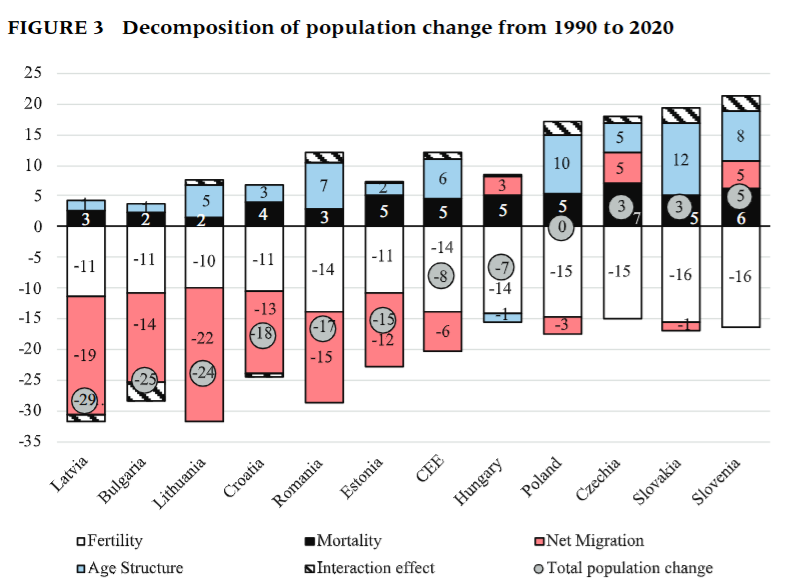
📢I’m happy to share that my paper is out in Population and Development Review.😀Central and Eastern Europe’s population change isn’t just about fertility, mortality, and migration — the age structure also played a key role in shaping the region’s demographic trajectory.
#demography #ageing #fertility #Hungary #Poland #Romania #migration
https://t.co/mK4p1td5Ya
📢I’m happy to share that my paper is out in Population and Development Review.😀Central and Eastern Europe’s population change isn’t just about fertility, mortality, and migration — the age structure also played a key role in shaping the region’s demographic trajectory.
#demography #ageing #fertility #Hungary #Poland #Romania #migration
https://t.co/mK4p1td5Ya
Emigration from Hungary reached a new record in 2024 and remained close to 40,000 in 2025.
The number of Hungarians leaving the country in the last two years was more than double the pre-pandemic level, amounting to almost 0.5% of the total population each year.
#demography #Hungary #migration
Without migration, Germany will lose 26 million people by 2100, with its population shrinking from 84 million today to just 58 million.
#Demography#Germany#Migration
https://t.co/rLITs6883U
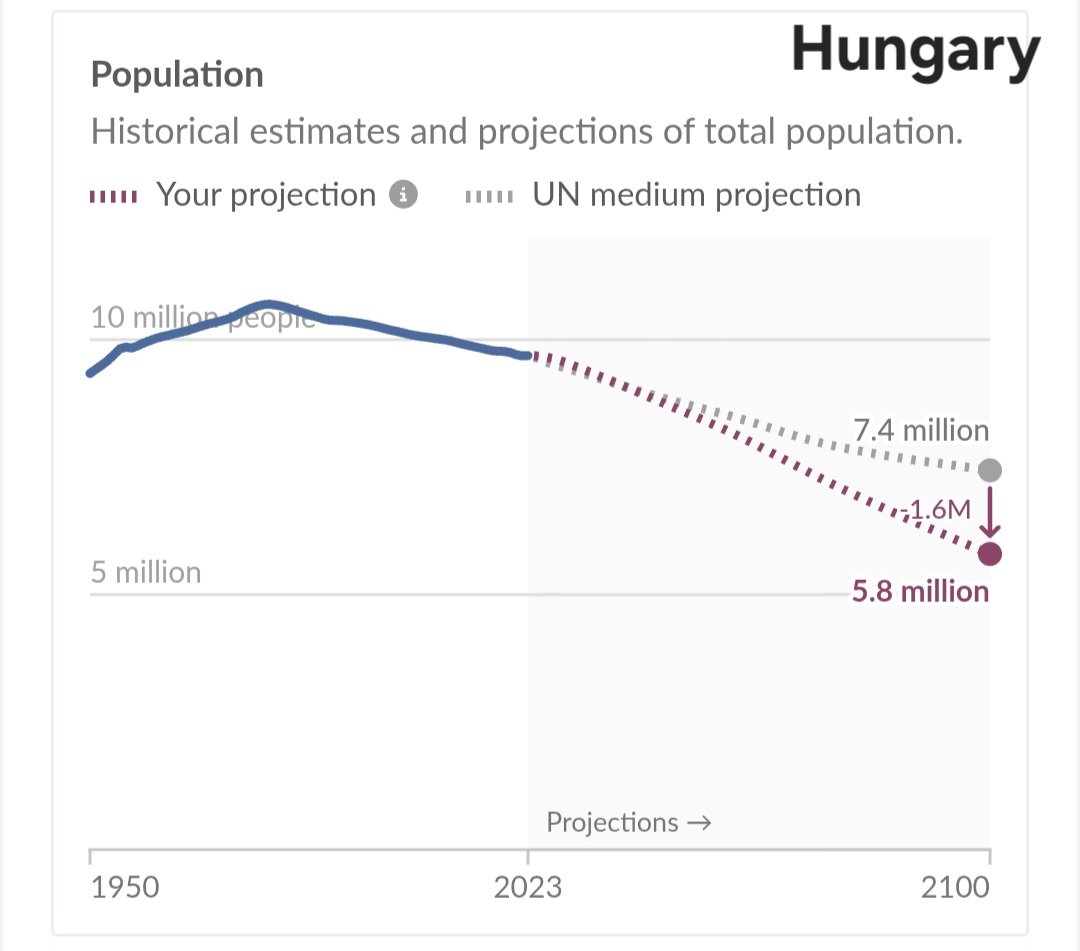
Hungary could lose nearly 4 million people by the end of the century if today’s extremely low fertility rate (1.3) persists. The population would shrink from 9.5 million to just 5.8 million by 2100.
#demography#Hungary#fertility
https://t.co/rLITs6883U
In 2024, 58% of children born in Vienna had a mother born abroad.
For Austria as a whole, the figure was 36%.
About half of foreign-born mothers came from the EU, especially Germany, Romania and Hungary. The rest came from non-EU countries such as Syria, Bosnia, Turkey and Serbia.
#demography #fertility #Austria #Germany #Turkey #Hungary
Excellent database: https://t.co/4BFkQgEWBE
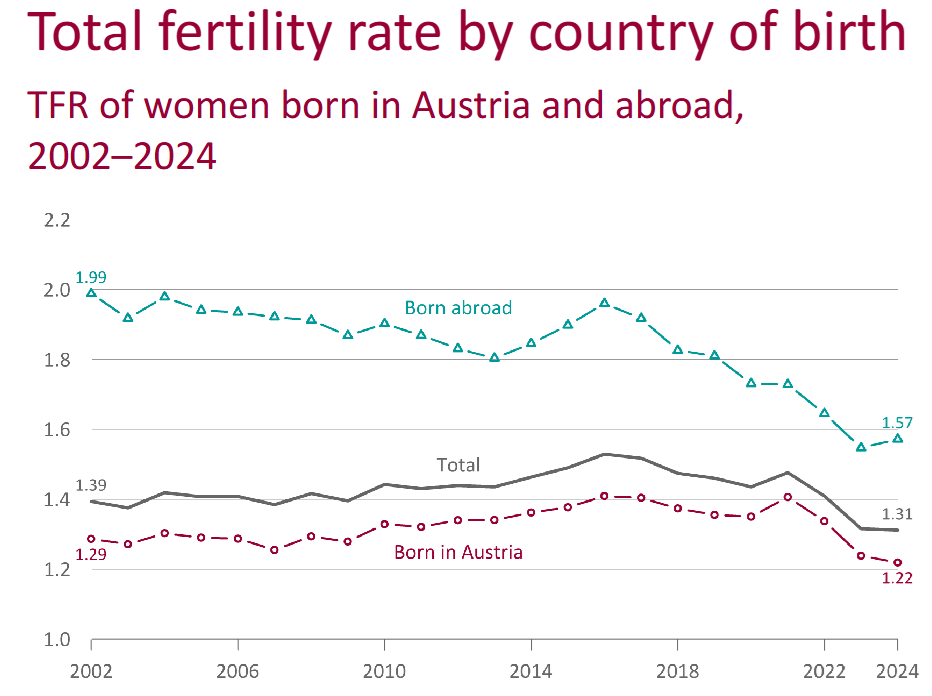
Significant but shrinking fertility gap in Austria:
Foreign-born women still have higher fertility than native-born women, but the difference is narrowing. In 2024, their higher fertility of foreign-born women pushed Austria’s overall Total Fertility Rate up by about 0.1.
#demography #fertility #Austria
Excellent report: https://t.co/S2Eg0h0DNS
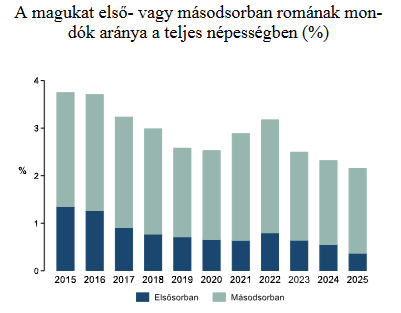
Hová tűntek a romák? – Az etnikai önbesorolás változása 2011 és 2022 között.
A két legutóbbi népszámlálás között egyharmadával csökkent a magukat első- vagy másodsorban romának mondó válaszadók száma.
#Hungary#demography
https://t.co/q0pEpYgq1s
The number of children that mothers give birth to is stable or even rising. But the proportion of women who have any children at all has fallen steeply in the past 15 years.
#demograpy#fertility
Excellent article:
https://t.co/n3wjcnE2AI
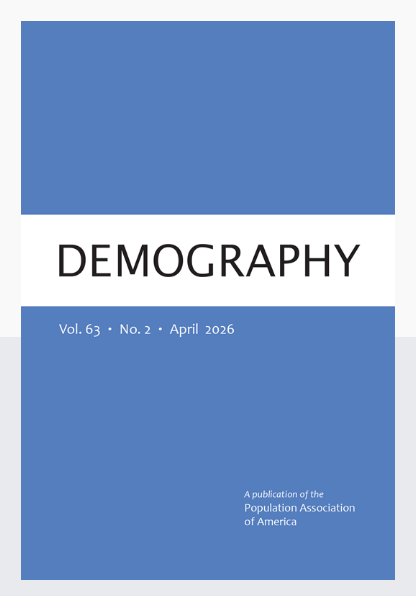
This issue offers 12 articles & 4 notes, covering varieties of capitalism & fertility, income growth over generations, net worth poverty in childhood, contemporary patterns of multiracial marriage & the persistent relevance of marriage for childbearing. https://t.co/BO755Y7Ov5
Politics is not just ideology — it’s demography.
By 2030, Fidesz could lose 300,000 core voters simply because its electorate is aging out, while younger Hungarians are overwhelmingly turning elsewhere.
The population pyramid is slowly becoming an election forecast.
A striking analysis by Bódi Mátyás (in Hungarian): https://t.co/2xynes2sah
Higher temperatures increased mortality during the warmest months, but milder cold seasons reduced mortality even more, resulting in over 900,000 fewer deaths in Europe during 2015–2024 than under the climate conditions of 1950–1979, and increasing life expectancy at birth by 0.2 years.
#demography #mortality #Europe #Poland
https://t.co/W5sEbT2int
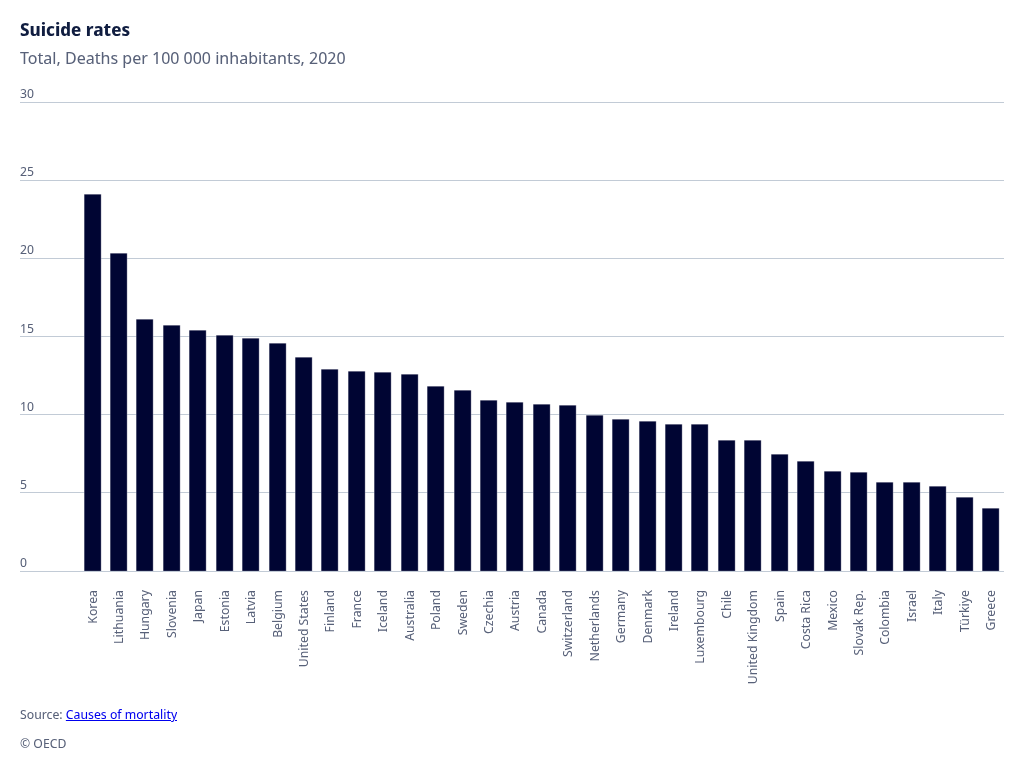
Hungary still ranks among the countries with the highest suicide rates, and the situation is especially alarming among men.
#demography#hungary
https://t.co/8kMZf5SZaQ