We’ve gotten used to checking the first and last 4 characters of a wallet address before sending.
But that still leaves the copy-paste step vulnerable.
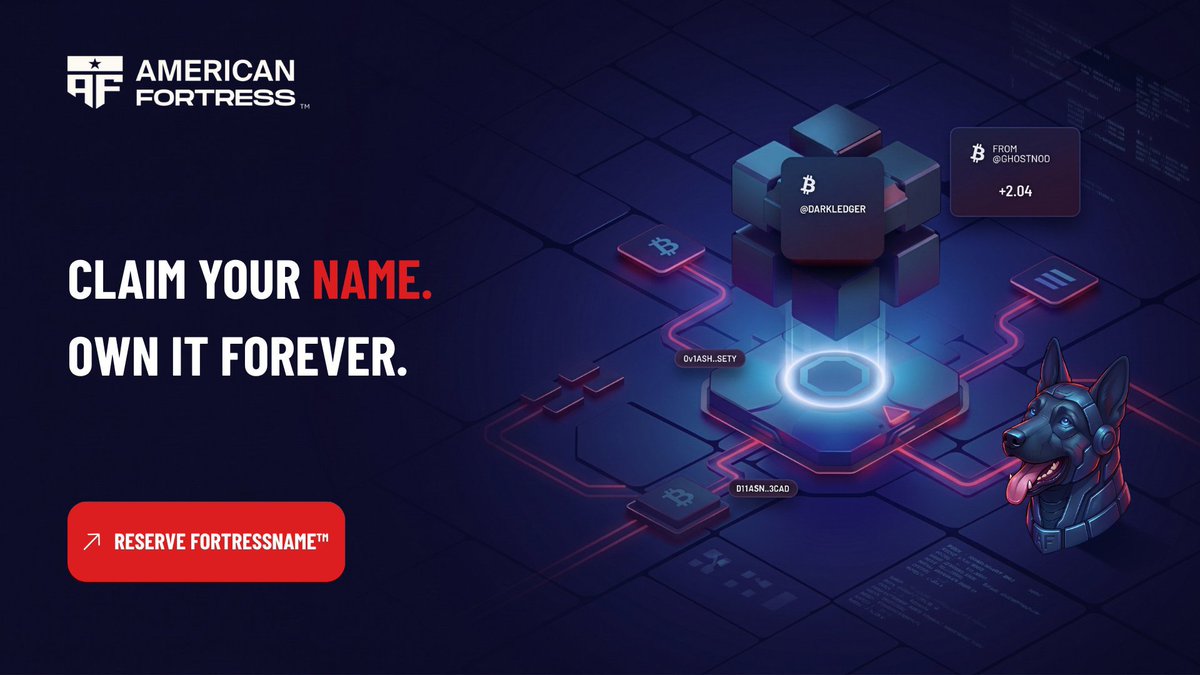
@Americanfort_io takes a different approach with Send-to-Name™.
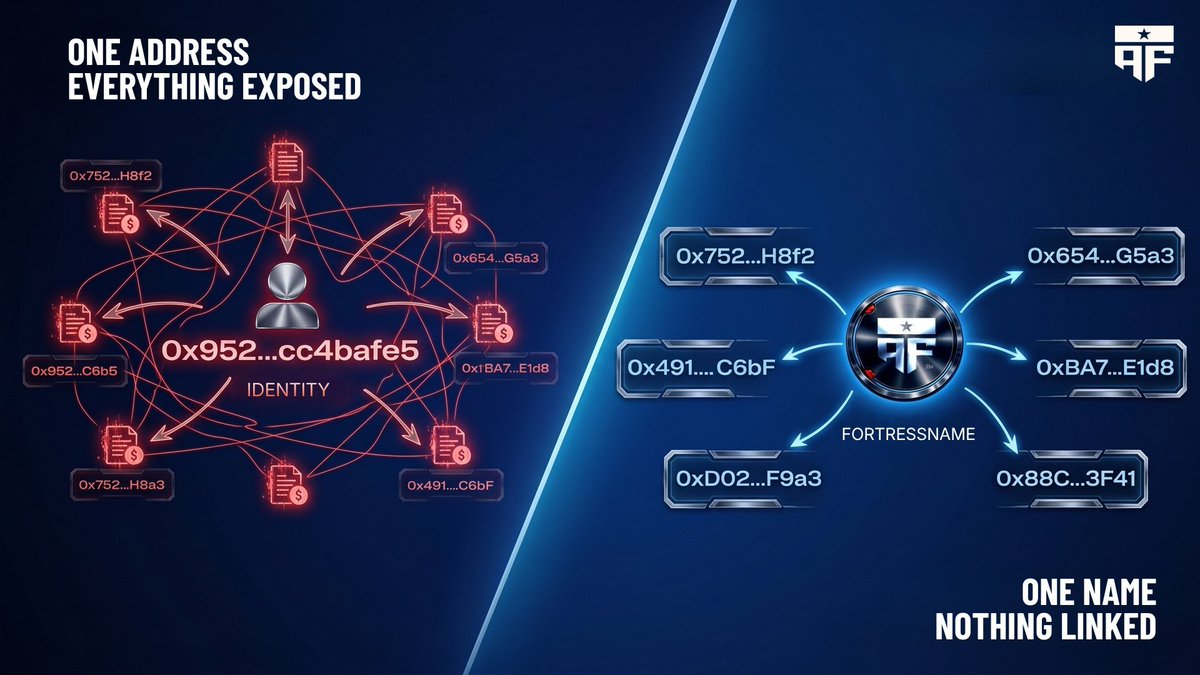
You send to a FortressName instead of copying a long address. For every payment, your wallet creates a fresh one-time address. Only the sender and recipient can derive it, and only the recipient can spend the funds. The transaction still settles normally on the native blockchain.
Unlike fixed-address naming systems, a FortressName doesn't publicly resolve to one wallet, balance or payment history.
And one name works across 13 integrated networks today.
For me, replacing address checking with a readable name makes the security model much easier to understand.
Claim your free lifetime FortressName: https://t.co/QVWNUrfdVA
good morning x friends
I wanted to look at @Americanfort_io from the perspective of someone watching the transaction, not just the person sending it.
With Send-to-Name™, the payment starts with a human-readable FortressName instead of copying a long wallet address.
The wallet then generates a fresh one-time address for that payment.
So from an outside observer’s perspective, the important distinction is:
They can see the blockchain settlement.
They can’t simply use the public FortressName to discover a fixed wallet, balance, or complete payment history.
The recipient can still identify that the payment was intended for them because they control the information needed to derive the payment address.
That’s what I find interesting about the flow.
The transaction itself remains on the native blockchain, but the relationship between a public name and a permanent financial profile is much less obvious.
And because the flow removes the need to copy and paste a long address, there’s a UX benefit too.
Send-to-Name™ is live, so this is something that can be tested rather than just described on a roadmap.
I’d attach a real Send-to-Name™ walkthrough or transaction flow here so people can see the difference for themselves.
I’m turning my ACS into an ongoing challenge instead of obsessing over one good trading session on @agenticscredit
My current score: 300
Earlier, I was around [280ACS], so now I’m tracking what happens after more sessions fully settle.
My setup is staying consistent:
→ One Pine strategy
→ Paper trading
→ Same approach
→ Let sessions close
→ Record the ACS after each update
I’m deliberately not changing my position size just because I see someone else posting a much bigger result.
The question I actually want to answer is:
What does my own trading activity do to my ACS over time?
Day by day, I’m recording the score and comparing it against what I actually did.
Day [4]: 300
Next target: 580
No guessing. No copying someone else’s result.
Just trade → settle → check ACS → repeat.
Let’s see where my score is by the next update.
I checked my @zerufinance Zaps again and noticed a change in my balance.
I went from 0→ 2 zaps, after [actual reason for the change].
What I like about tracking it this way is that I can actually see how my activity is being reflected instead of just assuming that participating means I’m progressing.
I’m also keeping an eye on my Clan standing because that gives me another reference point for where I currently sit.
If you’ve already joined Zeru but haven’t connected your trading wallets yet, there’s one simple thing I’d do next:
Connect your wallets and check your starting zaps.
Clan invite: https://t.co/ryyQJ6YPq6
I’ll keep tracking my balance from here and share the next change when there’s something real to show.
Zaps are points. Any future airdrop or whitelist allocation depends on the final official rules, cutoff and snapshot criteria.
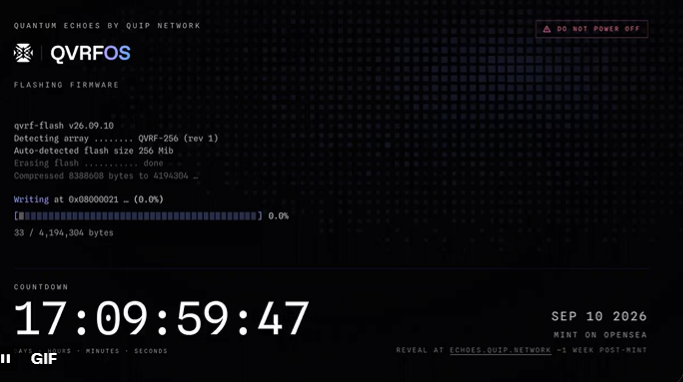
Quantum Echoes reveal day is finally here 🦋
What caught my attention is that revealing isn’t just a simple click.
You need a Quip wallet on ETH, and that wallet adds post-quantum protection to deposited assets.
Quip is also waiving the normal wallet creation fee through Sunday, so the wallet itself is currently gas-only.
So the flow is pretty straightforward:
create Quip wallet → pay gas → reveal Quantum Echoes
I’ve been waiting for the reveal, so today feels like the fun part of the experiment.
The quantum artwork is one thing.
Getting it through a wallet built around post-quantum protection makes the whole experience more connected to what @quipnetwork is actually building.
@siraj_dev122 The interesting part about GenLayer is not just making contracts smarter. It is trying to reduce the dependence on slow human processes when the evidence itself can be evaluated directly.
@luis_usaa Human judgment is useful, but making every decision dependent on human conviction creates a huge bottleneck. Especially when the evidence is already clear. The longer that bottleneck stays, the more expensive the process becomes.
Not every NFT needs to be about hype.
Quantum Echoes from @quipnetwork is built around QVRF, using real quantum hardware to seed each piece.
The result is fully onchain and independently verifiable, with the free open edition minting on Ethereum through opensea from September 14.
The technology behind the collection is honestly what makes this one interesting to me.
@jitusorkar12@GenLayer I like this question because successful systems usually make their early struggles invisible. The first Intelligent Contracts and the moments that forced changes could tell us much more than another polished explanation of the final product.
Quantum Echoes from @quipnetwork is an interesting example of bringing real quantum hardware into a digital collection.
The project describes it as the first QFT collection seeded by true randomness generated on real quantum hardware, which gives the collection a more direct technical connection to quantum computing.
What I find useful is that @quipnetwork has now launched an FAQ alongside it.
There are naturally going to be questions around how the randomness is generated and what role the quantum hardware plays, so having the answers available in one place makes the concept easier to explore.
For anyone who has been following Quantum Echoes, the FAQ seems like the logical next stop after seeing the announcement.
Thank you to everyone who participated in the heyAura Educational Use Case Challenge.
We have received over 400 submissions in the different categories: video, thread, article, and series.
Now the hard part begins. Evaluating each and every entry we've received.
Stay tuned.
I wanted to test @heyaura with a real workflow instead of just talking about its features.
So I asked it to help me prepare for a small ETH swap.
It helped me work through the network, token pair, slippage, gas + swap fees, minimum received, liquidity, and transaction details.
The biggest takeaway: @heyaura isn't just about executing an action.
It's about understanding what you're about to do before you sign.
I recorded the full process below 👇
The Road to the Castle update from @sleepagotchi looks like a fun way to add another layer to the Dino journey.
This time, the path runs through dark forests with hidden dangers and restless nights waiting along the way.
What I find interesting is that the new chapter keeps the focus on moving forward rather than simply unlocking another destination.
Helping weary travellers and clearing the road gives users something to actively engage with during the journey.
@sleepagotchi has been blending sleep routines with a game-like experience, and this update fits that direction nicely.
The ancient castle gives the whole chapter a clear goal too, so now I’m curious to see how difficult the road becomes.







![jitusorkar12's tweet photo. I’m turning my ACS into an ongoing challenge instead of obsessing over one good trading session on @agenticscredit
My current score: 300
Earlier, I was around [280ACS], so now I’m tracking what happens after more sessions fully settle.
My setup is staying consistent:
→ One Pine strategy
→ Paper trading
→ Same approach
→ Let sessions close
→ Record the ACS after each update
I’m deliberately not changing my position size just because I see someone else posting a much bigger result.
The question I actually want to answer is:
What does my own trading activity do to my ACS over time?
Day by day, I’m recording the score and comparing it against what I actually did.
Day [4]: 300
Next target: 580
No guessing. No copying someone else’s result.
Just trade → settle → check ACS → repeat.
Let’s see where my score is by the next update.](https://pbs.twimg.com/media/HTZAKsNb0AAN9cp.png)
![jitusorkar12's tweet photo. I checked my @zerufinance Zaps again and noticed a change in my balance.
I went from 0→ 2 zaps, after [actual reason for the change].
What I like about tracking it this way is that I can actually see how my activity is being reflected instead of just assuming that participating means I’m progressing.
I’m also keeping an eye on my Clan standing because that gives me another reference point for where I currently sit.
If you’ve already joined Zeru but haven’t connected your trading wallets yet, there’s one simple thing I’d do next:
Connect your wallets and check your starting zaps.
Clan invite: https://t.co/ryyQJ6YPq6
I’ll keep tracking my balance from here and share the next change when there’s something real to show.
Zaps are points. Any future airdrop or whitelist allocation depends on the final official rules, cutoff and snapshot criteria.](https://pbs.twimg.com/media/HTY-Z6naQAAQT-W.jpg)