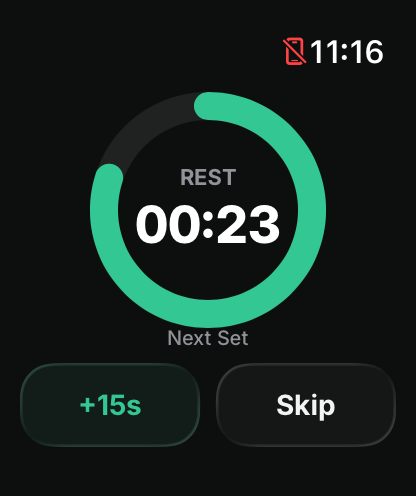
@DrHainesFitERDR That makes sense. I like keeping accessories moving, then giving the big lifts the extra time they need. Do you adjust rest based on how close the set was?
@DrAndyGalpin@RossEdgley One degree in the gym looks boring: one more rep than last week, or 5 lb more on the bar. Nobody notices for months, until you look back at the log. I build TrackYourLift partly for that, so the small wins stay visible. What's the smallest change that built resilience for you?
@SandCResearch Good case for keeping slow eccentrics and long-length work in a program: RDLs with a real stretch, incline curls, deep lunges. The muscle adapts to where you train it. Does the shift in peak torque angle carry over to strength at the sticking point, or is it mostly length?
@MetabolicFactor Easy way to see it: the RDL starts at the top with soft knees, hips push back, and the bar slides down the thighs until the hamstrings run out of stretch. Straight leg keeps the knees near locked, so more hamstring length and less weight. Which do you program more for growth?
@eda2026 i’ve started asking “are those yours or from the last person?” before stripping a leg press to avoid accidentally borrowing someone else’s cleanup. did he laugh once he realized?
how long i rest between sets, no guessing
1. heavy squat/bench/deadlift: 3 to 5 min
2. accessories: 60 to 90 sec
3. supersets: rest after the pair, not each move
4. start the timer the second you rack it
how long do you actually rest on squats?
Great reminder that the offseason isn't the enemy if the training stays honest. Curious how you run it: are you chasing load PRs on the big movements while you're heavier, or mostly adding reps and sets at a stable load? Feels like the gaining phase is when most people should push numbers hardest, before the cut takes some of that strength back.
Accentuated eccentric work feels like a tool that shines in small doses. Say you add a heavier lowering phase to 1 or 2 squat sets per week: you get the overload stimulus without the soreness wrecking the next session. The tricky part for most lifters is dosing it, since it doesn't fit neatly into a normal sets x reps plan. Does the paper give a practical starting volume for non-elite lifters?
Recomp is where the scale lies to you. Bodyweight can sit flat for 8 weeks while reps climb at the same load and the waist tape drops. So the honest scoreboard is a strength trend on your main lifts plus a tape measure, not the scale alone. I build TrackYourLift, and that's exactly why it leans on lift history graphs instead of bodyweight. Did the review find training status was the biggest factor, newer lifters vs well-trained?
@NotMaxedOut every time. what helps me is scrolling back to what i was lifting a year ago. it's usually way more progress than it feels like mid set. what lift are you proudest of right now?
@bkimsometimes if someone's waiting i still take my full rest on heavy compounds, like 2 to 3 min, but i'll offer to let them work in. on accessories i drop to about 60 sec and get out of their way. do you usually let people work in?
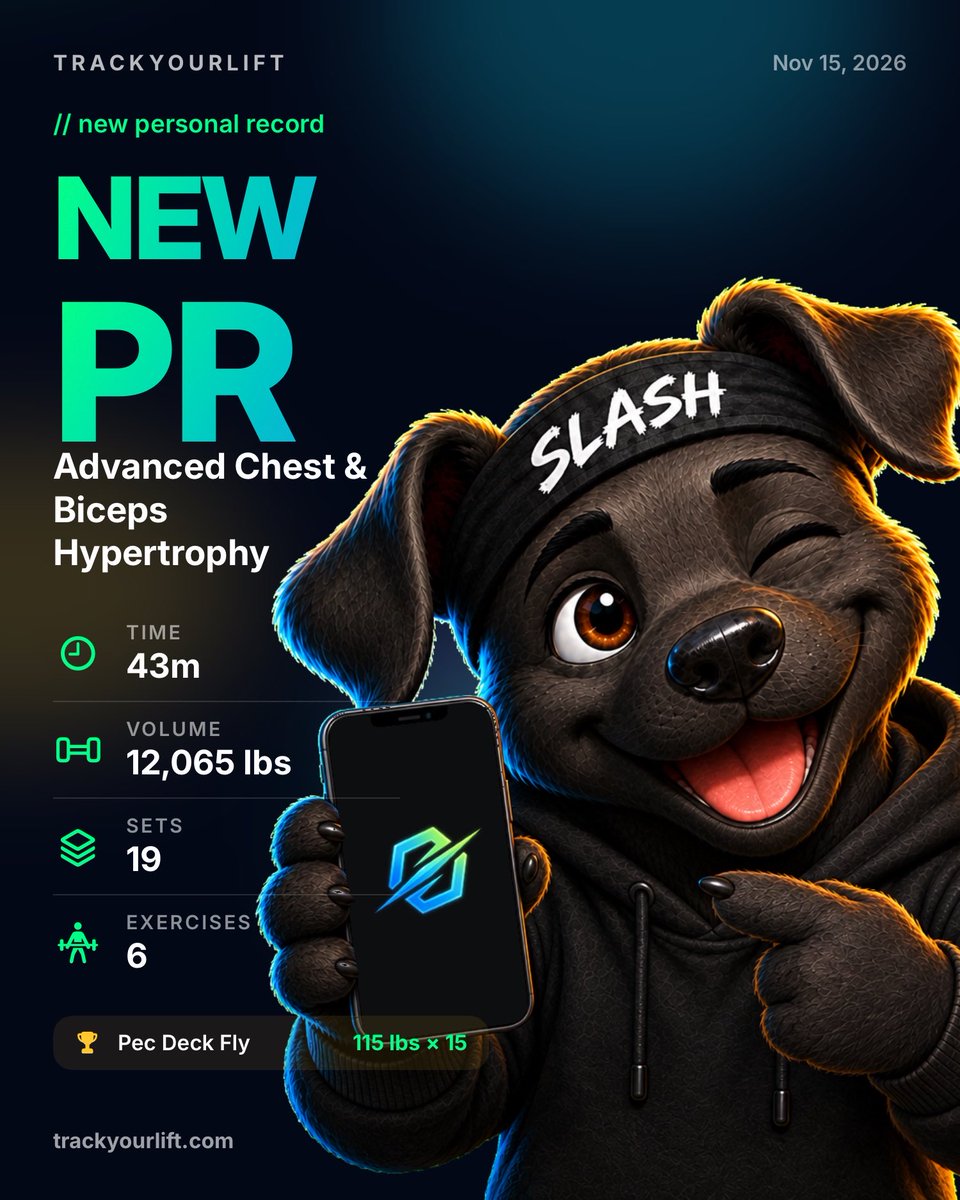
@AngryTides@rukky_nate Looking for a way to turn this into an actual routine?
TrackYourLift allows you to import images, videos, etc and it builds out the program for you.
Don’t have to carry around an image with bad AI graphics to the gym with you.
Would put a big underline on "get fit": lift something heavy a few times a week. Strength and muscle are strongly linked to staying independent later in life, and the barrier is lower than most people think. Two or three full body sessions, a handful of compound lifts, add a little weight or a rep when it gets easy. Boring, repeatable, works. What's the biggest thing that stops people from sticking with it?
Hard to beat the Romanian deadlift. Easy to load, easy to progress in small jumps, hits hamstrings and glutes in the stretch, and it carries over to every other pull. What keeps it delivering is boring: add a rep or 5 lb when the last set feels solid, and write it down so you know exactly what to beat next week. That last part is why I build TrackYourLift. What's the one lift your readers swear by most?
110 lb dumbbells overhead is still a serious press, and a 220 lb dumbbell press is just silly strength. Cool part about looking back like this: the top number drops, but the skill of pressing heavy never really leaves you. Do you still chase top end strength these days, or is it mostly training to feel good now?