if Robinhood is trying to make everyone an owner, there is a slightly nerdy problem hiding underneath that:
ownership creates an enormous amount of onchain data.
wallets, flows, clusters, behaviour, markets.
someone has to make sense of all of it.
i suspect the intelligence layer will become almost as important as the ownership layer.
probably thinking about this way too much @vladtenev 🤔
Let's tokenize everything.
Tokenization is one of the best ways for countries to "raise money", or attract FDI (Foreign Direct Investment).
Which country/company won't want to sell their (tokenized) stocks to everyone in the world?
I support tokenization on all blockchains. While this creates the "fragmented liquidity" problem, it is the fastest way to grow the sector, with multiple players pushing.
Fragmentation can be somewhat addressed if there is high interchangeability amongst different issuers, which is important.
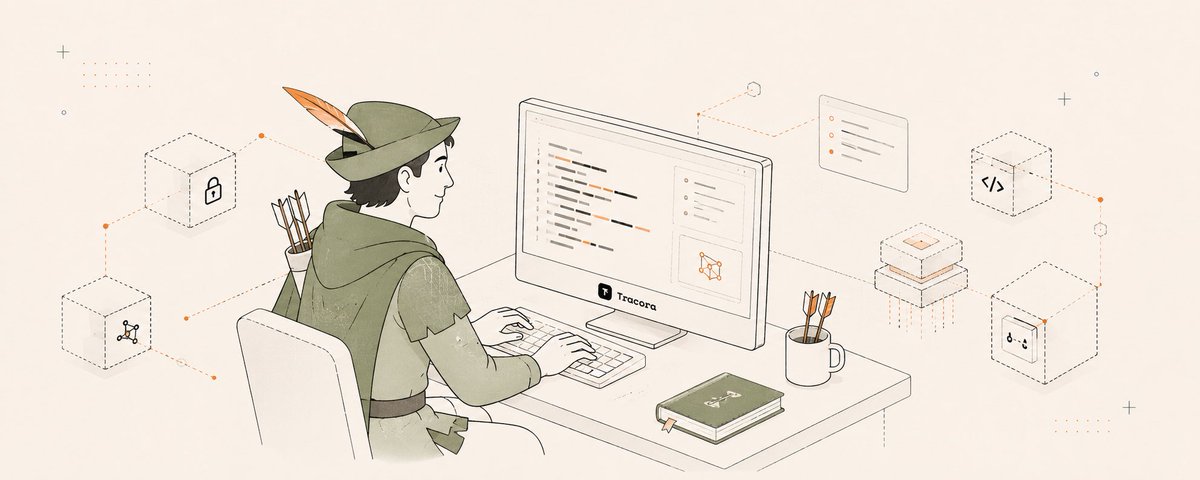
did you know Tracora can automate the entire process?
instead of manually watching wallets, tracking smart money, checking signals and waiting for the right entry, you can enable Smart Auto Trade and let the system execute based on the intelligence you define.
detect → analyze → decide → execute.
less staring at screens. more letting the machine do the repetitive work.
Smart Auto Trade is coming to Robinhood Chain.
the market never sleeps.
your terminal probably shouldn’t either.
@VERYKOOLLUKEY@Saint10Fourteen It was 0.4-2eth to deploy a token during the bull market last time.
That’s how we spawn tokens with 100M mcap and above.
will you rather have a dashboard that explains what already happened, or an intelligence system that notices when something is starting to change?
at Tracora, we think the second problem is more interesting.
onchain markets generate an absurd amount of small signals. wallets change behaviour, capital moves, clusters converge, liquidity shifts, social attention appears.
individually, most of these events mean almost nothing.
the interesting part is what happens when they start occurring together.
that is the problem we are building Tracora around: turning millions of small observations into context humans can actually reason about.
the market moves first.
the explanation comes later.
we want to work on the part in between.
solana was mostly us figuring out whether the machine could actually notice useful things before humans did.
now we’re doing the annoying part again for robinhood chain.
new chain, new asset types, new liquidity behaviour, new wallet patterns, probably new ways for the model to be wrong.
so most of the work right now is basically:
observe → break assumptions → rebuild → repeat.
would be nice if “multichain” was just changing an RPC endpoint lol
seems like we accidentally found the closest thing to a cheat code for playing solana.
still testing the limits of it.
but this is getting interesting.
this is where Robinhood Chain starts getting genuinely weird in an interesting way.
the first coin paired with $DJT on Pons is not just another memecoin pair. creator fees are routed to Donald J. Trump, while demand for the pair is already exposing a much more practical constraint: liquidity.
@MEADGod is now talking about getting LPs to add more $DJT and $RIVN liquidity.
so you suddenly have three systems colliding:
→ tokenized public equities
→ permissionless memecoin creation
→ creator-fee economics tied to real-world identities
and the bottleneck is not narrative.
it is market structure.
if this model scales, the interesting question will not only be “what token launches next?”
it will be which real-world assets become the deepest liquidity primitives for entirely new onchain markets.
seems like we accidentally found the closest thing to a cheat code for playing solana.
still testing the limits of it.
but this is getting interesting.
The most interesting number here is not that memecoins drove 51% of Robinhood Chain’s July spot volume.
It’s that 48% of RWA volume happened in pools pairing an RWA with a memecoin.
That is a strangely important signal.
Robinhood Chain may not evolve as “TradFi assets on a blockchain” and “crypto assets on a blockchain” as two separate markets.
They may increasingly share the same liquidity, wallets and market structure.
memecoins may be bootstrapping the activity.
RWAs may eventually inherit the liquidity.
and the intelligence layer will need to understand both.
Best report I've read on Robinhood Chain:
> Q2 crypto revenue fell 38% YoY to $100m accounting for 8% of revenue
> Retail crypto volume declined 36% YoY
> Crypto’s share of total AUC fell to all-time low of 7%
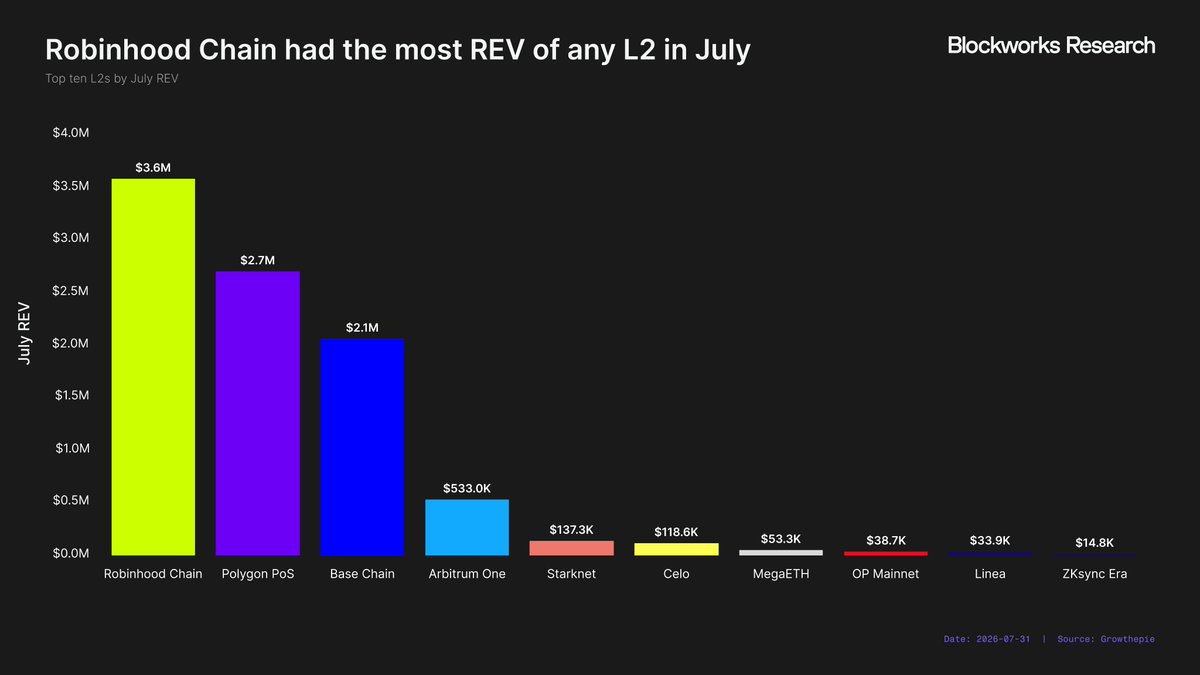
> Robinhood Chain had one of the strongest L2 launches in history
> Generated $3.6m in REV during July
> Accounted for 38% of all L2 chain revenue
>Memecoins drove activity, at 51% of July spot volume compared to just 5% for RWAs
> 48% of RWA volume occurred in liquidity pools pairing an RWA with a memecoin
> USDG already generates est. $10.5m in annualized interest income
> Lighter’s wallet-only integration accounted for just 0.2% of its total perps volume
from @blockworksres
I'm bullish.
$1B feels large until you compare it with the markets that could eventually move onchain.
the more interesting part is what happens to market intelligence when even a small fraction of that capital becomes programmable.
more assets onchain means more than more liquidity.
it creates a new observable layer of wallets, flows, positioning and behavior that simply did not exist before.
the asset migration is one opportunity.
understanding the capital once it gets there may be another.
another early gem was detected by Tracora.
$TOAD reached 681x with a score of 97/100.
→ called at $25.8k mcap
→ holders: 13.4K
→ insider clusters: 1
→ smart money detected: 12
what matters is not only that a token ran. it is that the onchain signals were visible while the market was still forming.
Tracora is built to surface those signals early:
wallet behaviour, cluster activity, security context, and token momentum in one view.
not every high score becomes a 681x.
but when a 1000x does happen, the interesting question is whether the evidence was already there.
more soon.
the first 100 wallets on https://t.co/voIGW8VDnw may tell us more about robinhood chain than the first 100 tokens launched there.
Uniswap has created a new market structure where issuance, price discovery and liquidity begin almost at the same moment.
this also creates a new behavioural graph from block one:
→ creator-linked wallets
→ repeat early buyers
→ coordinated entries
→ liquidity concentration
→ wallets that consistently exit before distribution broadens
the obvious analytics product will rank the profitable wallets and label them “smart money.”
but profitability alone does not tell us whether a wallet had information, access, execution skill, or simply proximity to the launch.
Tracora’s Robinhood Chain integration is still being built, and https://t.co/voIGW8VDnw is one of the first market structures we are designing around.
because the earliest wallet is easy to find.
the earliest informed wallet is a much harder problem.
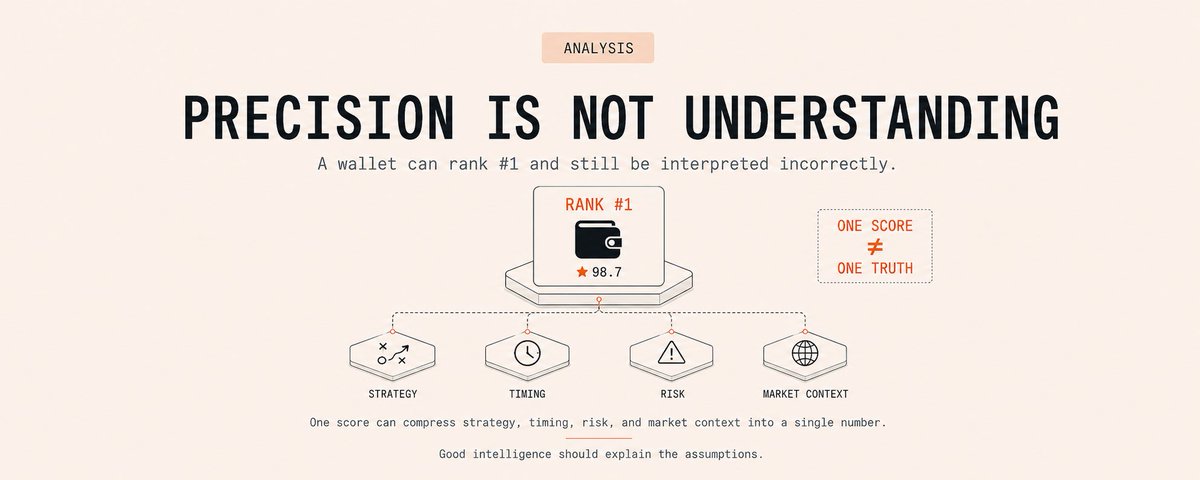
one underappreciated problem in onchain analytics is that precision and understanding are not the same thing.
a wallet can be ranked #1 using perfectly accurate data and still be interpreted incorrectly, because one score compresses strategy, timing, risk and market context into a single number.
good intelligence should not only tell you who is winning.
it should also explain which assumptions made them look smart.
one slightly awkward thing about “early calls” is that they become very easy to claim after the chart has already moved.
so the useful part is not the screenshot of the winner. it is the timestamped snapshot from before the move.
this week, Tracora’s board recorded 18 moons on Solana, the current top performers include:
→ $NEEGY: 109x
→ $1meow: 7.2x
→ $MEGUSTA: 5.4x
→ $wiwiwi: 4.9x
→ $OnlyMarms: 4.3x
→ $CATE: 4.1x
→ $Chonketha: 2.2x
ranked from Tracora’s first recorded flag to the verified peak.
this does not mean every detected token will perform, or that historical calls guarantee future ones.
it means the evidence existed before the outcome did.