Remove emotion from every trade. Use the SPY Swift Reactor indicator.
64.2% win rate & 1.8 Profit Factor (current results)
Designed for SPY options scalping.
We believe an edge in trading comes from executing the same profitable process over and over.
The challenge is that emotions often get in the way.
That’s why we built the SPY Swift Reactor Indicator.
No more charting levels or guessing where to enter and exit.
Coding a TradingView indicator in Pine Script isn’t just about getting signals on the chart. It’s about making sure those signals are actually trustworthy.
One of the biggest issues is repainting—when an indicator uses information that wasn’t available when the signal originally occurred, causing historical signals to change, disappear, or look better than they did in real time.
A backtest can look incredible and still be nearly worthless if the underlying logic repaints.
For our indicators, a signal must be based only on information available at that moment. Once a confirmed signal prints, it stays there.
If you can’t trust the historical signals, you can’t trust the statistics built from them.
Good Pine Script isn’t just about finding an edge.
It’s about making sure the edge is real.
@wannabechamp If you find a winning strategy, code and develop the strategy into an alert system. Just follow the alerts. No decision making necessary at that point.
Why can 3DTE SPY options be better than 0DTE when your trading system uses a 1:1 target and stop based on SPY’s price?
It comes down to the Greeks.
If our setup enters SPY at $750 with a +$0.70 target and -$0.70 stop, the underlying risk/reward is exactly 1:1.
But that doesn’t guarantee the option will have a 1:1 payoff.
With 0DTE, gamma is extremely high and increases as expiration approaches. Delta can change rapidly as SPY moves, while theta is removing extrinsic value at an accelerating rate. Implied volatility changes can also have an immediate impact on the premium.
That means a +$0.70 move and a -$0.70 move in SPY do not necessarily produce equal and opposite changes in your option’s value.
With 3DTE, gamma and theta are generally less extreme. Delta tends to change more gradually, giving the option a more stable relationship with movements in SPY.
So when the trading system itself defines risk as:
Target: SPY +$0.70
Stop: SPY -$0.70
3DTE can make the option P&L behave closer to the intended 1:1 structure.
0DTE offers more leverage and explosive percentage moves—but that same gamma sensitivity and time decay can make the option premium less predictable.
For our style of short-duration SPY scalping, we’re not necessarily looking for the option with the biggest potential return.
We want the contract whose behavior most closely matches the risk/reward our system was actually backtested on:
SPY price movement.
Most traders stack 5 indicators or have a complex/super specific setup which causes hesitation and doubt.
We built the SPY Swift Reactor so you don’t have to over think your entries and exits.
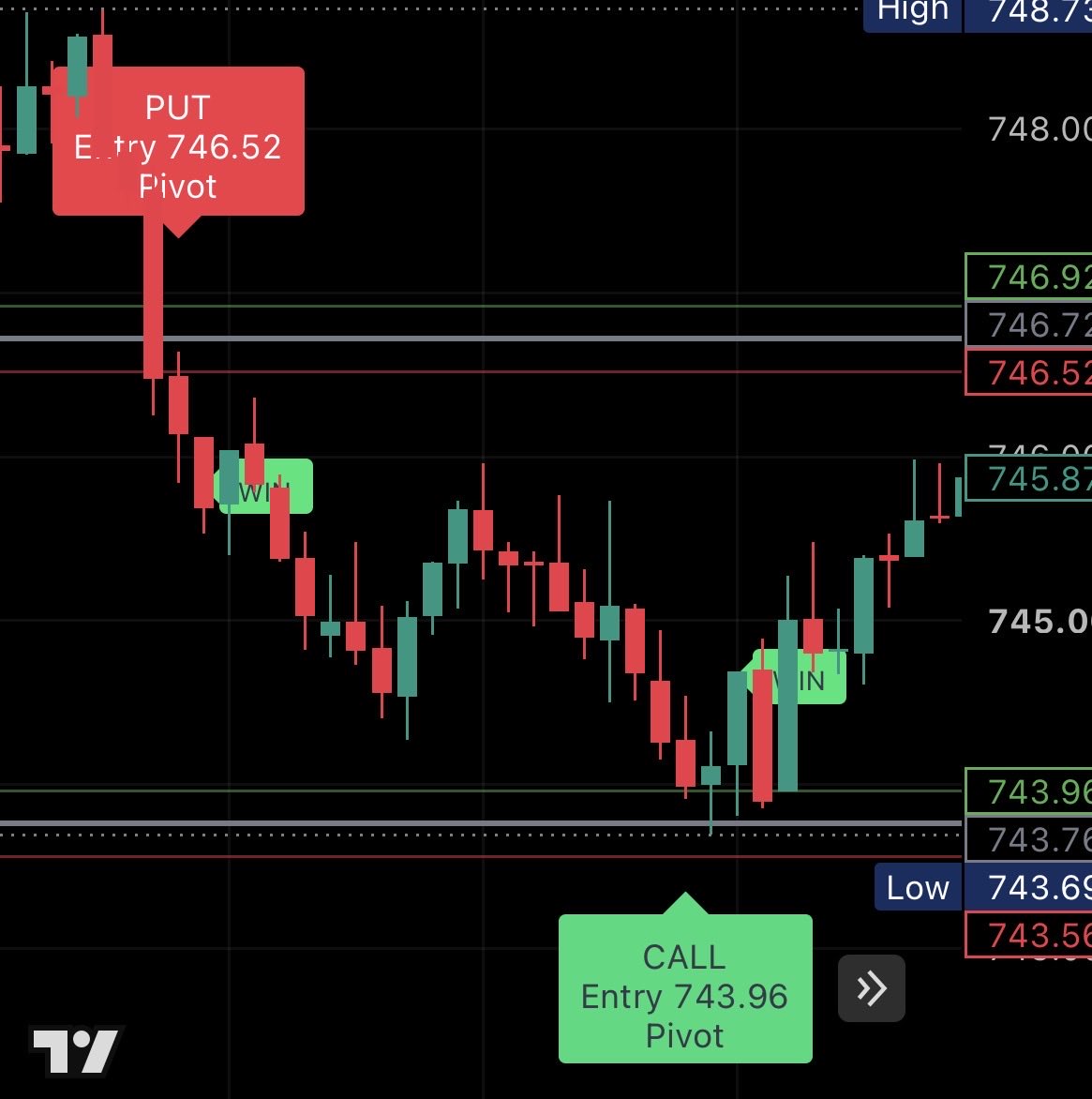
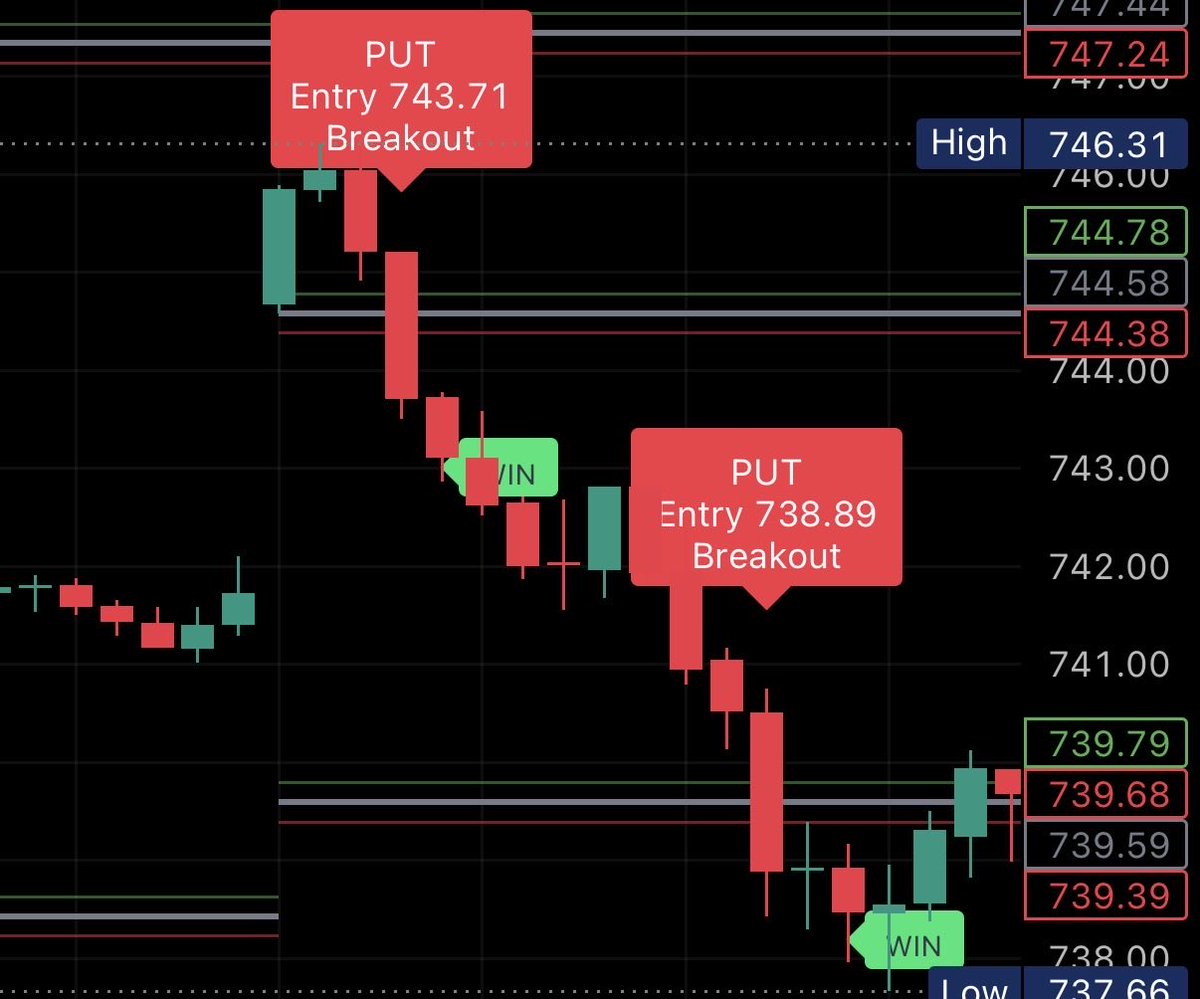
It auto-plots the key zones, only fires Call/Put alerts when multiple factors (structure, VWAP, volume, price action) align in historically high win-rate conditions, and it shows a live updated results table so you can trust the process.
1:1 RR. Take the signal with confidence.
@tradermike1234 4. Is great. People often forget that. If you took a loss because your system called for it, count that as a good day of trading. You followed your setup and executed. Losses are going to happen, it’s about keeping them under control.
The SPY Swift Reactor’s key zones for today. Looks like the top of the 772.42 zone holding as support.
It’s nice when you’ve built an indicator that can plot strong zones for you automatically! Now just wait for the signal.
Tired of indicators that look perfect in hindsight but fail live?
The SPY Swift Reactor shows a live + historical results table right on the chart — real win rate and profit factor, no faking.
It only alerts when the data confirms a high-probability setup (key levels + VWAP + structure + volume).
Non-repainting. 1:1 RR.
Take every signal with confidence.
Most traders lose not because of bad analysis, but because of hesitation and second-guessing.
We removed that variable.
The Swift Reactor marks the levels, filters for A+ setups, and gives clear entry + exit signals based on our backtested edge.
Less thinking. More disciplined execution.
@jtrader Most traders fail because they can’t wait and rush into setups or chase trades. Emotions take over. Trading is easier when you have a system that tells you exactly when to enter and where to take profit.
Most traders spend hours marking levels and planning setups.
We did that work upfront—and coded it into an indicator.
It automatically charts key zones, filters for A+ setups, then signals the entry and exit based on our backtested edge.
Less emotion. More confident execution.
@shentrades For our system, we target a 1:1 RR using SPY’s price. Still quick scalps, around 70 cent moves for target and stop. What are your thoughts on using 2-4DTE to avoid the intense theta decay to achieve much closer to a 1:1RR via options?
Our backtest data shows 2–4DTE can provide cleaner 1:1 risk/reward for SPY scalping than 0DTE.
With a $0.70 target and $0.70 stop on SPY, extreme 0DTE gamma and theta can distort option returns.
2–4DTE helps those equal price moves translate closer to a true 1:1.
Even with a good system, execution can be the hardest part.
Did I mark the level right? Am I chasing? Should I wait? Emotions creep in.
That’s why we coded our edge into an indicator.
Less second-guessing. More disciplined execution. More confidence in every setup.
SPY options can move fast. High gamma means even a small move in SPY can create a much larger % move in the option.
That’s why we scalp.
We don’t need a huge move—just the right setup, a defined target, and disciplined risk management.
Small moves. Repeatable process.