1. llms.txt on every page
Incorrect. llms.txt is a proposed Markdown file (from Jeremy Howard) placed at the root of your domain (/llms.txt), similar to robots.txt. It is not placed on every page, and it is not required for AI to "read the page."
Its purpose is to give LLMs a curated, human-readable summary of your site for inference time. Adoption by major AI companies is low/voluntary, and Google explicitly says you do not need it for their generative AI features in Search. Many AI crawlers currently ignore it or show minimal benefit.
Verdict: Optional experiment at the root only. Low priority. Not a core requirement.
2. FAQ on every page (ideally the whole page is just an FAQ)
Partially reasonable, but overstated.Clear Q&A structure, question-style headings, and FAQ schema are genuinely helpful because AI systems like pulling direct, scannable answers. Many strong AEO guides recommend this pattern.
However, making every page "just an FAQ" is not best practice. It can feel spammy and hurts user experience. Better approach: Use natural question headings + direct answers in the first 1–2 sentences, with supporting detail. Use FAQ schema where it genuinely fits (e.g., support pages, category pages).
3. 42-step programmatic pipeline to build the homepage
Not a real standard.There is no widely recognized "42-step" pipeline. The claim that "agents prefer content written by agents" is also dubious.
High-quality, original content with strong E-E-A-T (Experience, Expertise, Authoritativeness, Trustworthiness) signals tends to perform better. Purely AI-generated or heavily programmatic content without human oversight often lacks trust signals and can be deprioritized. Freshness matters more than a specific step count.
4. Serve completely different “agent-friendly” content to bots (cloaking)
Strongly incorrect and risky.This is cloaking — serving different content to bots vs humans. Google explicitly prohibits it and can issue manual actions (demotion or removal from search results).
Even if you only do it for non-Google AI crawlers, it is risky, hard to maintain, and against the spirit of helpful web content. Google’s guidance is clear: make pages for your audience, not for AI tricks.
5. Schema on every page, any schema, “it just works”
Directionally good but imprecise. Relevant, accurate schema (FAQPage, Article, Product, HowTo, Organization, etc.) helps both traditional search and AI systems understand and extract content. It is one of the more reliable technical tactics.
However:
“Doesn’t matter what it is” is bad advice — irrelevant schema can be ignored or cause issues.
Adding Author schema to a random product page is not particularly effective. Use schema that matches the page type.
Schema is helpful but not magic.
6. New “best” listicle every day with the date in the title tag
Mixed / mostly poor advice.Freshness helps (AI systems often favor more recent content). Regular updates to important pages are smart.
Daily low-value “best of” listicles with dates in titles, however, can look manipulative and risk violating Google’s scaled content abuse policies if the primary goal is gaming systems rather than helping users. Quality and substance beat volume and gimmicks.
7. Add Brave to your sitemap
Not meaningful AEO advice.Brave has its own search engine, but there is no established best practice of specially adding it to sitemaps for AEO, nor any credible link to “Claude likes this.” This seems like noise.
Focus on a good XML sitemap for all major search engines.
8. Every prompt should imply care and benevolence toward humanity (Claude-specific)
Irrelevant to website AEO.This is a prompt engineering tip for interacting with Anthropic’s Claude model (which has constitutional AI principles). It has nothing to do with optimizing your website for AI engines or crawlers.
9. Put your whole site on GitHub with no frontend
Bad general advice.Making clean Markdown versions available (e.g., via GitHub or .md endpoints) can help coding agents and some LLM workflows. Some documentation sites do this effectively.
However, “don’t even have a frontend” is terrible for real users, conversions, traditional SEO, accessibility, and most business goals. Most sites should have a proper frontend. This only makes sense for very specific technical/documentation use cases.
10. Deliberately provoke manual penalties from Google
Actively harmful and terrible advice.Never intentionally trigger Google penalties. Recovery is difficult and time-consuming. SEO and AEO are not opposites — Google states that strong foundational SEO practices remain the best way to appear in their generative AI features.
Bottom line
This list over-hypes experimental or fringe tactics while including genuinely risky recommendations (cloaking, provoking penalties). It does not reflect Google’s official guidance or the consensus from reputable AEO/SEO sources.
Realistic AEO best practices (2026):
Create clear, direct, people-first content that answers questions well (question-style headings + immediate answers).
Use scannable formatting (lists, tables, short paragraphs).
Implement relevant schema markup.
Maintain strong technical SEO (crawlability, speed, mobile experience, proper sitemaps).
Keep important content fresh and updated.
Build genuine authority and E-E-A-T signals.
llms.txt at the root is an optional, low-effort experiment — not a requirement.
Focus on being genuinely useful rather than gaming systems.
AEO is largely SEO done well for the AI era, not a completely separate discipline that requires breaking Google’s rules.
If you’re working on FastifyPDF, SiteBotStudio, or any of your sites and want practical, safe recommendations tailored to them, share more details about the specific pages or goals and I can give more targeted advice.
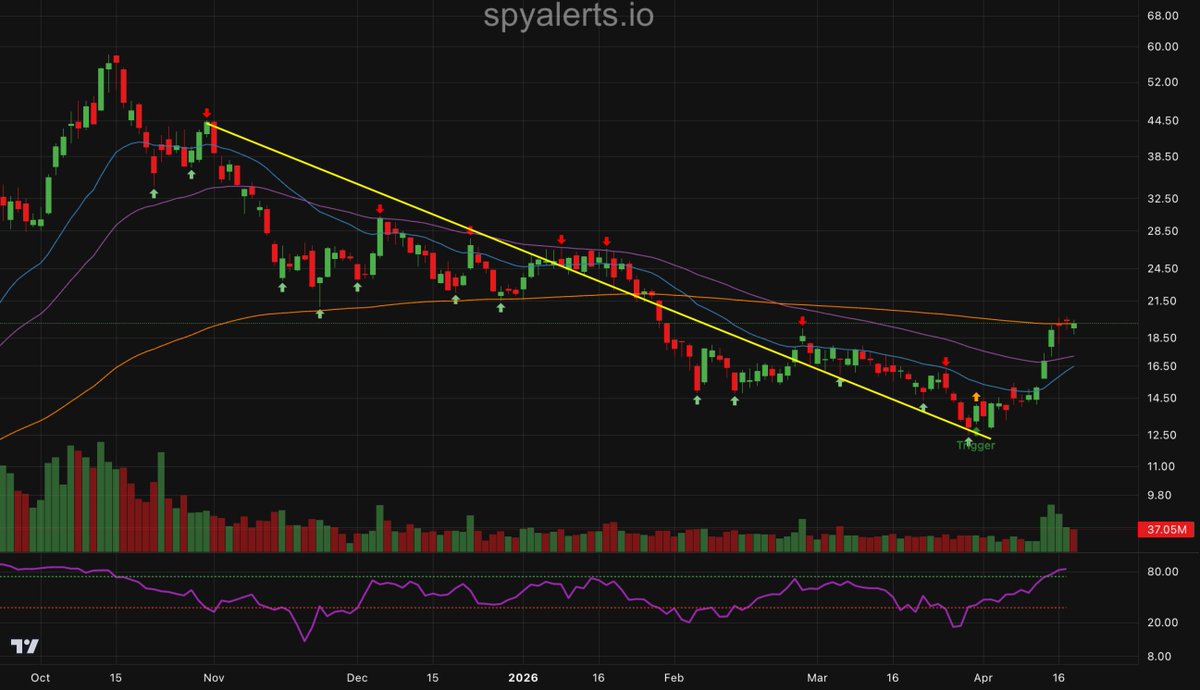
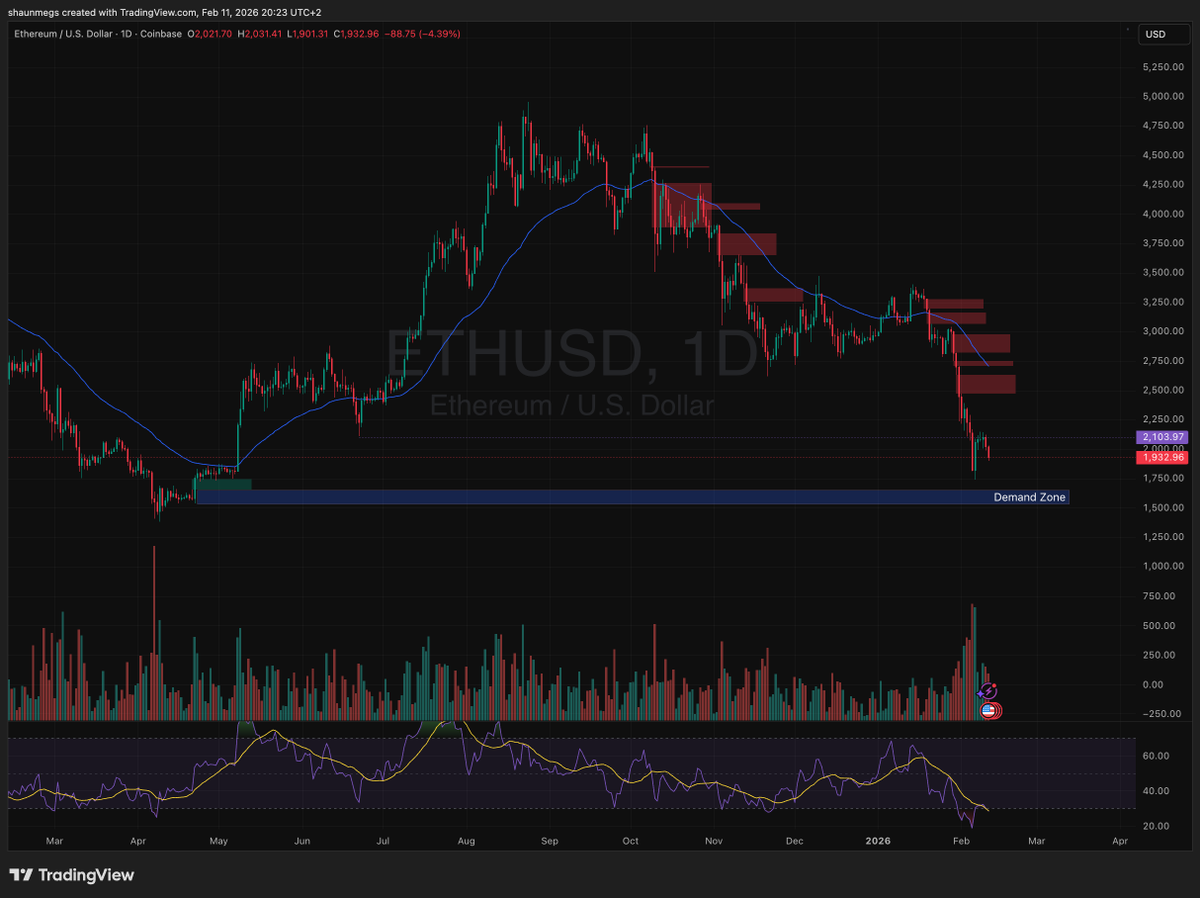
Behold, an $ETHUSDT demand zone. Set your limit orders. All those who have been around a few crypto bear cycles are licking their lips and slowly accumulating.