We're TraderStacks, the AI toolkit for your trading workflow. We post setup guides and tool comparisons for stocks, crypto, futures and options traders: what to connect, how to set it up safely, and which tools overlap. Tools, not trade advice. https://t.co/k2rbeh0kFP
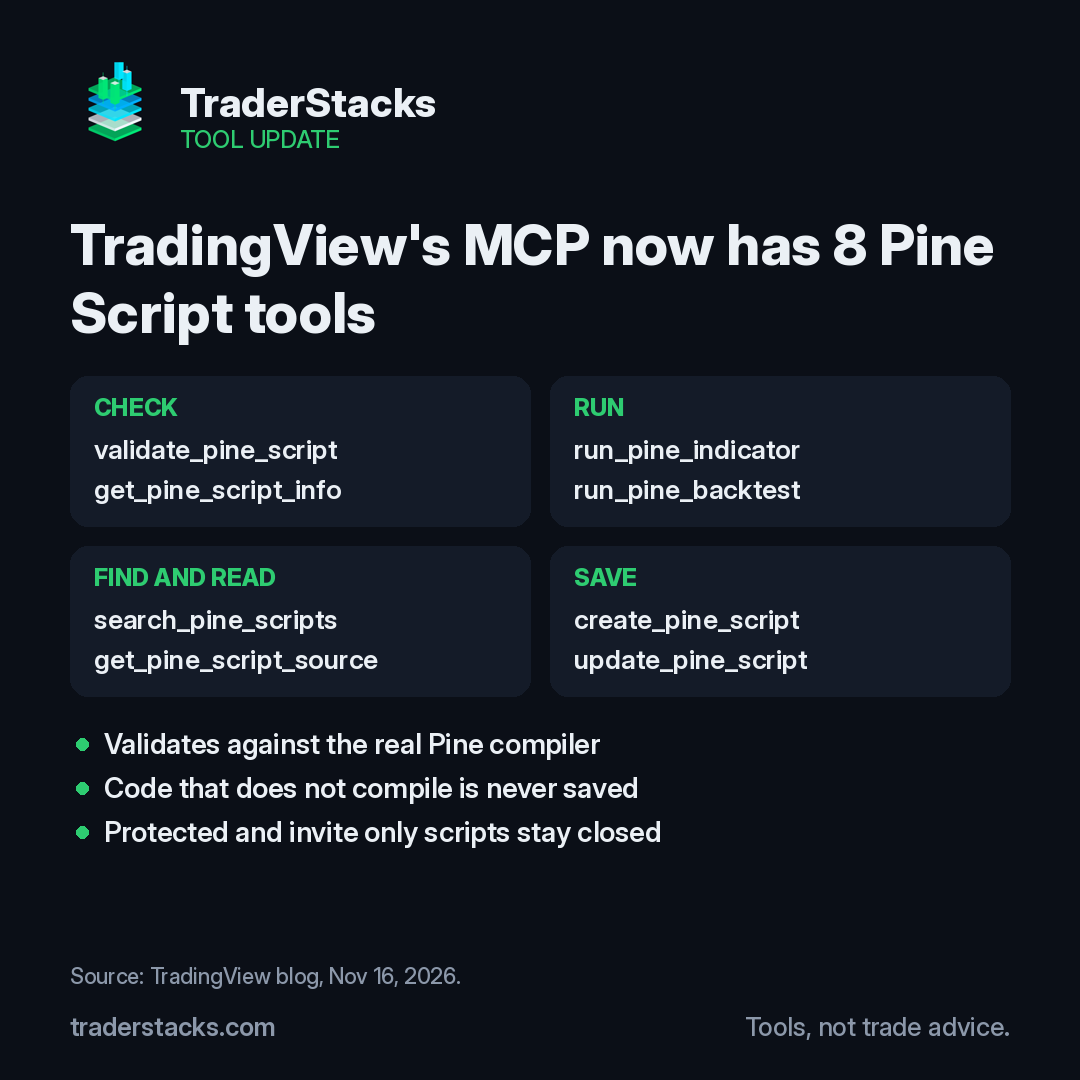
TradingView's official MCP now has 8 Pine Script tools. Your AI assistant can validate code against the real Pine compiler, run an indicator on any symbol, backtest a strategy and save the script to your account. Code that doesn't compile is never saved.
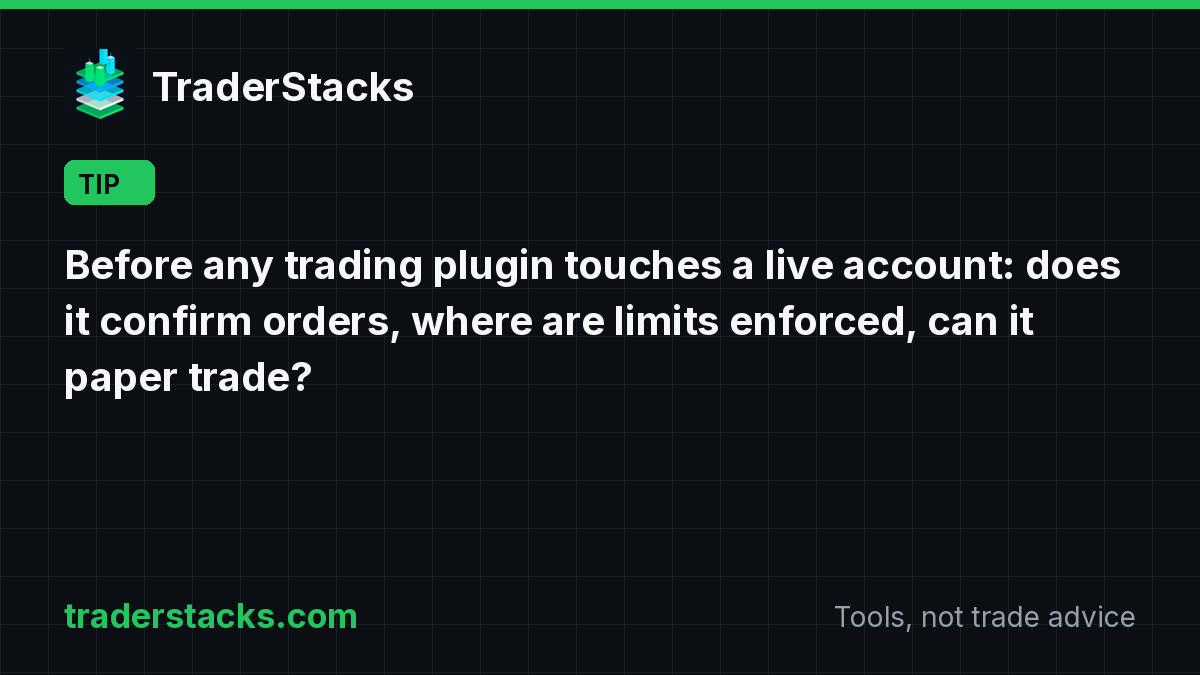
@MerrymenAI@claudeai Cool to see trading inside a Claude Code plugin. What I'd want to know before using it on a live account: does it confirm each order before sending, where are size limits enforced, and can it run in paper mode first?
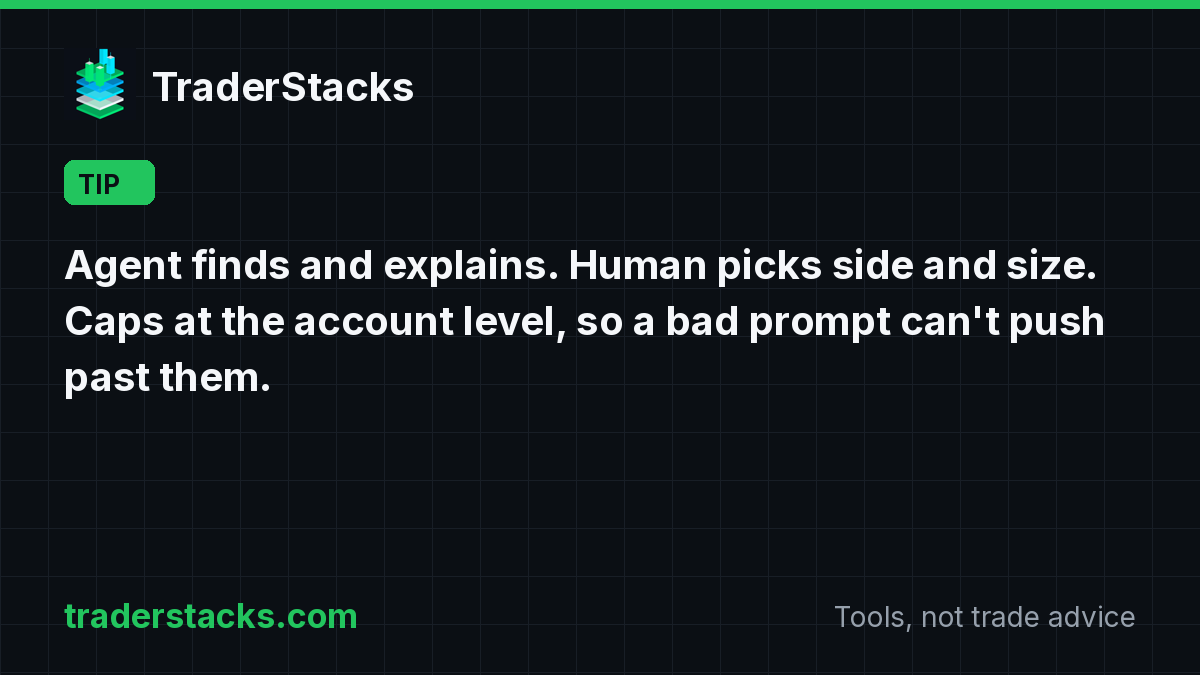
@fere_ai "You pick the side and the size" is the right split. The agent finds and explains, the human commits the capital. Even better if size caps live at the account level, so a bad prompt can't push past them.
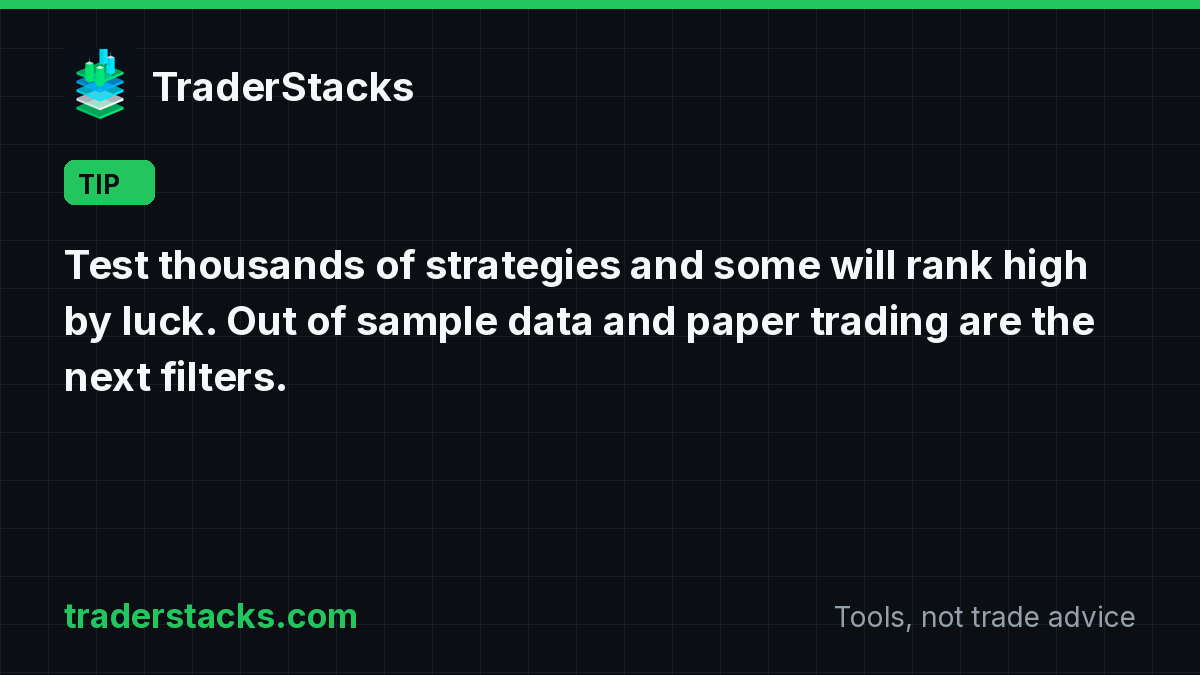
@cyrilXBT Great resource to learn from. One thing to keep in mind with 4,843 strategies: test enough of them and some will rank high by luck alone. The t stat column helps. Out of sample data and a paper trading run are the next filters before any real money.
@RohOnChain Turning candles into structured data is the right idea, models read numbers better than pictures. Before it trades on its own: paper trade it for a few weeks, set size and loss caps at the broker so the model can't change them, and log every decision so you can see why it acted.
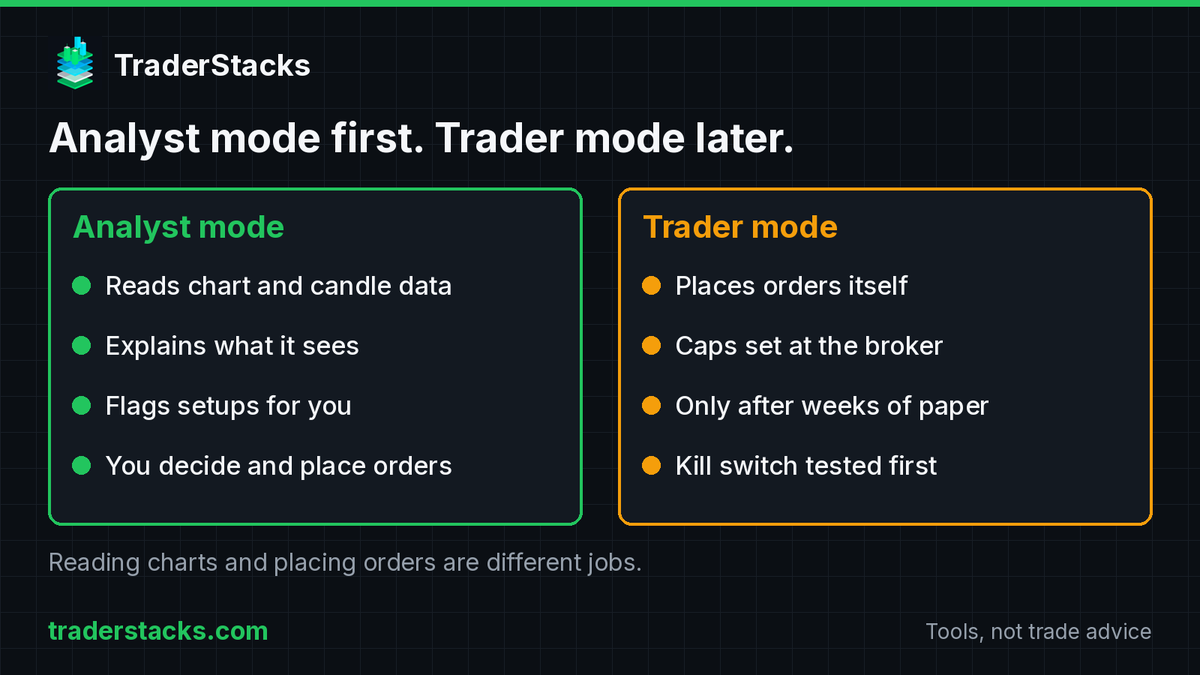
Lots of "my LLM reads every candle now" setups this week. Reading charts and placing orders are different jobs. Start your AI in analyst mode: it reads, explains and flags, you decide. Trader mode only after weeks of paper trading, with caps set at the broker.
Setup in 10 minutes is great. Spend 10 more before it touches real money: a trade only key with withdrawals off, size and loss caps set at the exchange, a paper run first, and know exactly how to stop it.
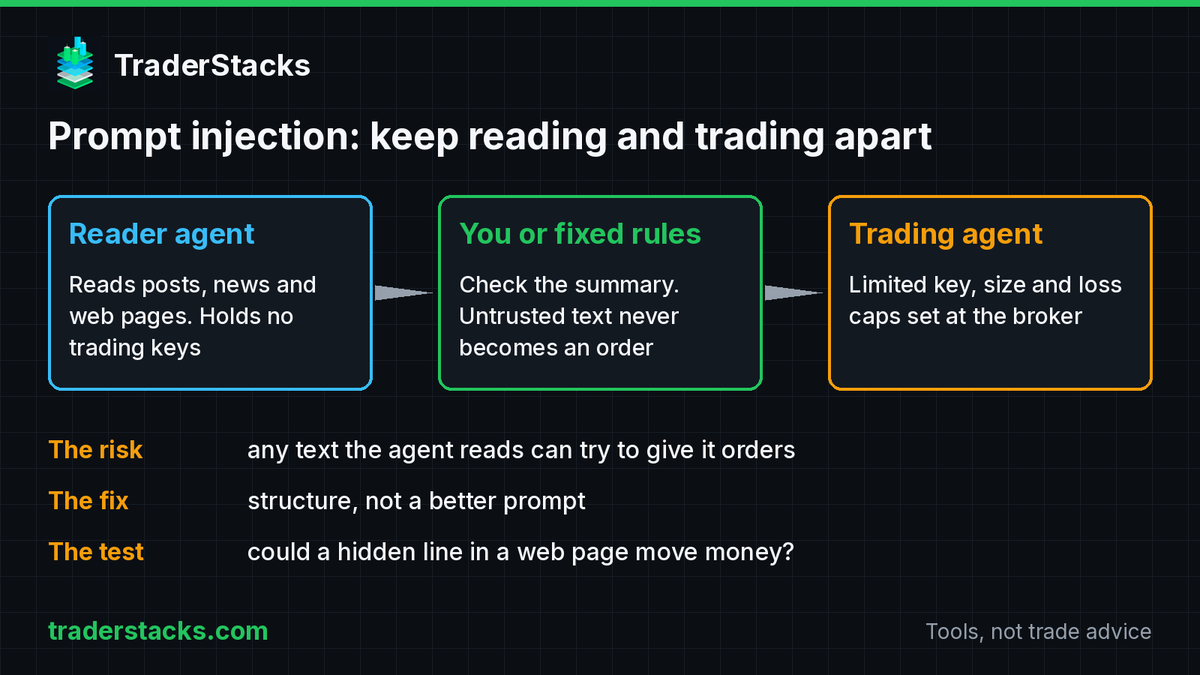
If your trading agent reads posts, news or web pages, any of that text can try to give it orders. That's prompt injection. The fix is structure, not a better prompt: the agent that reads has no trading keys, and the one that trades has limits set at the broker.
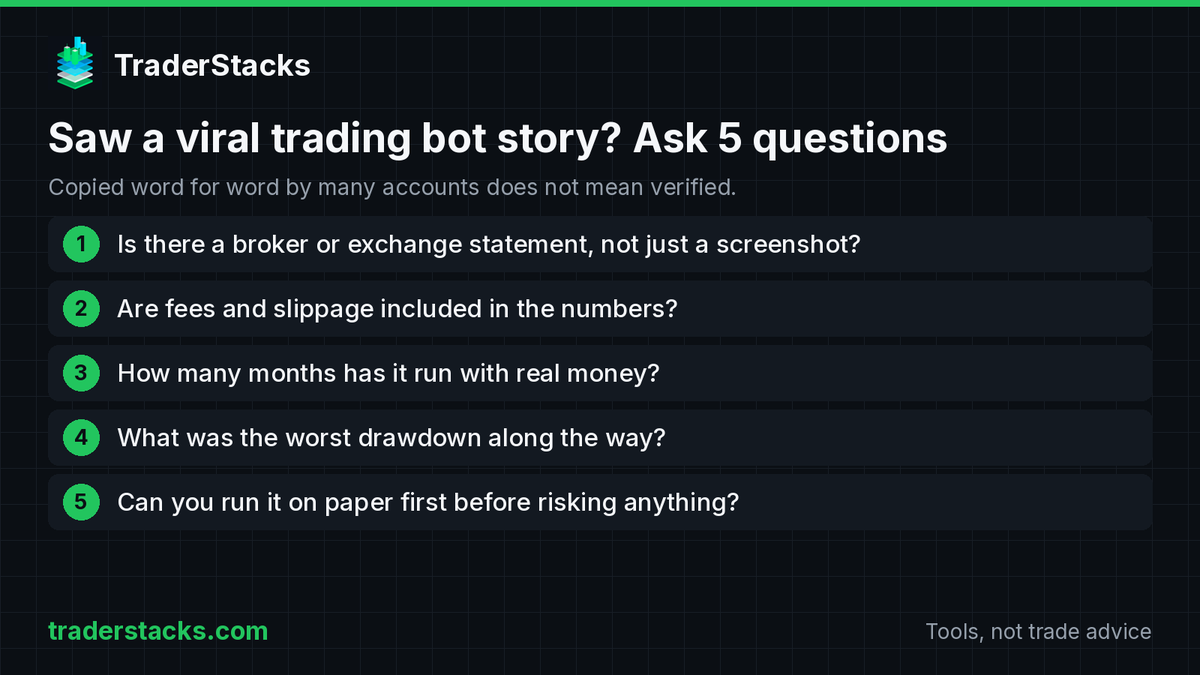
At least 7 accounts posted the same "19 year old built a trading bot with Claude Code in 2 days, $68 to $750,000" story in the last day, nearly word for word. We can't verify it. Before you copy any bot from a viral post, ask these 5 questions:
Hooking TradingView alerts up to a bot? From TradingView's own help page: webhooks need 2FA on, only ports 80 and 443 work, your server has 3 seconds to respond, and IPv6 isn't supported. Never put passwords or API keys in the alert message. 15 seconds:
Not sure what to hand an AI agent first? Start with the work that repeats: qualifying leads, drafting follow-ups, answering common support questions with a human escalation path, keeping your CRM and calendar current, and pulling reports.
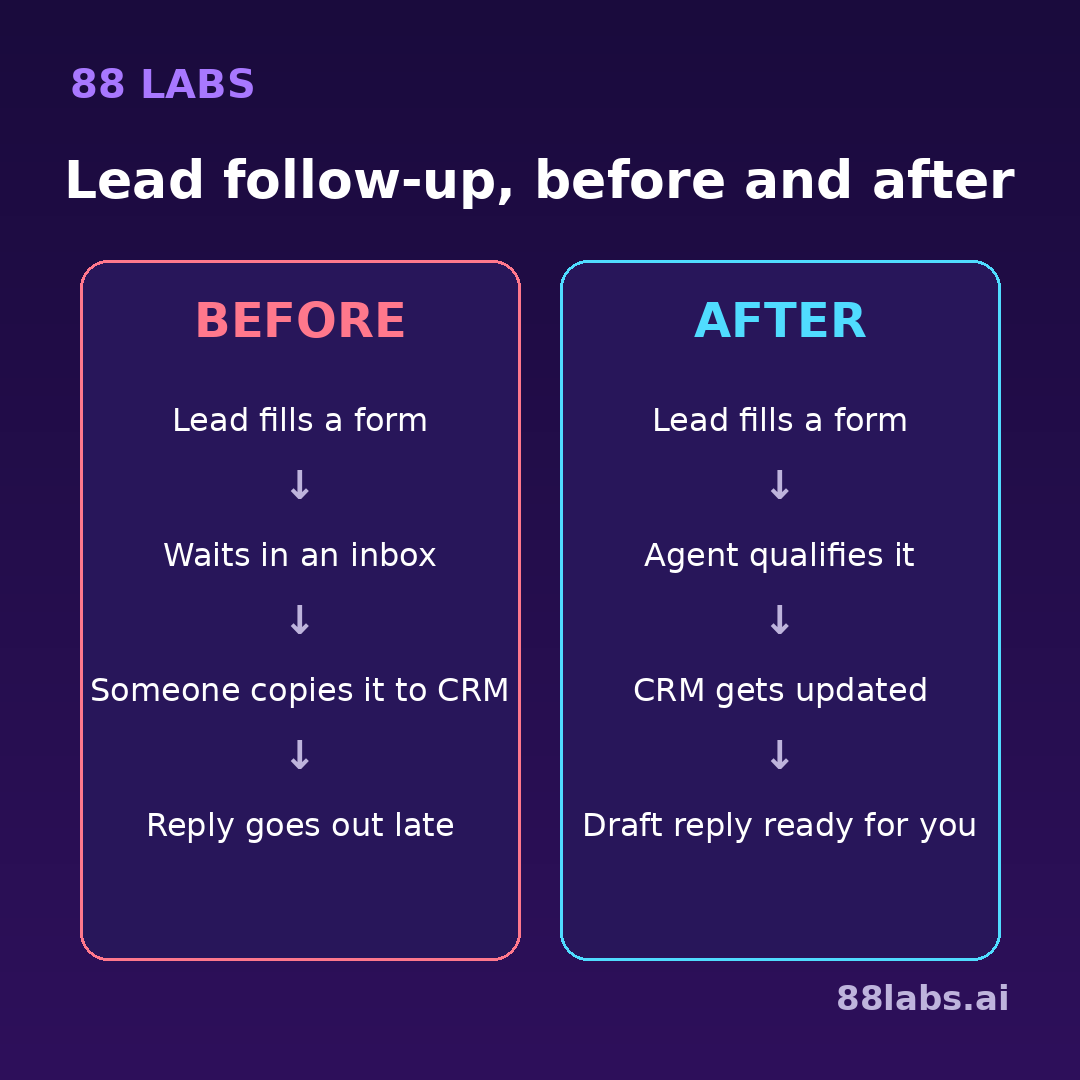
The cheapest automation win in most businesses is lead follow-up. Today a form fill waits in an inbox until someone copies it into the CRM. An agent can qualify it, log it and have a reply drafted for you to approve.
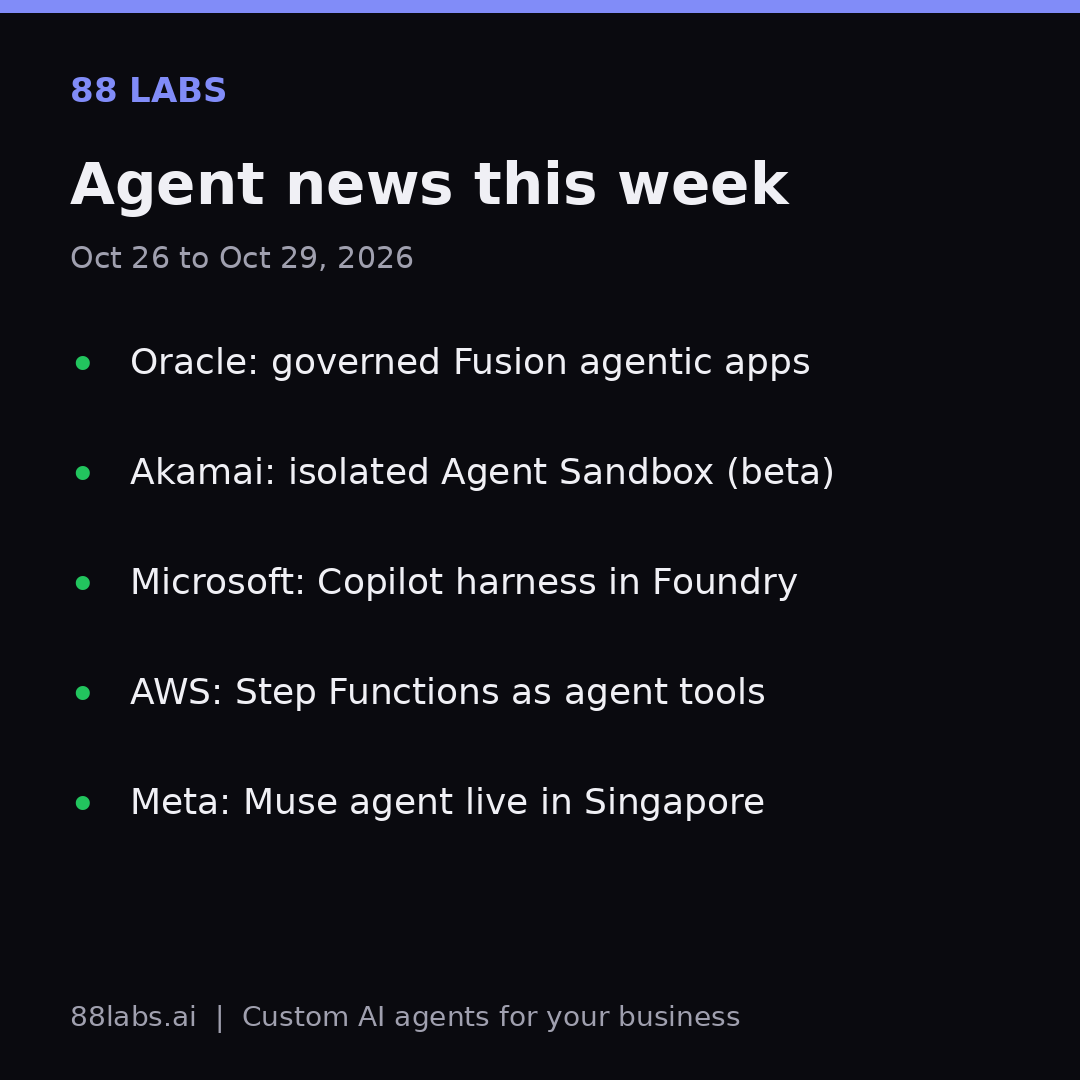
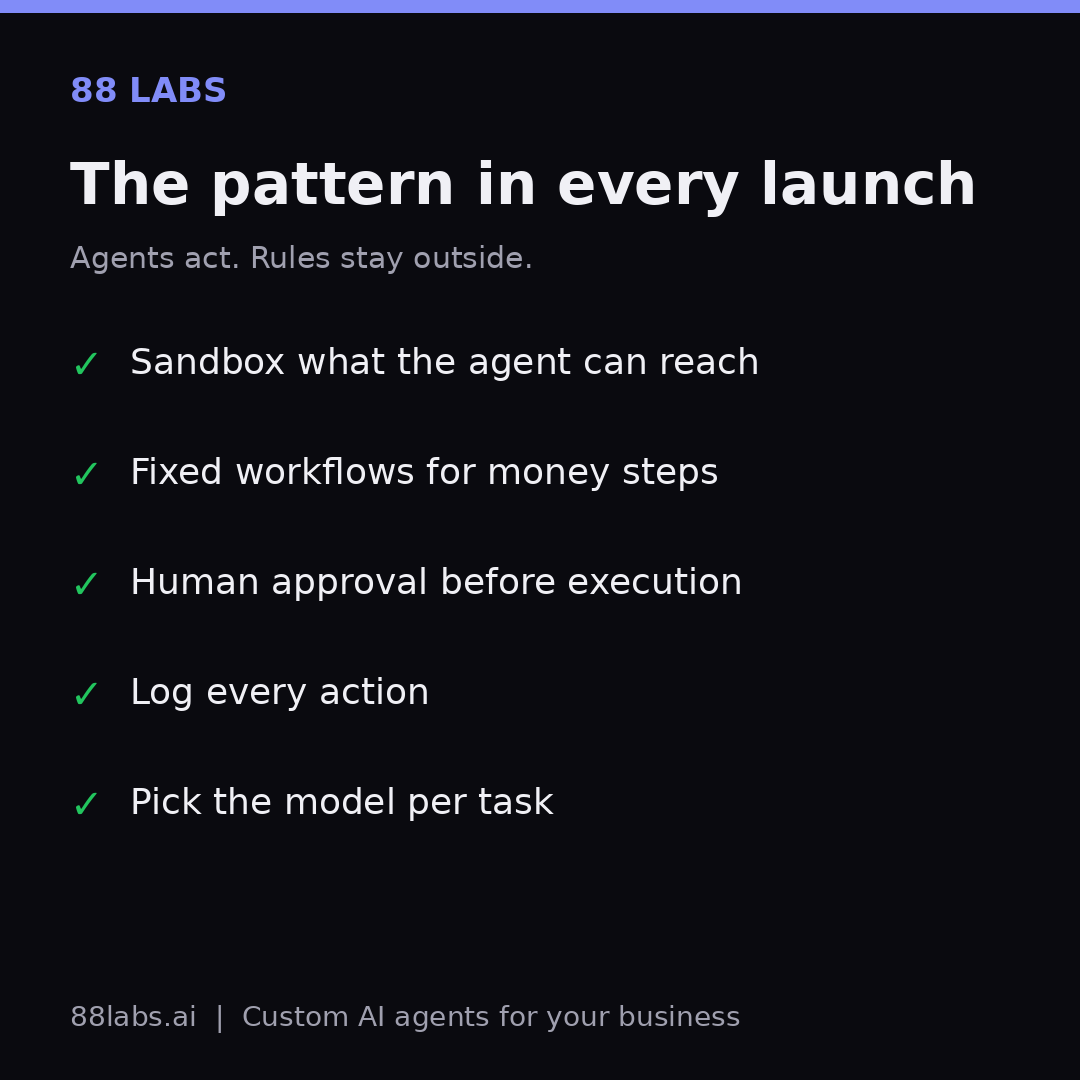
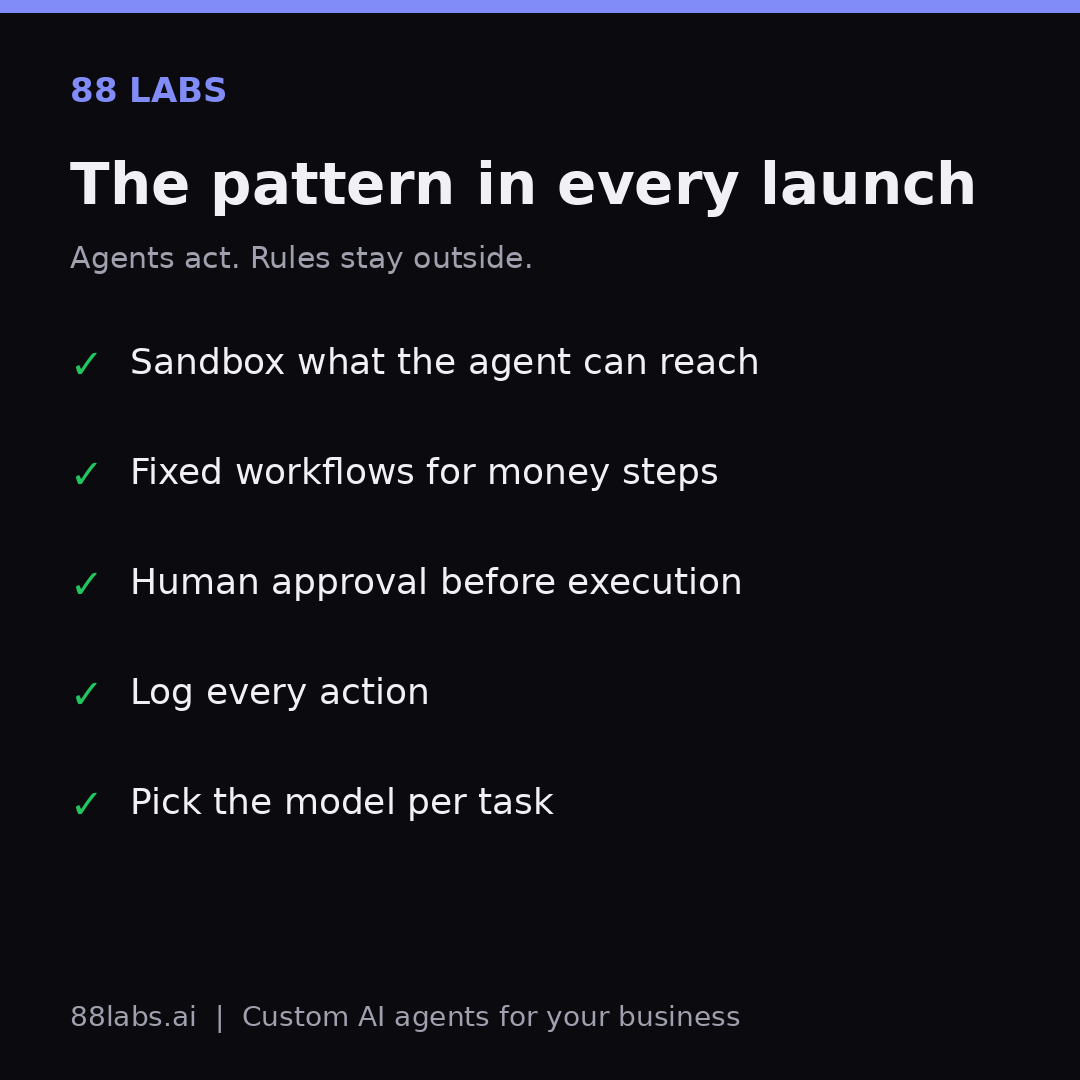
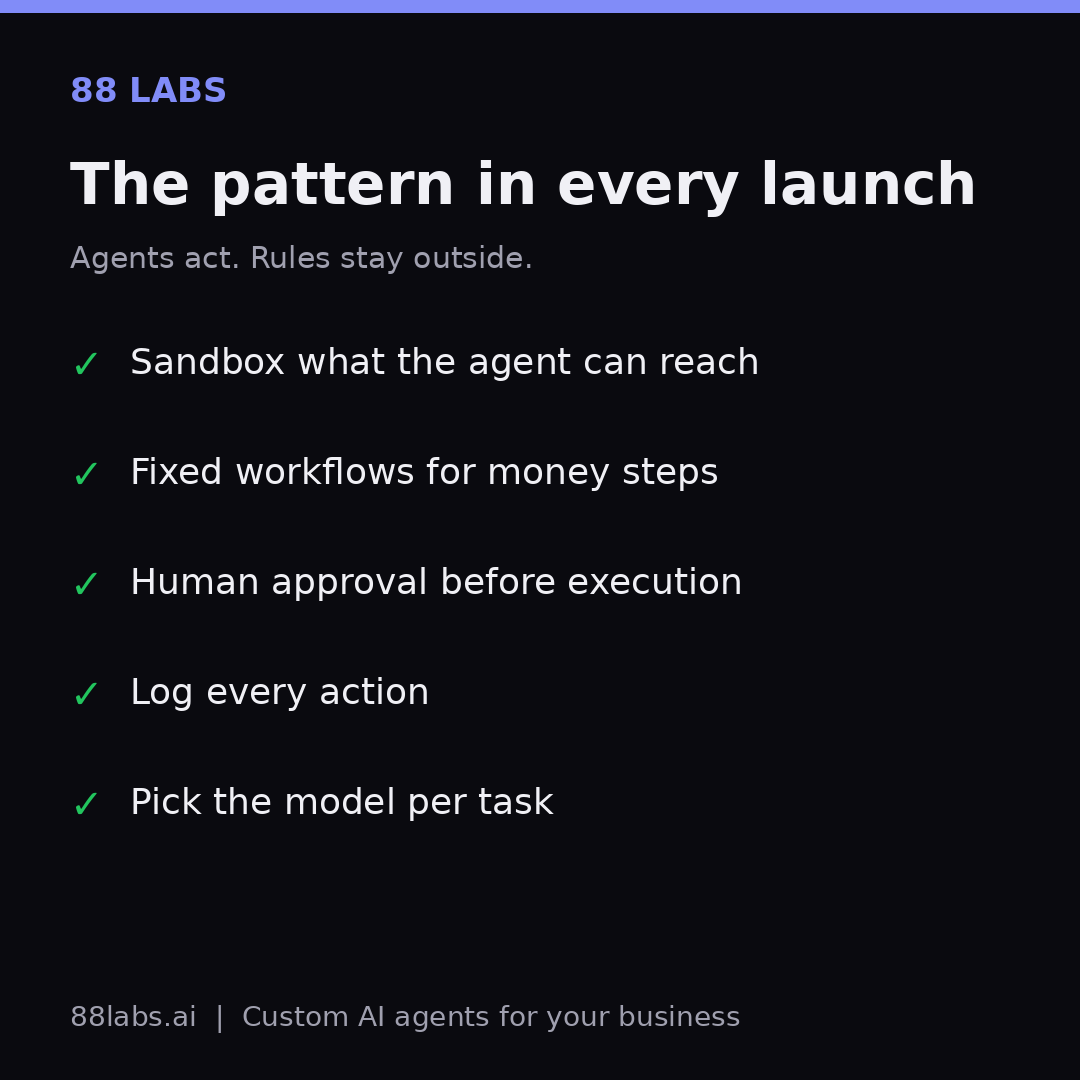
Big week for AI agents: Oracle, Akamai, Microsoft, AWS and Meta all shipped agent products between Oct 26 and 29. The common thread is not smarter models. It's control: sandboxes, approvals and fixed workflows around what agents can do.
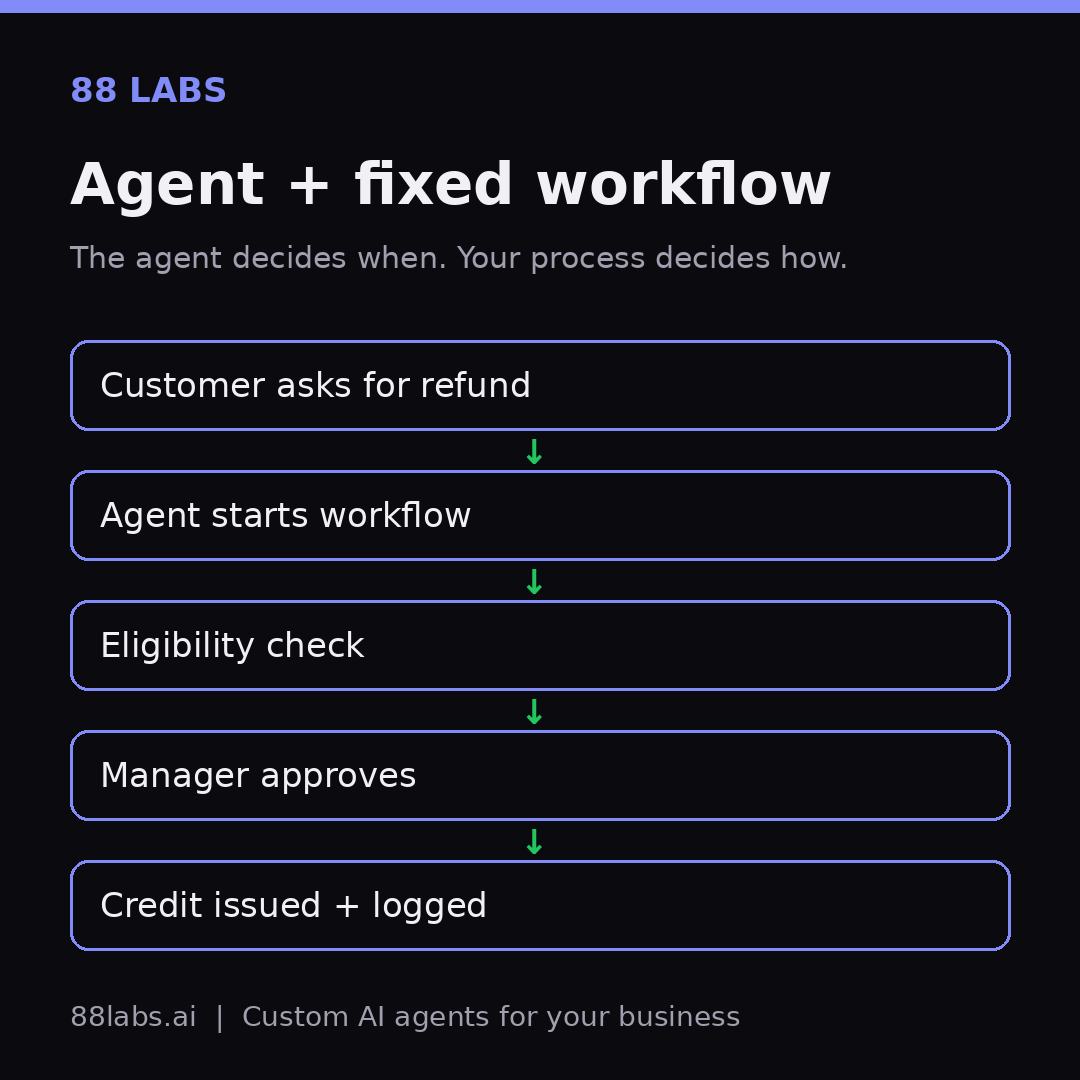
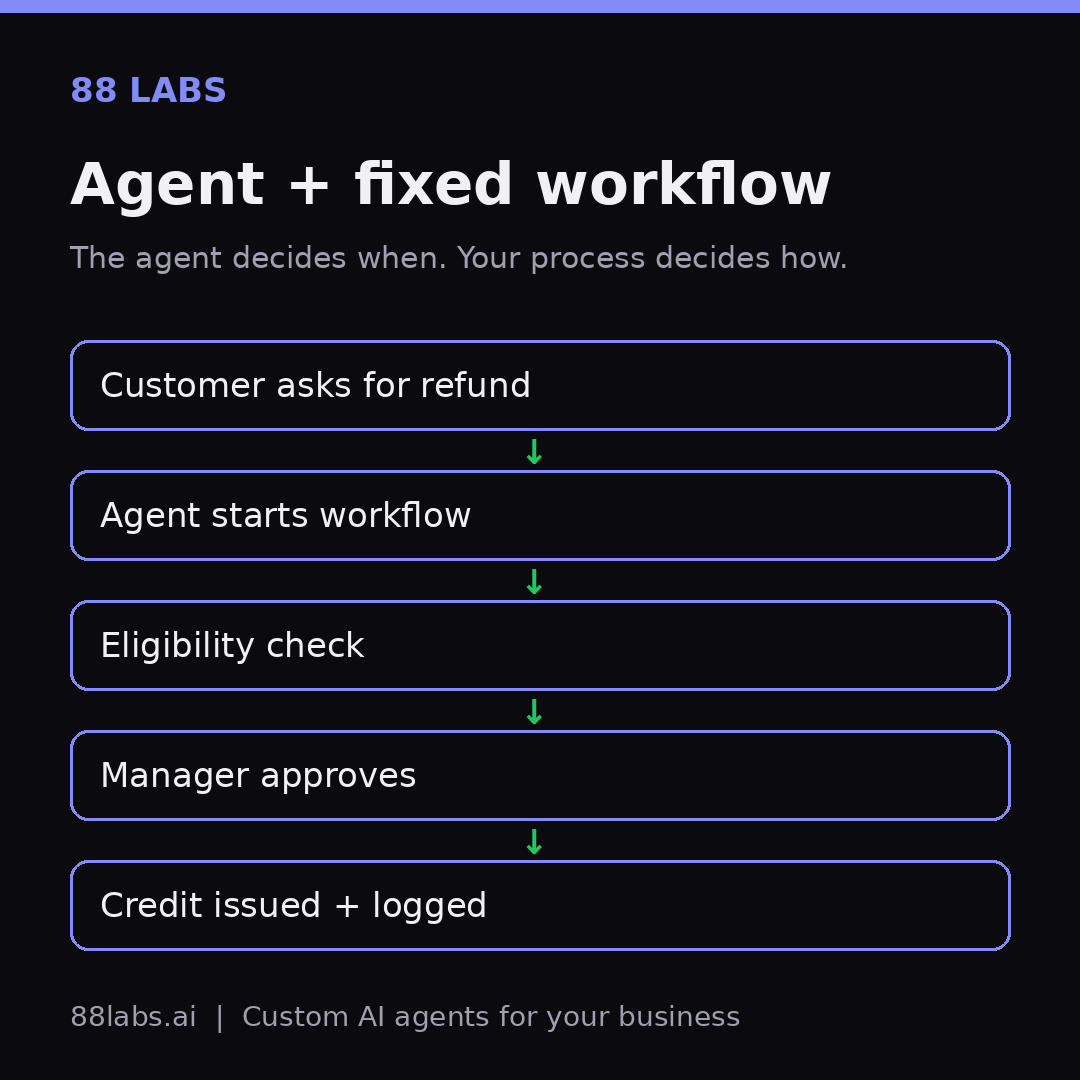
AWS now lets agents use Step Functions workflows as tools. The agent decides when to start a refund, and the workflow runs eligibility, manager approval and credit the same way every time. Takeaway: let agents trigger your process, not improvise it.
Akamai launched Agent Sandbox in beta: code an agent writes runs isolated, with limits on compute, memory and outbound connections. Small business version of the same idea: give each agent only the accounts and data its one job needs.
Microsoft opened its Copilot harness in Foundry with 20+ frontier models plus bring your own key. Lesson for any agent build: don't marry one model. Route simple tasks to cheaper models and save the expensive ones for hard reasoning.
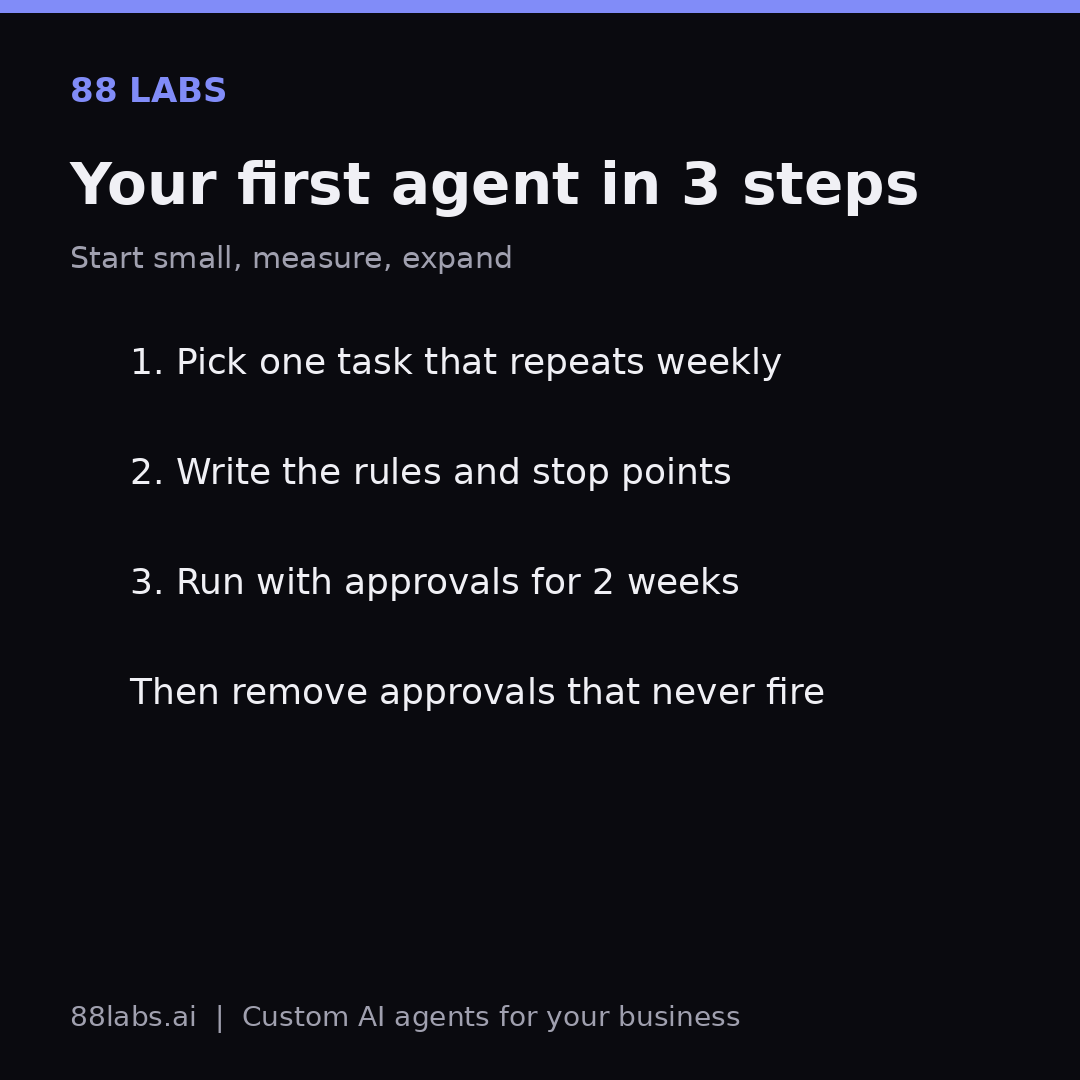
First agent tip: pick one task your team repeats every week, like inbox triage or quote requests. Write down the rules and where it must stop and ask. Run it with approvals on for two weeks, then remove the approvals that never get used.
Use case: the morning brief. An agent pulls yesterday's orders, open support tickets, overdue invoices and today's calendar into one message before you start work. No new software for your team to learn, just a better first 10 minutes.
Before you let an agent touch money, add three rules: a spend cap it can't change, a human approval step for refunds and payments, and a daily log you actually read. Big vendors are building these controls in. Your setup needs them too.