Last September I completed the Manhattan Island Marathon Swim in 7hrs and 35minutes. This documentary captures the swim, the preparation, the crew, and the incredible open water community surrounding NYC. @Urban_Swim@splashfit
https://t.co/vXtm3ioH9A
Elite swimmers don’t just train physically.
They mentally rehearse and visualize their races, their pacing, and their response to adversity before they ever step on the block.
Most think swimming is just physical. It’s not.
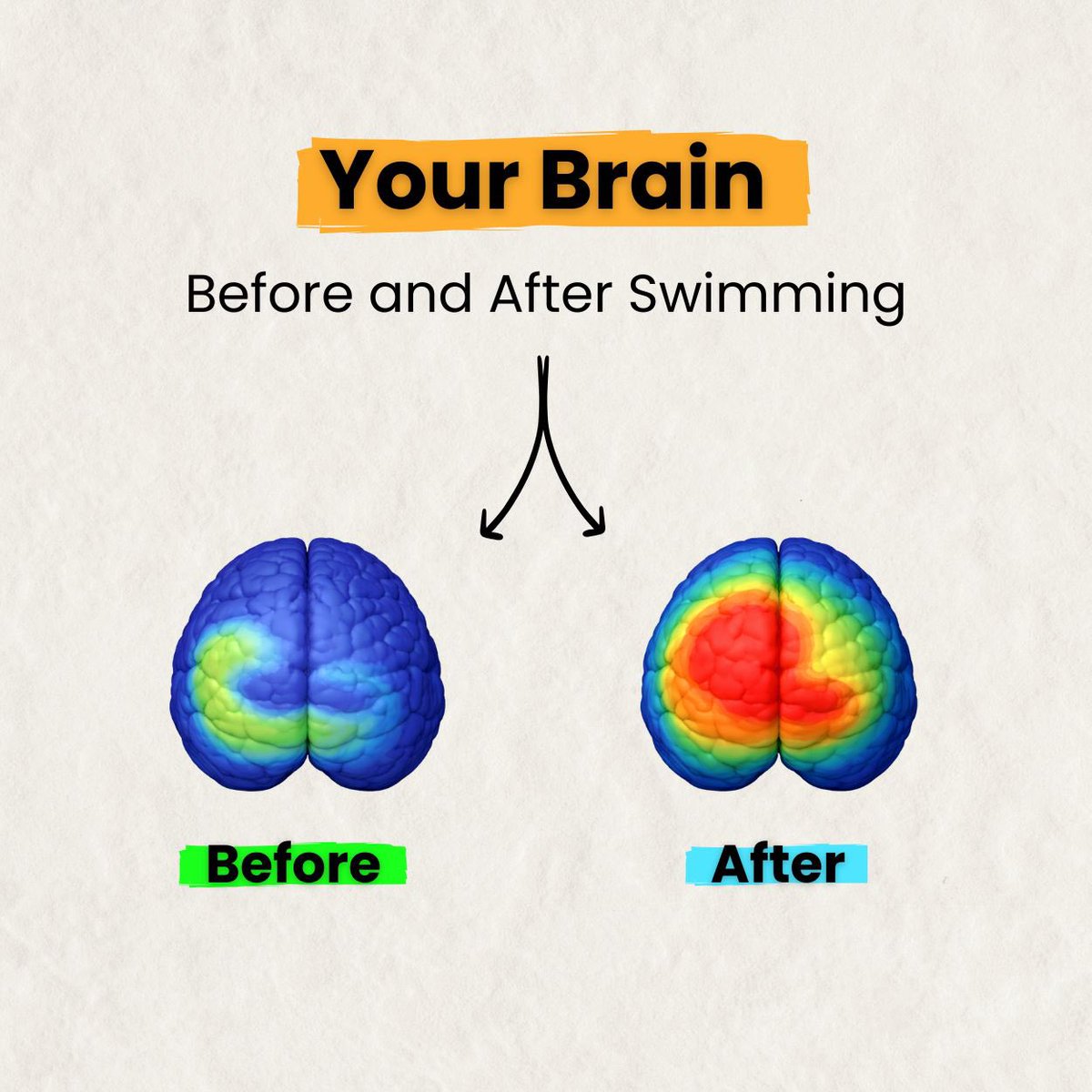
Your brain changes first.
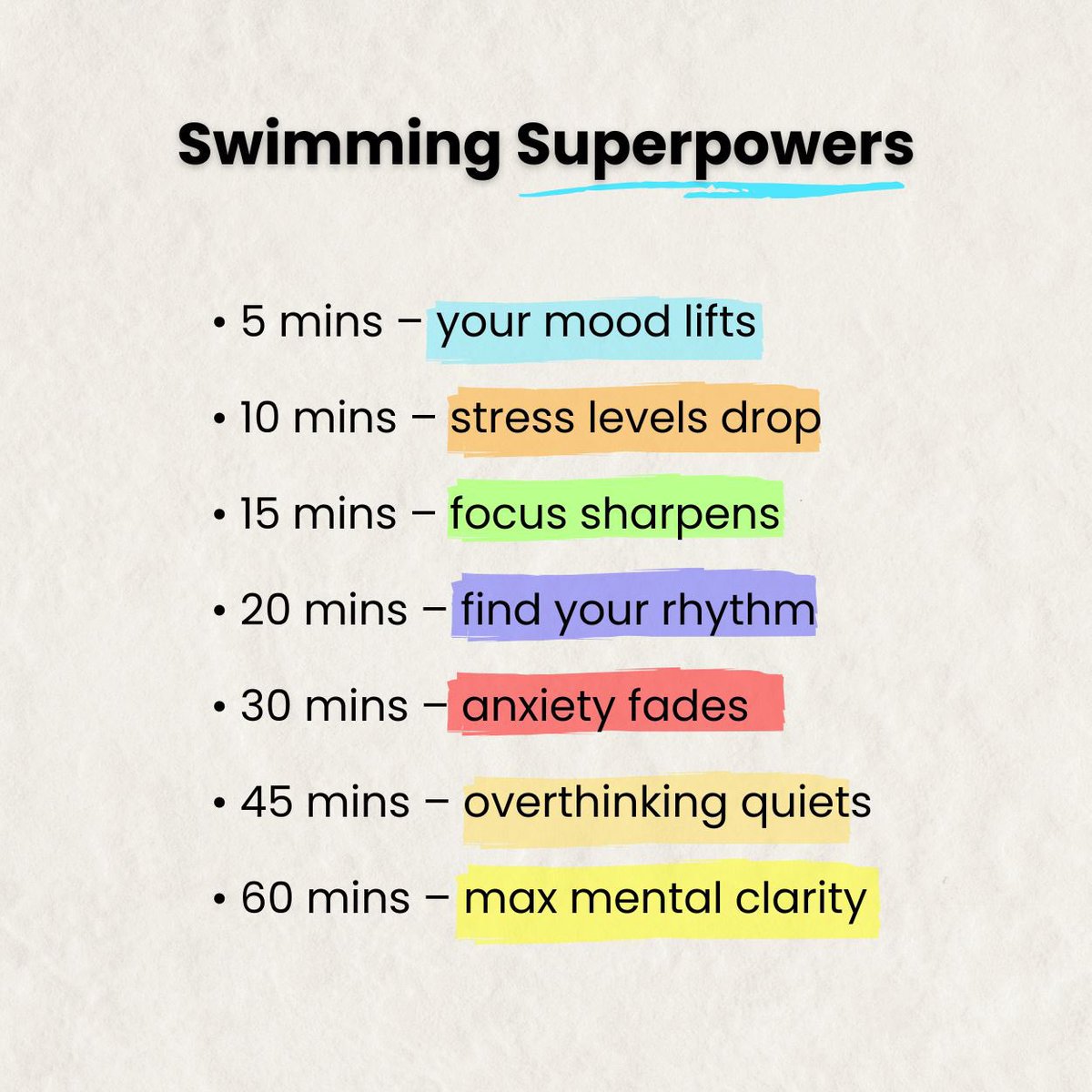
Within minutes, stress drops, focus sharpens, and the noise quiets.
That’s why it feels different.
It’s not just a workout. It’s a reset.
if you want speed, train it directly:
Heavy, low-rep strength work or explosive lifts (jumps, swings, med ball throws).
Same in the water—sprint, use resistance (chute/paddles/fins).
Power and speed decline with age… if you stop training it.
Many swimmers plateau not from lack of yardage but lack of strength.
A small amount of targeted dryland (2–3 sessions per week) can unlock speed, durability, and better technique in the water.
Most swimmers think more swimming or stretching fixes everything.
If your shoulders hurt, the missing piece is usually dryland.
Scapular function, thoracic mobility, and serratus activation keep the shoulder centered so the catch stops grinding the joint.
How often should swimmers lift and swim each week? It depends on recovery, schedule, and training tolerance. Elite swimmers may do 8–10 sessions/week of swimming and lifting, with double sessions. Youth and adult athletes usually do better with fewer, more focused sessions.
I failed swimming lessons so I joined the swim team and never looked back. I was a seasonal multisport athlete through my sophomore year before specializing in swimming.
Not gonna lie… I was a little embarrassed to share this 😅
But I went 23-high in the 50y free right after a hard resistance session.
20 years after college, still training, still sprinting, still pushing 🚀
That’s what I’m proud of.
What’s your 50 free PB? 👇🏼
Most panic in open water swimming isn’t fitness—it’s pacing. Triathletes and open water swimmers go out too fast, under-breathe, skip a real warm-up, then add a tight wetsuit + cold water. Train goal pace & tempo in the pool. Race by feel. You’re faster early than you think.