Everything about using docker with python (Flask or Django) and ML in Production (TensorFlow Serving).
I invested my time in this course and have completed proof of concepts.
Python in containers helped me for
‣ Dockerizing applications
‣ Deploy ML models
‣ Multiple services
From knowledge distillation → knowledge bases
From tensors → tokens
From SageMaker → Bedrock
From epochs → API requests
From dimensionality errors → max-token exceeded
We’ve truly come a long way.
Amazing to see how the data science world has evolved
From fine-tuning neural networks → tuning prompts
From writing nested loops for similarity → using vector DBs
From supervised learning → giving examples in prompts
From accuracy metrics → LLM-as-a-judge
Day 1 of the Data Hack Summit 2025 was amazing, learned a lot about AI agents, in-house LLMs, and MCPs. Got to see some brilliant minds and innovative products. It was a real pleasure meeting @joshuastarmer, whose tutorials I’ve been following for years - Triple Bam!
Thought of posting today after facing issues adding 300k+ embeddings (356-dim) to a vector DB:
• Overflow & NaNs during normalization
• Clipped embeddings values to [-10,10] to fix
• Manual normalization after clipping
• Used Qdrant with DOT distance for similarity search
It's time to combine GraphDBs with vector databases to achieve better results in edge cases where traditional vector searches struggle to find relevant chunks.
Feels like the XGBoost approach for RAG
https://t.co/pBqO9yGNJw
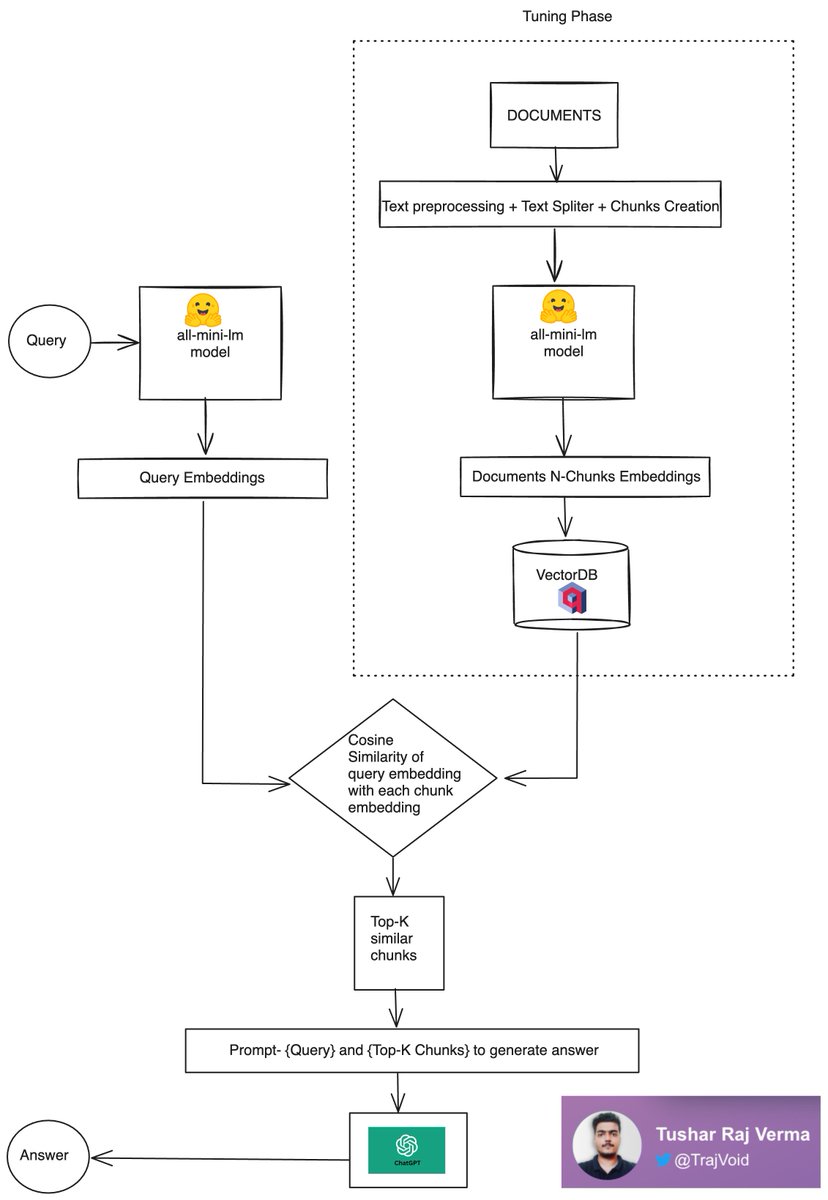
Check out my design addressing the max token length prompt issue.
No more sharing the entire document repository at once in sequence with any API service.
💡 Open to suggestions and recommendations! 🔍
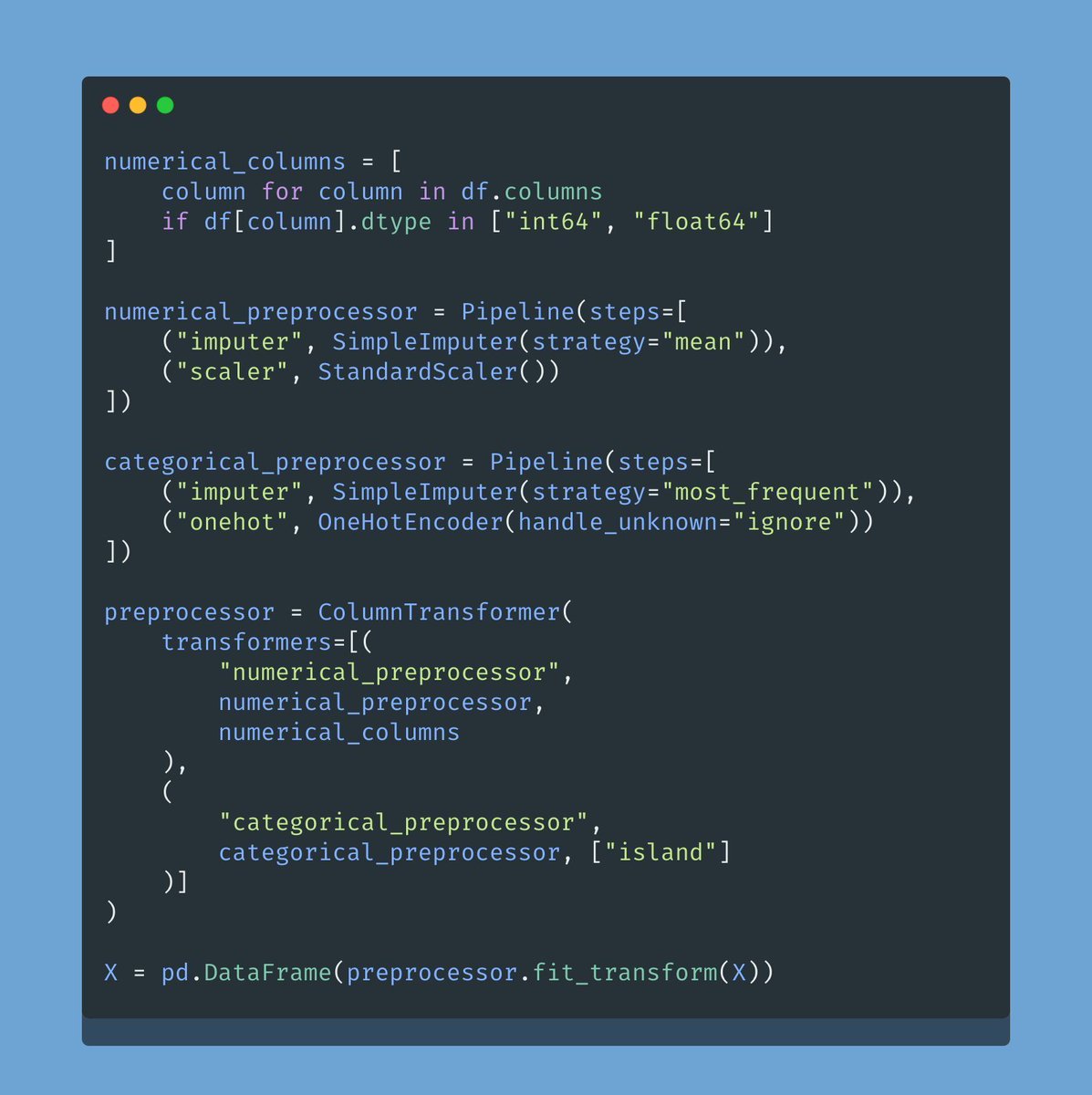
Tried this method recently in a project, it's solid. Code's way easier to read now.
Pipeline's saved pickle file is production-ready without extra test time code for preprocessing or transformations.
Even added it to my custom pipeline wrapper.
https://t.co/EqSXIdVhR9
One of the biggest mistakes data scientists make:
They don't use pipelines.
Pipelines will instantly improve your data transformation and training processes.
Three advantages:
• Cleaner code
• More robust
• Easier to deploy in production
Example attached.
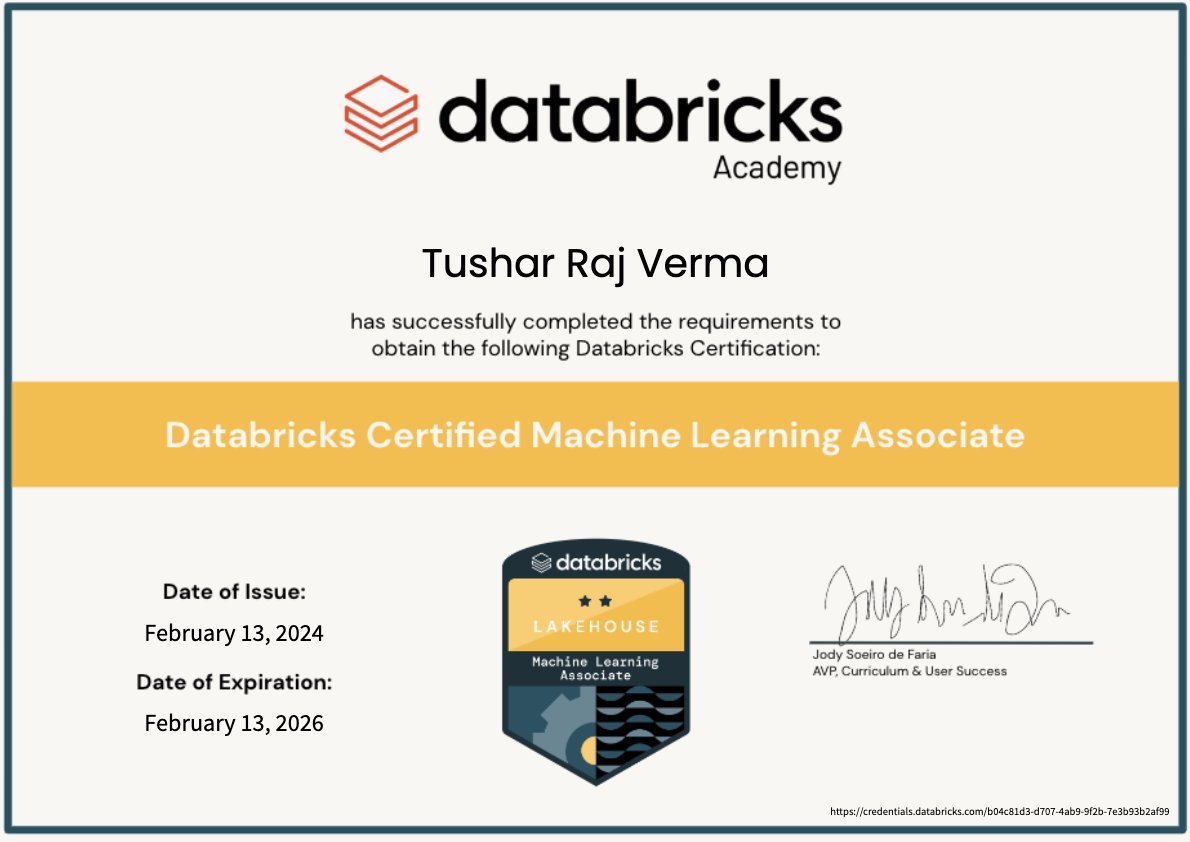
After thorough preparation, I successfully passed the Databricks Machine Learning Associate exam.
Throughout the past year, I had been creating content and implementing most of the modules, which greatly contributed to my success.
https://t.co/jNbWRRy1Pw
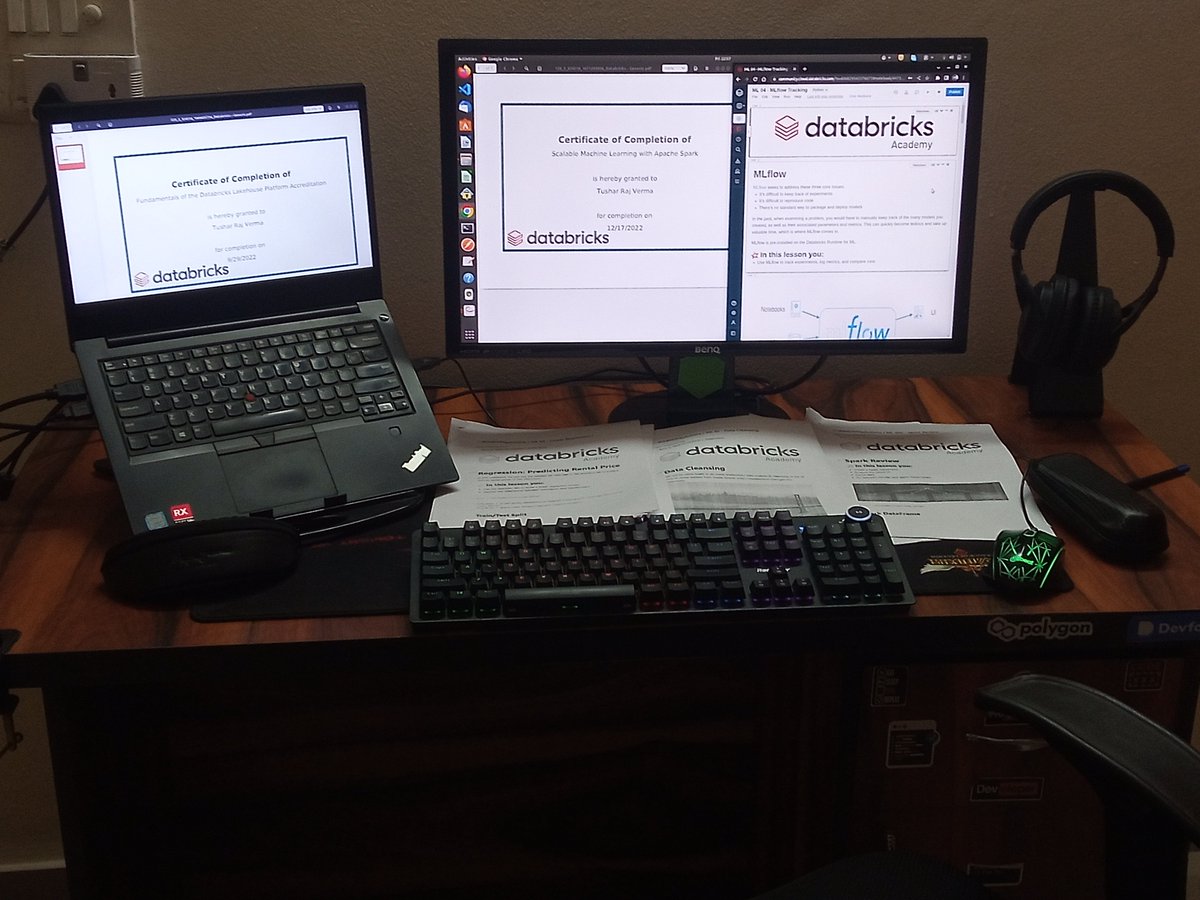
For about two months, I dedicated most of my time to various @databricks courses related to Machine Learning.
Getting practical knowledge about this platform and upgrading my skills.
I have explored advanced skills that will help me create insightful content.
1/5
Resources and a course roadmap with the implementation platform of my previous thread related to @databricks courses.
‣ You will find here GitHub repositories specific to Machine Learning.
‣ Platform to implement those repositories and setup.
1/8
https://t.co/rfbt1gyAae
@_avichawla Great post!!
I usually skip scaling when working with XGBoost or RF as they handle features differently with their split node. In production, avoiding the extra code for scaling makes things simpler. But for ANN, scaling is crucial to prevent loss from going nan(large input)
Zero-shot learning is pretty cool and makes a big impact when used for things like images and text.
I've been working on it, and I'm still at it!
https://t.co/3licGDID8e
‣ Sentence Similarity is used in various business problems for automating the matching text.
‣ For me, sentence similarity is an inference version of OneShot Learning mainly used in image domains.
‣ Here is what I mapped a flow to compute similarity between two sentences.
Excited to share my blog post on AWS training job with XGBoost! 🚀 Dive into the world of cloud computing and machine learning.
Check it out here:
https://t.co/i6zcIBedda
@__mharrison__@JonKrohnLearns Awesome! I've been working on XGBoost for a while. I'm wondering about my recent implementation if it's a good algorithm for training on text embeddings(bert, adaa) and numerical features to boost performance in a specific area.
Check out my design addressing the max token length prompt issue.
No more sharing the entire document repository at once in sequence with any API service.
💡 Open to suggestions and recommendations! 🔍
🌐🔊 Exciting Tech Journey: From English Audio to Multilingual Voices! 🔊🌐
1/ 🎙️ Started with English audio, but the world is diverse! 🌍 I transformed English audio to text using the power of code. 🧑💻 Let's explore how I bridged the language gap!
https://t.co/CZKZ01p0z4
4/ ⏸️ Introducing the Art of Pauses: It's not just about words, but the rhythm of speech! 🎵 I implemented pause logic to make the conversation more natural, adding a human touch that goes beyond translation. Added Pauses with silence and timestamp logic
https://t.co/dSu8Kiyx2X