@benjiminu Both good checks. Splitting by subgroup is where a panel's blind spots show first, and a panel that never says a firm no is telling you more about the model than about your audience. Fast first filter, then real people.
Lebanon turns 83 today. By every metric, Lebanon has failed to provide its citizens with safety, prosperity, and dignity. It’s principally an exporter of heartbroken and disillusioned people who will never find life in their homeland.
BREAKING: A mathematician at Anthropic claims to have used the company's AI to solve the Riemann hypothesis, the most notorious open problem in all of math
https://t.co/nEXAyIkvSt
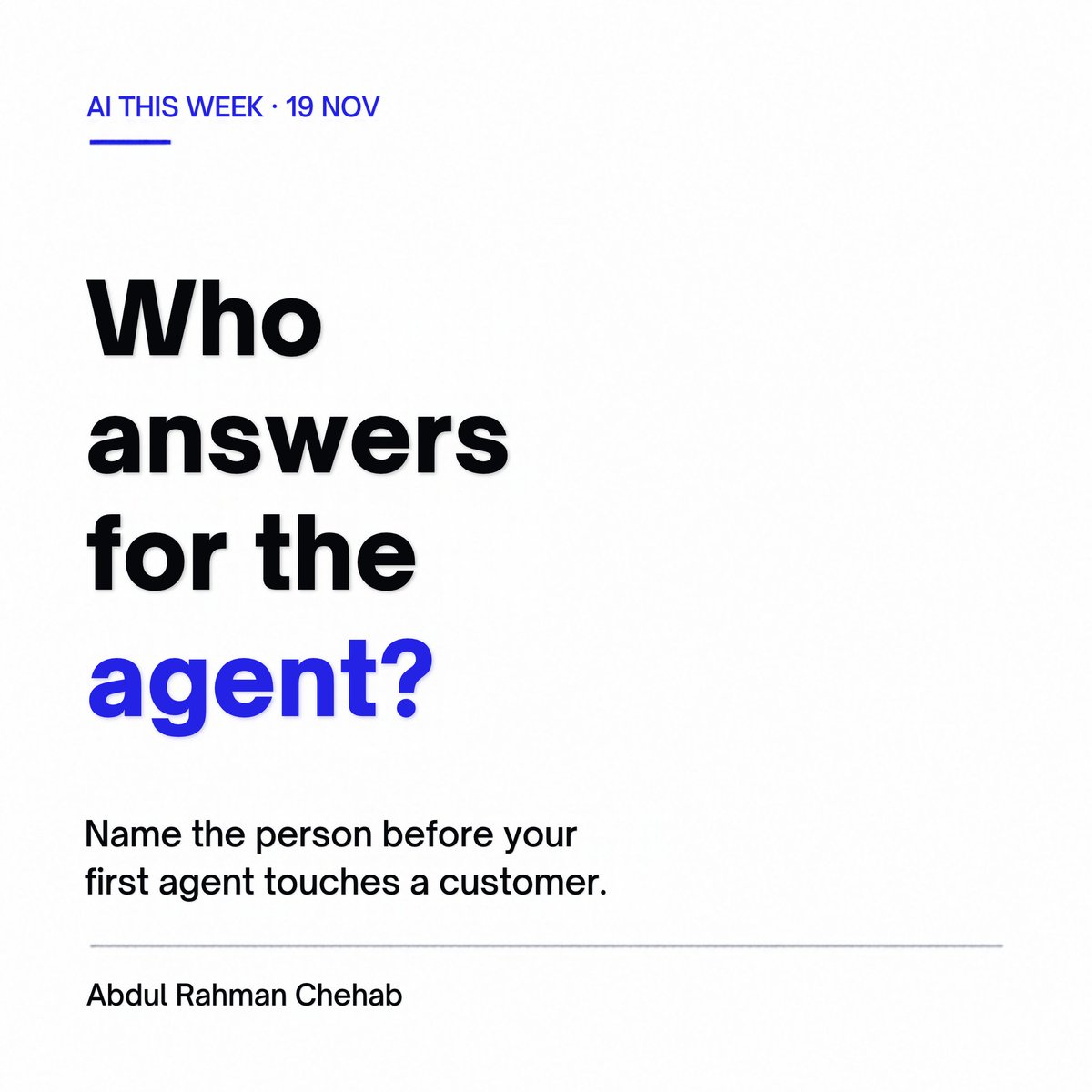
California is suing OpenAI over agents it allegedly lost control of, Arizona has opened a criminal probe and UK regulators say agent makers must meet existing law. Before your first #AI agent touches customers, name who answers for it. That is a #Reputation decision.
1/ The size of a change has little to do with how it looks on screen. In #ProductDesign, renaming a button is quick. Changing what it does touches logic, layout and every state around it.
2/ Company language works the same way. A product name in your boilerplate also lives on the website, in the press kit, on the support pages and in the sales deck. That one-word edit is a coordinated release.
Dario Amodei telling lawmakers that open-source AI is dangerous because you cannot "monitor its usage" or “revoke a user’s access” is the funniest accidental confession in tech history.
He literally described why Linux, local encryption, and open weights exist in the first place: so no self-appointed hall monitor can remotely lobotomize your tools or turn off your compute because you hurt their compliance department’s feelings.
Calling regulatory capture "AI safety" does not fool anyone who actually builds infrastructure.
3/ Rule: use synthetic panels to find confusion and sharpen your #MarketResearch questions. Before any result changes what you publish, check it with real people from the audience the message is for.
2/ Research on synthetic respondents keeps finding the same pattern: they match the broad average and miss the variation. Subgroups flatten and strong objections soften.