(1/5) ⭐️⭐️ Beyond thrilled to announce that I’ll be starting my own lab as a Tenure-Track Assistant Professor at the University of Tennessee Health Science Center (@uthsc) in Jan 2027! #NewPI
My lab will study the neurobiology of learning, memory, and motivation! 🧠🐭⚡️🔬
Many decades ago Olds and Milner found lateral septum stimulation to be extremely reinforcing. In our latest preprint we explore why. Check it out and let us know what you think! https://t.co/TMu2S2tXTe
@jennisisaac@sonia_karkare@HymavathyB
Identifying fundamental mechanisms of cognition that may be harnessed to prevent or reverse pathological cognitive aging, the biggest risk factor for Alzheimer's disease, motivated our foray into aging when I started the lab. Great to see this thoughtful write up of our discovery of a secreted phospholipase encoding a cognitive resilience sentinel in aging in alzforum. It does a great job placing our discovery within the larger context of lipid neuro/glial biology in aging and AD which remains one active focus of the Sahay lab.
https://t.co/IPKQHalQLS
🎉🎉🎉 Very exciting findings now online @NatureNeuro! Congrats to Cinzia and the amazing team of scientists that brought together this awesome work! Time to boost Pla2g2f!
Excited to share our discovery of a cognitive resilience sentinel in aging (Nature Neuroscience, Open Access https://t.co/H1GbqXl80Y) led by a terrific postdoc Cinzia Vicidomini PhD, other members of the Sahay lab and terrific collaborators.
Background
Healthy cognitive aging depends on a balance of resilience and vulnerability factors that dictate the tempo of synapse loss, lipid dysregulation, excitation-inhibition imbalance, ferroptosis, and neuroinflammation. Disruption of this balance accelerates cognitive decline and increases risk for MCI and Alzheimer’s disease (AD). Cognitive reserve theory posits the existence of compensatory factors in the aging brain that offset pathophysiological alterations; however, the identities of such factors have remained elusive.
The discovery
We discovered a secreted phospholipase, Pla2g2f, in a screen for synapse loss-induced genes in the Dentate Gyrus region of the hippocampus. We found that Pla2g2f expression is increased during perforant path synapse loss in aging and in aged cognitively resilient individuals with AD pathology. To study the functions of Pla2g2f, we employed genetic and viral approaches to bidirectionally manipulate levels of Pla2g2f in the hippocampus of aging mice. We found that Pla2g2f loss exacerbates aging-associated synapse loss, inflammatory microglia, reactive gliosis, impaired neurogenesis, lipid dysregulation, lipid droplet accumulation in neurons and microglia, and memory loss. Conversely, boosting levels of Pla2g2f during aging in mice is sufficient to prevent these pathophysiological alterations and protect memory. Remarkably, increasing Pla2g2f levels in middle-age prophylactically modified the trajectory of cognitive decline. In a human model system, we showed that neuronal PLA2G2F signaling reduced lipid droplet accumulation and cholesterol ester load in microglia, both signatures of AD (Alois Alzheimer, 1907).
Impact and Translation
Neuroinflammation is driven by pathological buildup of lipid droplets in microglia which impairs phagocytosis, debris clearance and synapse pruning, and produces toxic cytokines. Compensatory PLA2G2f upregulation confers neuroprotection through mobilization of lipid droplets, phospholipid remodeling, lipid signaling and potentially, ferroptosis suppression (Jiang lab, MSKCC). Much like EPO’s compensatory role in maintaining blood oxygen levels, we think that PLA2G2F is a sentinel to detect and protect synapses during aging. Boosting Pla2g2f levels in aging-sensitive knock-in AD models reduces lipid droplet accumulation in microglia, amyloid plaques and improves memory (preprint, unpublished, Sahay lab). Ongoing efforts are aimed at derisking therapeutic modalities to increase Pla2g2f expression in aging and AD to prevent memory decline.
Big thanks to our terrific collaborators @chopralab, @LabSalta, Li-Huei Tsai and @MatBVictor, Shannan Ho Sui, Murakami and @SimonsFdn (The Simons Collaboration on Plasticity and the Aging Brain) for funding.
#aging #cognition #resilience #healthspan
Feedback and questions are welcome.
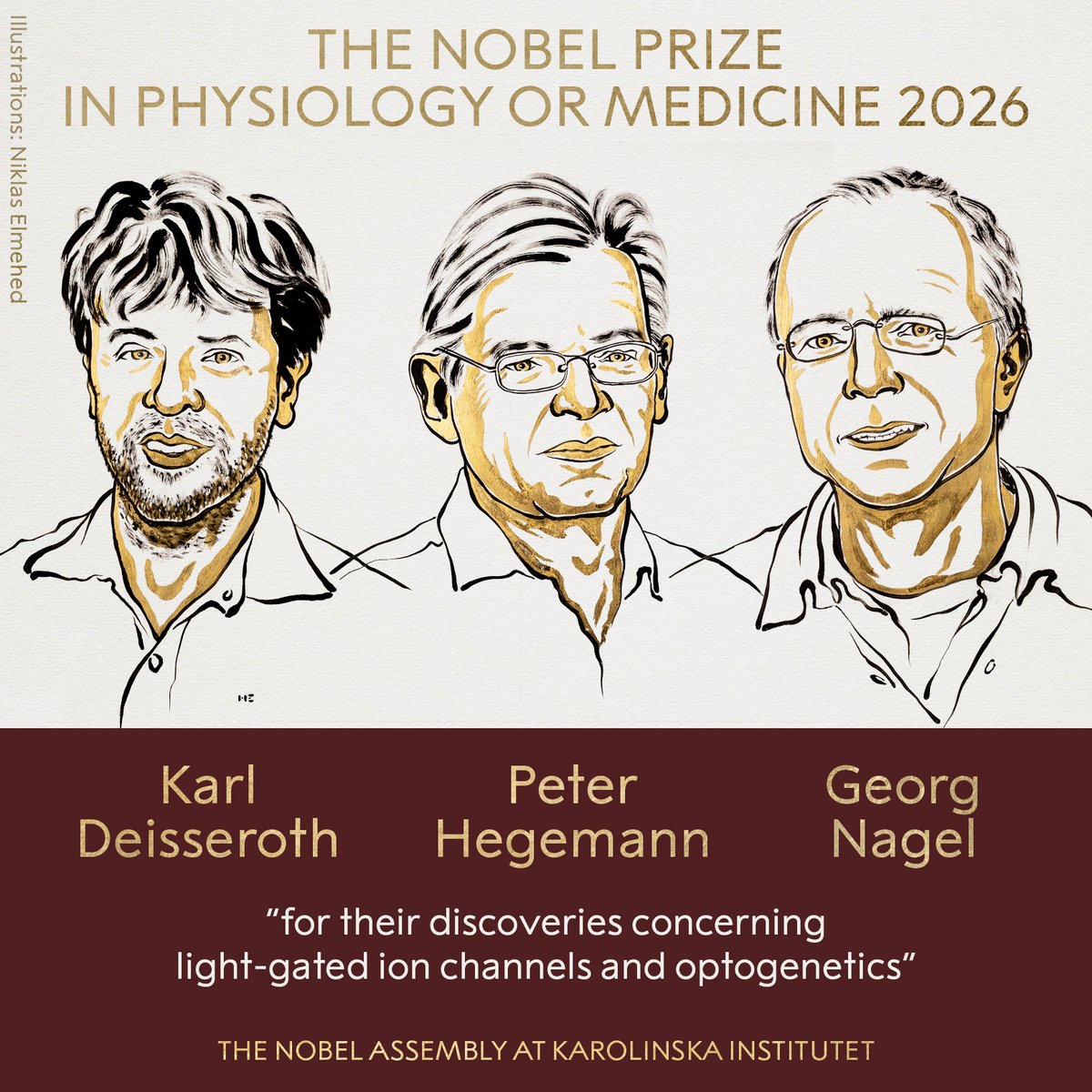
BREAKING NEWS
The 2026 #NobelPrize in Physiology or Medicine has been awarded to Karl Deisseroth, Peter Hegemann and Georg Nagel “for their discoveries concerning light-gated ion channels and optogenetics.”
(1/5) ⭐️⭐️ Beyond thrilled to announce that I’ll be starting my own lab as a Tenure-Track Assistant Professor at the University of Tennessee Health Science Center (@uthsc) in Jan 2027! #NewPI
My lab will study the neurobiology of learning, memory, and motivation! 🧠🐭⚡️🔬
Onward Professor @TravisDGoode I have no doubt that you will be an awesome mentor, colleague and asset to your department and look forward to hearing about your lab’s discoveries!