CELEBRATING EXCELLENCE IN PUBLIC SECTOR FINANCIAL REPORTING!
The Public Sector Financial Reporting Quality Workshop concluded Day 1 with an awards ceremony recognising public sector institutions that have demonstrated excellence, commitment and measurable progress in financial reporting, accountability and good governance.
The awards celebrated achievements ranging from clean audit opinions, timely submission of financial statements and resolution of outstanding audit findings to improvements in financial reporting practices and the implementation of International Public Sector Accounting Standards (IPSAS).
The Ministry of Finance was recognised as the IPSAS Roadmap Implementing Partner for championing the development and implementation of the IPSAS Roadmap across public sector entities.
The awards reaffirmed that institutional transformation is a journey built on commitment, consistency and collective effort. Every milestone, however small, deserves recognition as Government advances towards greater transparency, accountability and prudent management of public resources.
Congratulations to all the award recipients!
#ZimTreasury #IPSAS #PublicSectorReform
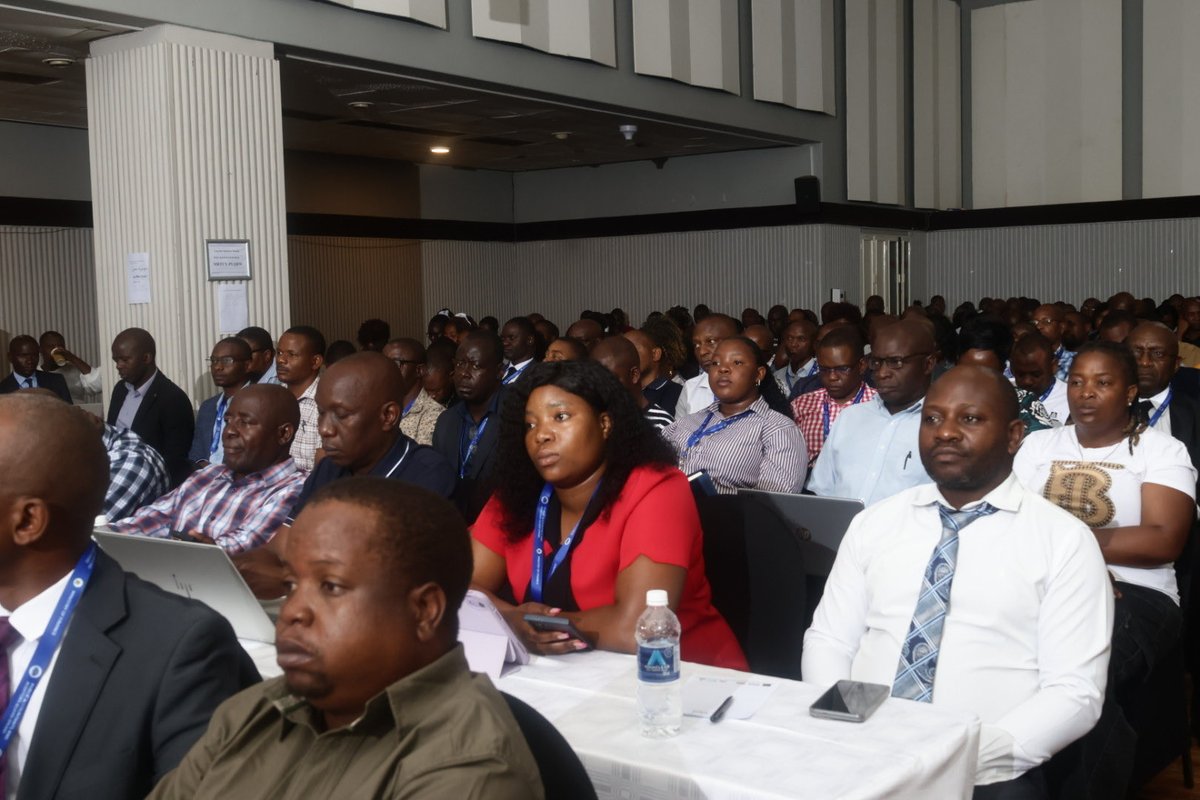
The Ministry of Finance, in partnership with the Public Accountants and Auditors Board (PAAB), is hosting the Public Sector Financial Reporting Quality Workshop in Bulawayo, from 20–21 November 2026, under the theme “Reflecting on Five Years of Public Finance Reform.”
The workshop brings together a broad spectrum of stakeholders, including Ministries, Departments and Agencies (MDAs), local authorities, banks, State-Owned Enterprises, professional accountancy bodies and public institutions. Among the delegates is the Secretary of the Lands Commission, Dr. P. Mawire, reflecting the whole-of-government approach required to strengthen public financial management.
In an address delivered on behalf of the Minister of Finance, the Deputy Accountant General, Mr Shumbaimwe emphasized that the adoption of International Public Sector Accounting Standards (IPSAS) and International Financial Reporting Standards (IFRS) must translate into tangible improvements in institutional behaviour, decision-making and accountability.
Reflecting on five years of public finance reform, the address highlighted progress in establishing a consistent financial reporting framework, improving visibility of Government assets and liabilities, strengthening reporting discipline and advancing the professionalisation of public sector accounting.
For the 2025 reporting period, 251 out of 285 expected financial statements had been submitted, representing 88% compliance. While this demonstrates progress, the Minister emphasised that submission alone is not sufficient; financial statements must be complete, accurate, credible, adequately supported and useful for decision-making.
The address further highlighted the importance of implementing the revised Zimbabwe Financial Reporting Manual (ZFReM), approved in 2026, strengthening internal controls, addressing recurring audit findings, building professional capacity and ensuring that financial information informs effective asset management, liability management, budgeting and resource allocation.
A key message was that standards are the means, not the end. Quality financial reporting must go beyond compliance to promote transparency, reinforce accountability and guarantee responsible stewardship of public resources.
As Zimbabwe accelerates towards Vision 2030, these reforms are critical to building efficient, transparent and accountable public institutions, ensuring prudent utilisation of national resources and translating public expenditure into tangible development outcomes and improved service delivery.
The ultimate measure of public finance reform is not simply how well institutions report their finances, but how effectively they manage resources entrusted to them for the benefit of citizens.
#ZimTreasury #PublicFinanceReform
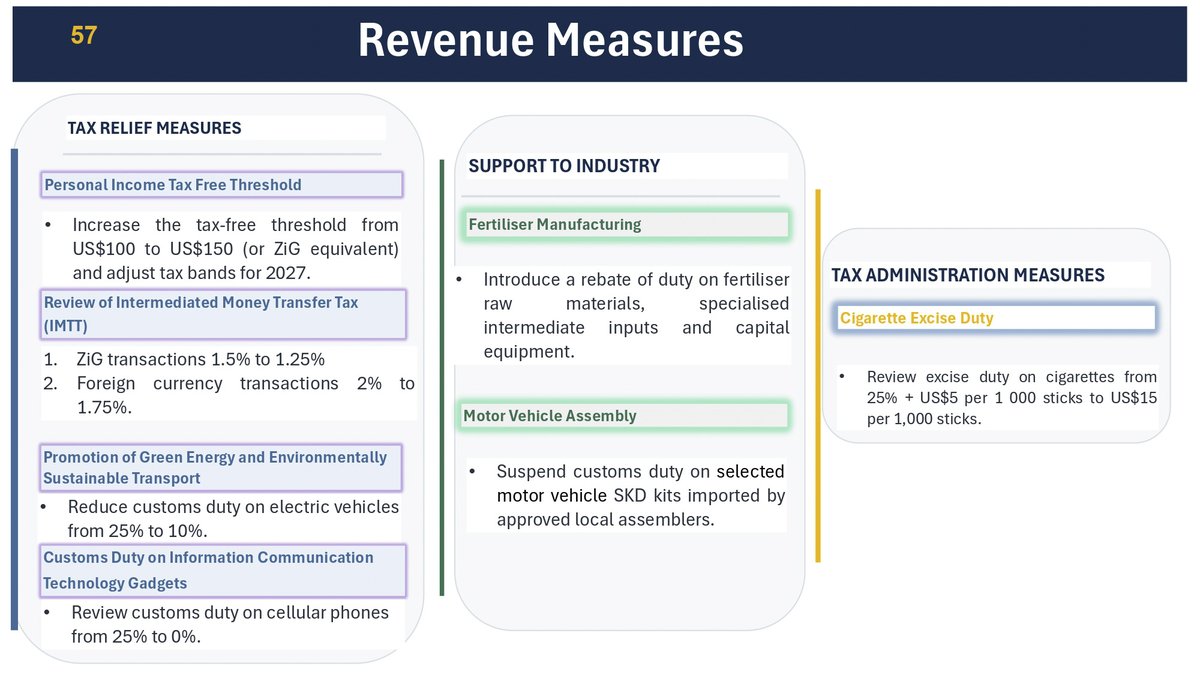
Government has prioritised tax relief over introducing new taxes or increasing existing ones. Key measures include raising the PAYE tax-free threshold from $100 to $150, reducing IMTT rates, and introducing incentives to promote local fertiliser production and the motor vehicle industry, including electric vehicle manufacturing.
CONCLUSION
The implementation of prudent fiscal policy by
Treasury, complemented by monetary policy by the Reserve Bank of Zimbabwe, has broadly anchored the economy towards durable macroeconomic stability, characterised by low and stable inflation, as well as currency and exchange rate stability.
The hard-won gains, particularly macroeconomic
stability, must be protected and further entrenched.
The business community should capitalise on a stable
environment and invest in new equipment, modernisation, digital technology, including automation and artificial intelligence.
REVENUE MEASURES
Tax Relief Measures
Personal Income Tax: Tax-Free Threshold
1. Review of the Personal Income Tax-free Threshold from USD100 to USD150.
2. Review of Intermediated Money Transfer Tax (IMTT)
Adjustment of the IMTT rates as follows:
-Reduce the rate on ZiG-denominated transactions from 1.5% to 1.25%; and
-Reduce the rate on foreign currency-denominated transactions from 2% to 1.75%.
3. Promotion of Green Energy and Environmentally Sustainable
-To accelerate the transition towards a green economy, customs duty rates on electric vehicles has been reviewed from 25% to 10%.
4. Customs Duty on Information Communication Technology Gadgets
-To promote adoption and use of mobile ICT capabilities by the general populace, customs duty on cellular phones has been reviewed from 25% to 0%.
5. Production-Oriented Stimulus Package: Fertilizer Manufacturing
-Introduce a Rebate of Duty on raw materials, specialised intermediate inputs and capital equipment used in the fertiliser manufacturing value chain, including primary raw materials producers, subject to prescribed conditions. The above measure take effect from 1 November 2026.
6. Suspension of Duty on Inputs into Production of Motor Vehicles
-Suspend customs duty on Semi Knocked Down (SKD) kits imported by approved local assemblers of 31 internal combustion engine-powered motorcycles, tricycles, trucks and electric commercial vehicles, effective from 1 December 2026.
TAX ADMINISTRATIVE MEASURES
7. Excise Duty on Cigarettes
-To replace the hybrid duty regime comprising an ad valorem rate of 25% plus US$5 per 1 000 cigarette sticks with a specific excise duty, at a rate of US$15 per 1 000 cigarette sticks, with effect from 1 January 2027.
Primary and Secondary Education
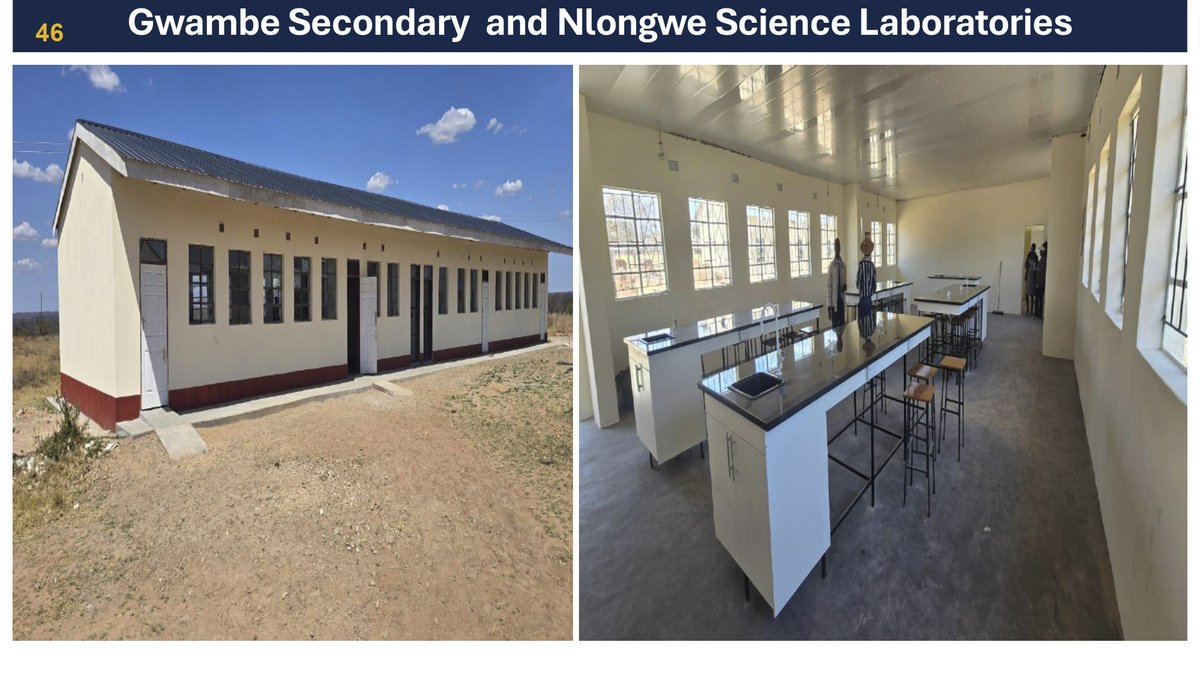
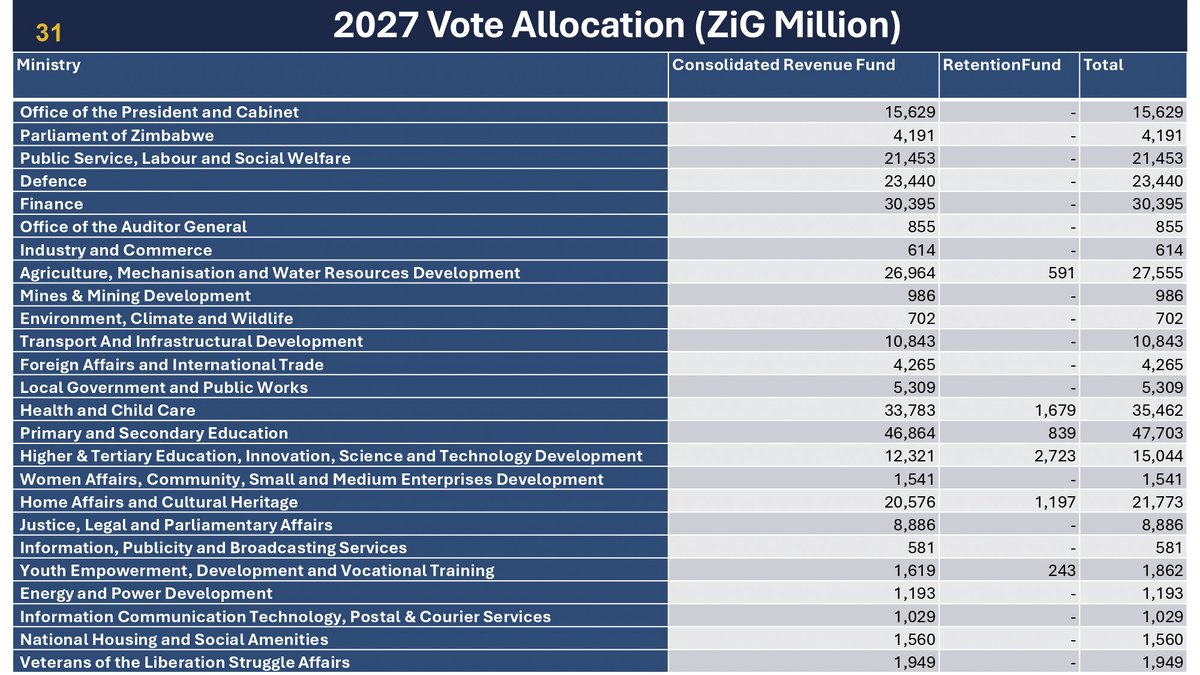
The 2027 Budget has allocated ZiG47.7 billion to the Ministry of Primary and Secondary Education. This will go towards provision of basic education, inclusive of employment costs, teaching and learning materials, examination fee subsidies and infrastructure development.
Job Creation, Youth Entrepreneurship and Development,Creative Industry, Sport and Culture
The Ministry of Sport, Recreation, Arts and Culture
will receive ZiG1.3 billion to harness sports, creative industries and recreation as catalysts for national identity, social cohesion and economic transformation.
Health
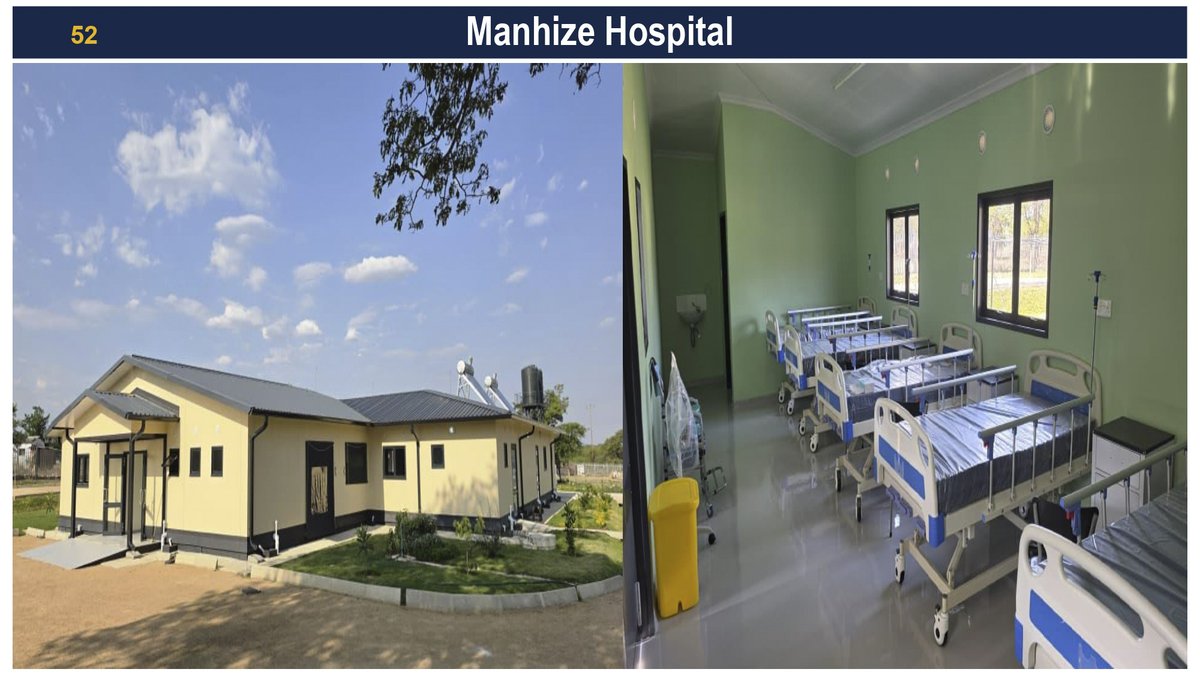
In 2027, Government will consolidate and sustain interventions in the health sector through an allocation of ZiG35.5 billion. This will go towards employment costs, acquisition of consumables and equipment, as well as the rehabilitation and construction of health infrastructure.
Agriculture, Food, Climate and Environment
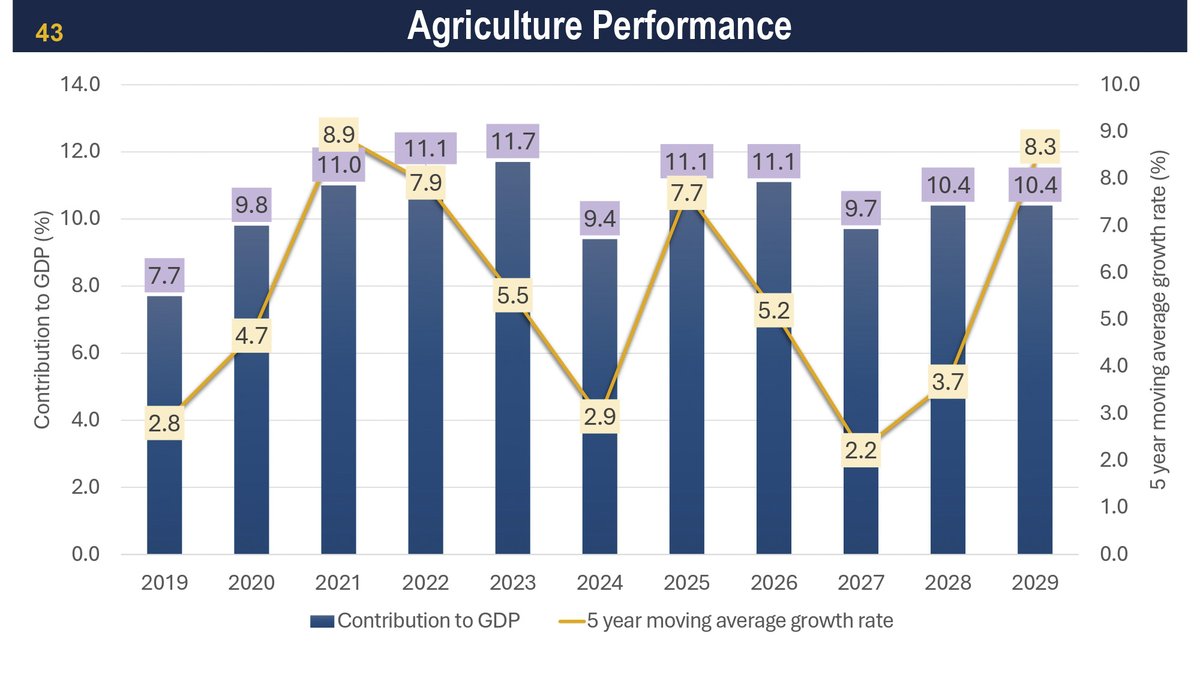
The agriculture sector is expected to encounter setbacks related to the impact of super El-Niño, which is usually associated with drought in the region.
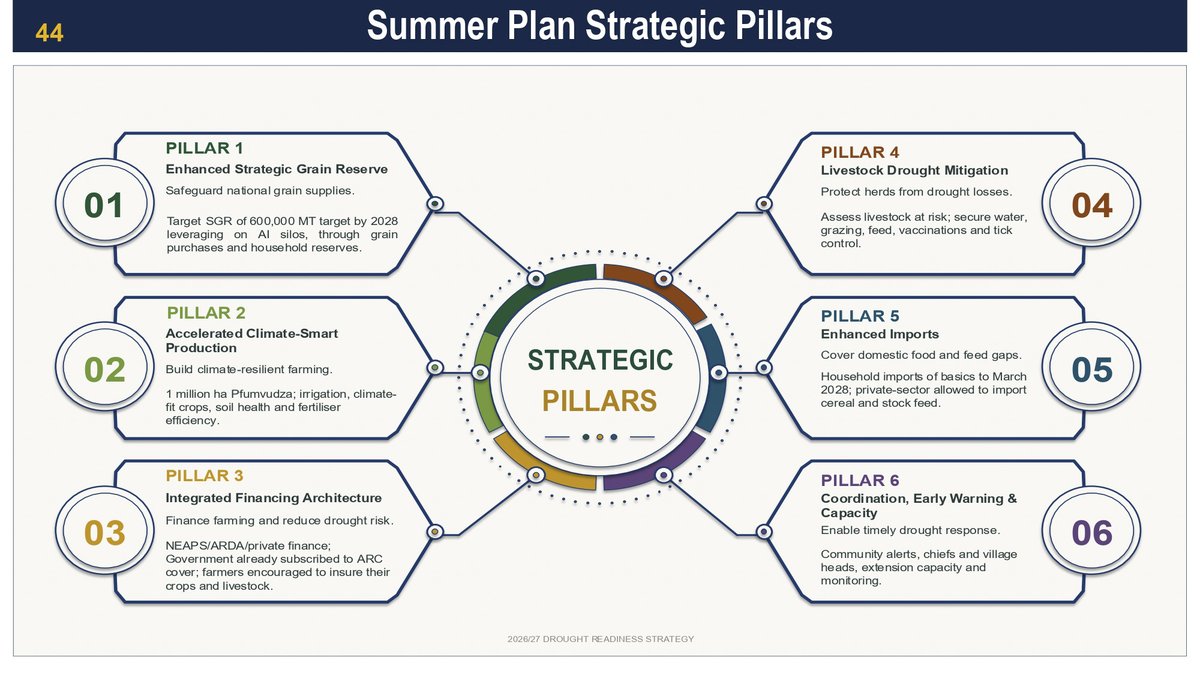
To mitigate against the negative impact of a potential drought, Government has put in place a Six-Pillar Strategy.
As part of the strategy, Government through GMB has procured grain amounting to 365 000 MT as of the end of October 2026, as part of building the country’s strategic grain reserve to 600 000 tons by 2027.
In addition, Government has subscribed to the African Risk Capacity sovereign drought insurance policy at a premium of US$3.4 million.
In total, the 2027 National Budget has set aside ZiG27.6 billion for the Ministry of Agriculture, Mechanisation and Water Resources Development to implement the above agriculture programmes and projects.
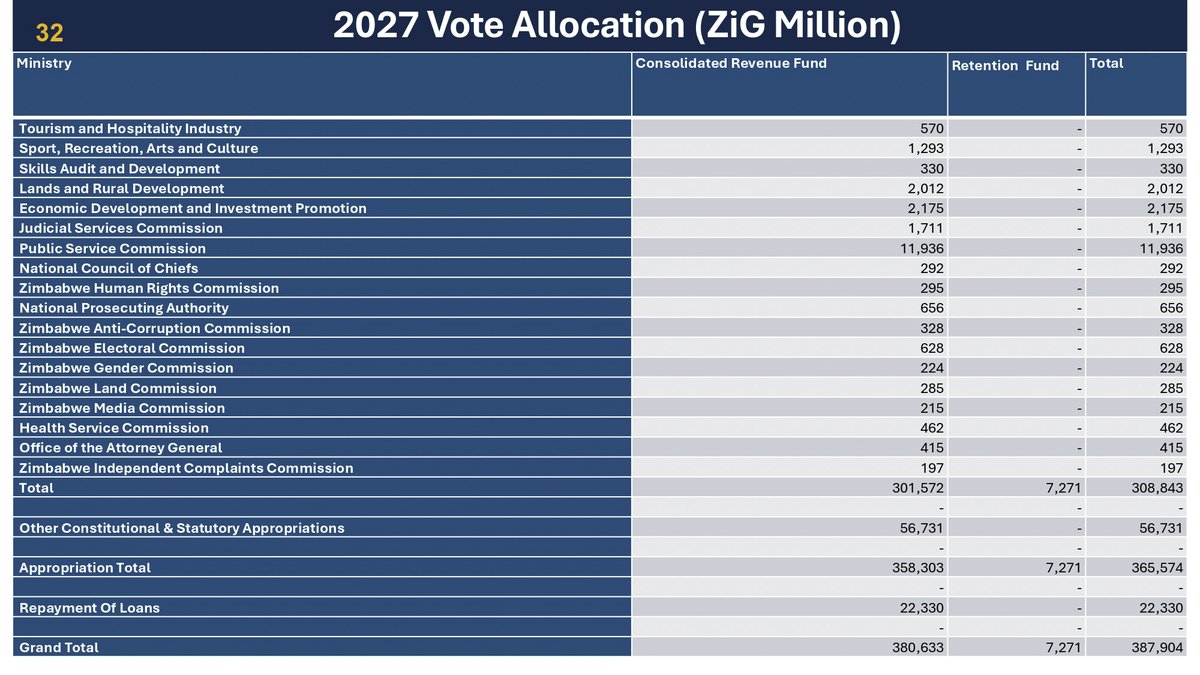
Furthermore, ZiG2 billion has been allocated to the Ministry of Lands and Rural Development to underpin land administration, land surveying and mapping and rural development and industrialisation.
STRATEGIC PRIORITIES FOR THE 2027 NATIONAL BUDGET
During the 2027 National Budget consultations with Ministries, Departments and Agencies (MDAs), a total of ZiG974 billion was submitted to Treasury as expenditure bids.
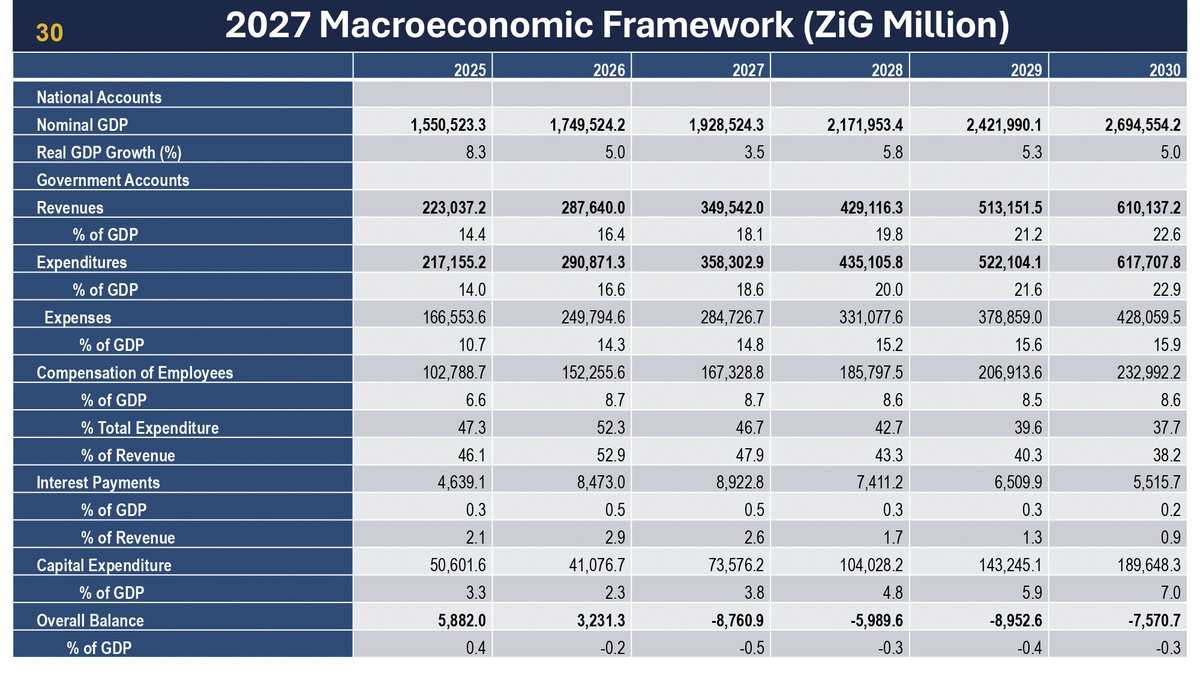
This is almost three times expenditure ceiling of ZiG358 billion (18.6% of GDP).
The expected resource envelope is distributed to MDAs as shown in the table below.
To spearhead the industrialisation and economic transformation initiatives, an amount of ZiG614 million is being allocated to the Ministry of Industry and Commerce. In addition, effective 1 January 2027, it will be mandatory for Government, mining companies and all large entities to procure at least 15% of their input requirements domestically, where capacity exists. The Framework will be in place by 31st of March 2027.
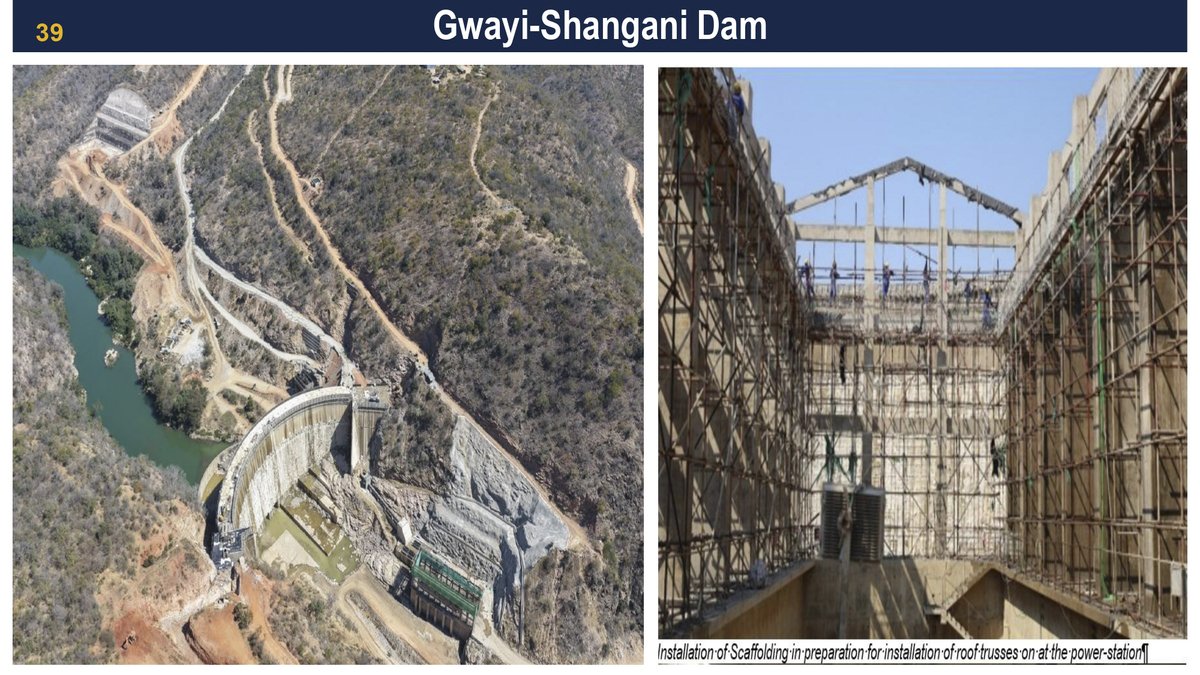
On Water and Sanitation, the primary focus in 2027 will be on sustaining implementation of ongoing workstreams on Kunzvi - Musami and Gwayi – Shangani, as well as drilling and rehabilitation of boreholes. Therefore, a total of ZiG4.8 billion has been allocated for water and sanitation projects and programmes.
THE 2027 FISCAL MACROECONOMIC FRAMEWORK
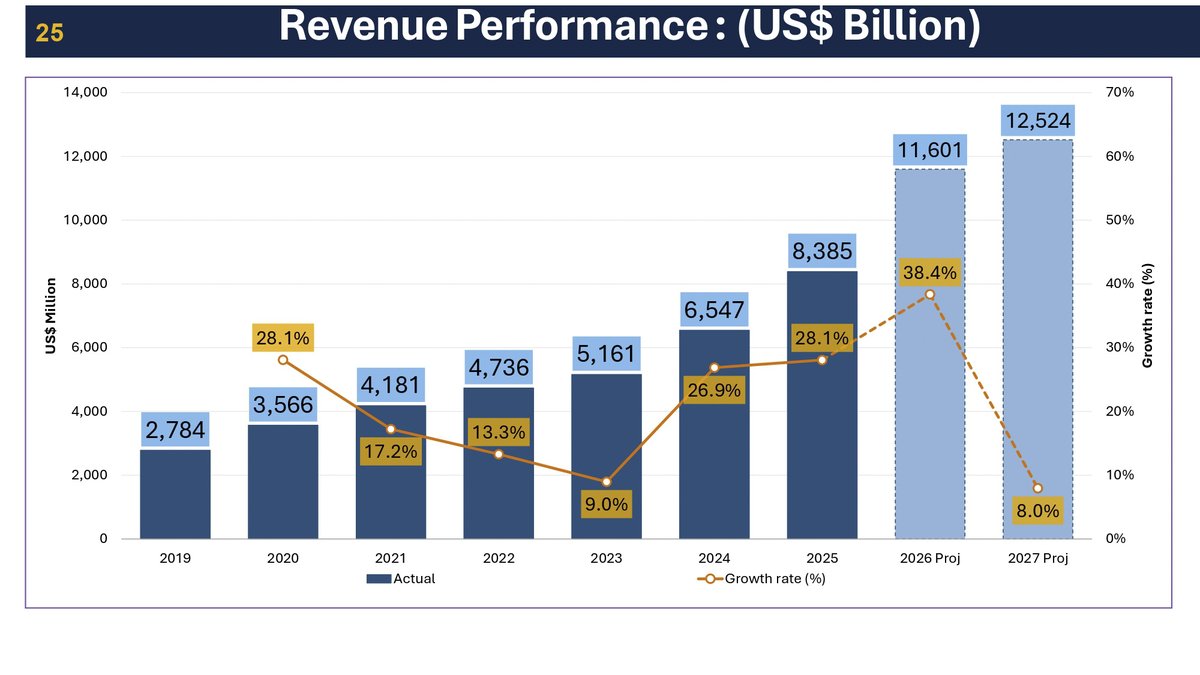
Government is projecting total revenue collections of ZiG349.5 billion (approximately US$12.5 billion) in 2027, equivalent to 18.1% of GDP.
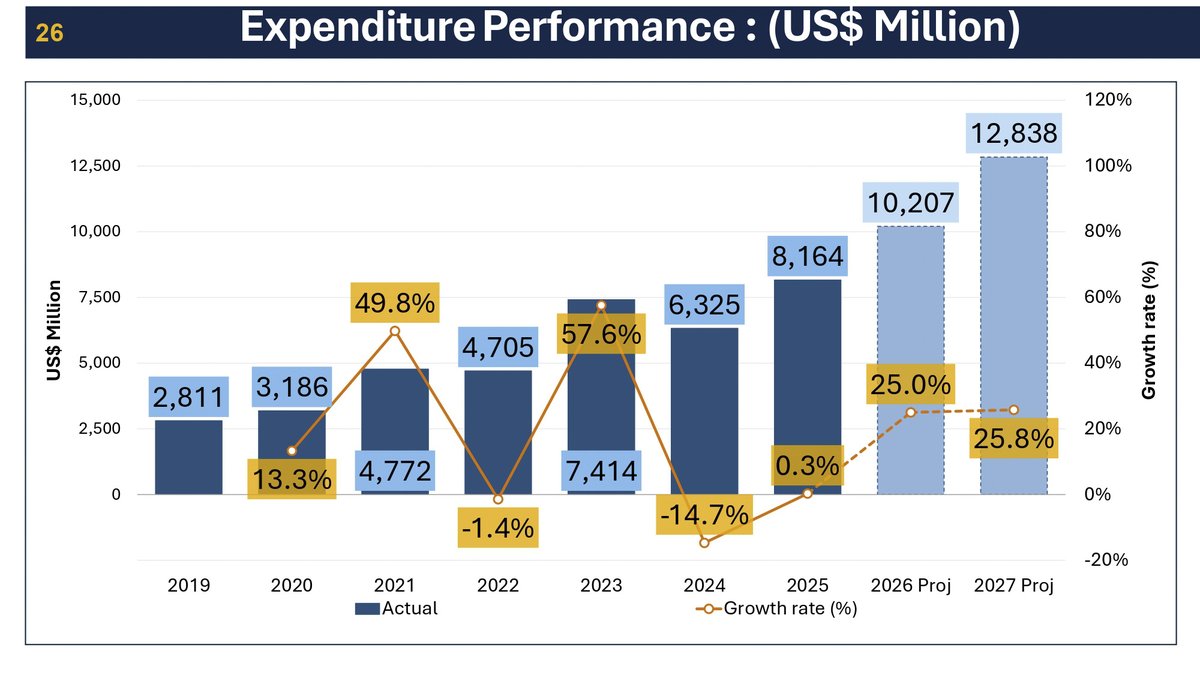
The projected revenue envelope, together with Government’s prudent borrowing capacity, supports an overall expenditure ceiling of ZiG358.3 billion (US$12.8 billion) in 2027, equivalent to 18.6% of GDP.
The Budget envelope includes contingent ZiG10.9 billion (US$400 million) (0.6% of GDP), as a precaution against more severe shocks, especially the super El-Niño drought.
The resources will be financed from Government buffers accumulated in 2026.
Public Debt Developments
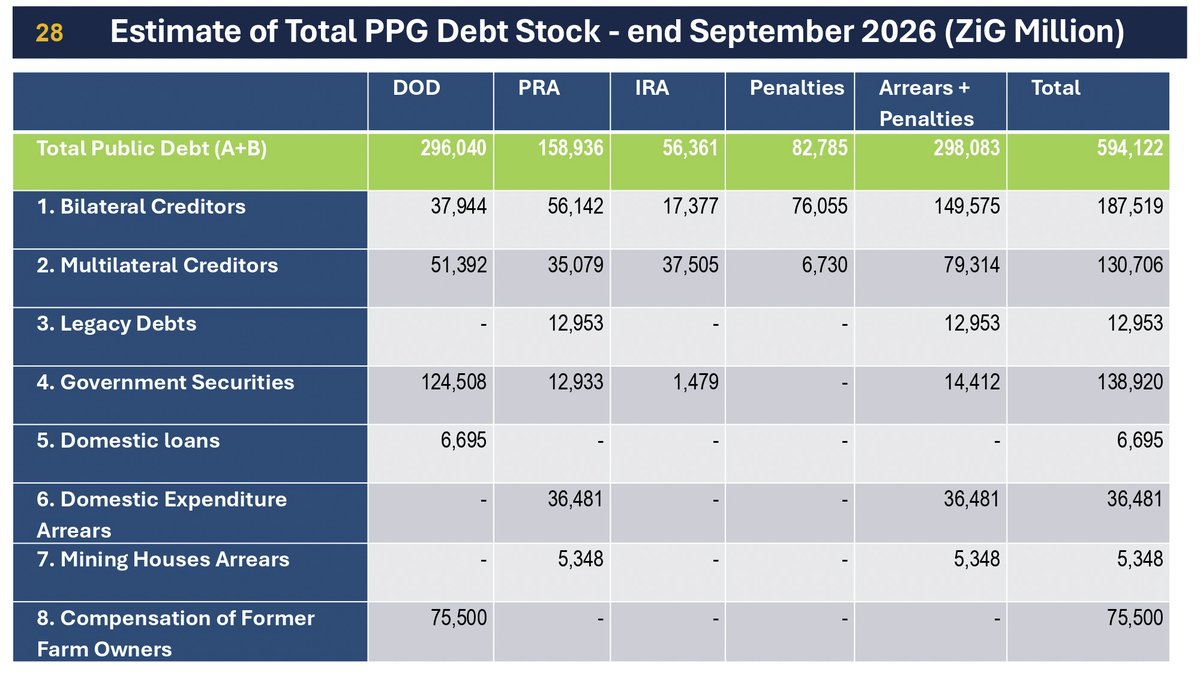
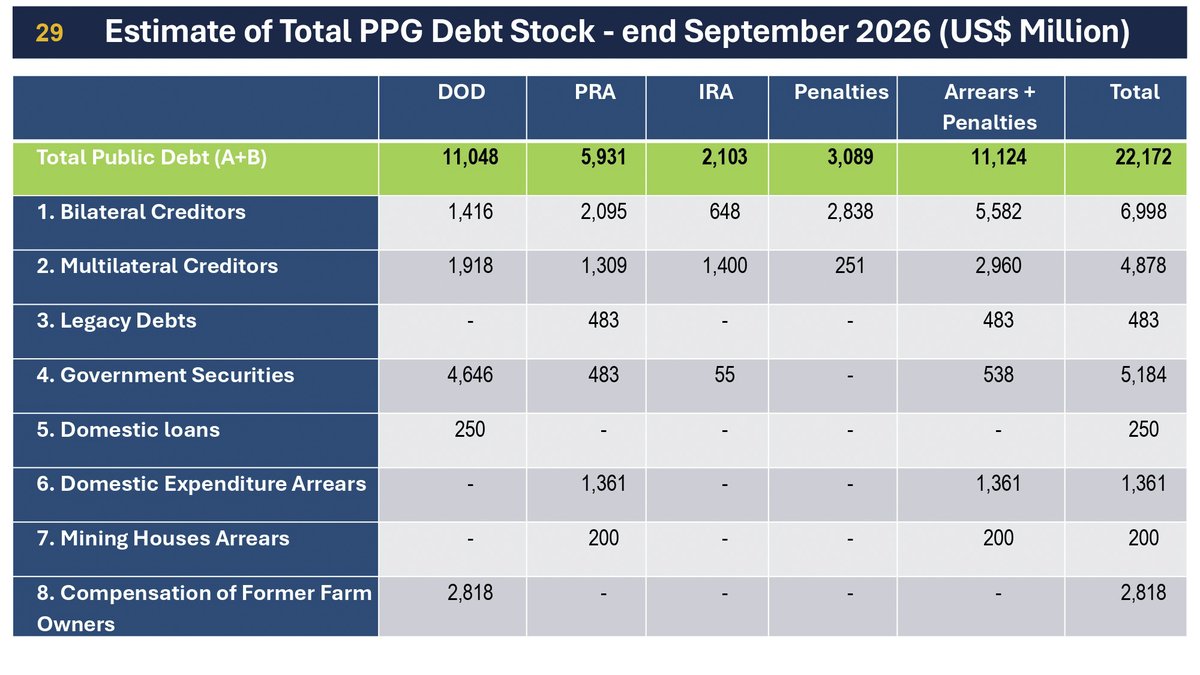
As at end September 2026, the stock of total Public and Publicly Guaranteed (PPG) debt is estimated at ZiG594.1 billion, compared to ZiG566.8 billion as of the end of December 2025. Of this total, external debt amounts to ZiG331.2 billion (55.7%), while the domestic debt stock was ZiG262.9 billion (44.3%).
In US dollar terms, the estimated Public and Publicly Guaranteed (PPG) debt as of the end of September 2026 was US$22.2 billion, representing 33.4% of the projected GDP. This is comprised of external debt of US$12.4 billion and domestic debt of US$9.8 billion.
Public Finance Developments
In terms of domestic resource mobilisation, revenue collections increased by 316.7% from US$2.8 billion in 2019 to a projected US$11.6 billion in 2026. (Slide 25)
As a result, the size of the budget has increased by 263.1% from US$2.8 billion in 2019 to a projected US$10.2 billion in 2026.
During the first nine months of the year, Government maintained a strong fiscal position with revenue performance at ZiG224.7 billion, while expenditures were contained at ZiG188.7 billion.
As at 30 October 2026, preliminary outturn indicate that MDAs have spent an average of 74.5% of the approved budget.
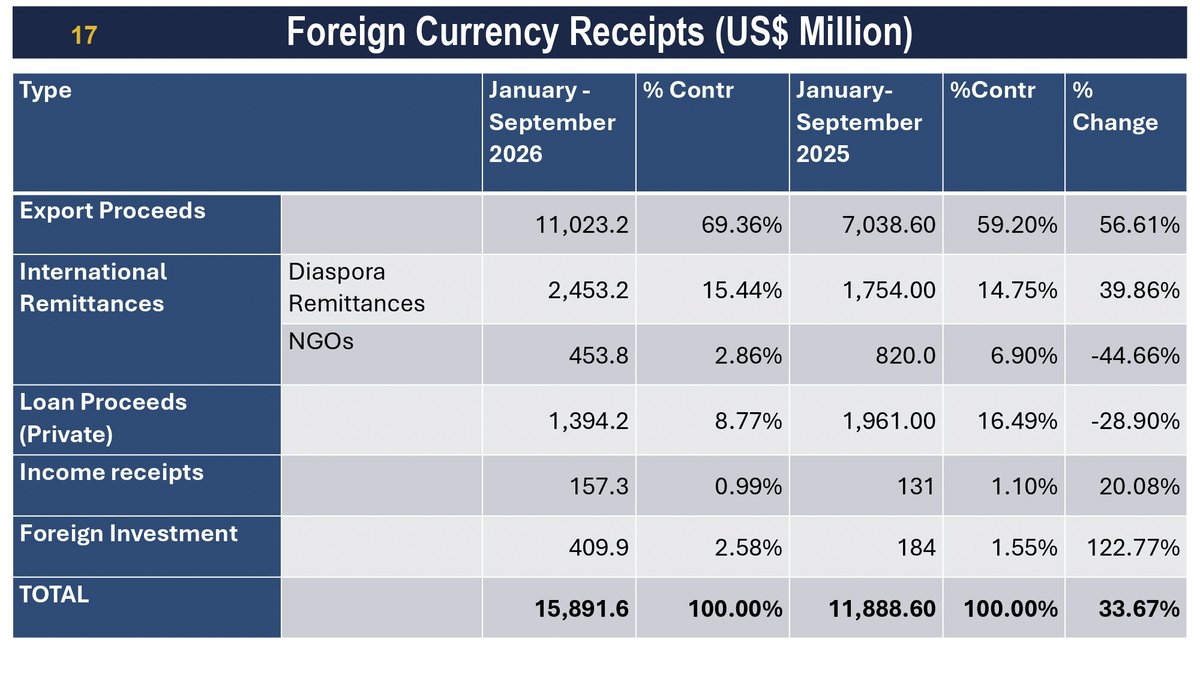
The favourable international commodity prices, together with expanding domestic economic activity have underpinned the growth of foreign currency inflows. This is being augmented by steady growth of diaspora remittances inflows and foreign direct investment.
During the period January to September 2026, foreign currency receipts increased by 33.7% to US$15.9 billion, compared to the same period in 2025.
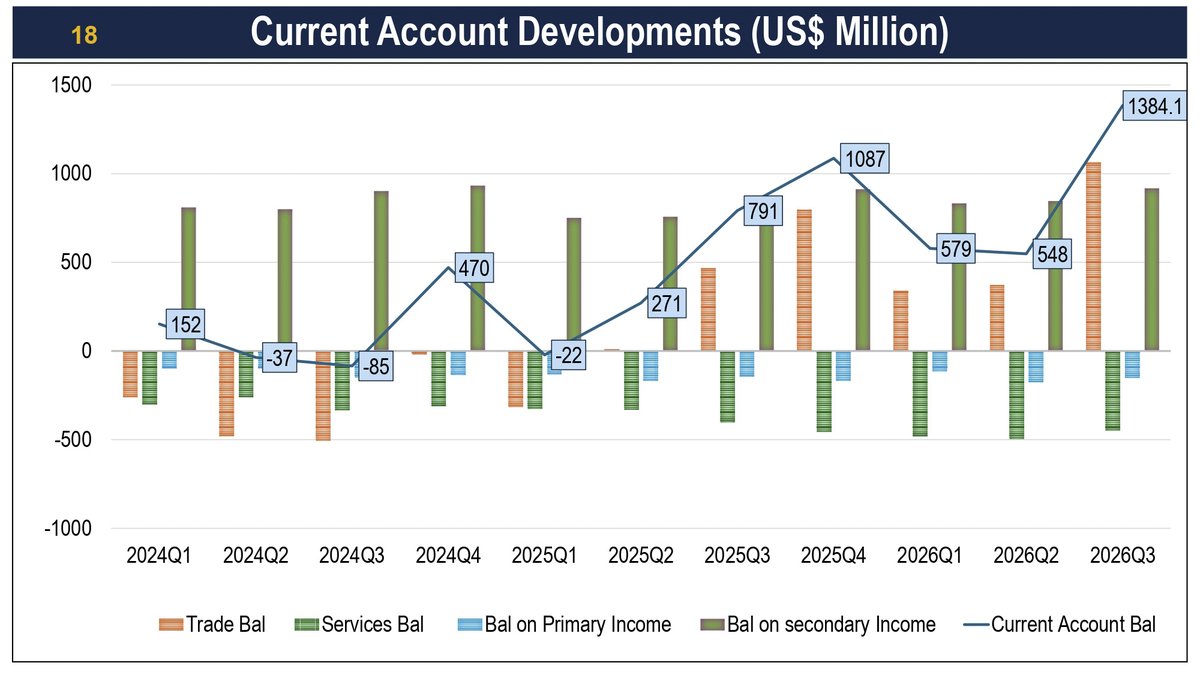
To year end, a current account surplus is projected to surpass US$3.5 billion, compared to US$2.1 billion recorded in 2025. The surplus is expected to narrow to US$3.4 billion in 2027.
Diaspora remittances inflows grew significantly by 39.9% to US$2.5 billion during the first nine months of 2026, and are projected to surpass US$3.2 billion and US$3.4 billion in 2026 and 2027, respectively, from US$1.2 billion in 2020.
Inflation developments
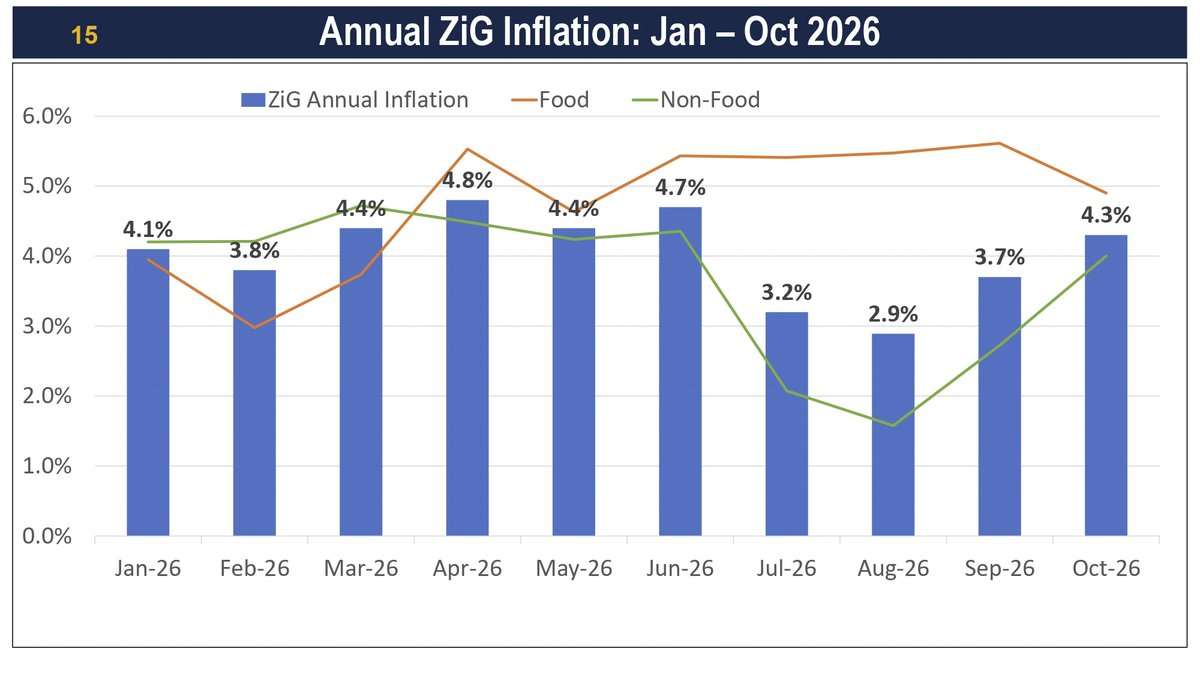
Prudent fiscal policy and complementary monetary policy resulted in durable price and exchange rate stability, despite fuel price pressures arising from geopolitical tensions. Consequently, domestic inflation has stabilised and is now below the level of SADC peers.
The ZiG annual inflation remained low and stable, averaging 4.0% for the first ten months of 2026.
Inflation in both currencies is projected to remain contained within the single-digit levels in 2027.
Domestic Economic Developments and Outlook
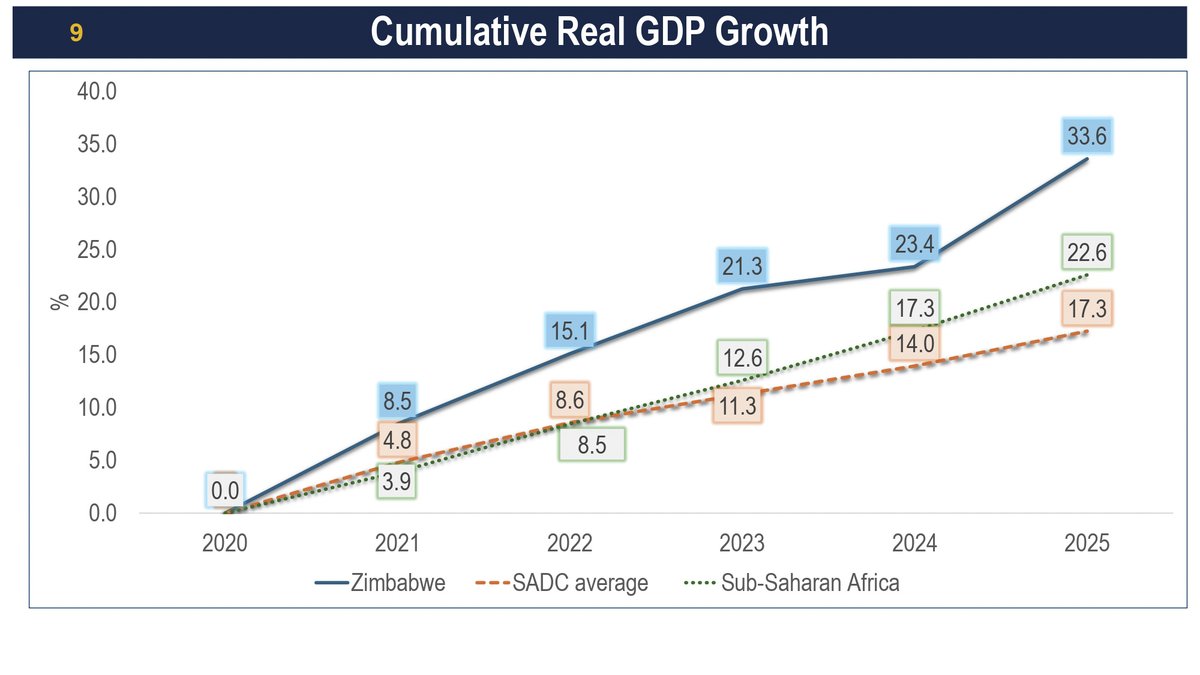
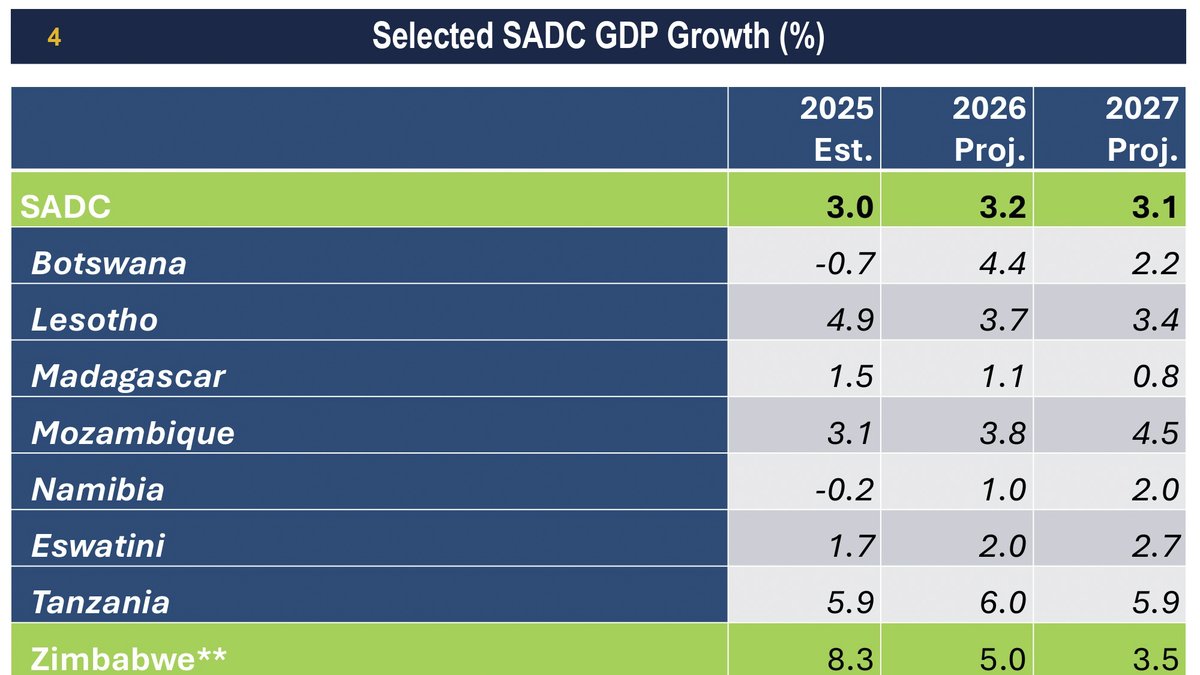
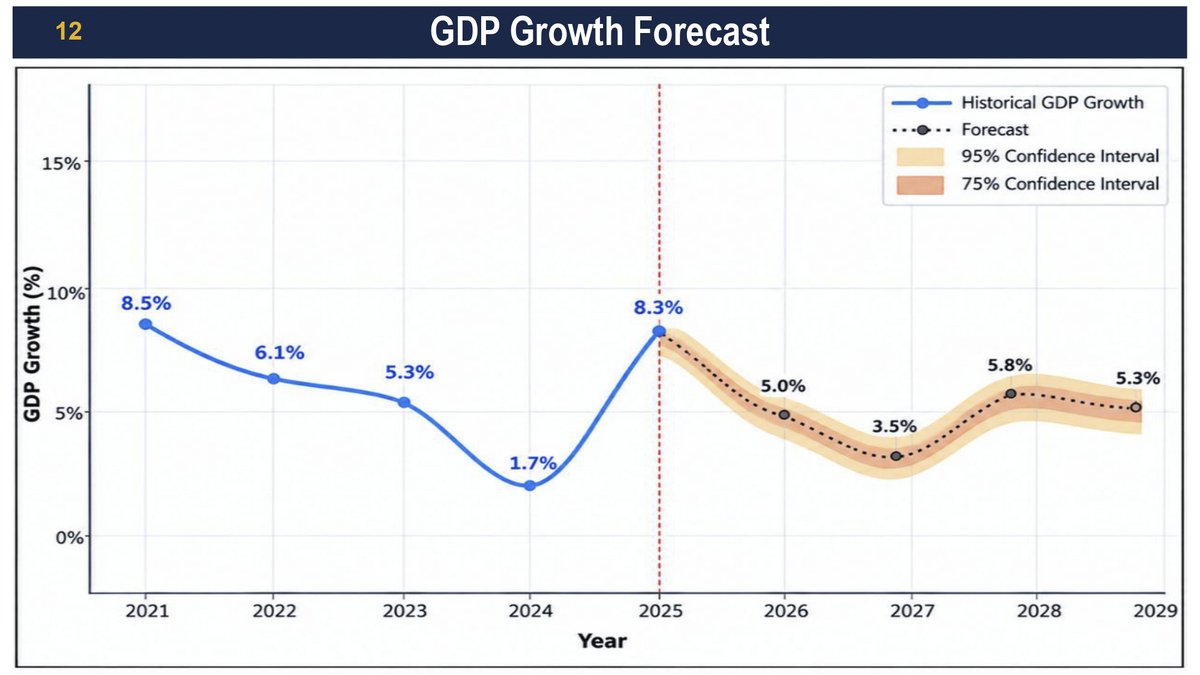
Post COVID-19, the domestic economy has registered a cumulative growth of 33.6% by 2025, well above SADC and Sub-Saharan regions average of 17.3% and 22.6%, respectively.
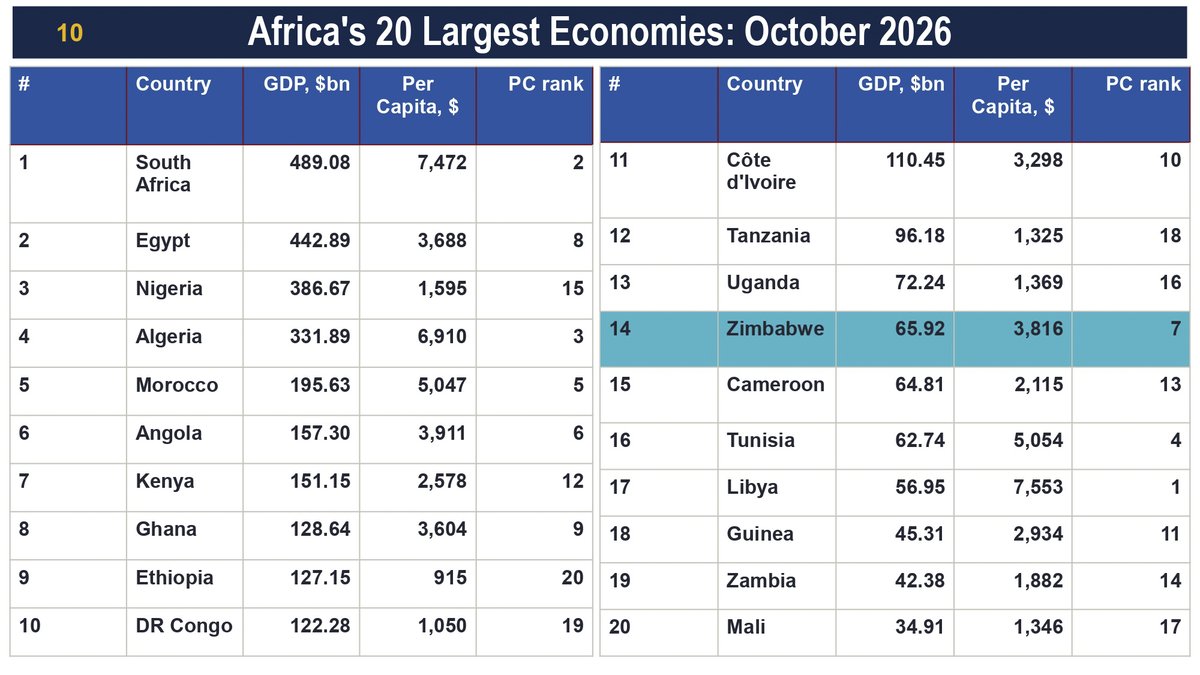
In 2025, the economy grew by 8.3%, the fastest in SADC and second fastest in Africa.
In 2026, the domestic economy is projected to grow by 5% in 2026.
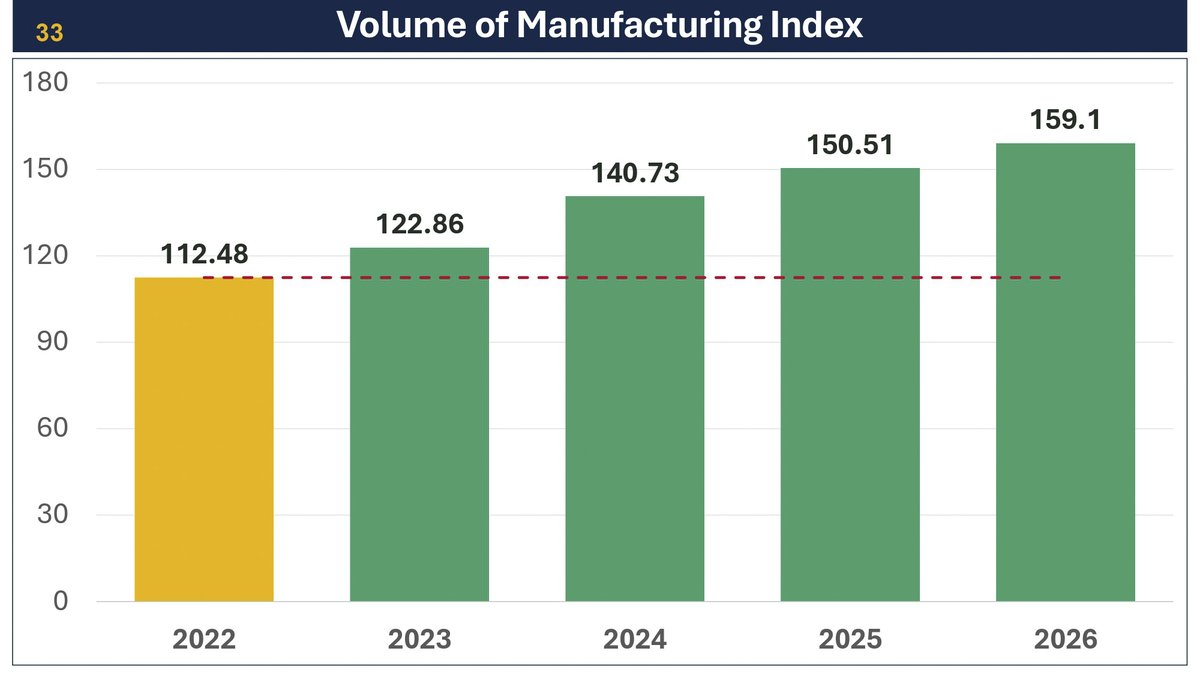
During the first nine months of the year 2026, the economy by 4.8%, underpinned by agriculture, manufacturing and wholesale and retail trade.
In 2027, economic growth is projected to moderate to 3.5%, largely reflecting the impact of the super El Niño and the drought related risks.
The 2027 National Budget has been framed against a potentially challenging global environment, characterised by moderating global growth, geopolitical tensions and elevated energy and food prices.
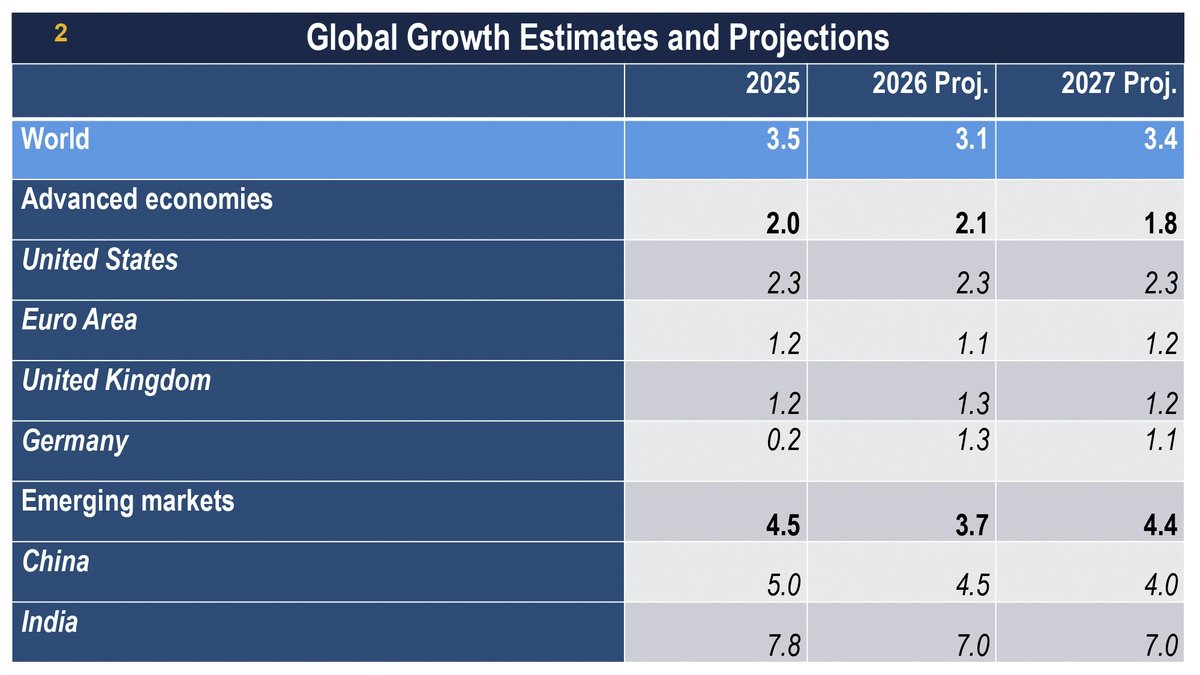
The latest IMF World Economic Outlook (WEO) is projecting a moderation in the global economy to 3.1% in 2026, before recovering to 3.4% in 2027. The global economy recovery is premised on growing investment momentum in artificial intelligence (AI), offsetting disruptions arising from the conflict in the Middle East.
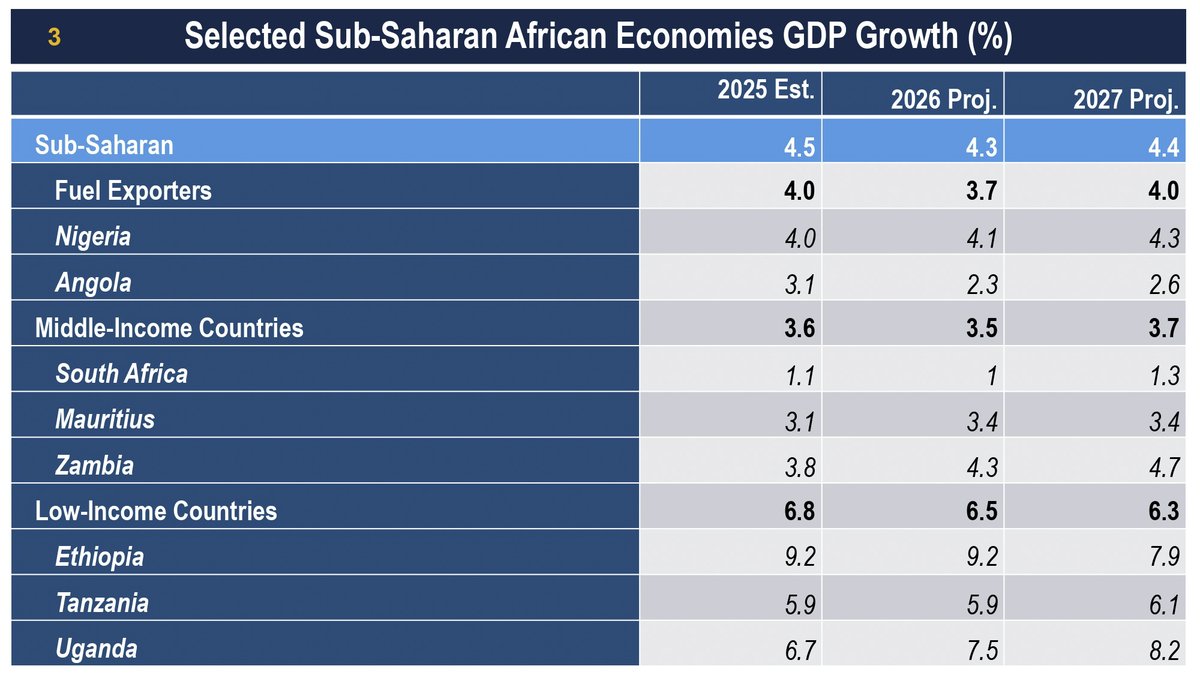
The Sub-Saharan Africa region is projected to record growth of 4.5% in both 2026 and 2027, while SADC growth is projected at 3.2% and 3.1%, respectively.
However, the outlook has been clouded by the conflict in the Middle East, compounded with declining official development assistance, as well as volatile international commodity prices.
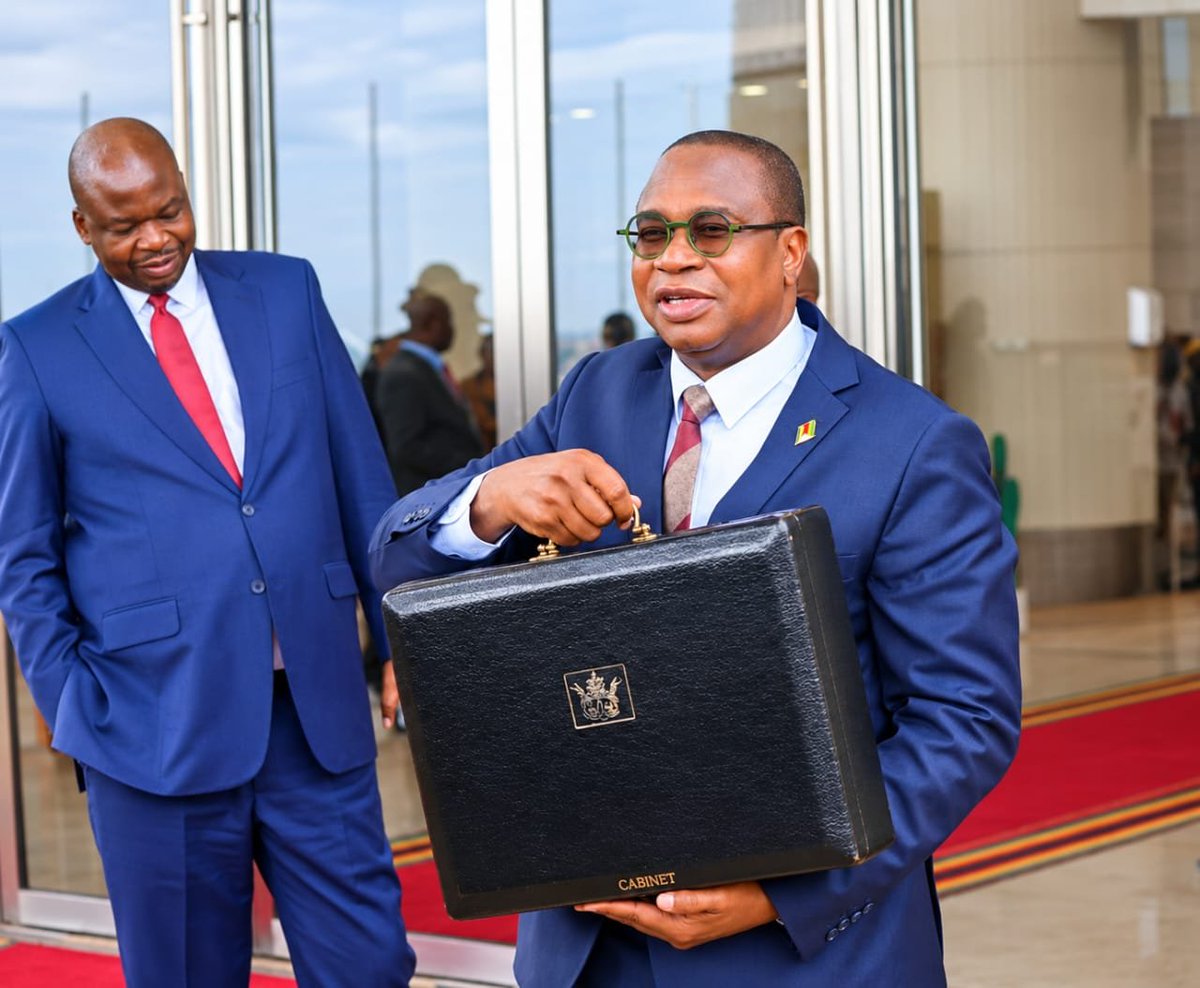
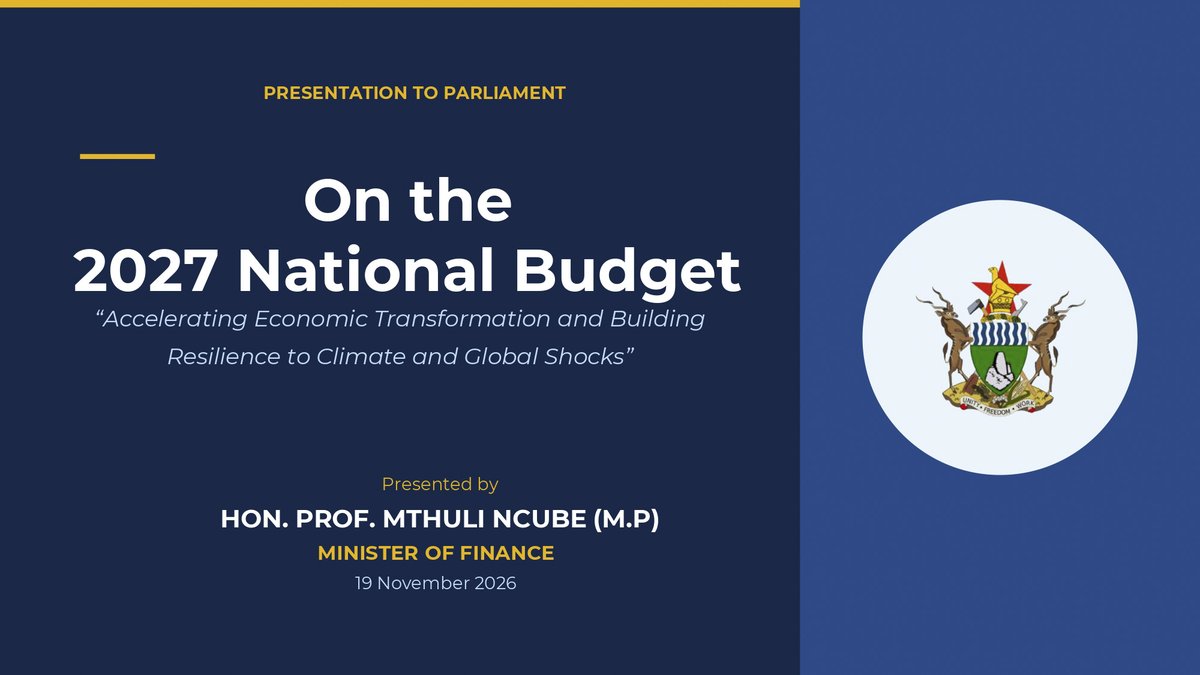
Presentation of the 2027 National Budget by the Minister of Finance, Hon. Prof. Mthuli. Ncube. This year’s budget is themed “Accelerating Economic Transformation and Building Resilience to Climate and Global Shocks”. The 2027 National Budget articulates the fiscal policy strategy for the coming year and the medium term.
The budget is being formulated against a potentially challenging global and domestic environment. Climate-related shocks, particularly recurring El Niño-induced drought episodes, impacting on agricultural production with cascading effects across the economy. These risks are compounded by geopolitical tensions, tighter external financing conditions, global trade fragmentation and disruptions.
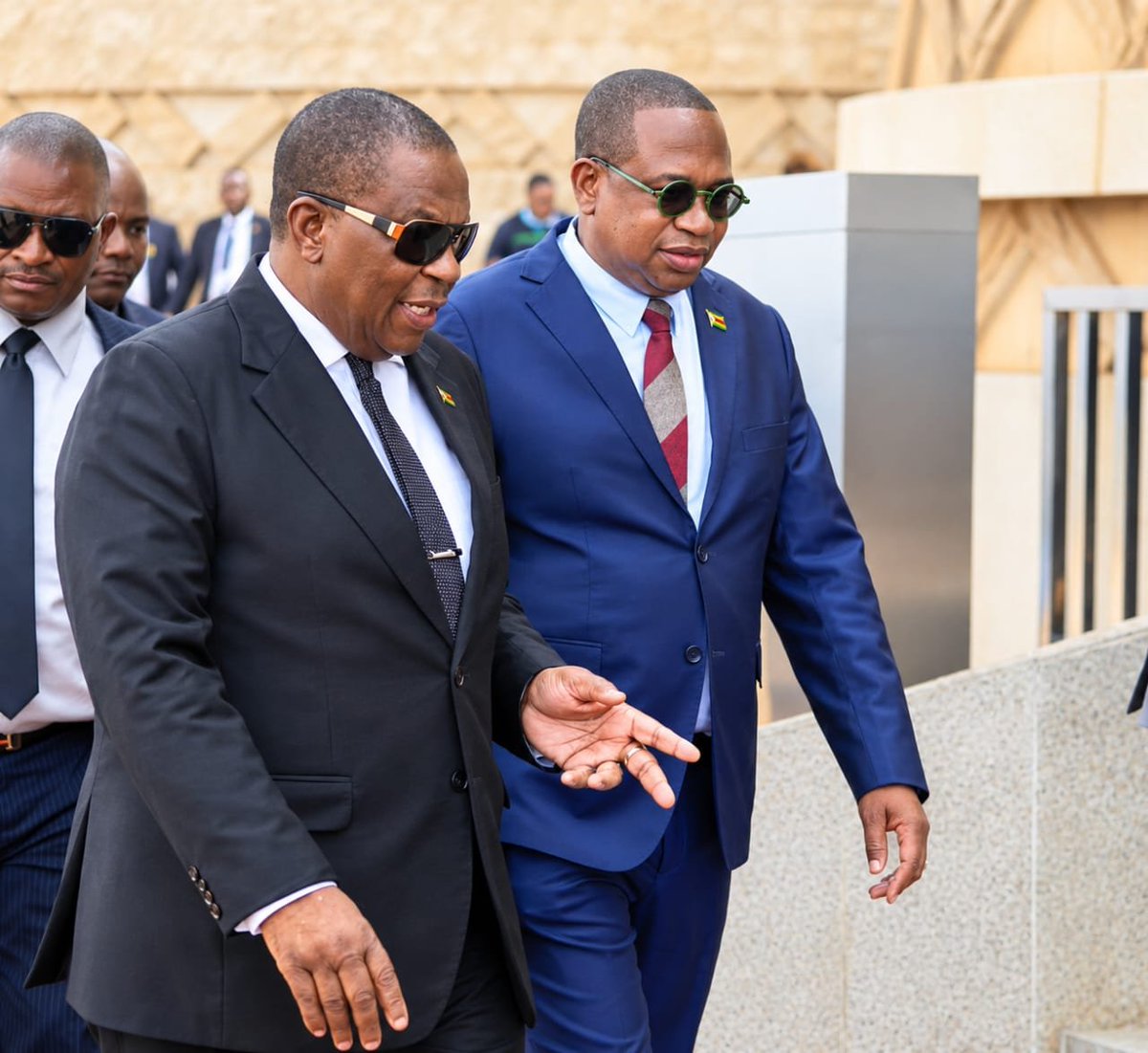
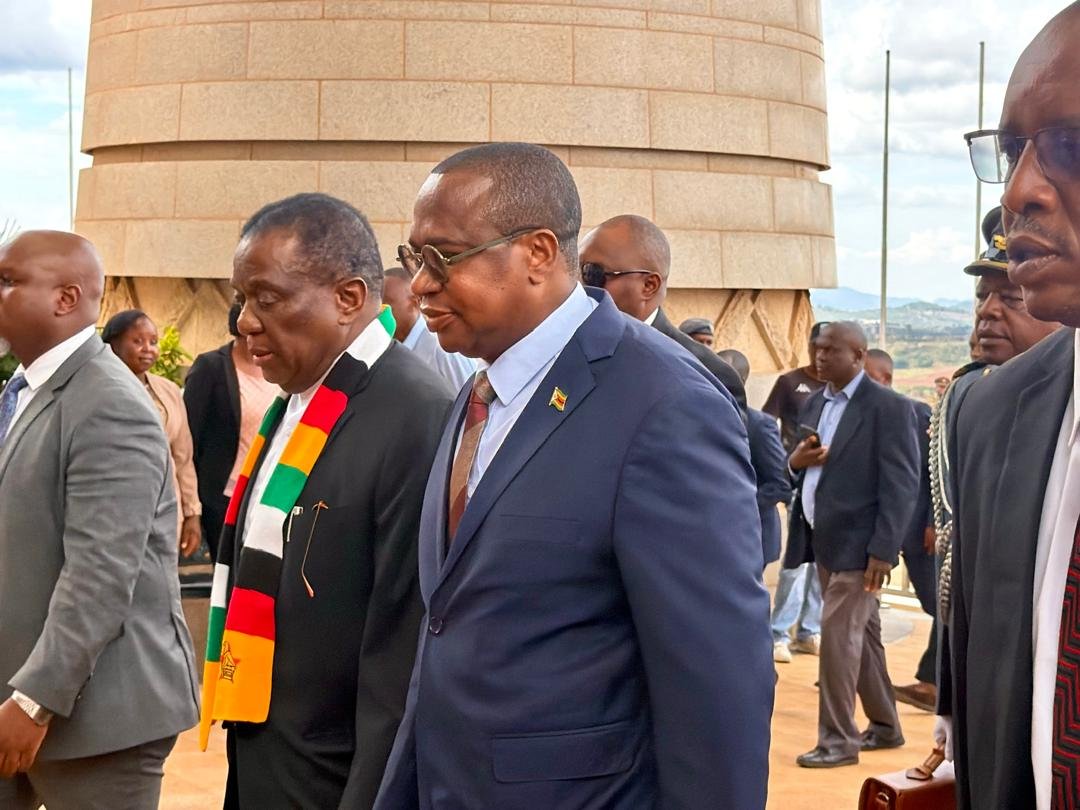
His Excellency, the President of the Republic of Zimbabwe, Cde. Dr. E.D Mnangagwa and the Hon. Vice President, General (Rtd) Dr C.D.G.N. Chiwenga, have arrived at the Parliament Building ahead of the presentation of the 2027 National Budget by the Minister of Finance, Hon. Prof. Mthuli Ncube.
Also in attendance are the Deputy Minister, Hon. K.D. Mnangagwa and the Permanent Secretary, Mr. G.T. Guvamatanga, who have joined other senior Government officials for this important national occasion.
The 2027 National Budget is being presented under the theme: “Accelerating Economic Transformation and Building Resilience to Climate and Global Shocks.”
The Minister of Finance Hon. Prof. Mthuli Ncube gives insights on the 2027 National Budget to be presented before Parliament tomorrow, Thursday 19 November 2026.
As Zimbabwe intensifies its diplomatic efforts to unlock international capital, resolve its sovereign debt challenges and restore access to international financial institutions, under the Structured Dialogue Platform, key bilateral consultations were held today ahead of next week’s High-Level Engagements on Arrears Clearance and Debt Resolution in Europe.
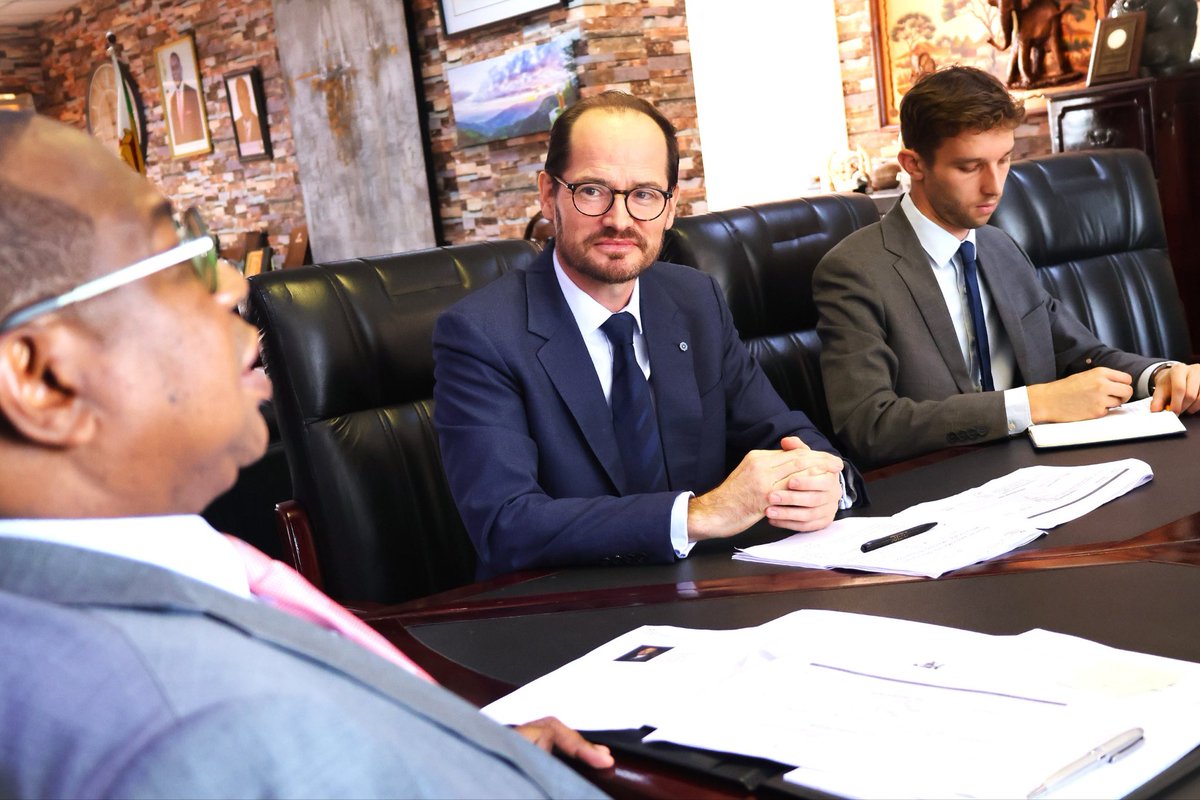
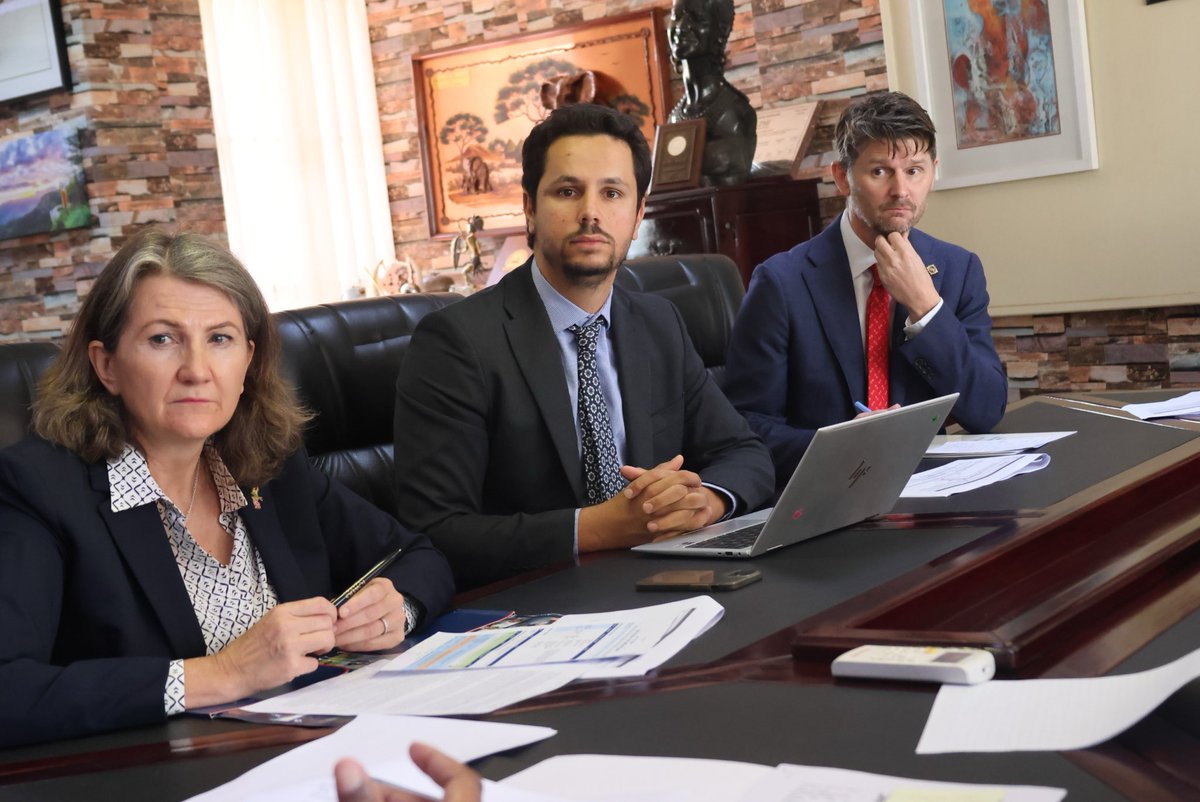
The Minister of Finance, Hon. Prof. Mthuli Ncube, received courtesy calls from European diplomatic partners to align expectations, strengthen mutual understanding and establish key technical priorities ahead of the forthcoming engagements.
The United Kingdom delegation was led by Deputy Ambassador Dr Jo Abbot, accompanied by Senior Economist Gabriel Montagu-Pollock and Governance Lead Ed Bell. In separate engagements, the Minister subsequently met with the Ambassador of France to Zimbabwe, His Excellency Paul-Bertrand Barets and the Ambassador of Germany to Zimbabwe, His Excellency Christoph Retzlaff.
During the discussions, the international partners acknowledged Zimbabwe’s ongoing macroeconomic stabilisation efforts and the progress achieved under the second review of the International Monetary Fund (IMF) Staff-Monitored Programme (SMP).
A key area of focus was the development of realistic three-to-five-year roadmaps to facilitate Zimbabwe’s reintegration into the global financial system. The European diplomatic partners stressed that resolving Zimbabwe’s sovereign debt challenges requires broad-based consensus among international creditors and across multilateral platforms.
During the bilateral engagement with the German Ambassador, discussions linked the technical debt clearance framework to the broader political re-engagement agenda under the Second Republic. Ambassador Retzlaff highlighted Germany’s influential position as Zimbabwe’s largest bilateral creditor within the Paris Club framework.
Key issues included the finalisation of Bilateral Investment Promotion and Protection Agreement (BIPPA) commitments, particularly those relating to land compensation.
In a subsequent meeting with the French Ambassador, His Excellency Paul-Bertrand Barets, the French delegation reaffirmed France’s diplomatic support ahead of the forthcoming engagements in Paris. Discussions also highlighted progress in bilateral relations, opportunities for expanding commercial partnerships and ongoing cultural cooperation initiatives. These include the restoration of the Great Zimbabwe World Heritage Site and the development of a new visitor centre.
On the domestic front, Treasury outlined ongoing economic governance reforms informed by public sector management frameworks, including those adopted in the United Kingdom. Minister Ncube highlighted the establishment of a Central Internal Audit Unit within Treasury to strengthen oversight of internal controls across Government. He also outlined the implementation of structured Ministerial Boards aimed at improving institutional accountability and aligning operational performance with executive leadership.
These strategic consultations form part of Zimbabwe’s broader diplomatic and economic re-engagement efforts, aimed at building international confidence, facilitating the resolution of longstanding external debt obligations and arrears and laying a sustainable foundation for the country's long-term economic stability and renewed access to international financial markets.