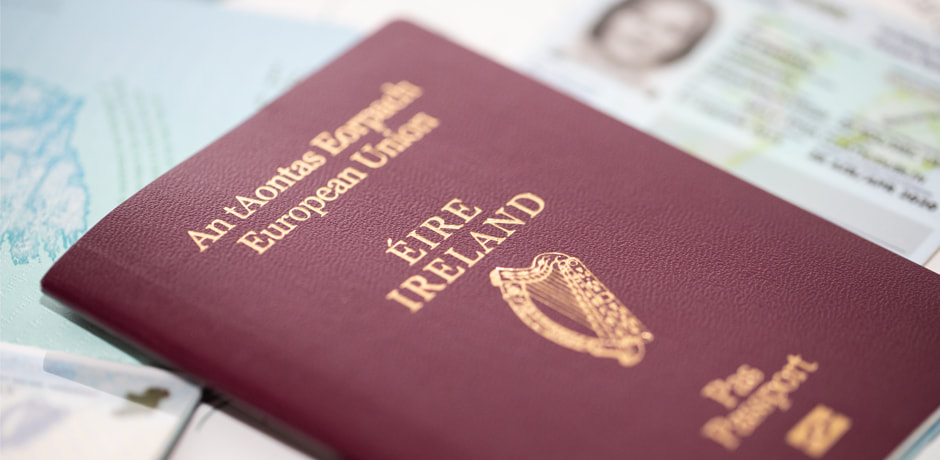
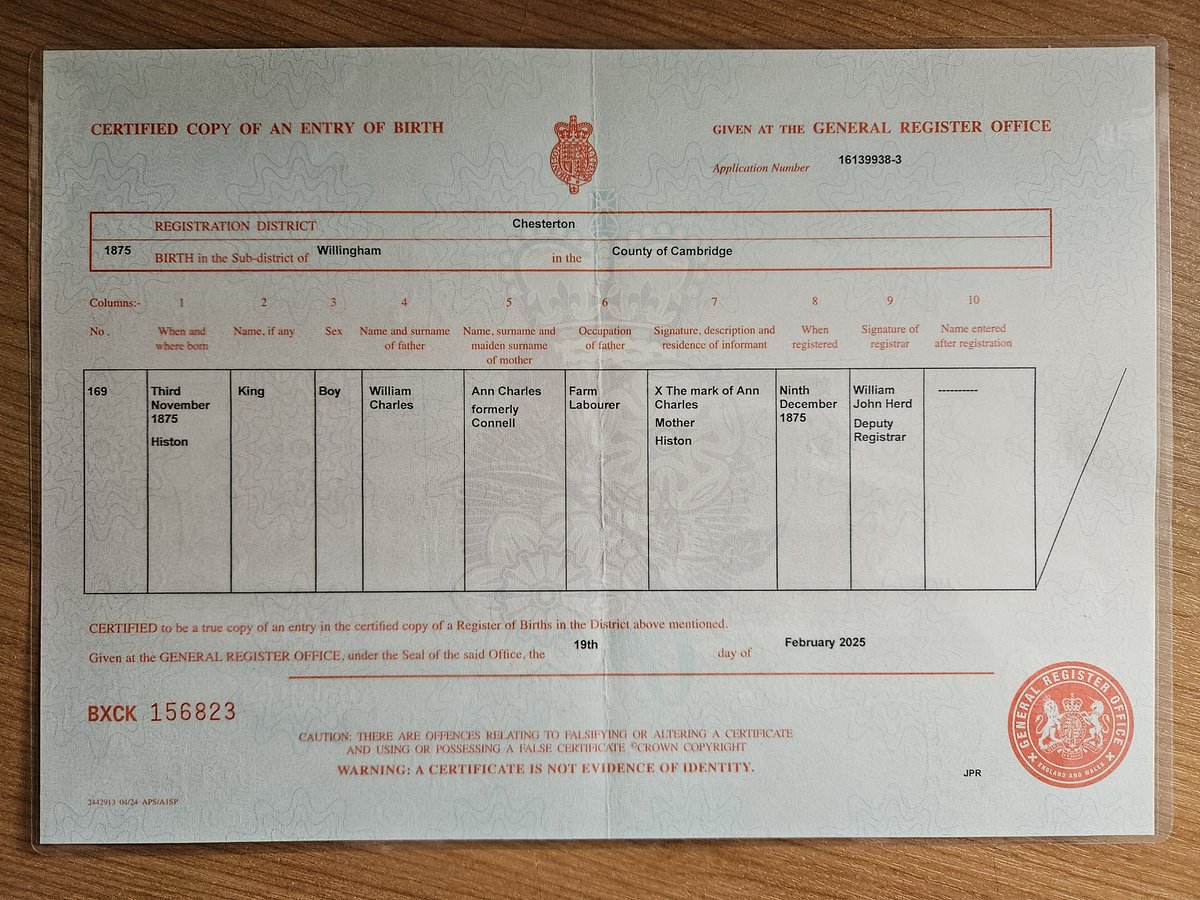
Have an Irish grandparent?
Want to apply for Irish Citizenship to keep EU freedom of movement after the end of 2020?
Contact us at https://t.co/86Fm5eM7kL to register your interest and we will alert you when the Irish DFA reopens applications after the current Covid-19 crisis.
The Man Who Watched Richard III and Counted Every Word.
In 1754, a field laborer from Derbyshire walked to London, a journey of roughly 150 miles on foot, to see the King. He never reached him. George II had just moved to Kensington Palace. So instead, the Royal Society arranged a visit.
Jedediah Buxton was born in 1707 in the village of Elmton. His father was the parish schoolmaster. His grandfather had been the vicar. Neither fact rubbed off on him: Buxton lived his whole life unable to read or write, and died an agricultural laborer, just as he had begun.
What Buxton could do was calculate. Without pen, paper, or any formal arithmetic, he surveyed the entire lordship of Elmton, thousands of acres, by walking it. He gave the result not just in acres and perches, but in square inches. He once squared a 39-digit number in his head. It took him two months, but he got it right. He could pause a calculation mid-problem, work the harvest for a week, and resume without losing his place.
After meeting the Royal Society, who verified his abilities and paid him a "handsome gratuity", Buxton was taken to Drury Lane to see David Garrick perform Richard III. Those who accompanied him expected the splendor and drama to move him. Instead, he spent the performance counting. He tallied every word Garrick spoke. He counted the steps of the dancers. The music, he later said, "perplexed him beyond measure", not emotionally, but mathematically, because the sounds were too numerous to track.
He returned to Elmton and his fields. He died there in 1772, buried without a headstone. The Gentleman's Magazine had told his story eighteen years earlier. Almost no one has told it since.
Some minds don't fit the room they're handed.
Update to my post from August about Death Duty Registers at TNA:
All Death Duty Registers are now produced by TNA as the original registers and must be ordered four days in advance.
No microfilms.
The FamilySearch datasets still exist but do not seem to be recommended by TNA.
Do you research into Suffolk genealogy? Then look at this blog post explaining Ancestry’s new Suffolk datasets which, at last, include document images. https://t.co/iNARcApkFq
TNA has recently changed the way that you view pre-1858 Death Duty Registers. Gone are the microfilms. Instead you now have to view them on FamilySearch.
See the details in this blog post - https://t.co/aG02XTLnMr
@j_amesmarriott The ability to read classical texts was not gradually lost, it remained, within the same communities it had always existed in. Joe Public was never able to read classical texts.
I just asked ChatGPT to provide a transcription of this 1663 Testament Dative written in Scots. It recognised that it was a Testament Dative, and that it was in Secretary Hand.
It got it close to 100% correct, so there is little for me left to do to create a formal transcription!
And they were. All 32 of them.
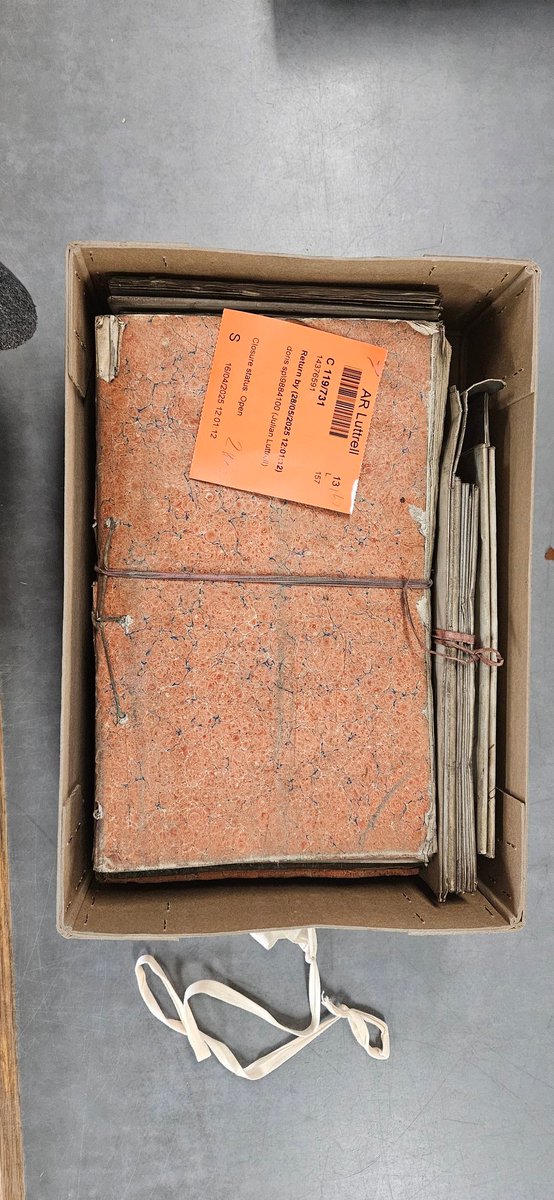
As well as 1000+ pages of cross-examination, 3 pedigrees, 2 sets of objections, 3 statements of facts, 3 interrogatories, 3 draft master’s reports (what changed is very revealing), and a printed (why printed?) summary of the evidence.
The National Library of Scotland has just released OS 'Old Series' 1:63,360 maps of England and Wales (https://t.co/52C6fPyZl2). Accurate _and_ beautiful to look at (this is the Lake District), but TNA still wins in my book with its 1:10,560 maps of Plymouth from 1784 (OS 5/2-5).
@CummingsPFH In 1842 John Turner died a wealthy man with no next of kin, but insane and intestate. Some people had doubts - was he instead the long lost brother of labourers and flintknappers in Suffolk?
160 Chancery documents and counting...