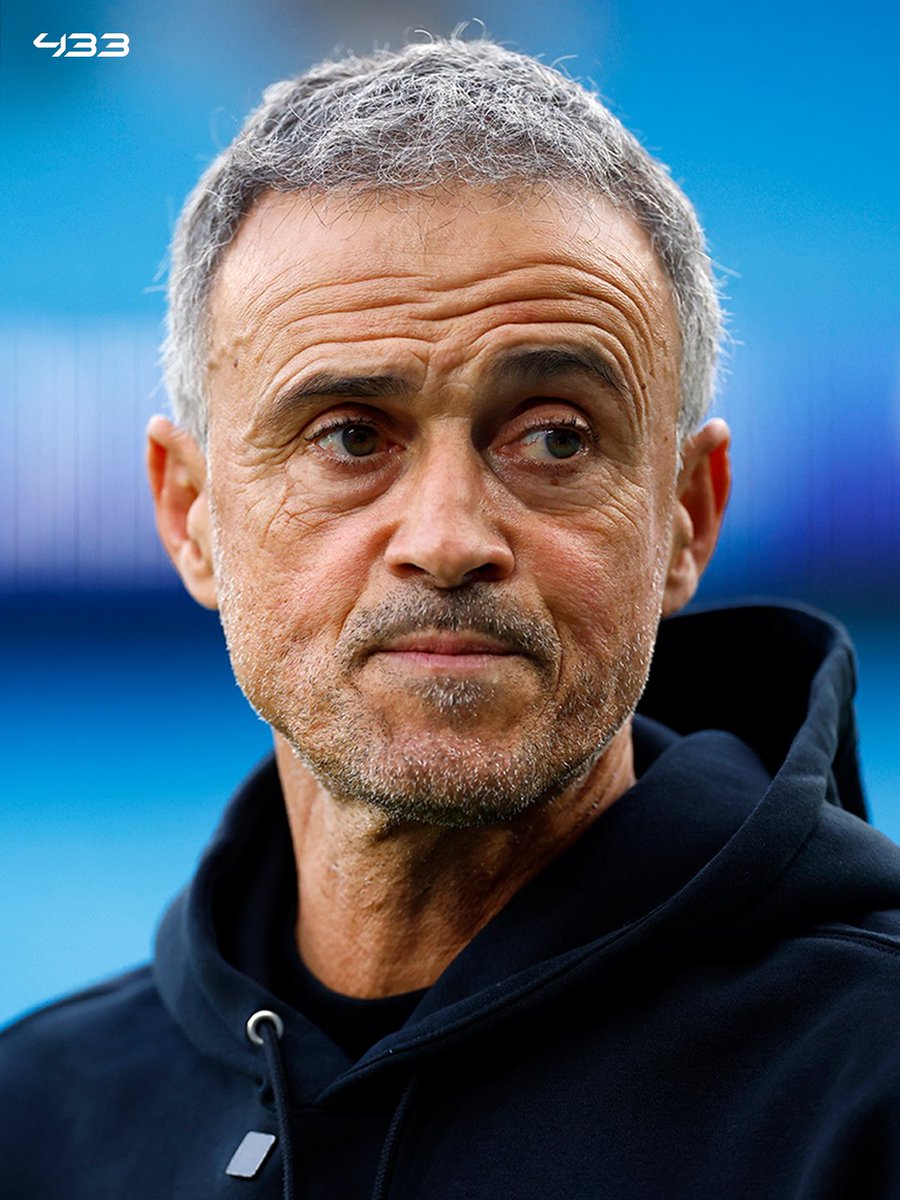
🚨 𝐔𝐏𝐃𝐀𝐓𝐄: PSG are considering signing a winger in the January transfer window, reports @le_Parisien_PSG 🔴🔵
Following injuries to Désiré Doué and Khvicha Kvaratskhelia, the Parisian club are exploring options to reinforce their attack 🔎
Luis Campos is targeting a versatile player capable of making a difference in tight spaces and one-on-one situations ⚡️
𝐖𝐡𝐨 𝐬𝐡𝐨𝐮𝐥𝐝 𝐭𝐡𝐞𝐲 𝐭𝐚𝐫𝐠𝐞𝐭? 🤔
Je suis désolé mobland , cette série est trop drôle
Quand le harrigan arrive pour payer la station d’essence, et vu que sa carte ne marche pas au lieu d’en sortir une autre, il tue le caissier de la station
Vous en faites beaucoup trop avec cette série les gars
Comme si un mafieux allait prendre le risque de tuer un mec comme ça gratuitement dans une supérette où il y a des caméras mdr
In addition:
- If you don’t enjoy teaching, or know how to teach
- If you get upset when people don’t understand your explanations or ask you questions
Please, don’t waste people’s time by starting a mentorship! 🙏🏽🙏🏽
You’ll think mentorship is easy until you experience it. Let me tell you guys my story.
I’ve never actually run a paid mentorship programme before. Earlier this year, sometime in January, I decided to test the waters by offering to teach people trading for free. My intention was simply to help people who couldn’t afford paid mentorships get access to some knowledge, guidance and occasional classes. I wanted to give back in my own little way.
I announced it on my Telegram channel, created a WhatsApp group, gathered interested people, and we kicked things off.
But somewhere along the line, I became inconsistent. Actually, I was inconsistent almost from the beginning.
Sometimes I’d be sleeping, eating, watching a movie or simply enjoying my day, and then I’d suddenly remember that I had a class in less than 30 minutes. And honestly, that realisation would ruin my mood because I couldn’t imagine having to interrupt whatever I was doing to conduct a class.
There were times I’d even over-sleep and wake up when the time for the class has past.
We covered a few things and touched on some basics, but keeping up with the classes was genuinely difficult.
And I remember asking myself: WHAT IF THESE PEOPLE HAD PAID FOR THIS?
Imagine having people pay you for a service, knowing fully well that you have to show up, be consistent, dedicate your time and ensure they’re getting value for their money.
That was when I started appreciating what goes into mentorship.
Honestly, you cannot imagine what some of these mentors go through to make sure their students get the value they’re paying for. They have to organise their schedules, put other things aside, prepare lessons and consistently show up.
Mentorship isn’t just about knowing how to trade. It’s also about having the time, patience, dedication and consistency to transfer that knowledge to other people.
Which is why I genuinely believe mentorship fees are valid. You’re not just paying for information; you’re also paying for someone’s time, effort, availability and commitment.
And if you’re one of the people who joined my classes earlier this year, I sincerely apologise that we couldn’t see it through to the end. I genuinely underestimated what it would take.
One thing is certain, though: I’m never attempting to run a mentorship programme again, whether paid or free. Never!😂
Huge respect to everyone who runs paid mentorship programmes and actually sees them through to the end. It is NOT easy.
It’s time-consuming, demanding and requires a level of dedication I honestly don’t see myself committing to.
I love my time and peace of mind too much.😭
'Abbott Elementary' star Janelle James unboxes a custom 'GTA VI' PS5 package sent by Rockstar Games, celebrating her in-game radio show 'She Got Assets'
"GOD IM TURNED ON KNOWING HOW MANY PEOPLE ARE JEALOUS RIGHT NOW. THANK YOU ROCKSTAR!"
(🎥: IG/janellejamescomedy)
NIGERIANS, GO AND VERIFY (7)
LIFTING THE VULNERABLE : ANAMBRA’S BLUEPRINT FOR POVERTY ALLEVIATION AND SUSTAINABLE EMPOWERMENT (2006–2014)
Economic growth that does not translate into improved living conditions for ordinary citizens is incomplete. This is one of our fundamental concerns with President Bola Ahmed Tinubu's government. Development must ultimately be measured by its impact on human lives, particularly those of the poor and vulnerable. This was underpinned by the Anambra Integrated Development Strategy (ANIDS). We believed that infrastructure, education, healthcare, agriculture, and social protection must reinforce one another. Poverty was not merely a shortage of money; it was also a lack of access to opportunities, productive resources, and the basic conditions necessary for a decent life.
Our poverty alleviation strategy, therefore, went beyond temporary handouts. It focused on restoring dignity, creating economic opportunities, and equipping vulnerable citizens with the means to become self-reliant.
Our approach attracted recognition beyond Anambra. In May 2010, Magnus Kpakol, then National Coordinator of the National Poverty Eradication Programme (NAPEP), commended our commitment to poverty reduction, declaring: “We are prepared to support you in the excellent work you are doing in Anambra State.”
1. POVERTY MAPPING: KNOWING WHERE POVERTY LIVES
We recognised that poverty could not be effectively addressed without knowing where it was concentrated and what caused it. We, therefore, undertook a poverty-mapping exercise to identify the most deprived local government areas and communities.
The exercise revealed that some of our poorest communities were also important food-producing areas. Their challenges included poor access to markets, agricultural inputs, electricity, water, and other economic opportunities.
Areas including Anambra West, Orumba South, Awka North, and Ogbaru required particular attention. The findings informed our development priorities, enabling us to direct roads, agricultural support, and social interventions toward neglected communities.
2. EMPOWERING WOMEN, WIDOWS, AND COOPERATIVES
We recognised that rural women, widows, and indigent households bore a disproportionate burden of poverty. Across the 21 local government areas, we provided financial assistance and productive support to thousands of beneficiaries.
Our administration provided financial assistance to support the establishment and expansion of small businesses and farming activities. We also introduced revolving loan schemes to promote enterprise development, economic self-reliance, and improved livelihoods.
We distributed productive equipment, including sewing machines, generators, ovens, cookers, hair dryers, shoe-making machines, and welding equipment. The objective was to help beneficiaries establish sustainable livelihoods rather than remain dependent on government assistance.
We also promoted access to microcredit and cooperative financing to enable small entrepreneurs to expand their businesses, improve their incomes, and create employment.
Our philosophy was simple: rather than merely giving people money to survive today, the government should help them acquire the means to earn a living tomorrow.
3. AGRICULTURE AND FADAMA: MAKING RURAL COMMUNITIES PRODUCTIVE
Agriculture was central to our poverty-reduction strategy because many rural households depended on farming.
Through partnerships with the Federal Government, the World Bank, and other development partners, particularly under the FADAMA programme, we supported farmers with finance and productive assets.
In November 2009, our administration disbursed millions to FADAMA Community Associations across the state. By October 2010, the National FADAMA office was commending Anambra’s commitment. Its National Project Coordinator, Buka Tijjani, represented by Charles Ugwuona, described Anambra as the leading state in the programme.