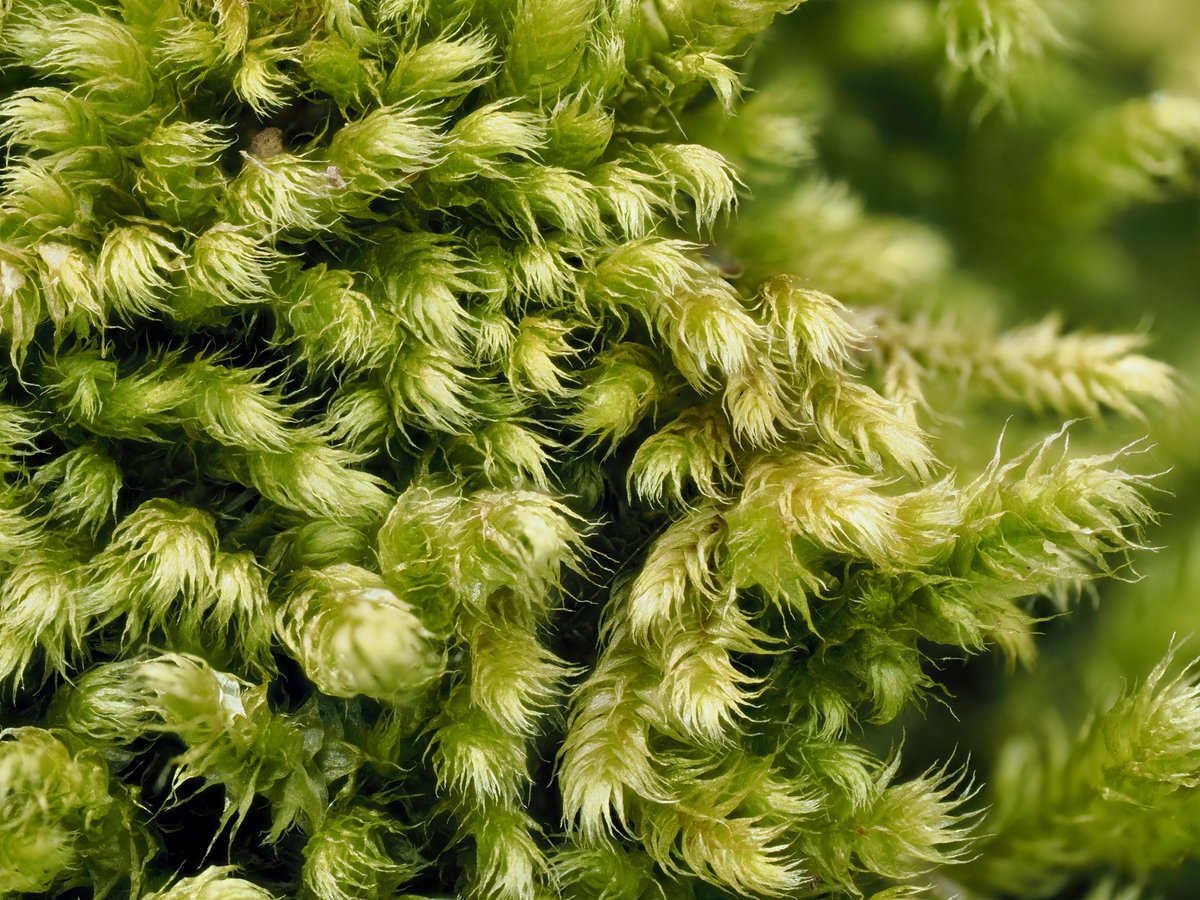
"Comb moss," Ctenidium molluscum, is a carpet moss with a featherlike growth form and leaves that are sickle-shaped and swept to one side (falcate-secund). This was seen Saturday at a former organic farm being converted to a natural area.
Calliergonella curvifolia (formerly Hypnum curvifolium) has a pinnate growth form and sickle-shaped leaves swept to the sides of the stems and branches (falcate-secund). As such, in the field it is a dead ringer for Callicladium imponens (formerly Hypnum imponens).
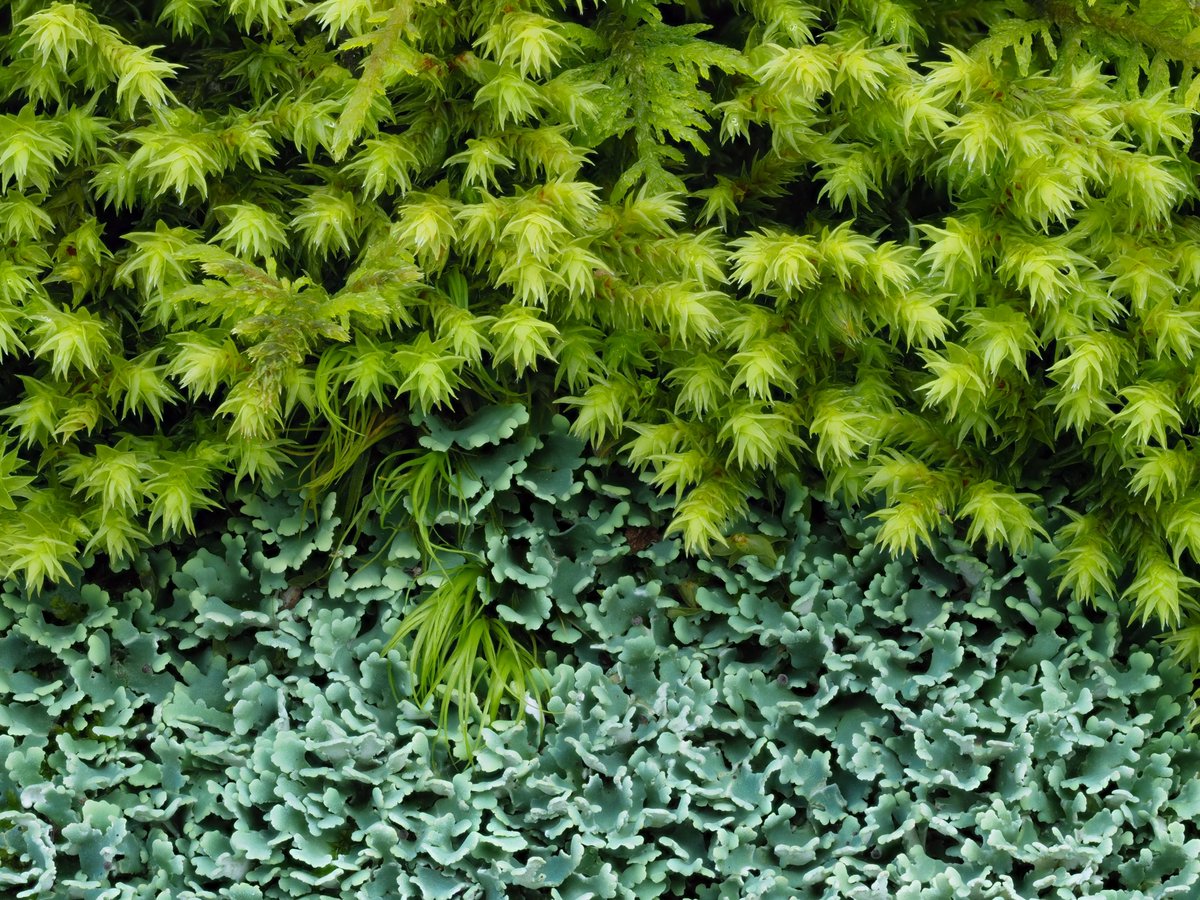
A pretty and shiny carpet moss with a roughly featherlike branching pattern, pointed stems and oblong-lanceolate leaves that hug the stems and branches, giving them a pointed aspect, this is "pointed spear moss," Calliergonella cuspidata.
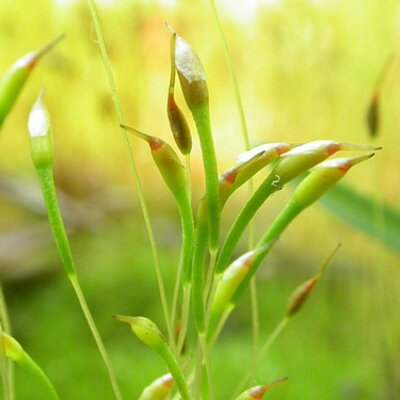
I took a long cut home to see the rare and unusual Discelium nudum at a Lake Erie bluff. It has a persistent protonema, hence the gametophytes are tiny budlike affairs. It's called "flag moss" because the calyptra wraps around the base of the stalk and flanks the capsule.
I licked it. It didn't taste bitter, but still methinks it be "bitter wart lichen," Lepra (Pertusaria) amara, seen today on the trunk of a beech tree n southern Ohio's Vinton County.
A little button-like tuft of moss high on a tree trunk (in this case a buckeye) with crisp-curled leaves and somewhat elevated sporophytes, this is "crisped pincushion," Ulota crispa.
Traponora varians (formerly Pyrrhospora varians) is a common crustose lichen found on tree trunks and branches. It can be recognized by its its thin warty grayish-beige thallus and abundant small pale brown apothecia.
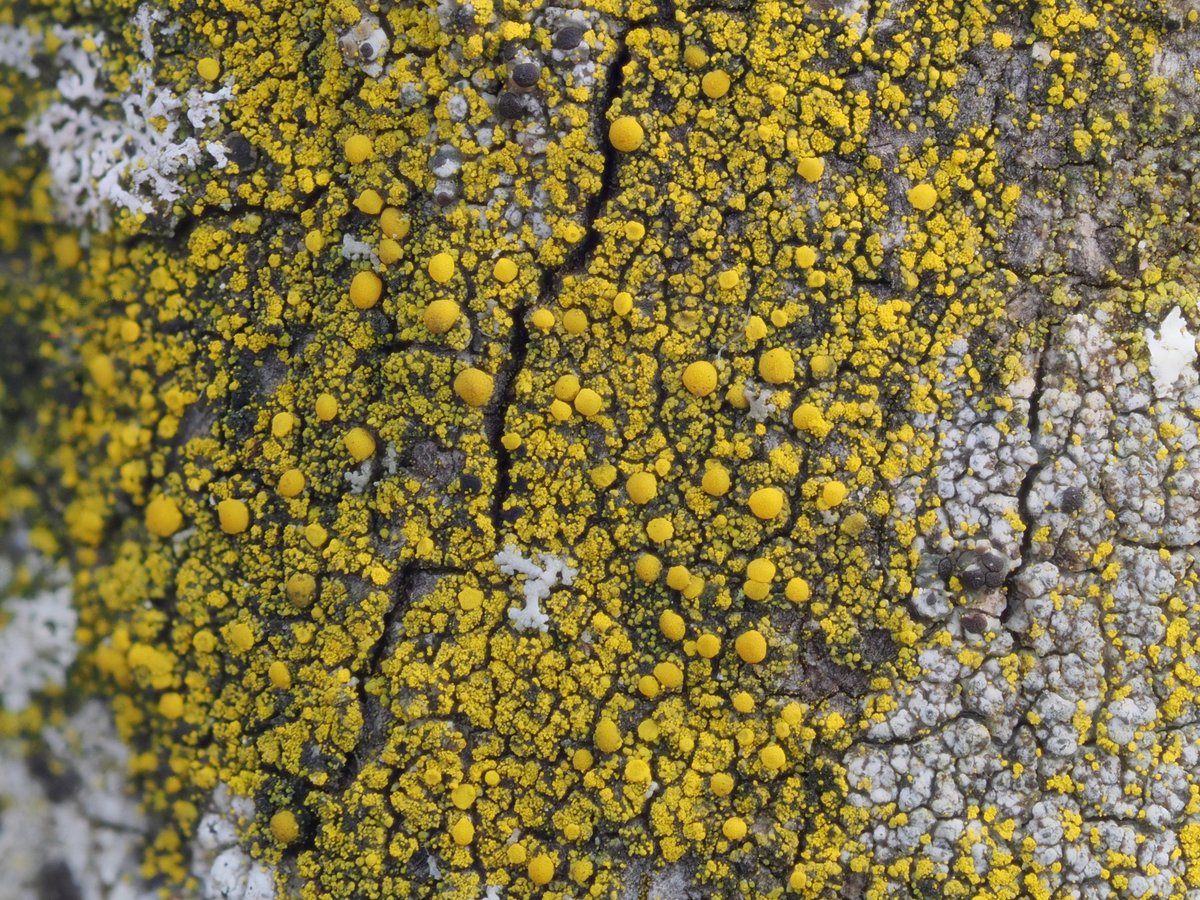
A pretty yellow lichen that's similar and, I assume, closely related to the foliose "candleflame lichens" in the genus Candelaria but is strictly crustose and bears abundant spore-producing apothecia, this is a "goldspeck lichen," genus Candelariella.
This not-quite-foliose lichen is Protoparmeliopsis muralis, abundant in many places wordwide, it's kind of rare in Ohio, and this might be its grandest presentation, on a rock in a calcareous prairie in west-central Ohio's Miami County, where it posed for this photo yesterday.
Since they're so often seen together on granitic boulders in places like southern Ohio where they were photographed yesterday this Hedwig's ciliate moss (Hedwigia ciliata) and dragon cladonia (Cladonia squamosa) seems like the best of friends.
Since they're so often seen together (on tree trunks in park-like settings such as the OSU campus where they were photographed yesterday) this marble screw moss (Syntrichia papillosa) and tiny bristle moss (Orthotrichum pusillum) seems like the best of friends.
Bird's-claw beard-moss, Barbula unguiculata, is a common little moss that forms bright patches on bare soil in lawns and parks. Note the light green leaves that are lance-shaped and end in a projecting extension of the mid-nerve. It was seen this afternoon in central Ohio.
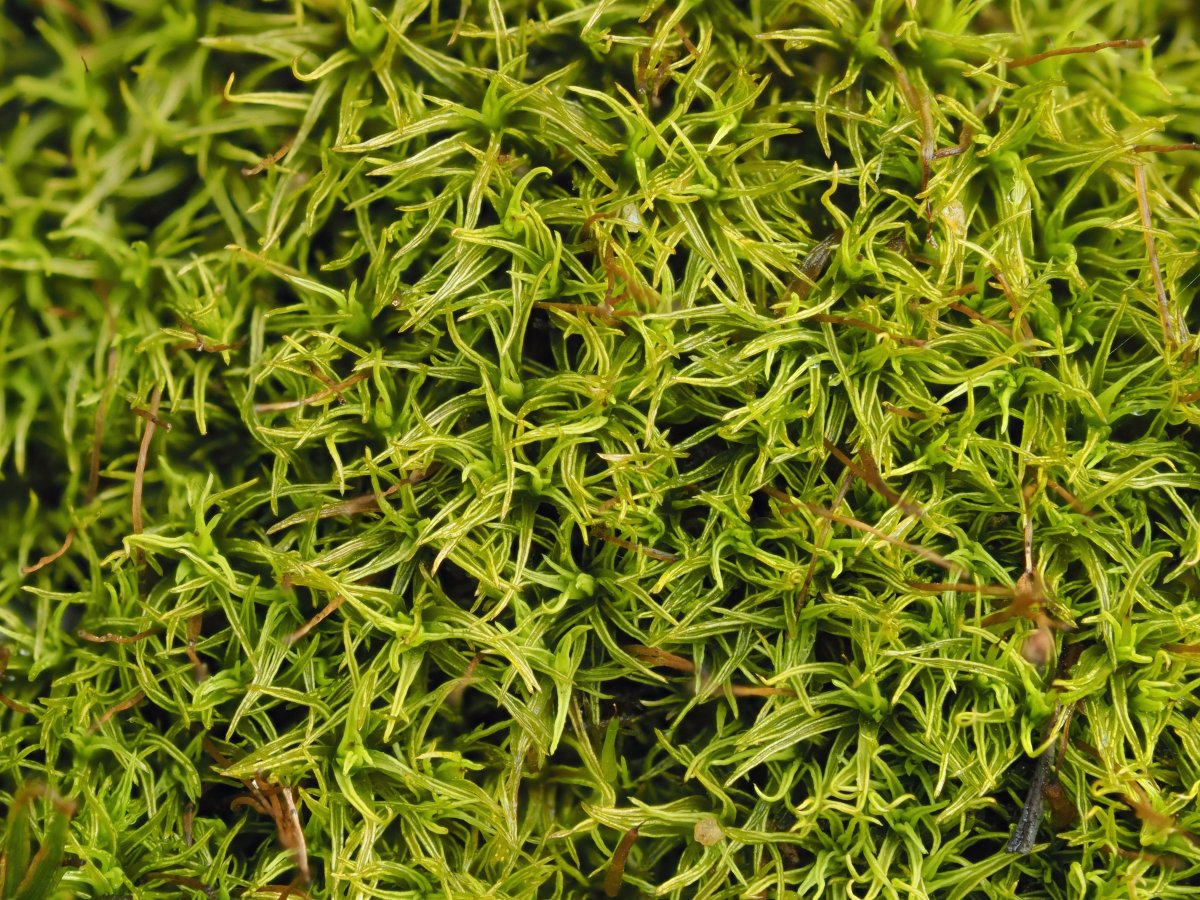
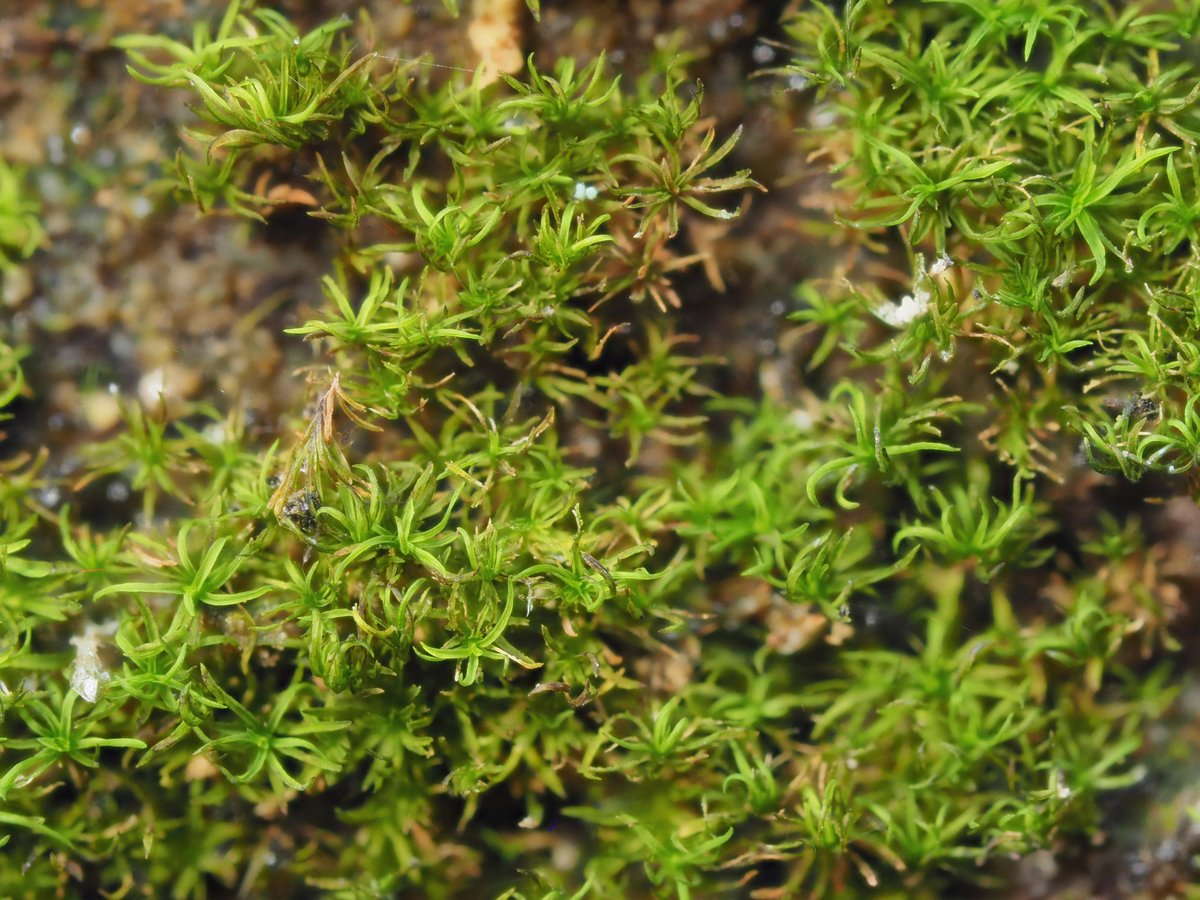
This moss, seen Friday, is growing on the ground on a hillside in southern Ohio's Vinton County. It's an acrocarp (cushion moss) with leaves that are involute (upwardly rolled along the margins), hence it seems to be a Weissia.
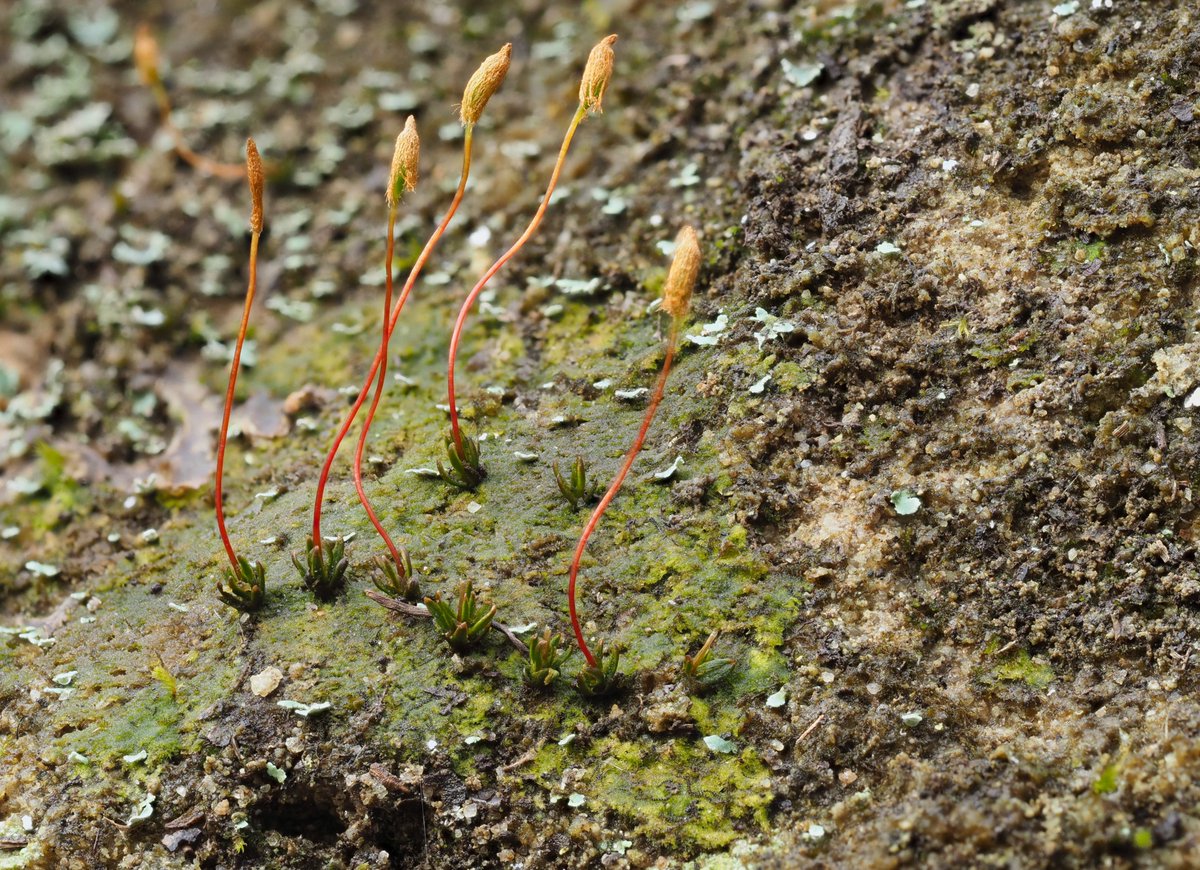
It's Pogonatum brachyphyllum! Seen today on a damp sandstone ledge in southern Ohio's Vinton County, this is one of just a few mosses that have a persistent protonema--the alga-like stage of gametophyte development that occurs before the growth of leafy "gametophores."
Cranberry Bog State Nature Preserve is a floating island in Buckeye Lake in east-central Ohio's Licking County that formed when the valley it resides in was flooded in the 1800's as part of a canal project. Sphagnum mosses are abundant there.
The tiny (the scene shown is about 1.5 cm across) but sometimes abundant "verdigris tufa-moss," Gymnostomum aeruginosum (family Pottiaceae), is a calciphile that nonetheless often appears on sandstone. This colony was seen Thursday on a damp shady rock ledge in southern Ohio.
Boulder broom moss, Dicranum fulvum, does have a fidelity to boulders. It somewhat resembles common broom moss, D. scoparium, which occurs sparingly on boulders but is more of a ground-dweller. This was seen Thursday in southern Ohio's Athens County.
This is the undersurface of a leafy liverwort, Jubula pennsylvanica, at 100x. Very Frullania-like (differing mainly in the leaf shape, having the upper lobes somewhat pointed instead of smoothly rounded), it has the lower lobes modified into little pitchers.
Because it is tan, fluffy, and cute, this has been called "the golden retriever of liverworts." It's handsome woolywort, Trichocolea tomentella, an Ohio rarity, seen yesterday on the ground in a damp recess in a rock overhang in southern Ohio's Athens County.
This is shield liverwort, Cheilolejeunea (formerly Leucolejeunea) clypeata, n ID made tentatively in the field by its incubous leaf insertion, and later confirmed at the microscope by its complicate bilobed leaves, and the presence of just one large granular oil body per cell.