Thank you @MickPuck. Thursday 18th, it's free to get in with the secret code 'Lunar Moths'. Details on the poster. We shall be joined by Waterboy. 'Famous' James Hallawell.
This scene comes from a series of wood-engraved illustrations based on Gustave Doré's drawings for Samuel Taylor Coleridge's poem, The Rime of the Ancient Mariner. The large folio edition featuring these illustrations was published in London in 1876.
This part is based on the moment in the poem when the sea seems to burn with ominous lights at night:
'About, about, in reel and rout
The death-fires danced at night;
The water, like a witch's oils,
Burnt green, and blue and white.'
The 'death-fires' imagery in the poem refers to St. Elmo's fire - a phenomenon that appears on pointed structures like ship masts during stormy weather and was often interpreted by sailors as a harbinger of doom. The depiction of the water burning green, blue, and white describes marine phosphorescence (bioluminescence) glowing in the dark. Coleridge blended these two distinct natural phenomena that sailors encountered in real life and attributed to supernatural forces.
Doré, too, doesn't depict this ambiguous display of light as a scene of scientific explanation. Instead, he transforms it into an image of dread featuring a winged humanoid figure, sea foam, the dark ocean, and tiny points of light.
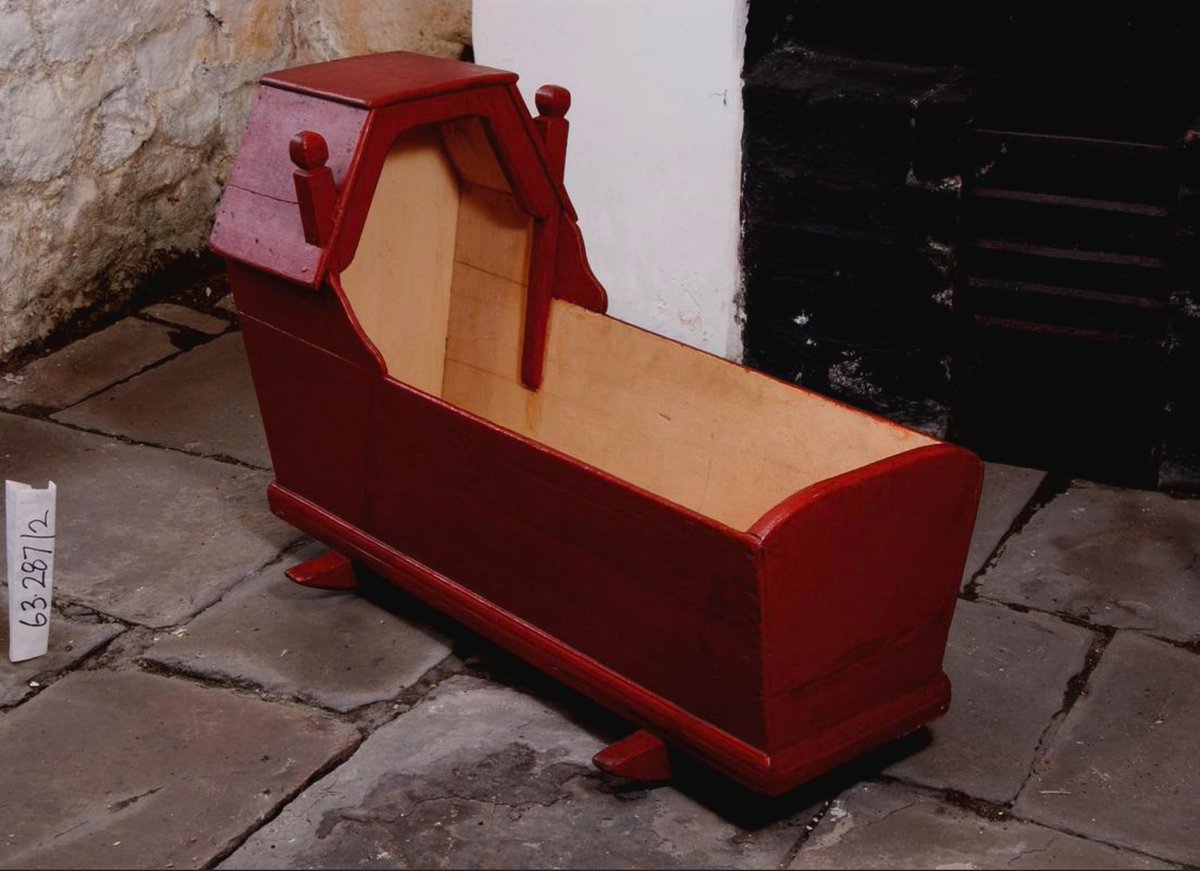
Colour magic, for baby protection.
Red cradle. Made in 1853 by a shoemaker on the Welsh island of Anglesey.
Red was reputedly lucky, protective & healing. Red cloth especially, but also other red things (including cars, 1960s folklorists recorded).
Image credit: Museum Wales
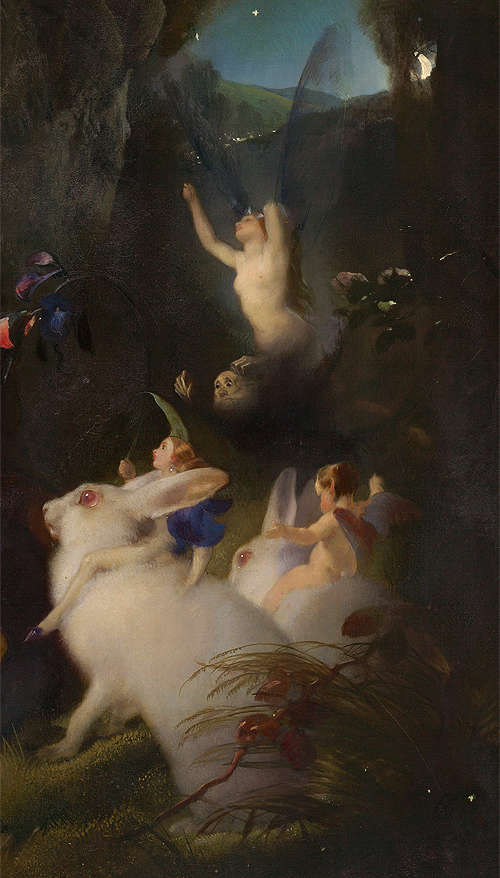
HEATH ROBINSON'S FAIRIES
Heath Robinson's illustrations to A Midsummer Night's Dream (1914) are less well known that Rackham's but equally enchanting. I delight in the insectoid fairies and tricksy Hobgoblin 'Lord what fools these mortals be' (Puck) #FairyTaleTuesday
A bright and breezy start to the week here in Glastonbury. Sun rays through the gateway. Photo taken as you go in to Avalon orchard at the base of Glastonbury Tor.
"Druidry is the western form of an ancient universal philosophy, culture, or religion, dating back from the days of early man where the three were one. It is of the stone circle culture, the groves of scared trees, the circular dance"
~ Ross Nichols
art: Maggie Vandewalle
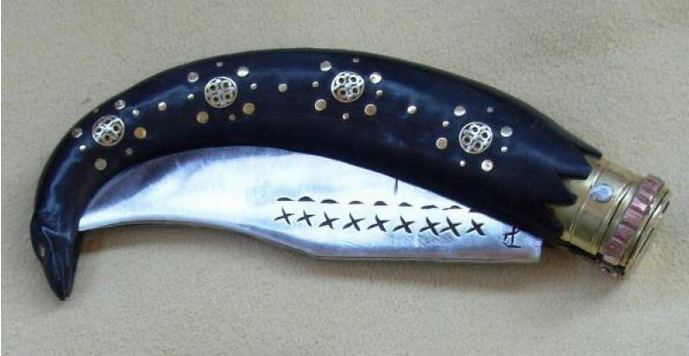
A magical weapon from Alpine folk tradition: The Drudenmesser (Drude Knife) 🗡️
Stabbed into floors, under cribs, or into stable ceilings.
To ward off the Drude—a nocturnal, nightmare-inducing spirit—and other evil influences.
🏛️ Credit & collections: Met Museum NY & Hexenmuseum Schweiz.
#MIDSUMMER is seen as a time when the normal laws of nature or divinity could be suspended, when spirits & fairies could contact humans, when humans could exceed the usual limitations of their world. #FairyTaleTuesday Images: Oliver Messel; Landseer
This is one of Carnac archaeologist Zacharie Le Rouzic’s earliest cards showing the transepted passage grave of Keriaval in Carnac animated by a small family group. The back type, image size and format of editor name place it in 1901-02. #TombTuesday.
#FairyTaleTuesday Is it time to elect Monty Summers (1880-1948) as this year's mid-summer icon? An adherent of clerical drag & restoration theatre, Summers was also an occult historian penning 'A History of Witchcraft & Demonology' 'The Vampire' & 'The Werewolf' helping to shape how we now perceive folklore.
“To understand the grimoires within their own context, we must not look at them through the eyes of twenty-first century readers with modern sensibilities.
We must examine them with the eyes of the medieval magician, who lived in a world much harsher than our own: famine, epidemic illness, religious persecution, and warfare often meant that human life was cheap.
As a result, the magic employed by medieval mages to protect home and hearth was a very serious business and not for the faint of heart.”
― Aaron Leitch, Secrets of the Magickal Grimoires: The Classical Texts of Magick Deciphered
The simple dolmen de Bidot in Mas-d’Azil (Ariège) had a single capstone resting at an angle on 2 orthostats with at least one other collapsed into the chamber at the time of this c.1905 card by Labouche Frères in Toulouse.
Foxgloves, poisonous yet beautiful, observe their surroundings with majestic poise🌿🩷
In Norse mythology these magical flowers were gifted to the fox by the fairy folk🌷
In one version of this tale, the bells of the Foxglove are worn around the neck of the fox so that when it runs the bells jingle and cast a spell over the animal rendering it silent to humans and their dogs 🦊🔔
Leith Hill Place is now open Saturdays and Sundays until the end of September, 11am-4pm. A lovely National Trust house but listed on the Portal because of Charles Darwin's 'Earthworm Stone' in the grounds. More 1/