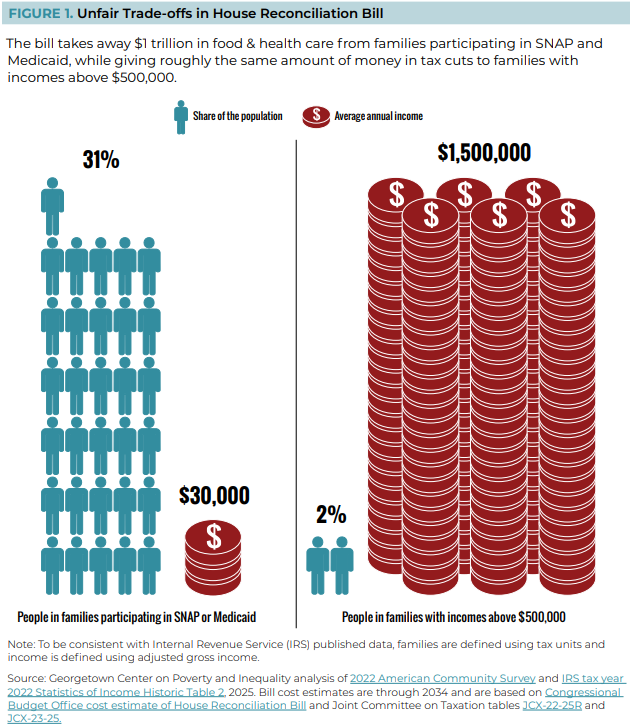
In a new @GtownLawPovCntr analysis, we ran the numbers to reveal the unfair tradeoffs in the "big, beautiful bill" which takes health care & food away from the many to pay for tax cuts for the few.
We also ran numbers by state. The results are staggering.
https://t.co/Qv9tZyLPbt
Instead of enacting policies that would reduce poverty & hardship, this President and the Republican majority have pushed the megabill and other policies that aim to weaken programs that Census data show lifted millions out of poverty in 2024. https://t.co/t2KtgVHdOV
New Census data show that child poverty remained much higher in 2024 than in 2021, when the #ChildTaxCredit expansion & other pandemic relief sharply lowered poverty & reduced racial inequities.
Big Takeway: policies mattter & poverty is a policy choice!
https://t.co/D2OqyVh1nQ
The #ChildTaxCredit lifted 2.4 million children out of poverty in 2024, but making a $2,200 credit fully refundable could have lifted 1.4 million more children, an opportunity Congress and President Trump missed. https://t.co/HKJ72Z1PLF
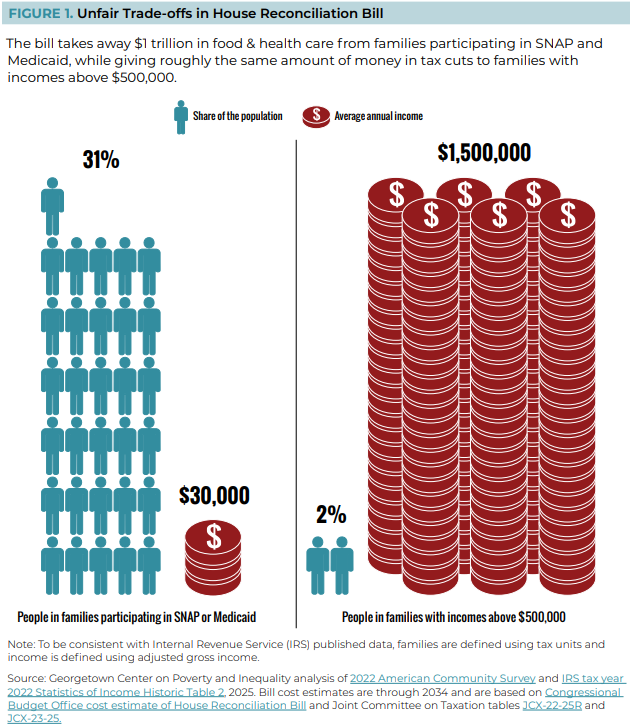
In our analysis of the House bill, we showed how people in families with income above $500,000 have average annual incomes of $1.5 million. This bill will make our debt soar & increase inequality in every state. There's nothing beautiful about that. https://t.co/Qv9tZyMn11
The big winners of the #BigUglyBill will be the small percentage of people who make over $500,000 per year, while millions will lose health care & food assistance. It's striking that this is particularly true even for some groups that disproportionately voted for Trump:
Senate Rs voted to pass a bill that wld raise food & health care costs on families, increase hunger & take health coverage away from millions of ppl while doubling down on tax cuts for the wealthy. House Rs must stand up for their communities & reject it. https://t.co/6xRvT6LPYM
The numbers don’t lie. The Senate just passed a bill that takes health care & food away from the many to pay for tax cuts for the few.
These unfair trade-offs in the Senate bill are just as bad as they were in the House bill. (And they explode the debt!) https://t.co/Qv9tZyLPbt
There are real stakes of budget and tax decisions. Cuts to food, housing, and health care aren’t just numbers—they’re harmful trade-offs that hit families hardest.
Check out our analysis ⬇️
See our paper for full methodology. We used the Census Bureau’s ACS & the latest available published tables from the IRS, which are for tax year 2022. To be consistent with the IRS data, families are defined using tax units and income is defined using adjusted gross income.
In a new @GtownLawPovCntr analysis, we ran the numbers to reveal the unfair tradeoffs in the "big, beautiful bill" which takes health care & food away from the many to pay for tax cuts for the few.
We also ran numbers by state. The results are staggering.
https://t.co/Qv9tZyLPbt
The House bill will exacerbate already extreme levels of income inequality.
In Wyoming, Nevada, and Florida, the average annual income of families above $500,000 is more than 70 times the average income of families participating in SNAP or Medicaid.
https://t.co/5Oa7y6gVkO
Team, we’re losing the plot. Their plan to cut people’s health care & food assistance is about paying for tax cuts for rich, not deficit reduction:
Today, HHS Secretary Nominee Robert F Kennedy Jr. is set to appear in the Senate. One area to watch: What is his position on the future of #Medicaid and marketplaces, which together cover nearly 100 million people,helped shrink the uninsured rate, and improved access to care?
This new OMB memo is certain to cause chaos and could result in serious harm to a broad swath of people and communities around the country. https://t.co/OGUGJO3NQu
Policymakers should heed this warning. Republican proposals would take away health coverage & food assistance from millions of low- & moderate-income families, leaving fewer people with access to lifesaving care and more families struggling to pay their bills & afford groceries.
Economic & health security policies are stronger today than in ‘79, though many still struggle to afford the basics. Recent proposals that would take health coverage & food assistance away from people would increase hardship and reverse this progress. https://t.co/xfgtxg4NBi
A new CBO report comparing several measures of income and poverty underscores that government assistance programs have done a lot of good since 1979. Unfortunately, some readers have misconstrued the findings. Let’s take a look.
Looking at families in poverty using the official poverty measure in 2019 (before the pandemic), CBO data show that 68% of their total income including non-cash and tax benefits but excluding health benefits comes from “money income,” which is primarily earnings.