The Future Trojans football camp will be held at L. Richard Whitney Athletic Field on July 17, 6-9pm. We look forward to hosting any and all interested Trojans.
As a member of the scientific community, and particularly as a member of the American Chemical Society, I share the concerns that the ACS put forth in their "Statement on the Dismissal of National Science Board Members."
https://t.co/0zO3bSCmeB
Thanks to @bradleyu Chemistry (Drs. Montag, Campbell, Fry, McQuade) and @AmerChemSociety, I was able to read this incredibly relevant paper that studied guided-inquiry vs expository approaches in the Organic Chemistry lab. Really good stuff by BU.
https://t.co/6M7D7I1xN9
Senior RB/LB Logan Estes had a good visit this past weekend at Monmouth College. MC checks all of the boxes - good education, good campus, good football. Thanks to @RollScotsFB and Coach Braun (@MCBraunyBoy) for hosting him.
@logan_estes04
"Well, here's one reason why we are learning to wire in series and in parallel. This Lull requires 24V for its starter. To get that, two 12V batteries are wired in series." Pretty cool day wiring PV cells in series and then seeing this.
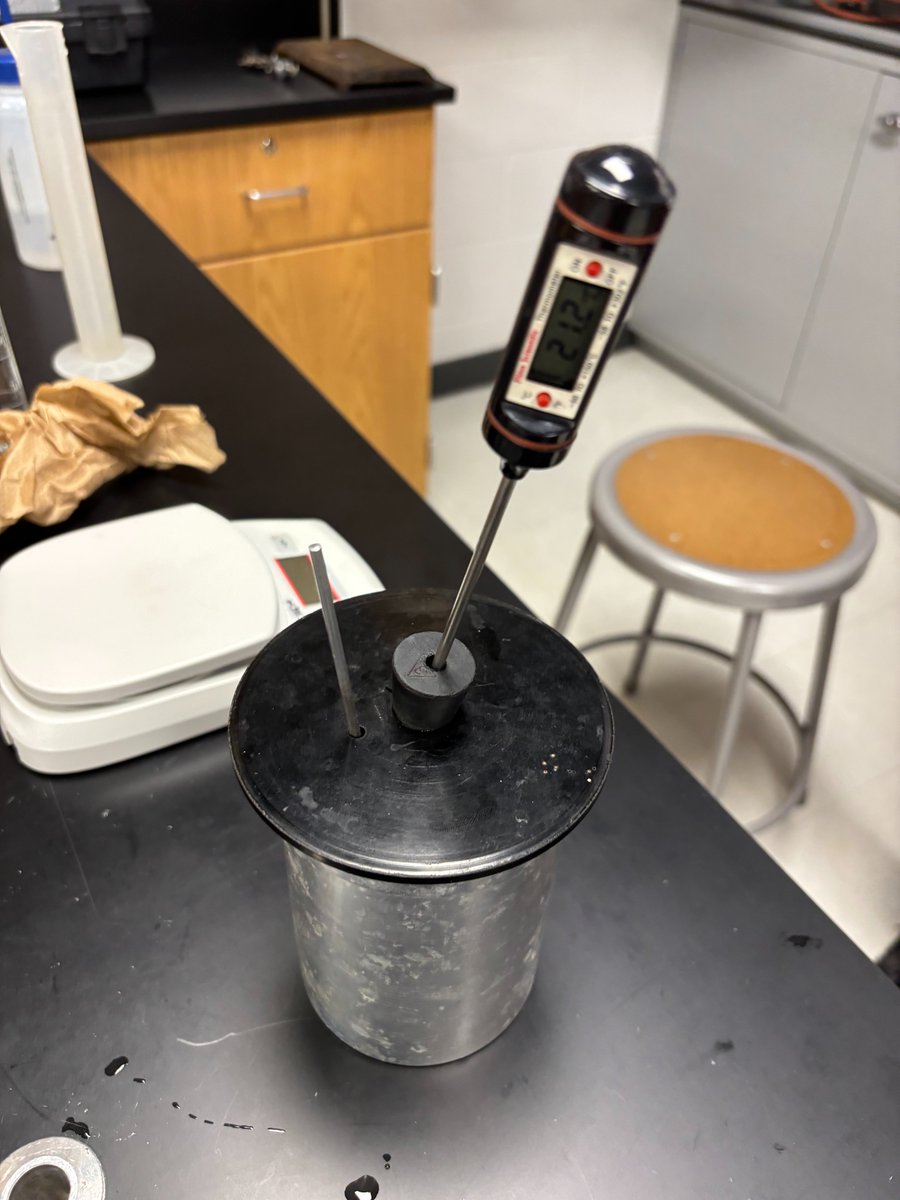
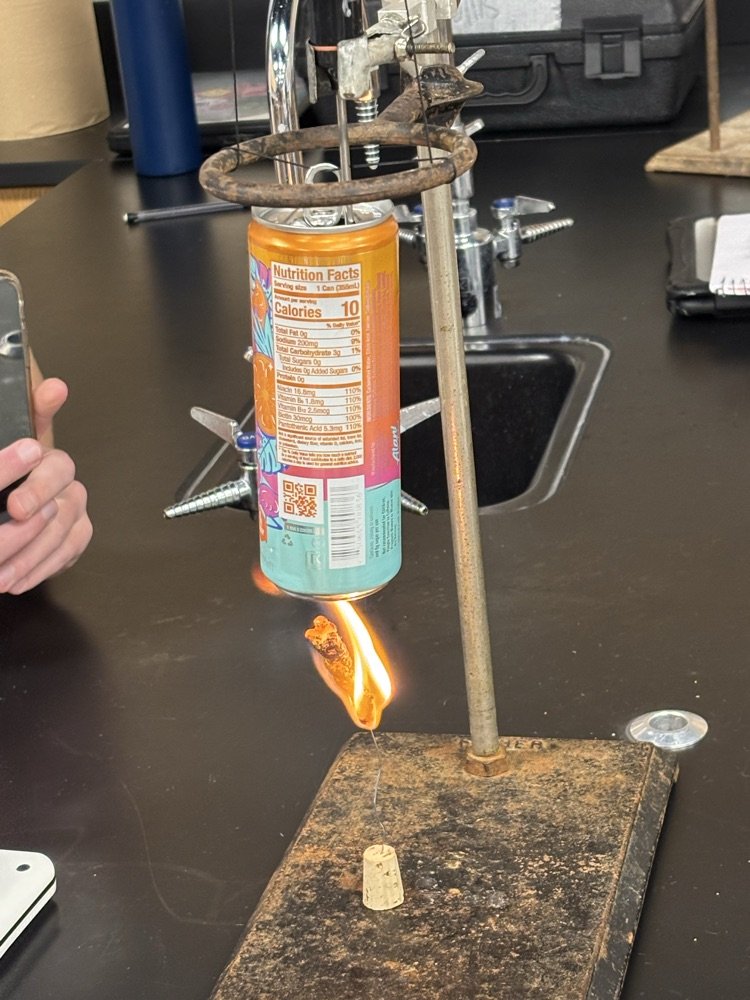
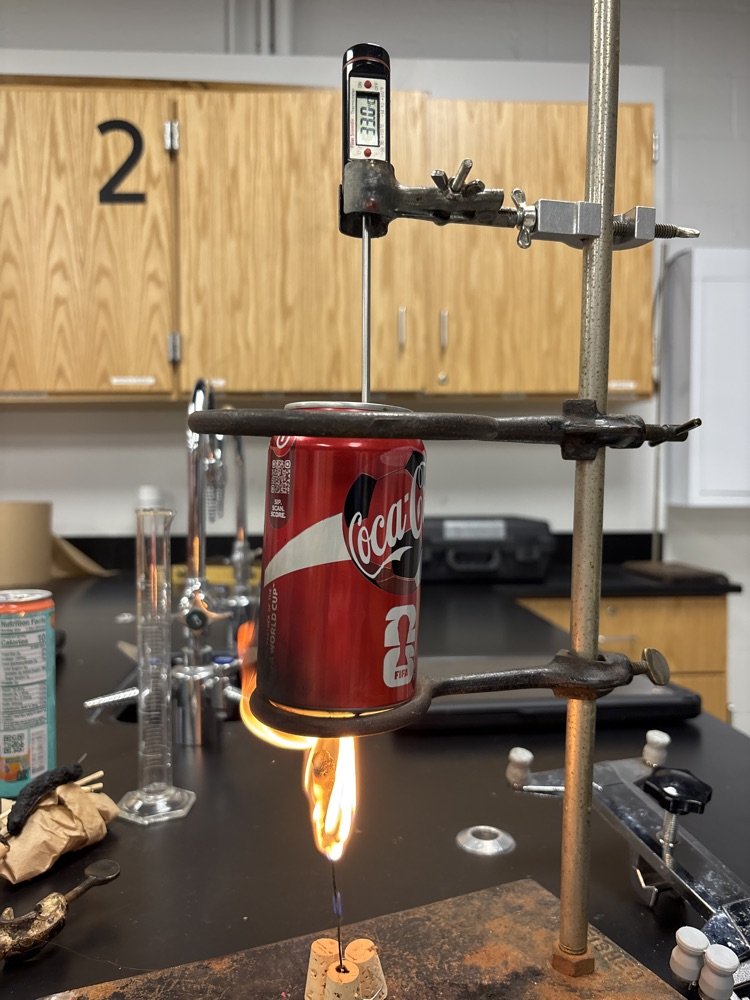
Substances have aspecific heat capacity, C. Heat in calories or Joules is denoted as Q. Heat aborbed by water, known C=1.0cal/(g*F), is the same as heat removed from a hot sample of metal. Qwater=Qmetal, we can idenfity the unknown metal by using the equation Q=m*C*deltaT.
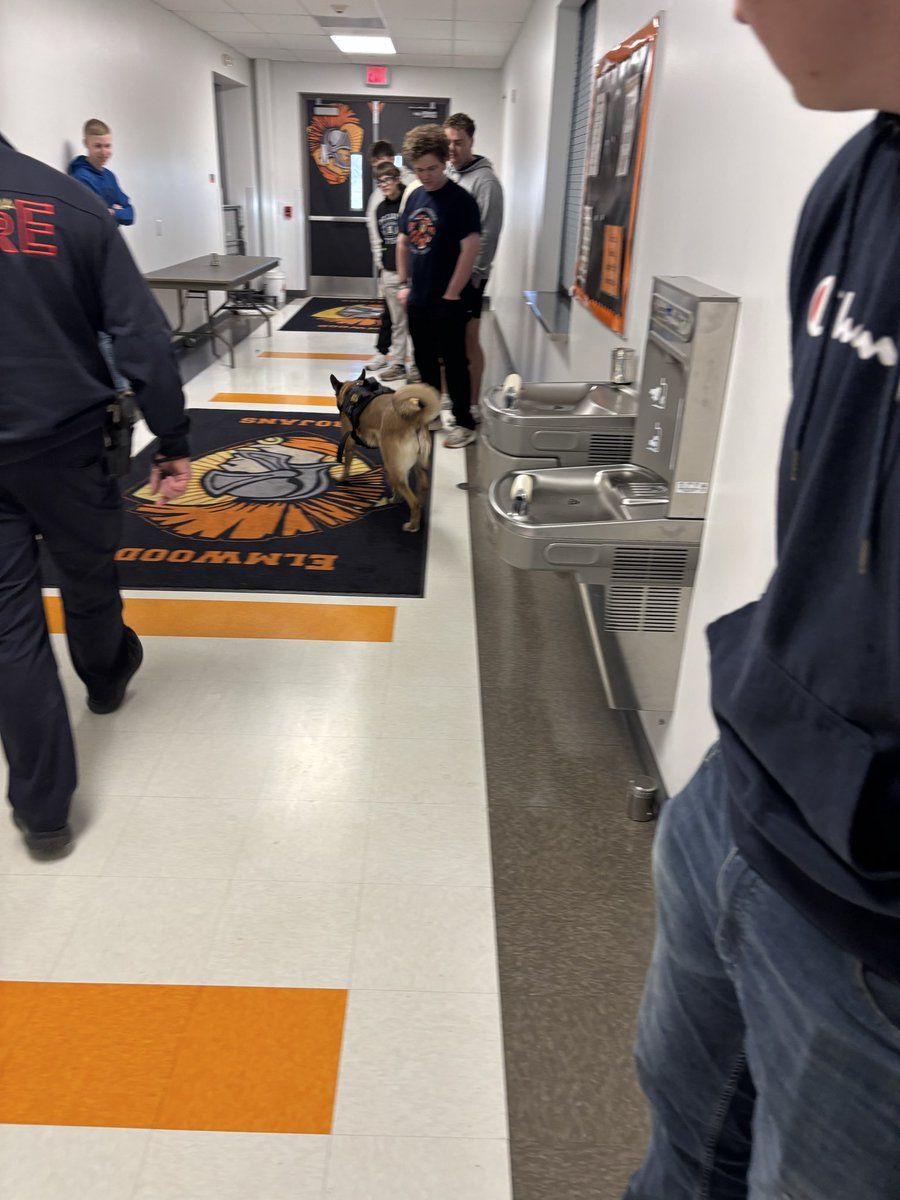
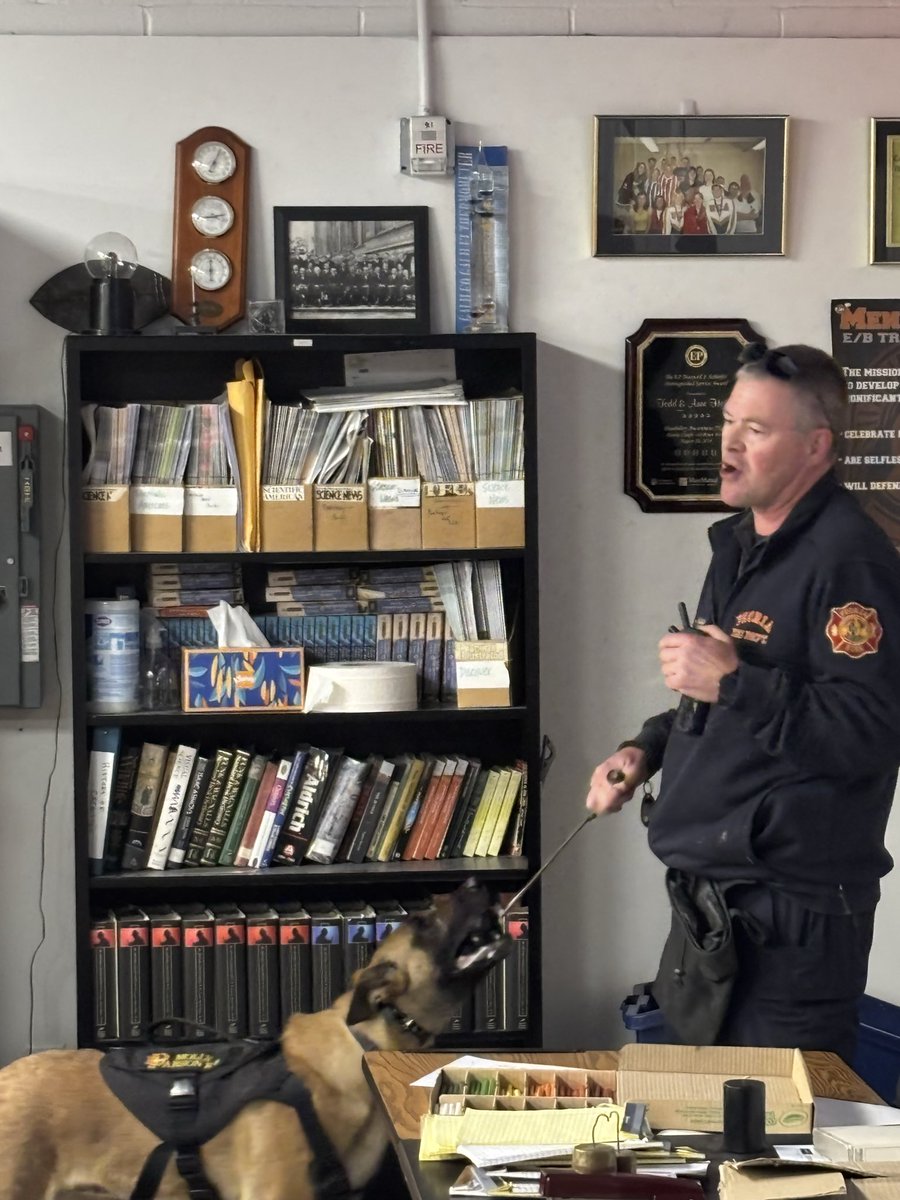
City of Peoria Fire Captain Harris and his partner Molly visited today to talk about the chemistry of fire, fire and arson investigation, and fire safety. While Capt. Harris is great, Molly certainly stole the show. Dogs have 300 MILLION olfactory receptors, we have million.
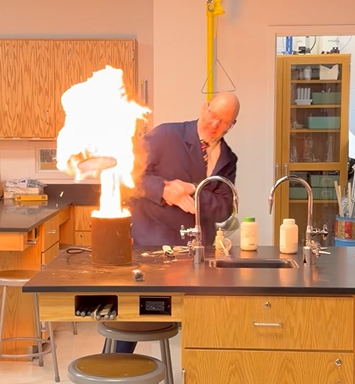
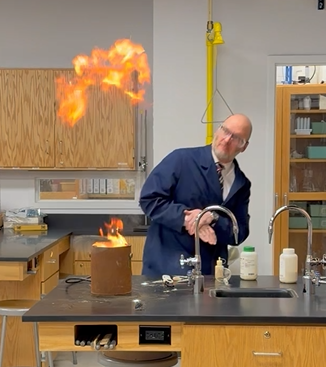
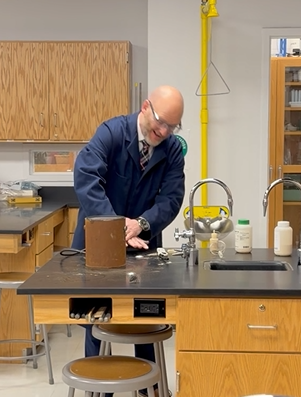
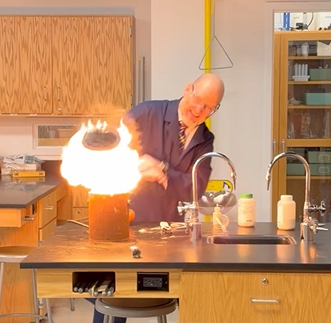
A simulation of a grain elevator explosion. The fire is created when air is pumped into the 'elevator,' blowing lycopodium powder (like grain dust) into the air. There is a lit candle in the can. Scale this up = big problem.
Random student question: "Mr. Hollis, could you die from eating too many cough drops?"
We used Merck to look up LD50rats menthol. Rats are not humans, but gives us approximation. It would take 200ish bags in one sitting to reach LD50 for a 100kg 'person.' I think we are safe.
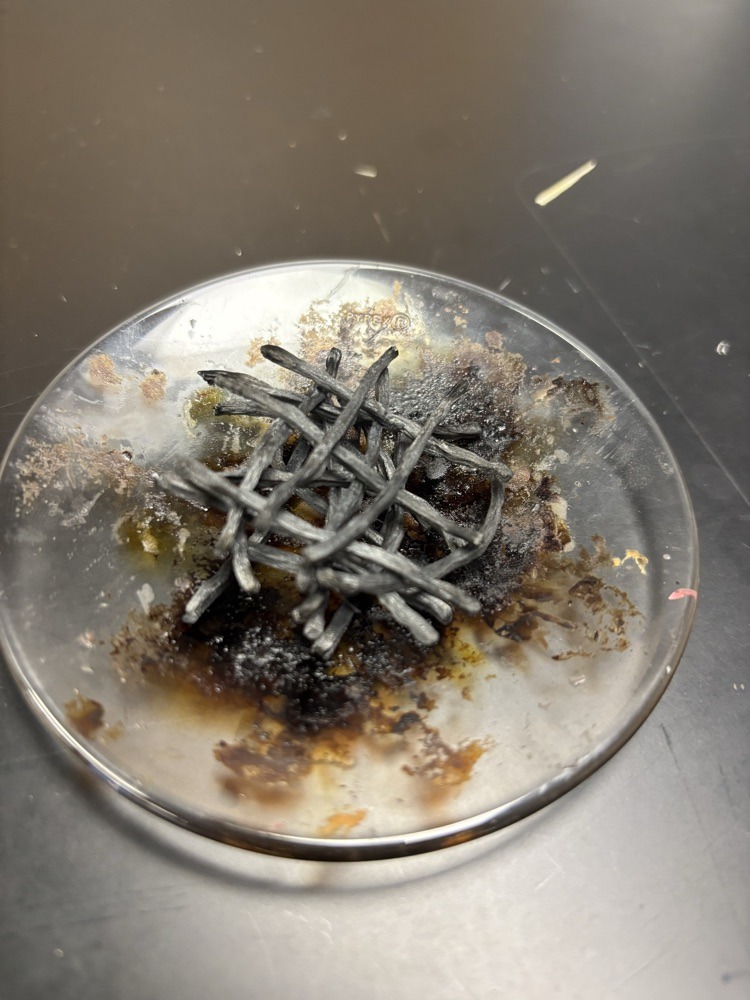
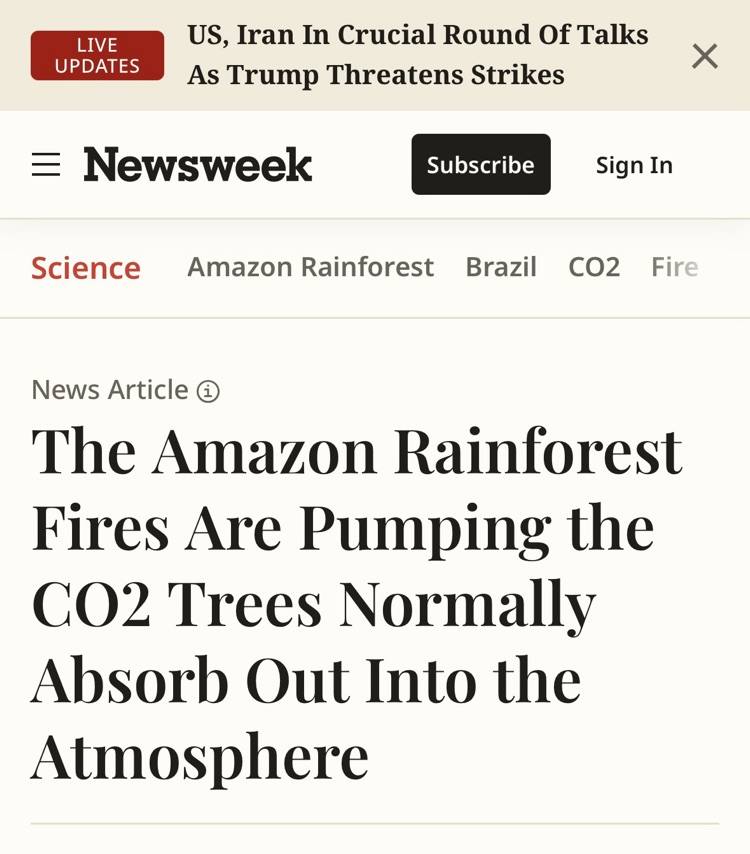
Today we perform an experiment to determine the amount of carbon dioxide produced when wood (glucose) burns. We will scale our results up to predict the amount produced when an acre of forest burns.
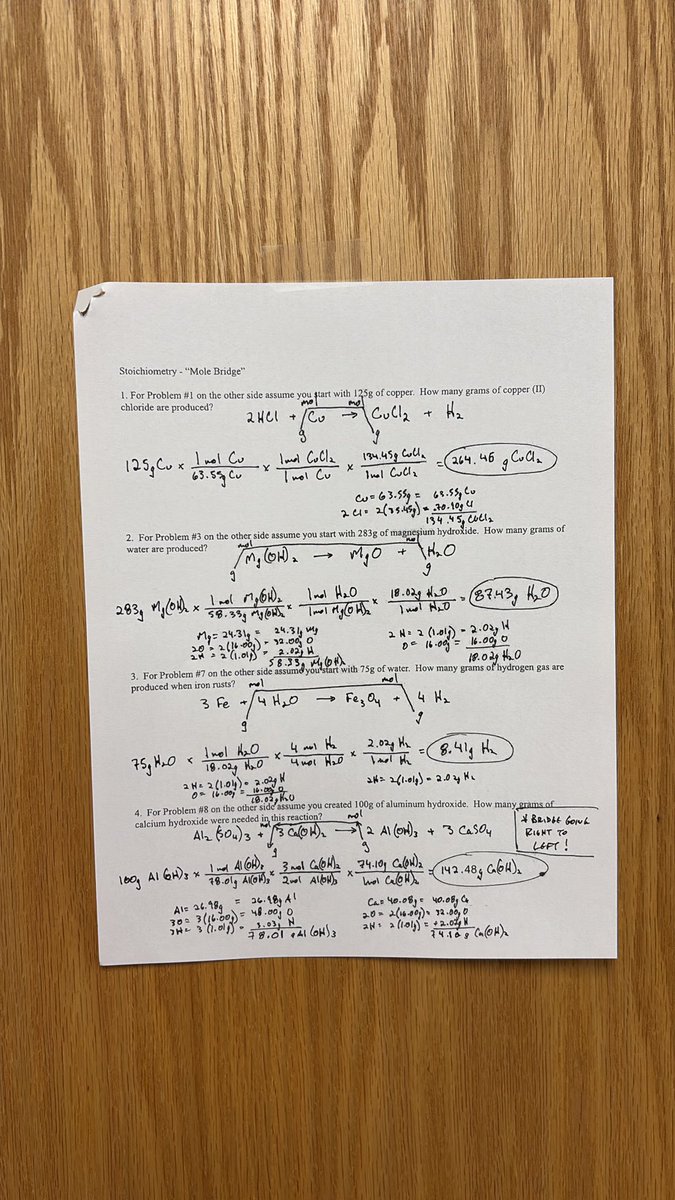
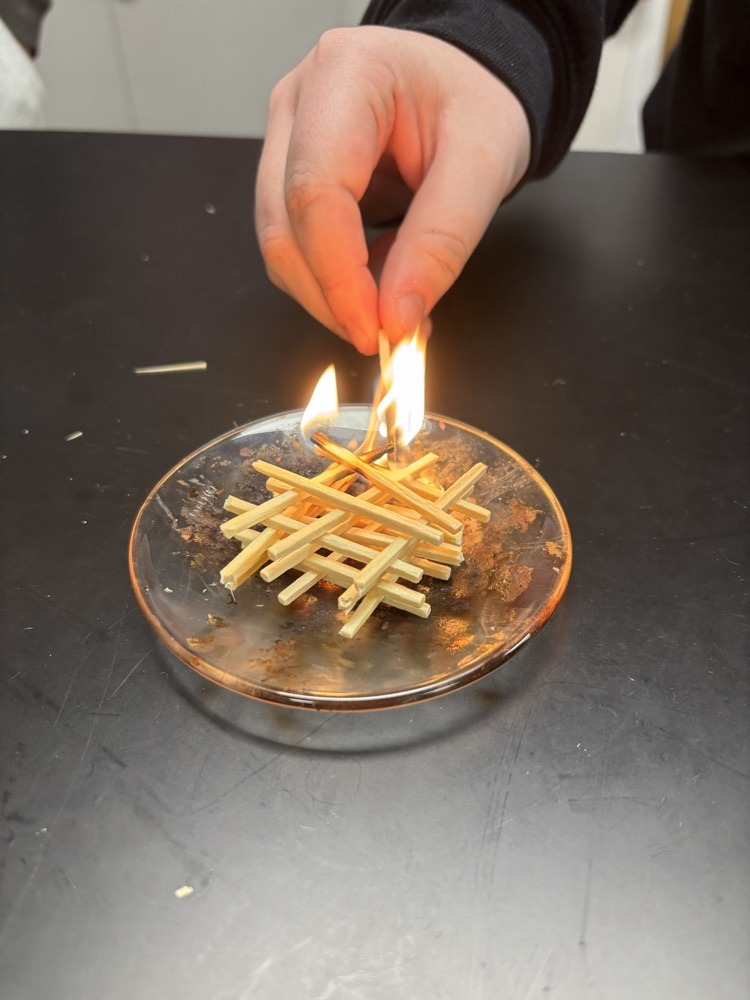
Last week Chemistry students saw magnesium burn. Absolutely white hot at 3100C (5100F). Today, we burned steel wool, which is mostly iron. A much slower, cooler burn. 1000C (1800F). We used this reaction to discuss limiting and excess reactants.
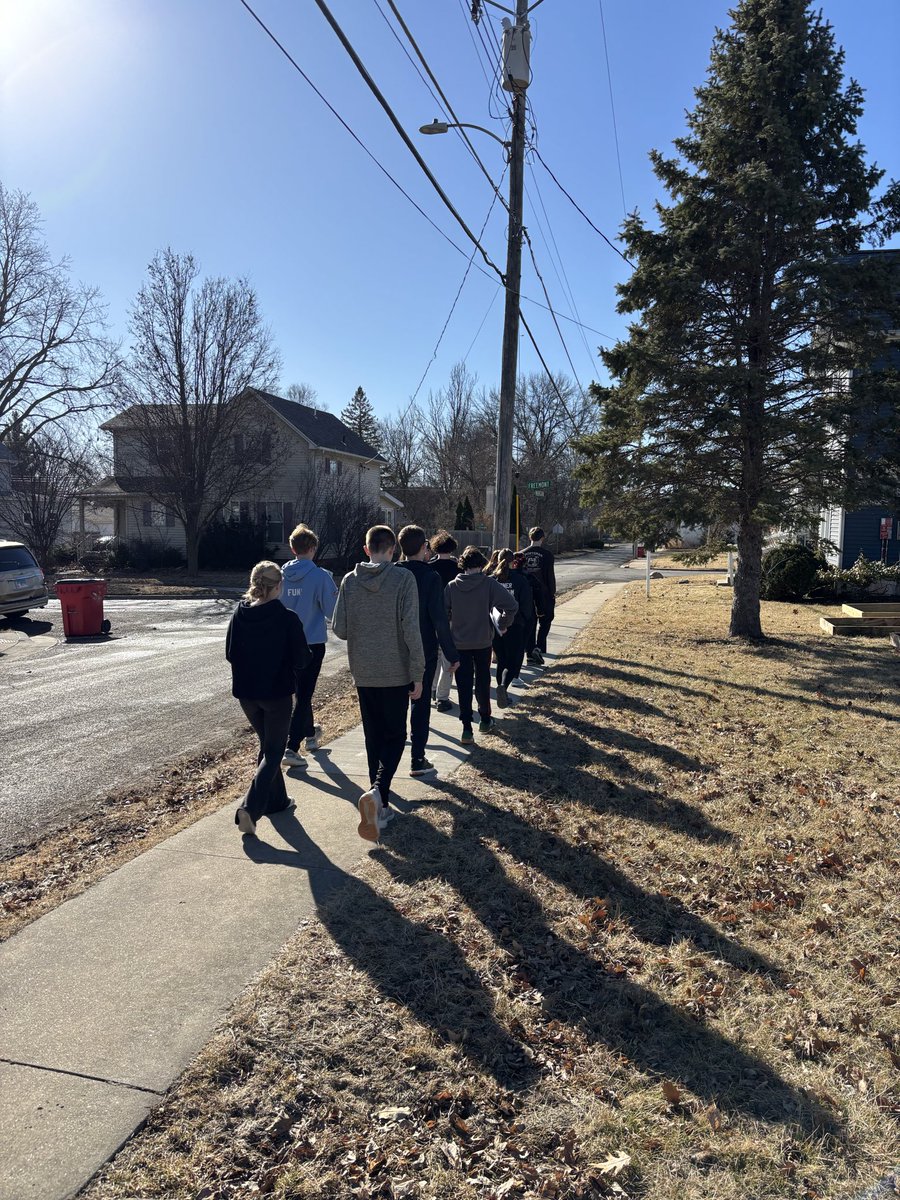
It’s in the mid-50s in central Illinois in February. A perfect day to get outside and podcast walk. How is light produced in glow sticks? How does sunscreen work? How do sunglasses work? @ChemForYourLife will tell us. We will jigsaw what we learned next time.
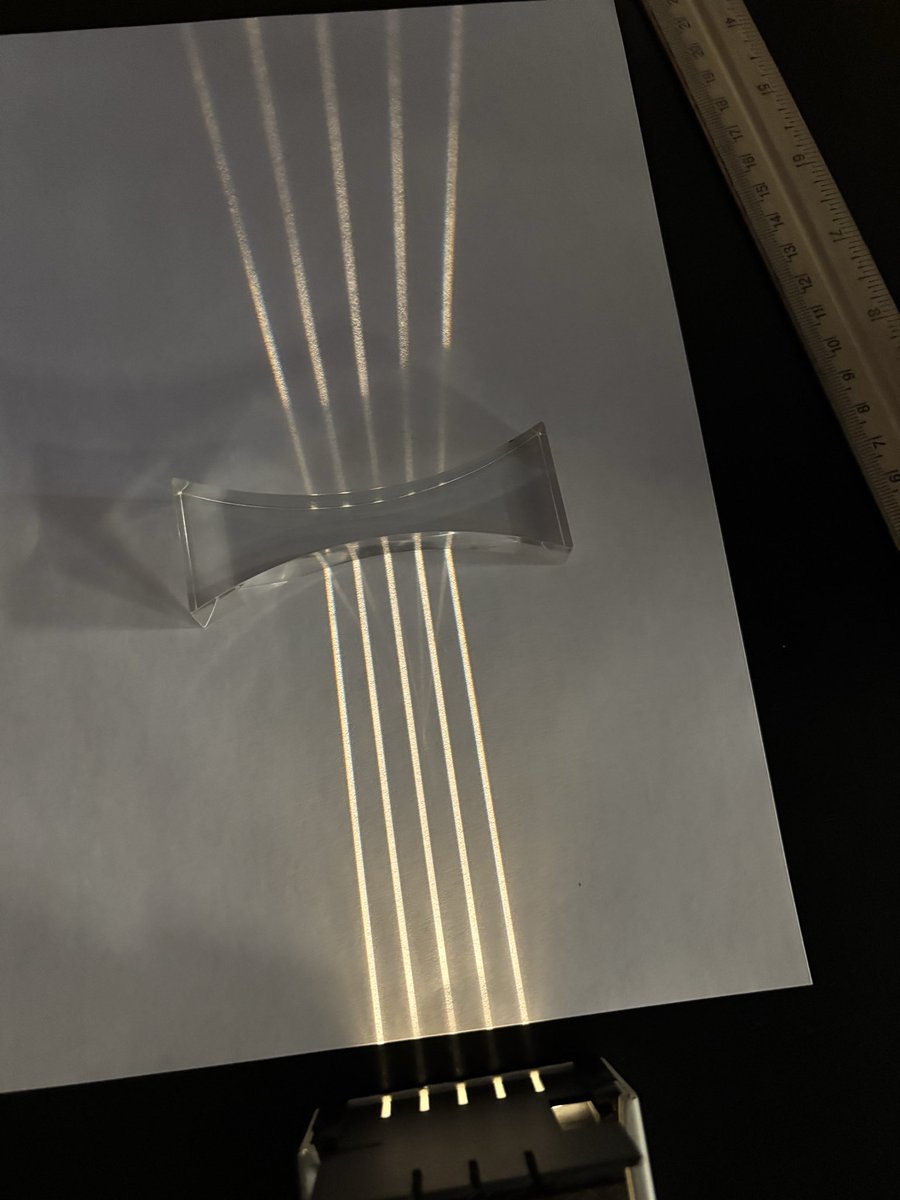
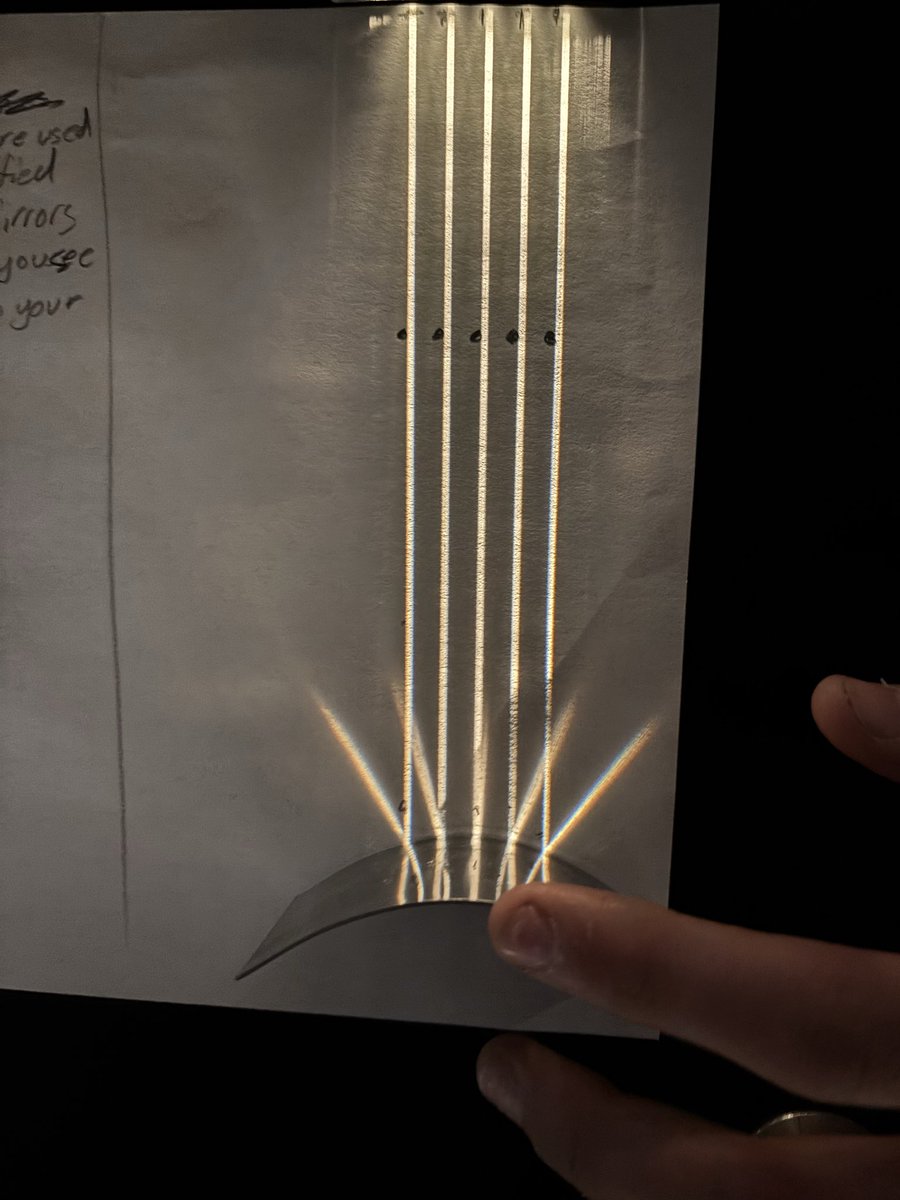
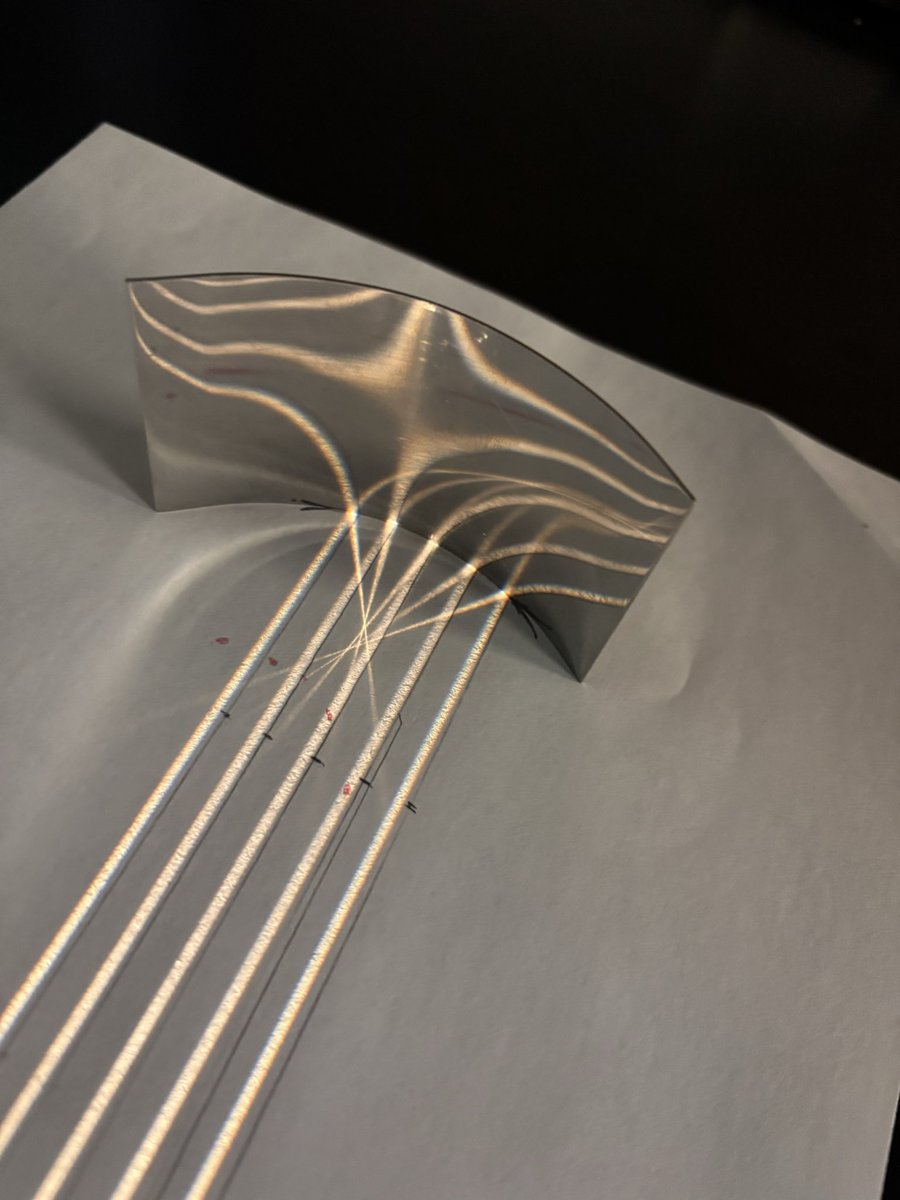
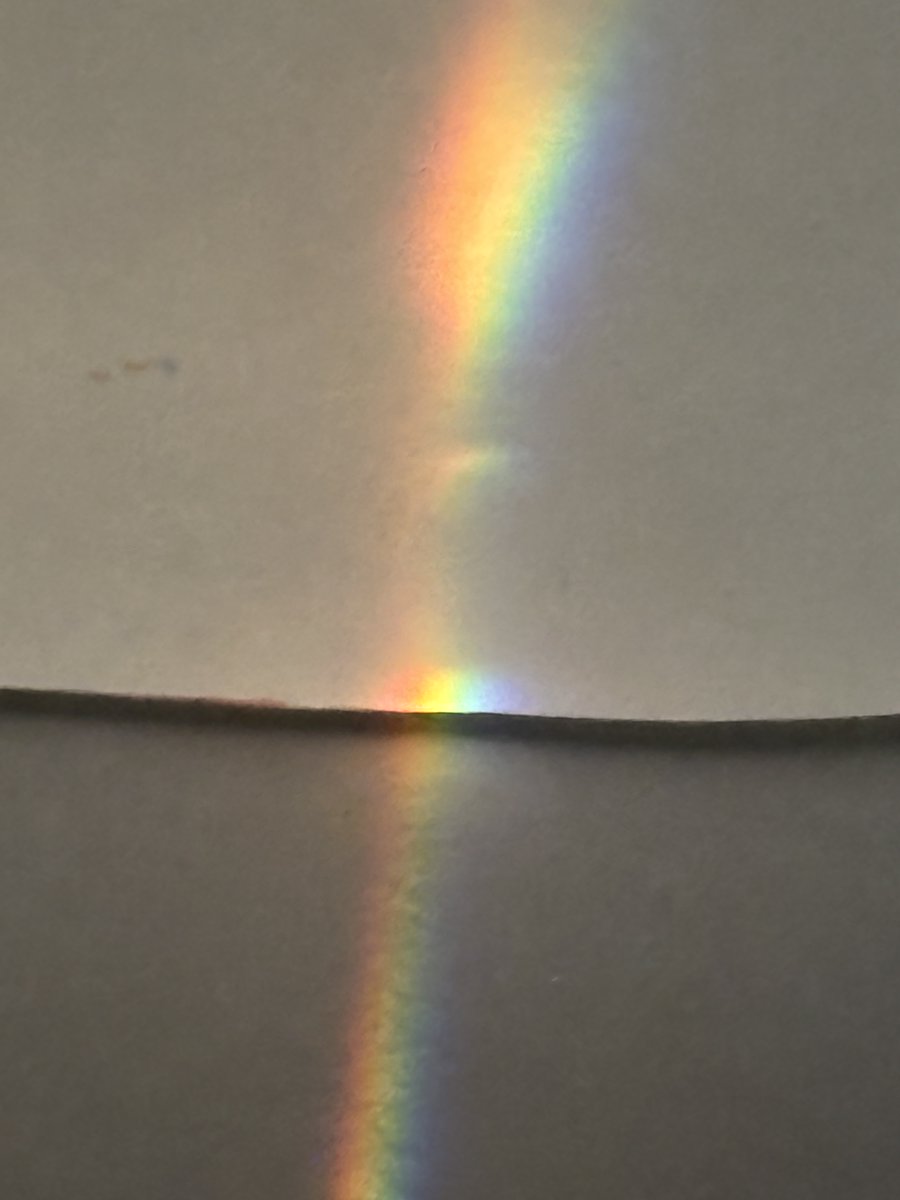
Today we went back to 1666 and replicated Isaac Newton's experiment that discovered that white light is made up of the spectrum of visible light. This led to Herschel discovering IR in 1800, and Fraunhofer identifying spectral lines in 1814.
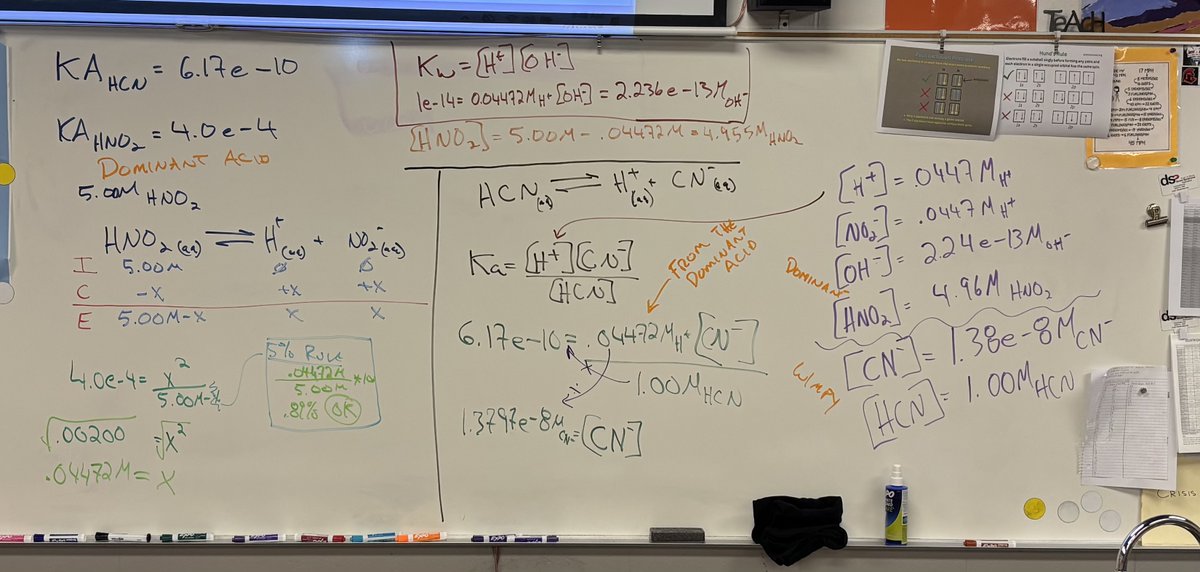
Solutions containing two weak acids are 'dominated' by one of them. The dominant acid is determined by comparing the acid dissociation constants, Ka. In this case, nitrous acid, HNO2, dominates hydrocyanic acid, HCN. We calculated the concentration of all species in the solution.
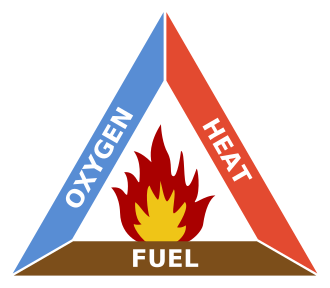
When there is adequate fuel, oxygen, and heat, the conditions for fire are met, see the fire triangle. Here, lycopodium powder demonstrates extreme flammability WHEN PARTICLES ARE ADEQUATELY SPREAD OUT. This reaction is similar to what can happen in a grain elevator explosion.
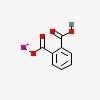
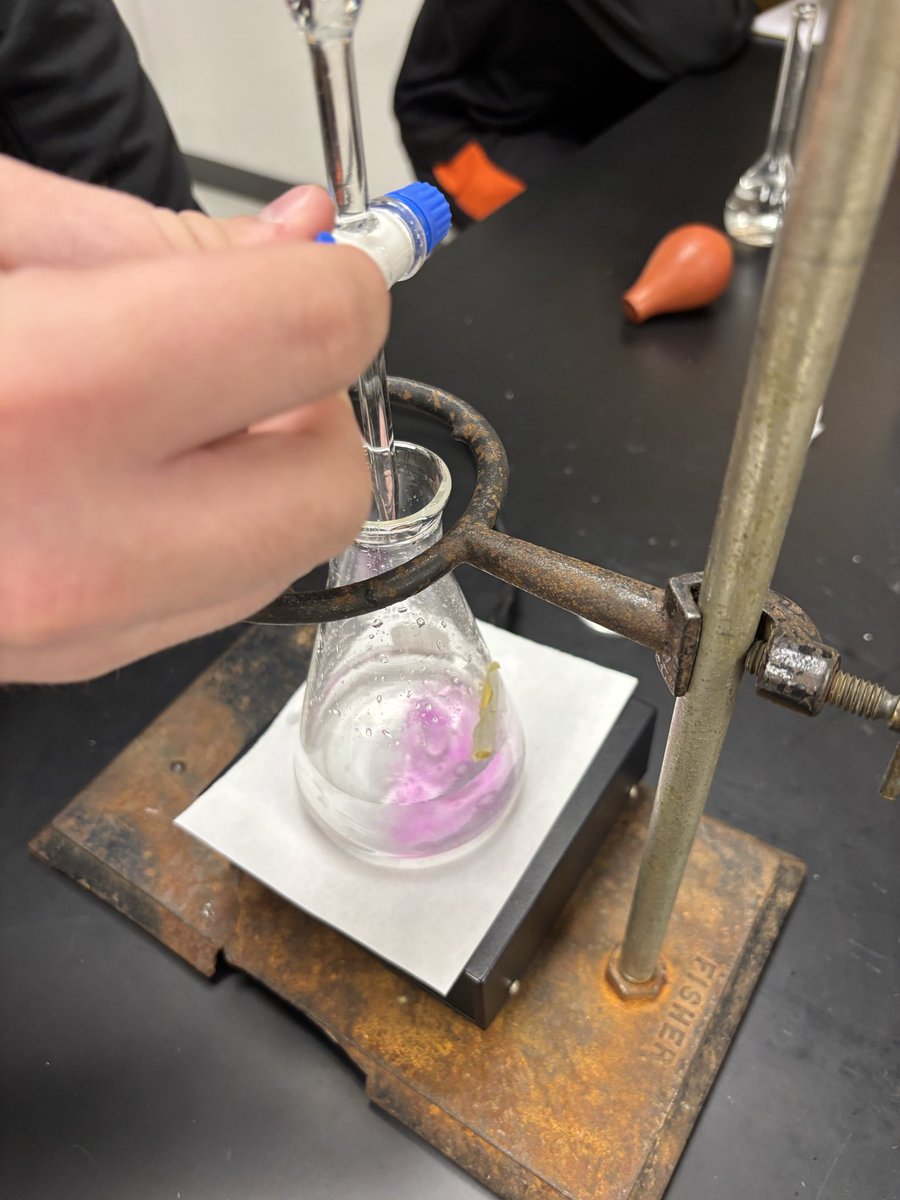
Today we are standardizing sodium hydroxide, NaOH, with potassium hydrogen phthalate. The standardized NaOH will be used to determine the citric acid concentration in 7-Up and Sprite.
Structure credit: PubChem