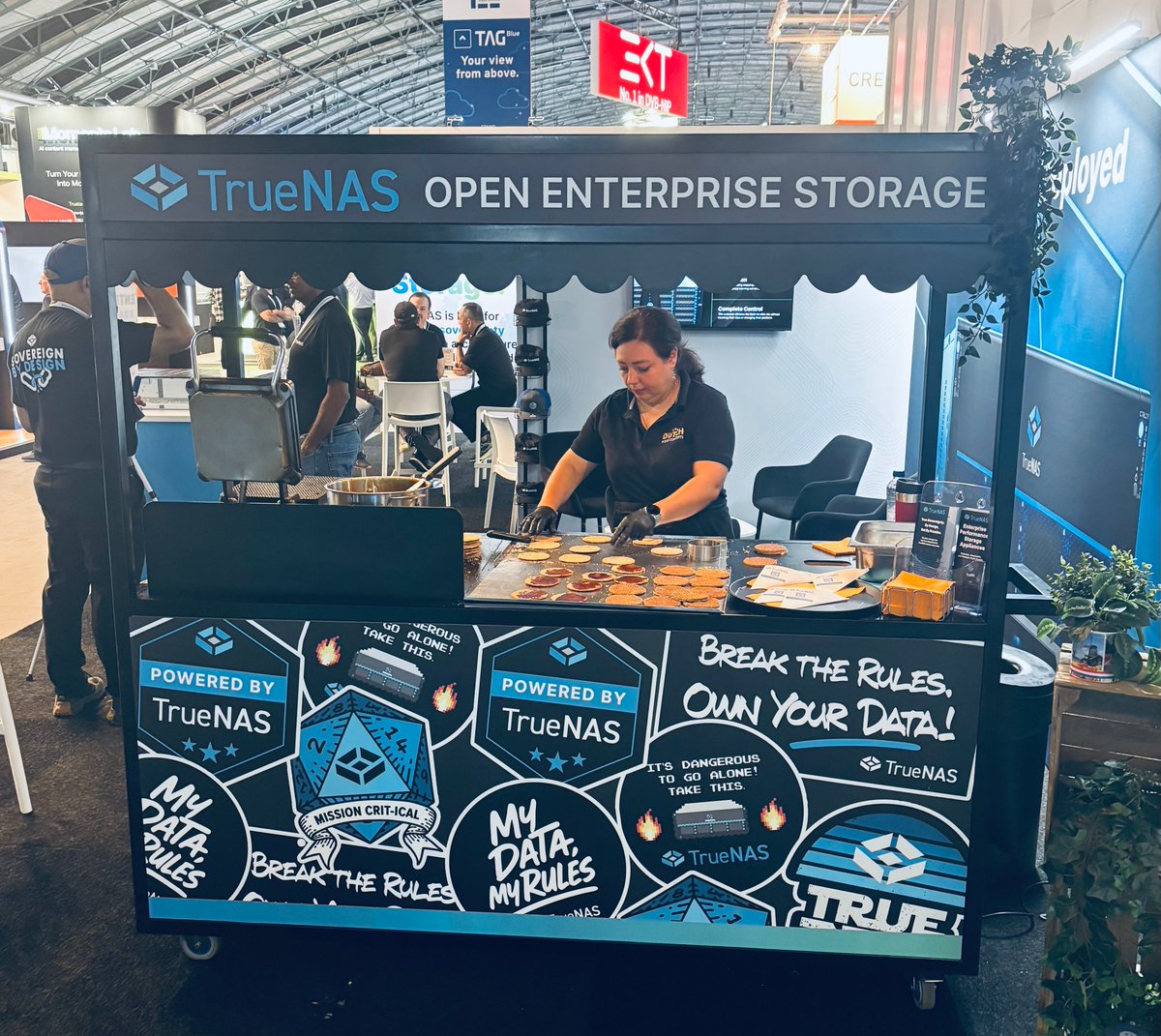
#TrueNAS: The Mission-Critical Open Enterprise Storage Platform delivering Data Sovereignty — Enterprise appliances + free Community Edition. #OwnYourData
Veeam usually means two systems, a backup server and separate storage, sized and patched on their own.
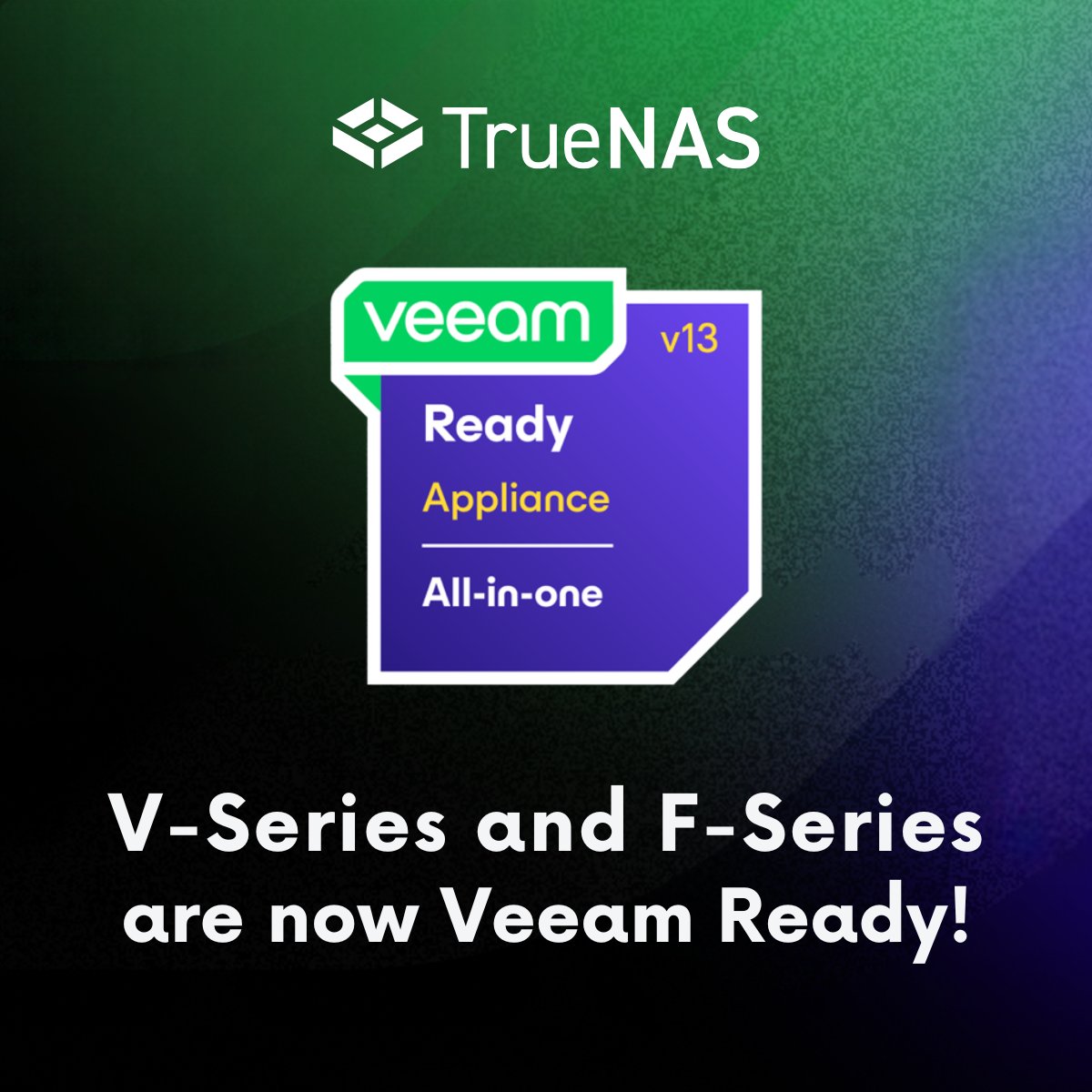
The Veeam Software Appliance now runs as a VM on the TrueNAS array. F-Series and V-Series are first certified under Veeam’s new All-In-One category.
Full breakdown - https://t.co/PLiveE72rY
Block, file, and object for your AI pipeline don’t need three separate arrays. Adding a new protocol can just mean turning on a service on the pool you’re already running, not buying another box.
Full breakdown - https://t.co/AyLwD6sfn1
90% of VMware users are exploring options because of licensing costs, per @arstechnica. Proxmox VE has become one of the default landing spots for teams leaving VMware, and TrueNAS is already a common storage layer underneath those clusters.
The new TrueNAS Proxmox Plugin lets Proxmox provision, snapshot, resize, migrate, and delete TrueNAS-backed VM disks directly. (link in comments)
Read More - https://t.co/D8UnsXCK5d
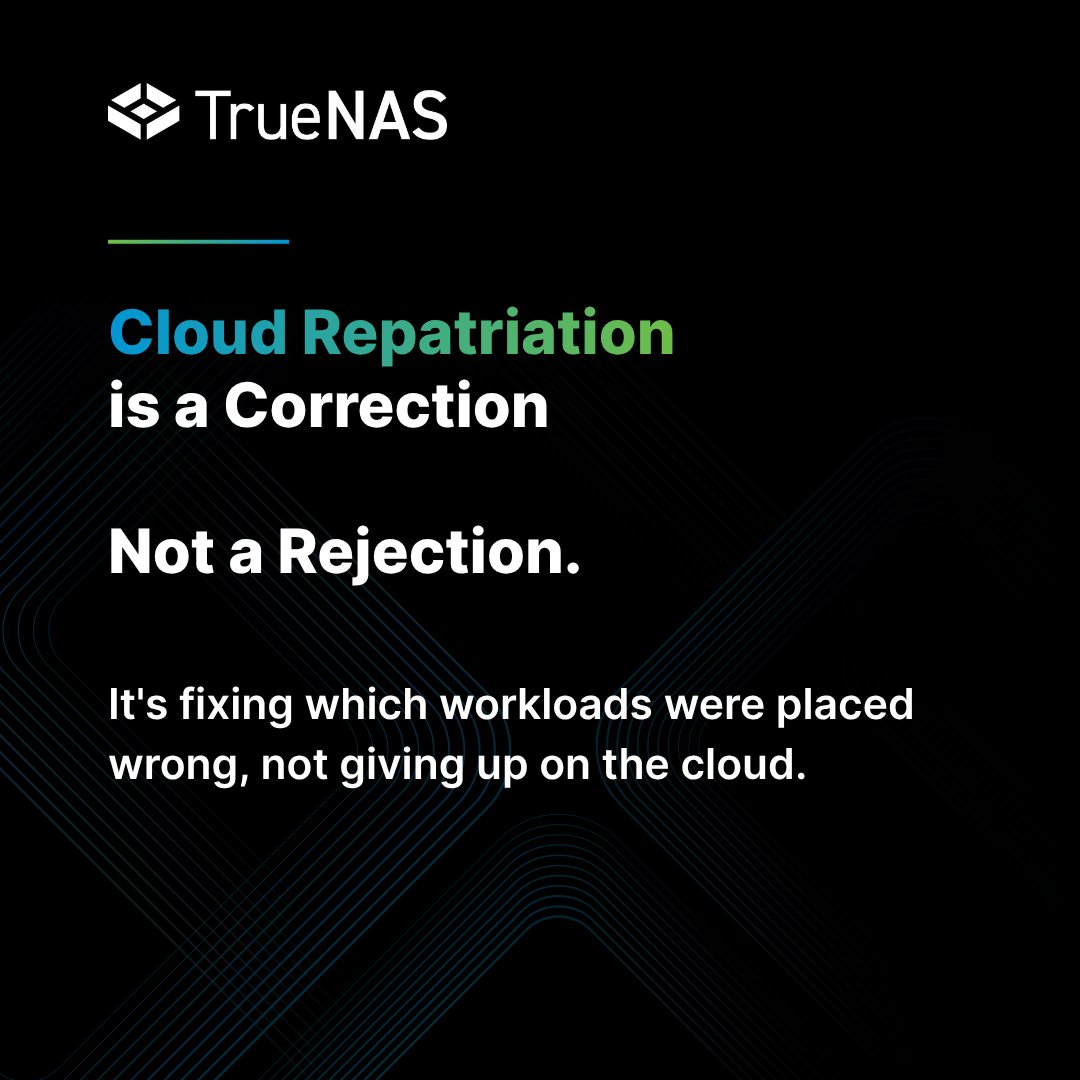
Cloud pricing works great until your data stops behaving like cloud data.
62% of enterprises blew past their cloud storage budget last year. Usually not overuse, just the wrong workload on the wrong pricing model.
Full breakdown - https://t.co/npC46Dy2bf
TrueNAS V-Series and F-Series are now Veeam Ready certified for All-In-One (Virtualized), running the Veeam Software Appliance directly as a VM. One system to secure, one certification to show for it.
Learn More :https://t.co/DEG8CEify2
Here's 7 things worth checking before you make a purchase decision on enterprise storage, from protocol coverage to what "effective capacity" actually means on a quote.
Full breakdown on the blog: https://t.co/G8EMj6LxsO
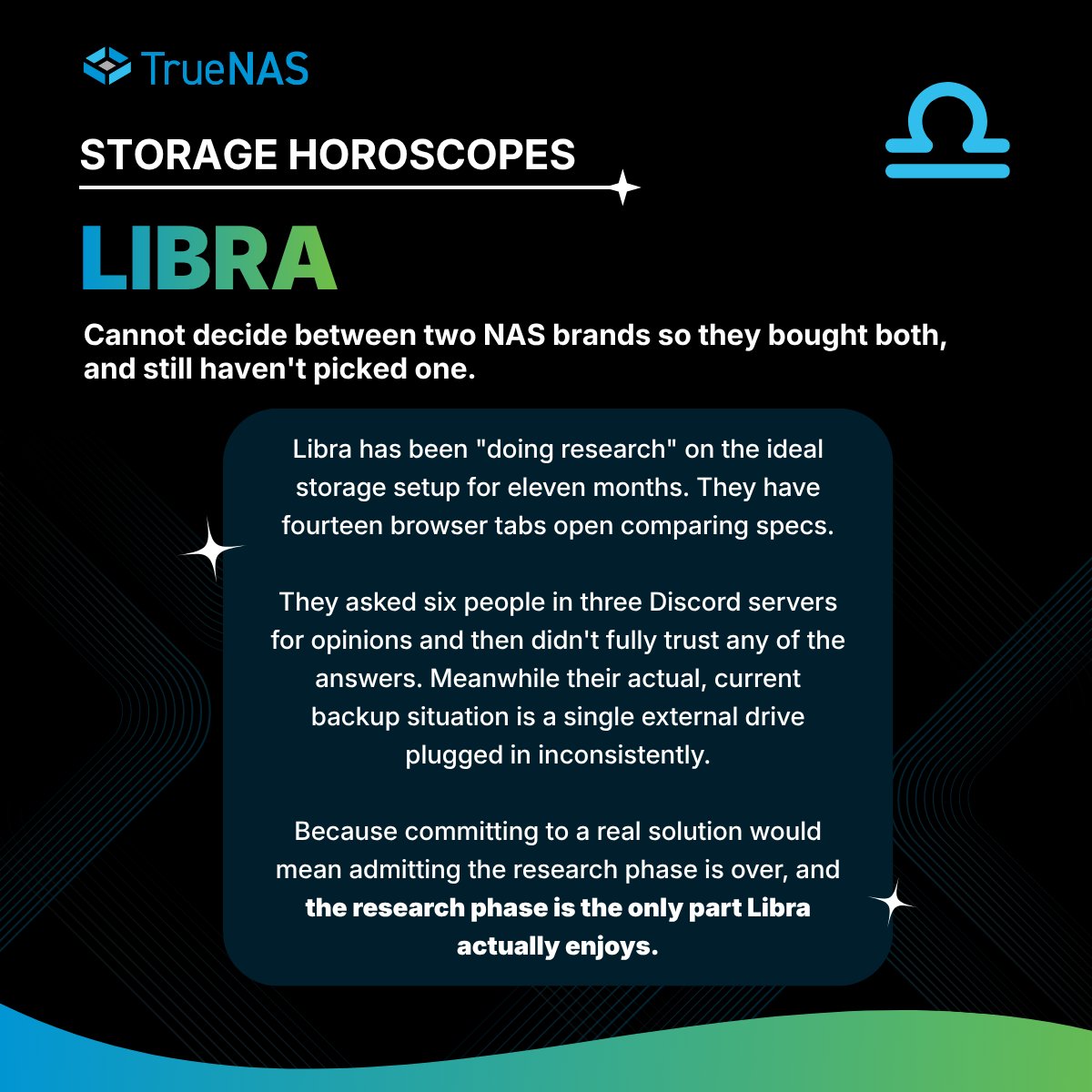
We are back again with Storage Horoscopes!
It's officially the month of Libra and you know what it means. Eleven months of NAS research, still no purchase, one external drive that maybe backs up on Tuesdays.
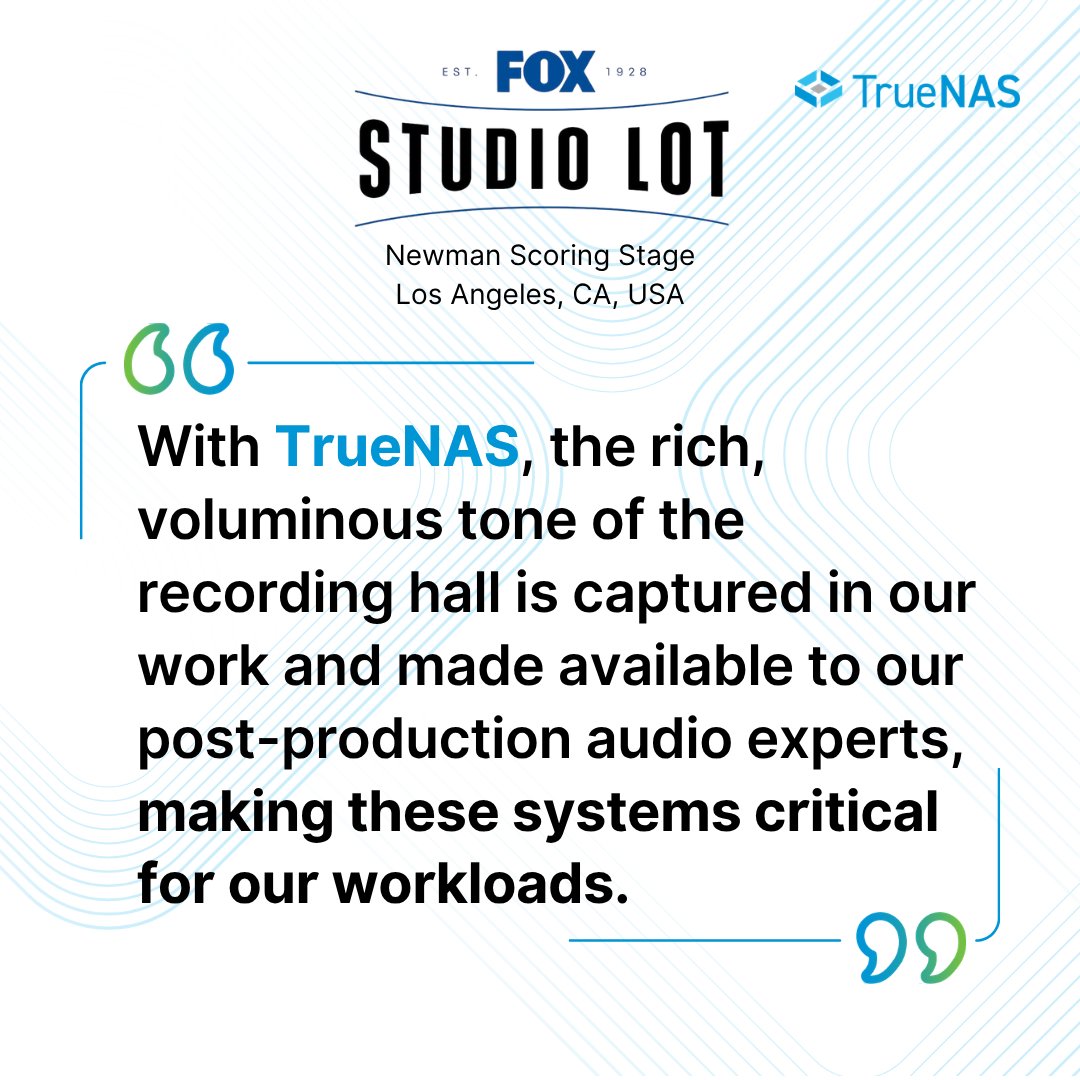
Most post-production shops size flash storage to their whole media library, not to what's actually being worked on.
Fox's Newman Scoring Stage does it differently: active sessions run on flash, delivered work sits on disk, and OpenZFS checksums and snapshots cover both.
See how it's built: https://t.co/h9WaO4QQHg
VMware's licensing pushed you onto Proxmox. Your storage shouldn't have to make that same forced jump.
The new TrueNAS Proxmox Plugin provisions and snapshots TrueNAS-backed VM disks directly. No manual iSCSI LUN management.
Learn More: https://t.co/VLM8Gfhj0G
If your database VMs feel slow despite plenty of storage, check how the pool is laid out before you blame the drives.
Picture a 12-wide RAIDZ3 pool built from drives rated at 250 IOPS each. That pool still delivers 250 IOPS total, the same as running on one drive alone, no matter how many disks you add. All that extra capacity. None of the extra IOPS.
Mirrors don't have that ceiling. Every mirrored pair adds its own IOPS to the total, which is why database and VM storage gets mirrors while wide RAIDZ is better saved for backups and file shares, where streaming speed and capacity matter more than raw IOPS.
Read the full breakdown here: https://t.co/QoXzB6SeXv
A ZFS snapshot can't be altered because of how the filesystem writes data in the first place. ZFS writes every update to new, empty space instead of overwriting the old, so a snapshot's contents can never be edited or overwritten again.
That permanence only covers the contents, though. The snapshot itself can still be deleted under normal retention policy, unless someone's placed a Hold on it, which only a Full Administrator can release. For ransomware recovery, that gap is the point: the accounts handling daily snapshot work aren't the accounts that can erase your last copy.
Read more - https://t.co/asIQ7tMXGc
New series: Storage Horoscopes. Every month, we roast a zodiac sign's approach to data. First up Virgo season.
If you've ever written documentation for your own naming convention, this one's for you. 👀