Most people with a large stock position aren’t short on information. They’re short on a plan that ties it all together.
If your RSUs, your 401(k) and your tax return are each managed by someone different, or by no one at all, that’s usually where the gaps are.
A lot of executives with concentrated stock get the same advice:
“You should diversify.”
That may be true. But simply telling someone to sell millions of dollars of highly appreciated stock isn’t much of a strategy.
The real question is how you diversify.
@Broadcom’s trading policy applies to all employees, not just executives. It prohibits hedging company stock, pledging it as collateral, and holding it in a margin account.
We created a guide for Broadcom employees on what you can and can’t do, and when. Link in the comments.
AMD expects data center revenue to more than double in 2027. The stock still dropped.
That’s concentration risk. If $5M of your $7.5M is in AMD, a 40% drop costs you $2M.
You can diversify without one giant tax bill. Full AMD RSU guide in the comments.
#RSU
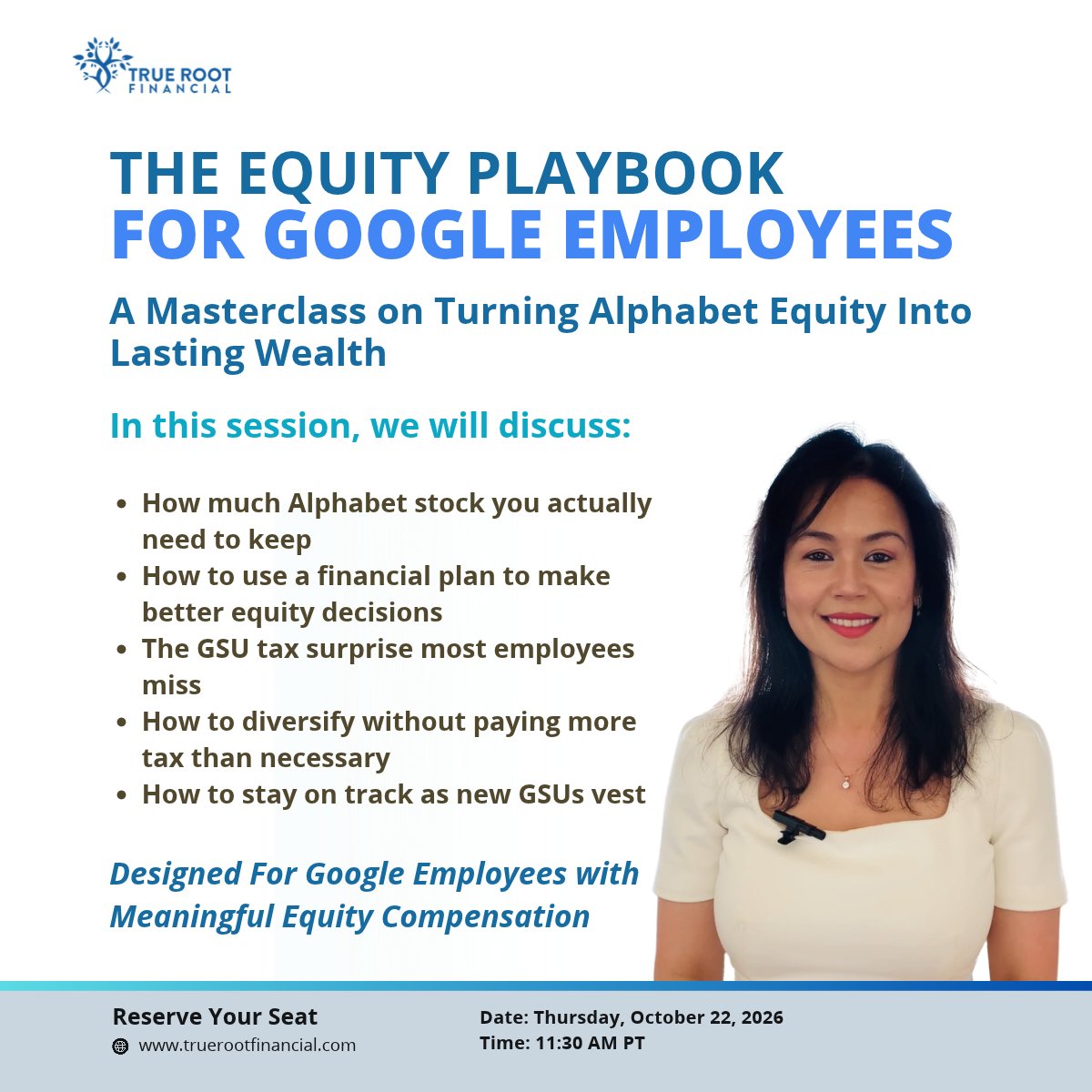
Googlers: if Alphabet fell 40% next year, would your plans still work?
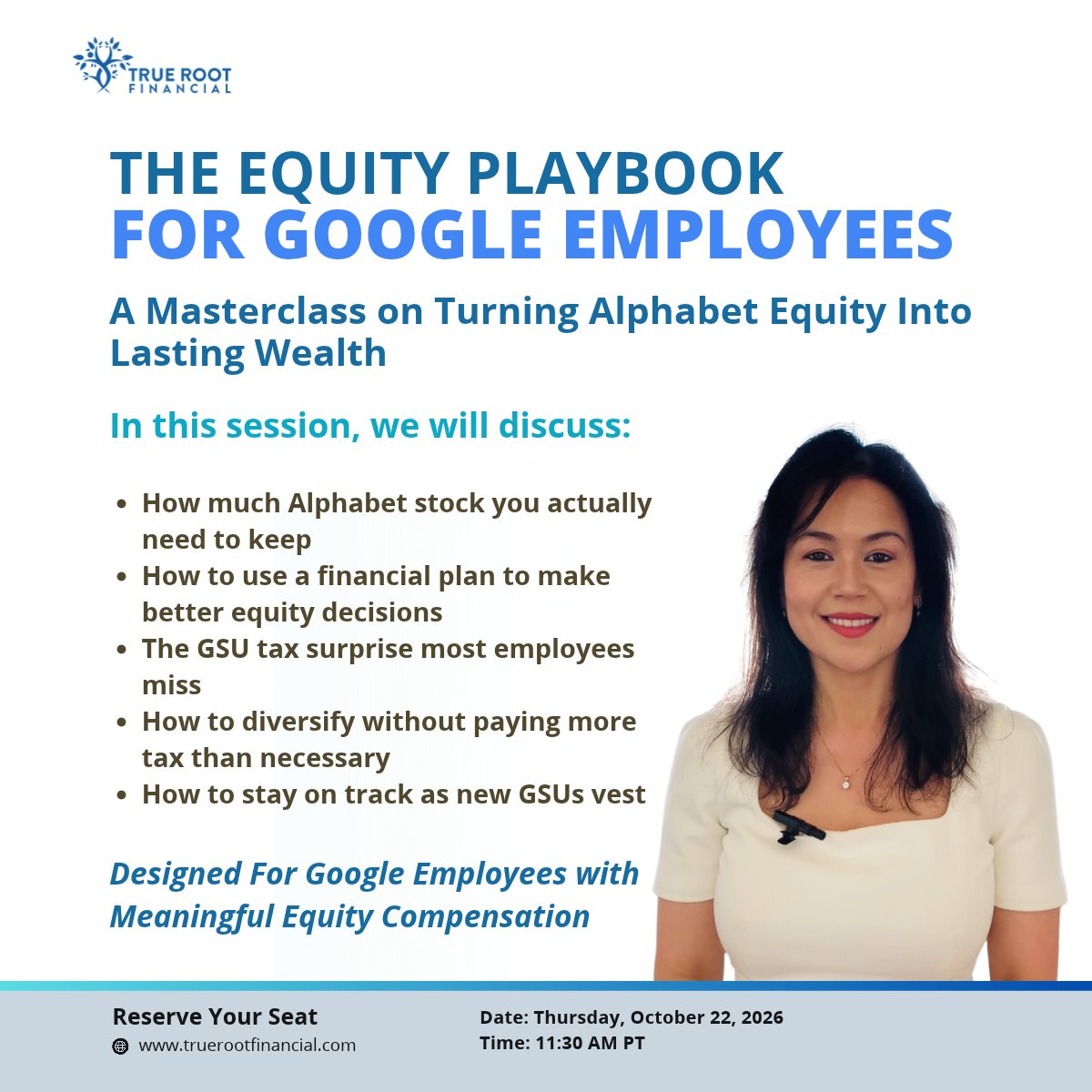
Free masterclass one week from today. Thu, Oct 22, 11:30 AM PT. How much GSU stock to keep and how to diversify tax efficiently.
Register: https://t.co/qYihBK1XTk
#GoogleRSU#GSU
Googlers: how much of your future should depend on Alphabet stock?
Free masterclass Thu, Oct 22 at 11:30 AM PT. How much to keep, the GSU withholding gap, and how to diversify without overpaying tax.
Register: https://t.co/qYihBK1XTk
#GoogleRSU#GSU
INVIDIA fell ~50% in 2022. If most of your net worth is in NVDA, would your plans survive a repeat?
Here's how to diversify over several years without one giant tax bill.
Link in the comments.
A tech executive sold stock in a secondary offering.
Then taxes took a bigger bite than they should have.
Not because he sold. Because of what happened before he sold.
Watch the video to see the actual mistake.
Diversifying concentrated stock always comes with a tax question.
Here are three strategies that can lower the bill while you do it. Tax loss harvesting, direct indexing, and a 130/30 approach.
DM me if you have questions.
Your advisor put you in a model portfolio and called it a financial plan. At $8 million, that isn’t planning. It’s a template. If your advisor’s entire strategy for your concentrated stock is to “sell it little by little,” that’s the tell.
The SALT deduction cap jumped to $40,000 this year.
If you're close to the threshold, maxing out your 401(k) could make the difference between getting more of the deduction or leaving it on the table.
There’s still time to act before year-end.
Most @Apple employees think their ESPP discount is 15%. With the lookback feature, it is often much better than that.
You buy at 15% off the lower of two prices, so a normal year can turn into a 30-40% gain on day one.
I wrote a full guide on how the plan works. Link in comment.
Here is the part most Google employees do not know. Google does not allow employees to hedge their position with collars, exchange funds, or loans against their stock. Those tools are off the table.
Read the full article to learn more. Link in the comments.
If you're within five years of retirement and more than 50% of your net worth is in one stock, you are not investing. You're betting.
I wrote this article for Broadcom employees and other tech professionals who are thinking through that transition. See article in comments.
If you work at a pre-IPO company and have ISOs, exercising too many options in one year can trigger a surprisingly large tax bill.
It's called the Alternative Minimum Tax (AMT), and it's one of the biggest reasons ISO planning needs to start early.