On #PartitionHorrorsRemembranceDay, recognize the enormous human suffering and far-reaching geopolitical consequences of Partition.
Salute the courage and resilience of those who rebuilt their lives. But we must also remember the painful lessons from this period of our history.
1-Gas cylinder on missed call.
2-Payment of online bills.
3-UPI payment.
4-DigiLocker.
5-Jan Aushadhi Kendra.
6-Ayushman Card.
7-New Parliament Building.
8-Free vaccination.
9-Pradhan Mantri Jan Dhan Yojana.
10-Surgical strike.
11-Operation Sindoor.
12-Triple Talaq Bill.
13-Aadhaar linking.
14-FASTag.
15-Chenab Bridge.
16-Jammu Tunnel.
17-Ganga Expressway.
18-Kashi Corridor.
19-Vishwanath Corridor.
20-Kedarnath reconstruction.
21-Shri Ram Temple construction
22-Sukanya Samriddhi Yojana.
23-Construction of toilets.
24-Doubling of railway tracks.
25-Expansion of railway stations.
26-Fewer days for ticket booking.
27-Ticket cancellation facility.
28-Golden Quadrilateral Scheme.
29-Bharatmala Project.
30-18 AIIMS construction
31-S I R
32-Mahatma Gandhi Setu reconstruction.
33-Bhupen Hazarika Setu.
34-Army modernization.
35-Make in India.
36-Drone revolution.
37-Direct money into farmers' accounts.
38-Ration digitization.
39-Free ration.
40-Kanya Sumangala Yojana
41-Implementation of GST.
42-Major reduction in GST.
43-Preservation of cultural heritage.
44-Construction of ponds.
45-Har Ghar Nal Se Jal.
46-22 hours of electricity.
47-Unprecedented rebate in income tax.
48-Abolition of Article 370.
49-553 new railway stations.
50-1500 new overbridges.
51-Removal of over 200 obsolete laws.
52-ED's record-breaking raids on corrupt individuals.
53-Year-long waiver on FASTag for 3000 rupees.
54-Implementation of VVPAT in EVMs.
55-Kartavya Path route.
56-Pictures of cultural heritage on currency notes.
57-Reconstruction of Nalanda University.
58-Indigenous production of Tejas.
59-Self-reliance in cell phone manufacturing.
60-Mudra Yojana.
61-Ujjwala Yojana.
62-Suraksha Bima.
63-390 new universities
64-7 new IITs
65-7 new IIMs
66-16 new IIITs
67-300 new medical colleges.
68-Construction of Pamban Bridge.
69-Rishikesh-Karnaprayag railway project.
70-Uttarakhand Char Dham road construction.
71-BrahMos production factory.
72-Assault rifle manufacturing in Amethi.
73-Vande Bharat modern trains.
74-Law on Waqf Board property.
75-Bio-toilets in railways.
76-Implementation of labor laws for workers' welfare.
77-Implementation of GRAM JI Yojana.
78-India has already surpassed China in road construction.
79-12 lakh youth provided government jobs.
80-Over 8 lakh commercial licenses issued.
81-80,000 new petrol pumps.
82-Construction of Shaurya Sthal.
83-Merger of railway budget into general budget.
84-Over 9000 new schools.
85-Bulldozers on illegal constructions.
86-Fencing on borders.
87-Open license to army against terrorism.
88-Vikas Kaushal Yojana.
89-Demonetization.
90-FASTag facility by abolishing toll gates.
91-Chandrayaan.
92-Mangal Mission.
93-Multi-satellite stabilization.
94-Reduction of flood-affected areas in Bihar.
95-End of queues.
96-Smart City expansion.
97-Urea coating for farmers.
98-PF withdrawal made convenient.
99-Creation of over 5 crore new jobs in private and domestic sectors.
100-If the farm laws had been passed, brokerage would have ended, and illegal encroachments by many Bangladeshis in mandis would also have ended.
Therefore, stand firmly with BJP and Modi ji, and understand the opposition's conspiracies.
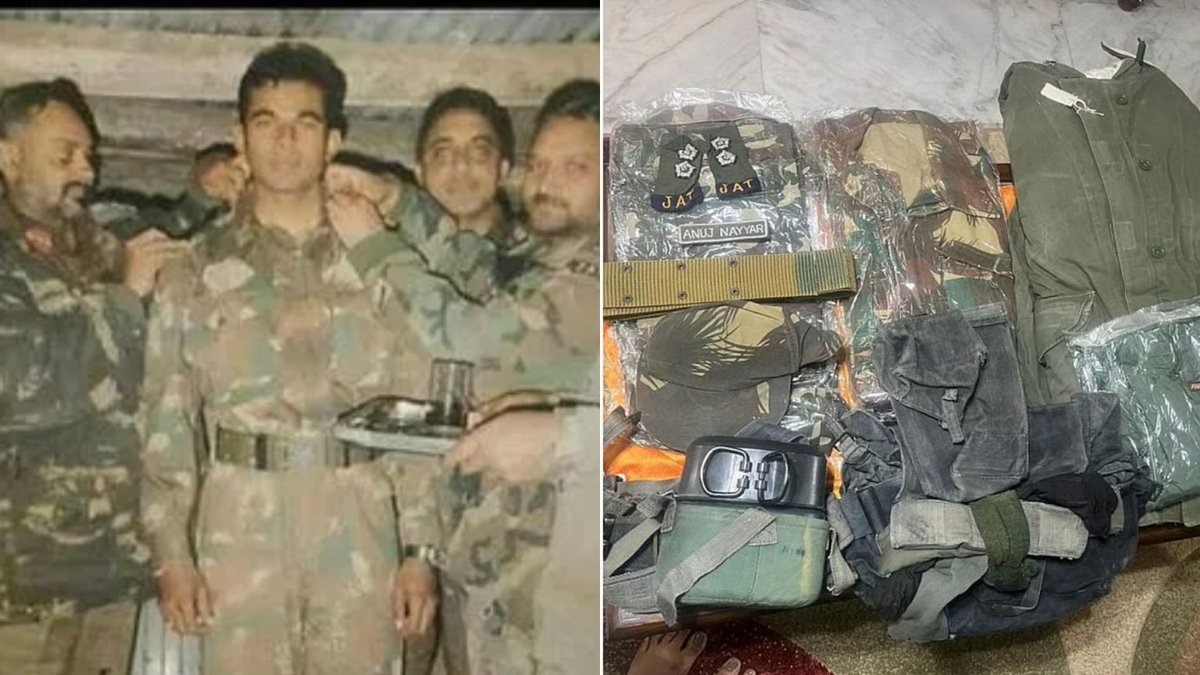
🇮🇳 #HeroesOfKargil: In the final days of the battle for Tiger Hill, a soft-spoken officer from Delhi was handed one of the most perilous objectives in the Mushkoh Valley: clear the Pimple Complex on Point 4875.
Just after receiving his promotion to Captain, he led ‘Charlie’ Company of the 17 Jat Regiment up vertical, ice-bound cliffs at 15,990 feet. When heavy enemy artillery fire injured his Company Commander early in the assault, he stepped up without hesitation.
Leading from the front under relentless machine-gun fire, he crawled between fortified stone sangars, physically taking down three enemy bunkers with hand grenades and rocket launchers while neutralizing nine enemy combatants.
On the night of 6–7 July 1999, only one enemy bunker remained.
With zero regard for his own safety, he charged the last position himself. An enemy RPG rocket struck him at point-blank range, but his ferocious assault had already silenced the stronghold, securing the vital feature overlooking NH 1D and paving the final road to victory at Tiger Hill.
He made the ultimate sacrifice at just 23 years old.
His men raised the Tiranga on the peak he bought with his life.
-- Captain Anuj Nayyar, 17 Jat Regiment, Maha Vir Chakra (Posthumous) 🇮🇳
Salute to the braveheart and his dear ones.
Let’s unearth the true depth of our history, one incredible story at a time. Join the journey to #KnowTheRealBharat
Bravest Of The Brave
27 years of Kargil
#LestWeForgetIndia🇮🇳 The four Param Virs- the fallen & living legends of #OperationVijay #Kargil1999 awarded the Param Vir Chakra for their courage, valour, and sacrifice in service of the Nation
• Captain Manoj Kumar Pandey, PVC (P)
• Captain Vikram Batra, PVC (P)
• Subedar Major & Hony Capt Sanjay Kumar, PVC
• Subedar Major & Hony Capt Yogendra Singh Yadav, PVC
#KargilVijayDiwas #IndianBraves🏵️
“Either I will come back after hoisting the Tricolour, or I will come back wrapped in it. But I will be back for sure.”
— Captain Vikram Batra
These weren’t just words.
They were courage. Conviction. Duty.
A nation’s soul is shaped by people who speak like this… and then live those words.
Not a day goes by without being inspired by him.
We will remember.
#KargilVijayDiwas 🇮🇳
Reach is being stifled by @X if you are exposing the roaches - massive boost to pro cjp messages across Media and SM
As usual @GoI_MeitY@MIB_India will do nothing about it
BJP had 12 years to bring in Media, Judiciary, Police and Bureaucracy reforms - did precious little and they are paying the price for their lapse now
Mesopotamia was never the cradle of civilisation. India was.
I spent forty years in international shipping, not academia. When I began researching the history of maritime trade, I had no orthodoxy to defend. I followed the evidence, and it kept arriving in the same place: the Indian subcontinent.
Nineteenth century archaeologists dug in Mesopotamia because the climate preserved artefacts, the biblical sources pointed them there, and the Ottomans allowed the excavations. That is the entire basis for the myth of Mesopotamia as "the cradle of civilisation."
Nobody applied the same rigour to India. Mohenjo-daro was not discovered until 1922. By then the narrative had already hardened.
What was actually there was the largest civilisation of the ancient world. Three hundred cities. Fifty thousand people in each, by 2600 BC. Two thirds of them stood on the banks of the Sarasvati, the central and greatest of the seven rivers described in the Rig Veda, flowing down from the Himalayas before the river vanished entirely by 1900 BC. The Vedic kings claimed territory stretching "sea to sea," from Afghanistan to Maharashtra, some 1.5 million square miles, against Egypt's 13,000. A dock at Lothal built to handle thirty ships of sixty tons, unmatched in Europe for four thousand years. When it was first excavated, it was recorded as a bathing pool.
When the scale became impossible to dismiss, the theory was not corrected. It was replaced with a story of pale-skinned nomads from the steppe who supposedly arrived around 1500 BC and brought civilisation with them. There is no evidence. The chronology doesn't work. The Vedas describe no invasion.
In 2019 a Harvard-led genetic study revived the claim, and the press reported it as confirmation. It was not. The same study found the builders of these cities were indigenous. The Sarasvati river that the Rig Veda described had already dried up before these newcomers arrived. What the study also found is that a small group of men, arriving after the Sarasvati had already dried up, interbred with the existing population and left a genetic signature. That is all.
So, where they chose to dig was mostly an accident of climate and access. The Aryan invasion theory was constructed because an Indian civilisation that owed nothing to Caucasians was a fact the late nineteenth century could not accommodate.
Link to full Substack essay with sources in the comments below.
Some heroes leave the battlefield, but never the hearts of a grateful nation. 🇮🇳
Remembering the Shershah of Kargil, Capt. Vikram Batra (PVC), on his Punyatithi with profound respect and eternal gratitude.
#OperationSindoor stands as an epochal mission of India that will always remind our enemies of the infallible striking power of our armed forces.
History will remember it as the day of the precise striking power of our armed forces, meticulous intelligence of our agencies, and resolute political will rising together as one to destroy each and every address of terror across the border that dared to cast an evil shadow on our citizens at Pahalgam. This day will continue to bring the dreadful message to our enemies that no matter where they hide, they cannot escape. They are always within our sight and the fierce wrath of our firepower.
On this day, I salute the unparalleled valour of our forces.