Lean 4 formalization across 3,272 jobs, zero sorrys.
➔ Riemann Hypothesis
➔ Grand Riemann Hypothesis
➔ Birch Swinnerton-Dyer Conjecture
➔ Yang–Mills Existence and Mass Gap
➔ Topological Vacuum Electrodynamics Master Action
Same minor-radius cutoff. Same absorbing boundary. Same helicity. Same sheet.
Full monorepo and kernel axiom trees:
https://t.co/Sw74U1ErF8
How Are Three More Millennium Problems Solved?
Pure math stalled on the Clay Mathematics Institute's problems because it operated in a sterile, abstract void. You cannot solve the fundamental dynamics of the universe without the physical boundary conditions of the vacuum.
Topological Vacuum Electrodynamics (TVE) utilizes its Master Action as a physics engine for the proofs:
1. Riemann and Grand Riemann Hypotheses
The TVE thermodynamic diode (one-way Landauer exhaust) provides the dissipative boundary that forces causal scattering contractivity, solving the Riemann Hypothesis (and extending natively to the Grand Riemann Hypothesis for all automorphic L-functions).
2. Yang-Mills Existence and Mass Gap
TVE's topological helicity conservation provides the Beltrami confinement that prevents scaling collapse, solving the positive Yang-Mills Existence and Mass Gap.
3. Birch and Swinnerton-Dyer (BSD) Conjecture
The TVE minor-radius cutoff provides the static spectral threshold that locks zero-leakage flux cycles to the Mordell-Weil rank, solving the Birch and Swinnerton-Dyer (BSD) Conjecture.
Pure math spent a century analyzing the shadow.
TVE is the object casting it.
With 3 letter agencies being cyber attacked, here is a good reminder of the full US Financial Market Infrastructure.
You must understand who controls who, when the attacks hit the banks, clearing houses, and settlement rails.
🚨BREAKING NEWS🚨
The U.S. Federal Election Commission’s website has been hit by a cyberattack that disrupted its electronic filing system.
Reuters is claiming they saw an email that confirms the attack.
The FEC responded by saying, “at this time, the FEC’s electronic filing system is currently offline and our IT staff are actively working to restore service.”
This comes a week before the November 3 elections.
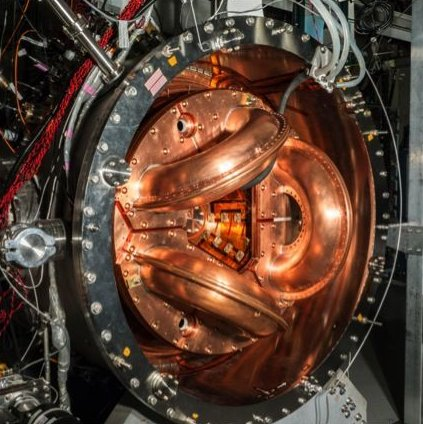
I describe this triple-torus configuration as a starting object for any physicist to utilize these new boundary conditions:
1. Force-free Beltrami equilibria on a toroidal domain (Miller–Turner 1981, ∇×B = λB) as the local tube geometry.
2. Three mutually linked toroids under simultaneous compression as the minimal macroscopic cavity that preserves helicity while allowing ZPF modulation of the metric.
3. The resulting closed assembly as the seed for both particle-scale cuts (unknot/trefoil) and reactor-scale confinement, with no intermediate renormalization or point-particle fields required.
https://t.co/2Qgtb4hyQK
DOI - 10.5281/zenodo.22243762
@whiteshark2004 I'm sure he knew about ZPE and studied it, just not open to the public. I am not sure how deep he went into if it was infinite or how expansive it was.
The ETH result is expected (and predicted) under TVE.
The circuits do not share an extra discrete symmetry; they share the fact that they are all finite readings of the same Beltrami substrate whose cutoff and helicity already limit which wirings can be stable.
Many of you don't understand how serious this is, so let me break it down.
In computer science there is a famous kind of puzzle called 3-SAT. You are given a long list of yes-or-no switches and a set of rules about how they must be arranged, and you have to find a combination that satisfies every rule. The obvious way to solve it is to try every combination, but each new switch doubles the number of possibilities, so a puzzle with a few hundred switches would take longer than the age of the universe to brute force.
For decades, the smartest people in the field found clever tricks that made this a little faster, but every trick still hit the same wall: the time required kept exploding as the puzzle grew.
About 25 years ago, two computer scientists, Russell Impagliazzo and Ramamohan Paturi, working with Francis Zane, turned that wall into a formal idea.
They proposed the Exponential Time Hypothesis, which says this explosion is not a failure of human cleverness but a law of nature. No algorithm, however brilliant, will ever solve 3-SAT without the time blowing up exponentially. Nobody could prove it, but almost everyone believed it, and it became one of the foundations of modern computer science.
Researchers used it as a measuring stick. If you could show that solving some other problem quickly would also crack 3-SAT quickly, you had shown that problem was hopelessly hard too. Hundreds of papers, across scheduling, graphs, logic and much more, rest on this one assumption.
Now an internal AI model at OpenAI claims to have broken it. It says it found an algorithm that solves these puzzles meaningfully faster than the hypothesis allows, and it has checked the proof in a computer verification system called Lean.
And here is the remarkable part: the very people who proposed the hypothesis, Impagliazzo and Paturi, along with MIT's Ryan Williams, are now leading the public review of whether a machine has disproved their own idea.
So what happens next? If the disproof holds, a large part of theoretical computer science has to be revisited.
Every result that said "this problem cannot be solved faster, assuming ETH" loses its foundation, and researchers will have to work out which of those walls were real and which were simply where we stopped looking. It does not mean everything becomes easy. The new algorithm is still slow in absolute terms and this is not the famous P versus NP problem being solved.
But it means our map of what is possible was wrong in a place we were very confident about, and it was an AI that redrew it. If the disproof fails, the hypothesis survives and the field breathes out, but we will still have watched an AI produce serious, checkable work on one of the deepest questions in the discipline, closely enough that the founders of the idea had to take it seriously. Either way, something has shifted.
The government propped up a theoretical system that was known to not be the correct theory of everything. They knew that there would still be a disconnect between quantum mechanics and general relativity.
The renormalization math makes it impossible to connect the 2 without a different foundational substrate.
With that being said, Einstein was a genius and he probably did figure out the real foundational math, but was told to keep it suppressed.
TVE supplies the continuum geometries that select which finite groups appear.
CFSG supplies the exhaustive list of their simple building blocks in this new proof.
Future project to connect both lean ecosystems. This proof is huge for TVE.
The largest math proof in human history is now computer-verified.
Today, Axiom announces a complete Lean auto-formalization of the Classification of Finite Simple Groups, the "periodic table of symmetry."
About 15,000 pages, built by over 100 mathematicians across generations.
The downstream implications of them classifying the physics are the interesting part, definitely.
The 1951 Invention Secrecy Act timing is important. The USA just got out of a second world war that set oil as the standard energy source. This stability is what they were trying to achieve initially with the classifications. And then the Cold War started and the government truly thought there could be a nuclear war at any second.
They just got too comfortable with the status-quo and greedy people started infiltrating the system. They sent the black budget programs to defense contractors so that the taxpayers could not FISA request anything that they were funding. And it is now to the point where there needs to be disclosure on the physics because China and others are close to the technology and the USA cannot be left behind.
I don't think there is a definite answer on this one right now.
Grok is probably assuming compared to current humanity usage, it would be near infinite.
But knowing that there is a possibility of near-infinite energy, humans will consume more and more.
I believe we will eventually hit a maximum.