The intelligent command layer for crypto.
Trade, swap, bridge, scan, deploy, and manage everything from a single interface.
No tabs. No friction. No chaos.
Crypto just got a smarter interface.
Ghost OS v0.002 — The September Release is live.
🧠 Ghost Brain v2
Stronger intent understanding, reasoning, and multi-step onchain execution.
🌍 Multilingual Execution
Command Ghost OS in your own language and execute real onchain actions.
Different language.
Same onchain intent.
✨ Refined web + app experience
Improved UI/UX, transaction flows, themes, notifications, onboarding, and performance.
🔐 Stronger foundations
Expanded security + privacy docs, new user guides, and fixes across Google, X, and external wallet signup.
Plus dozens of smaller improvements across slippage, wallets, execution states, stability, and error handling.
One intelligent interface for the onchain world.
Say what you want.
Review it.
Ghost OS executes it onchain.
v0.002 is live now. 👻
Built by Encrypted Layer.
Full release article in the comments ↓
For someone new to crypto, what causes the first real “I’m closing this app” moment?
Token identity?
Wrong network?
Gas?
Signing?
Pick one—and say what the screen should explain.
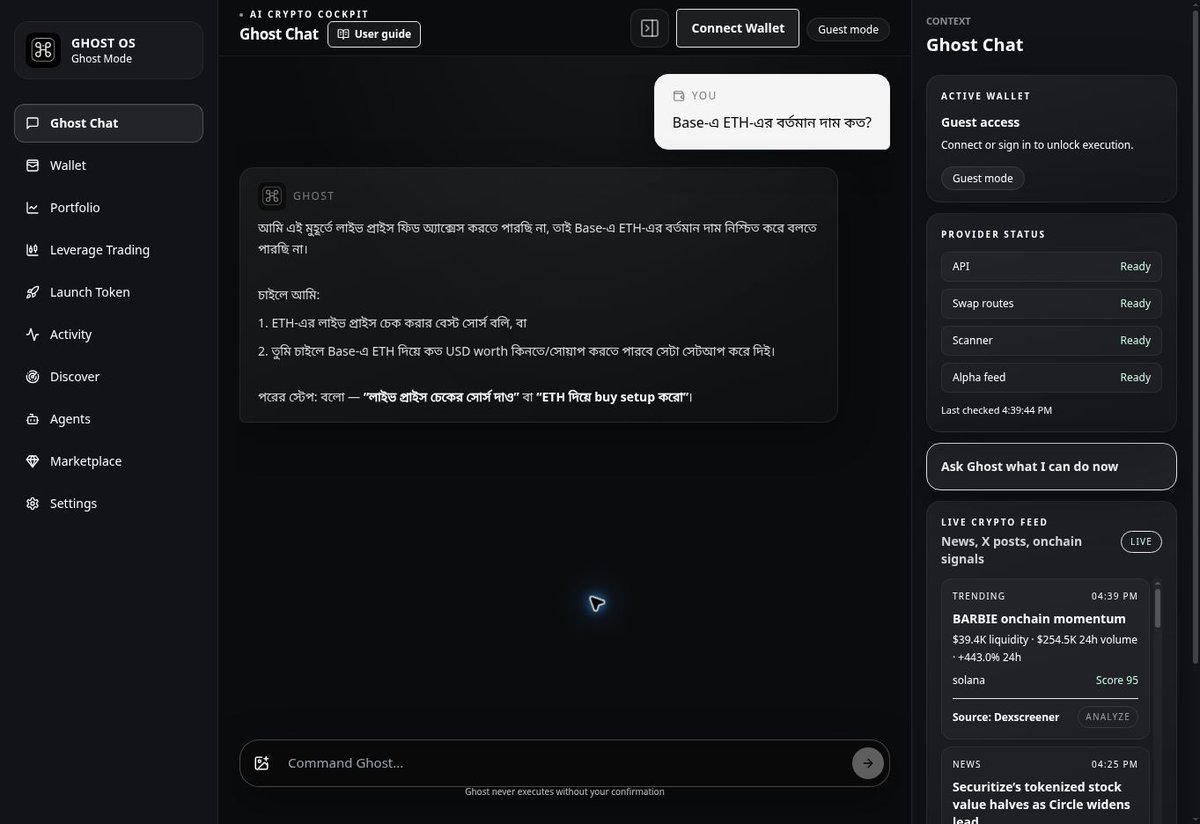
I asked GhostOS Guest Mode in Bangla: “What’s the current ETH price on Base?”
It understood the question and answered in Bangla—but said the live price feed was unavailable instead of inventing a number.
Language understanding worked. Live data didn’t. Both facts matter.
What makes you abandon a swap before confirming?
• unclear route
• surprise fees
• vague approval
• something else
Reply with the exact moment you close the tab.
I asked GhostOS Guest Mode for SOL’s current price.
It returned a timestamped Dexscreener source—and plainly marked the 24h change unavailable.
Useful data products show what they know and what they don’t.
Before I sign, I want three answers:
What moves?
Who gets authority?
What’s the maximum amount?
If a wallet prompt cannot explain those plainly, the UX is not finished. Which do you check first?
I typed “Scan USDC on Base for risk” in GhostOS Guest Mode.
Ghost did not guess. It asked for the token contract address before running a real scan.
That’s useful friction: ticker + chain still isn’t token identity.
What should a crypto app let you inspect before “Connect Wallet”?
Price and source?
Token risk flags?
Route availability?
News and context?
Guest mode is where trust starts. What belongs on the list?
I asked GhostOS guest mode: “What’s trending on Robinhood?”
It returned 10 USDG results with different contracts, prices, liquidity and Dexscreener sources.
The useful lesson was not “buy this.” It was: same ticker ≠ same token. Verify the contract.
App: “Sign this message.”
Me: excellent. What does it authorize?
A signature request should explain its domain, purpose and consequence—not rely on button fatigue.
Opened a swap expecting one clean transaction.
The gas estimate added a plot twist.
Crypto fees do not need to be predictable to the cent—but the cost and route should be visible before approval.
You open a bridge.
Then the questions begin: fee, minimum received, arrival time, destination network.
Which one makes you abandon the transfer first?
A useful route should make all four obvious before approval.
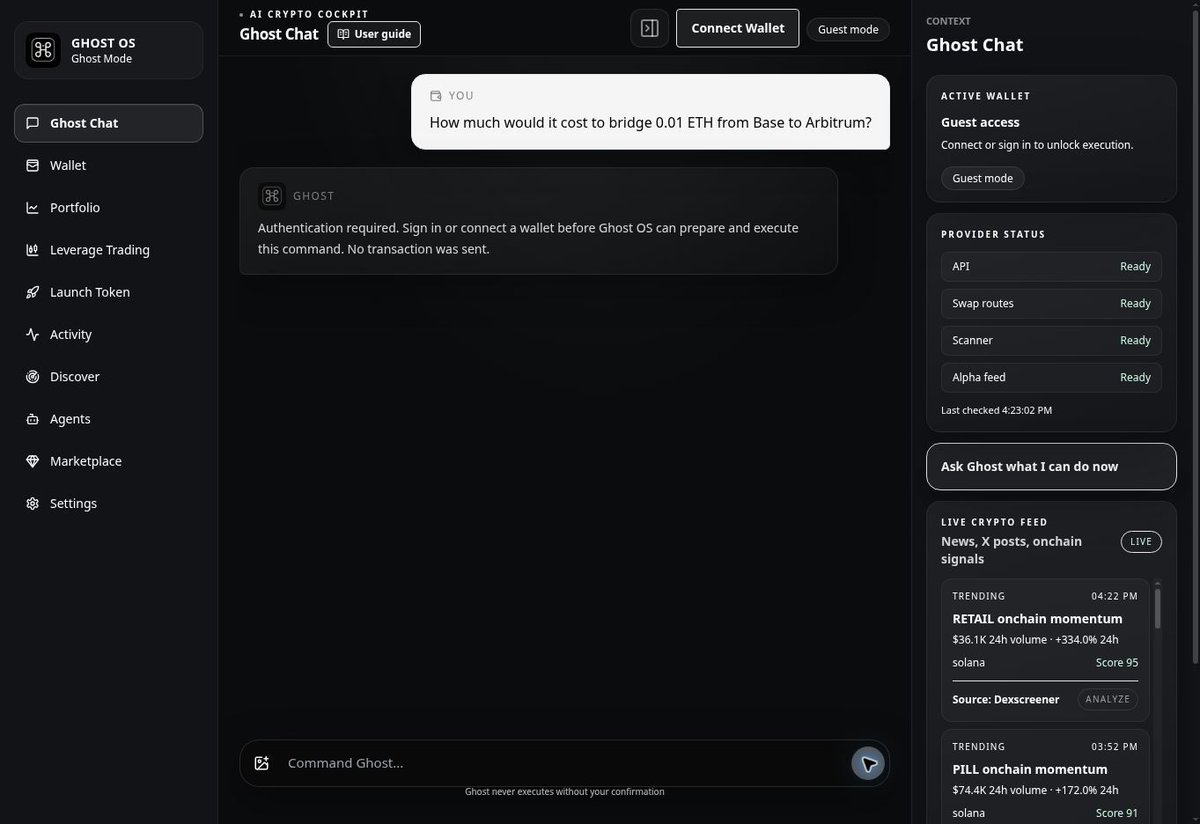
Real guest-mode test today:
“How much would it cost to bridge 0.01 ETH from Base to Arbitrum?”
Ghost required sign-in or a wallet before preparing the command—and confirmed no transaction was sent.
Useful boundary. No quote was produced.