𝗦𝗲𝘅 feels different when you 𝗻𝗲𝘃𝗲𝗿 𝗺𝗮𝘀𝘁𝘂𝗿𝗯𝗮𝘁𝗲.
𝗚𝗲𝘁𝘁𝗶𝗻𝗴 𝗱𝗿𝘂𝗻𝗸 feels different when you have 𝗿𝗲𝗮𝘀𝗼𝗻𝘀 𝘁𝗼 𝗰𝗲𝗹𝗲𝗯𝗿𝗮𝘁𝗲.
𝗦𝗽𝗲𝗻𝗱𝗶𝗻𝗴 𝗺𝗼𝗻𝗲𝘆 feels different when you’re 𝗿𝗲𝘄𝗮𝗿𝗱𝗶𝗻𝗴 𝘆𝗼𝘂𝗿𝘀𝗲𝗹𝗳 for your 𝗮𝗺𝗯𝗶𝘁𝗶𝗼𝗻 and 𝗱𝗶𝘀𝗰𝗶𝗽𝗹𝗶𝗻𝗲.
𝗖𝗵𝗲𝗮𝗽 𝗺𝗲𝗮𝗹 feels different when you keep a 𝘀𝘁𝗿𝗶𝗰𝘁 𝗱𝗶𝗲𝘁.
Dear son, 𝘌𝘢𝘳𝘯 𝘺𝘰𝘶𝘳 𝘧𝘶𝘯.
One thing I’ve noted from all of this is that so many people in this country only see Black people as servants and since we can’t be their servants they go out of their way to defend those who serve them better regardless of the fact that they are breaking the law!!!
𝗢𝗡𝗘 𝗖𝗢𝗠𝗣𝗔𝗡𝗬. 𝗕𝗘𝗔𝗧𝗦 𝗔𝗡 𝗘𝗡𝗧𝗜𝗥𝗘 𝗠𝗔𝗥𝗞𝗘𝗧
South Africa's TOP40 largest listed companies are worth a combined $1.38 trillion, and NVIDIA is worth nearly 4x more than that.
𝗡𝗩𝗜𝗗𝗜𝗔 = $𝟱.𝟮𝟬 𝘁𝗿𝗶𝗹𝗹𝗶𝗼𝗻
Think about that 🤯
South African Muslims are governed by the Muslim Supreme Council of South Africa (MUSCOOSA).
South African Jews are governed by The South African Jewish Board of Deputies (SAJBD).
Afrikaners are governed by Afriforum & the Freedom Front Plus (Vryheidsfront).
These organizations are more important than South African laws and the Constitution.
What this means is: If SAn laws or the Constitution goes against what these bodies stand for, they fight aggressively to change the laws or find ways to insulate themselves against the laws.
Does your racial group, religious group or cultural group have governing bodies that fight for you, lobby government, offer funding & insulate you from laws that prejudice your people?
South African companies where the government is the largest shareholder:
Nedbank
Capitec
ABSA
FirstRand
Standard Bank’s (2nd largest shareholder)
Investec
Sanlam
Shoprite
Clicks
Discem (2nd largest holder)
Woolworths
Pepkor
Bidvest
MTN
Telkom
Vodacom (2nd largest shareholder)
Impala Platinum
Sibande Stillwater
AngloGold Ashanti
Harmony Gold
Goldfields
Naspers
Remgro
Aspen
Sizwe Mpofu Walsh got a law degree just because.
The man also has a PhD from Oxford University and has written two books which have sold more copies than others. We must put some respect on his name.
There are some people who act like they are the only ones who can speak about the law online as if they were anointed by Pius Langa.
I don’t get the fuss about why we need to focus so much on business people who are close to Deputy President Paul Mashatile, especially if they’re LEGITIMATE.
For EG, Nelson Mandela had ties with the late businessman Douw Steyn and other white business people. Cyril Ramaphosa has links to many business people, some even funded his campaign. Thabo Mbeki himself had connections to various business people. I mean even Donald Trump is directly linked to Elon Musk.
Is the problem that DP Mashatile is linked to black business people and not necessarily those linked to Stellenbosch?
I’d understand the focus on him if he was linked to illegitimate business people, who don’t even qualify or have experience.
you went to a Model C school. your parents sent you to university, bought your first car, and even paid the deposit for your flat. never feel guilty about that. don’t let people make you feel ashamed of your privilege, life is different for everyone
Those living in gated communities with security often want to lecture ordinary South Africans about what should be tolerated in their areas, while they themselves are protected from the very problems they are telling others to accept.
South Africa is like that uncle the whole family takes advantage of until his kids grow up and start setting boundaries. then the entire family hates and resents them for protecting what was once an easy target.
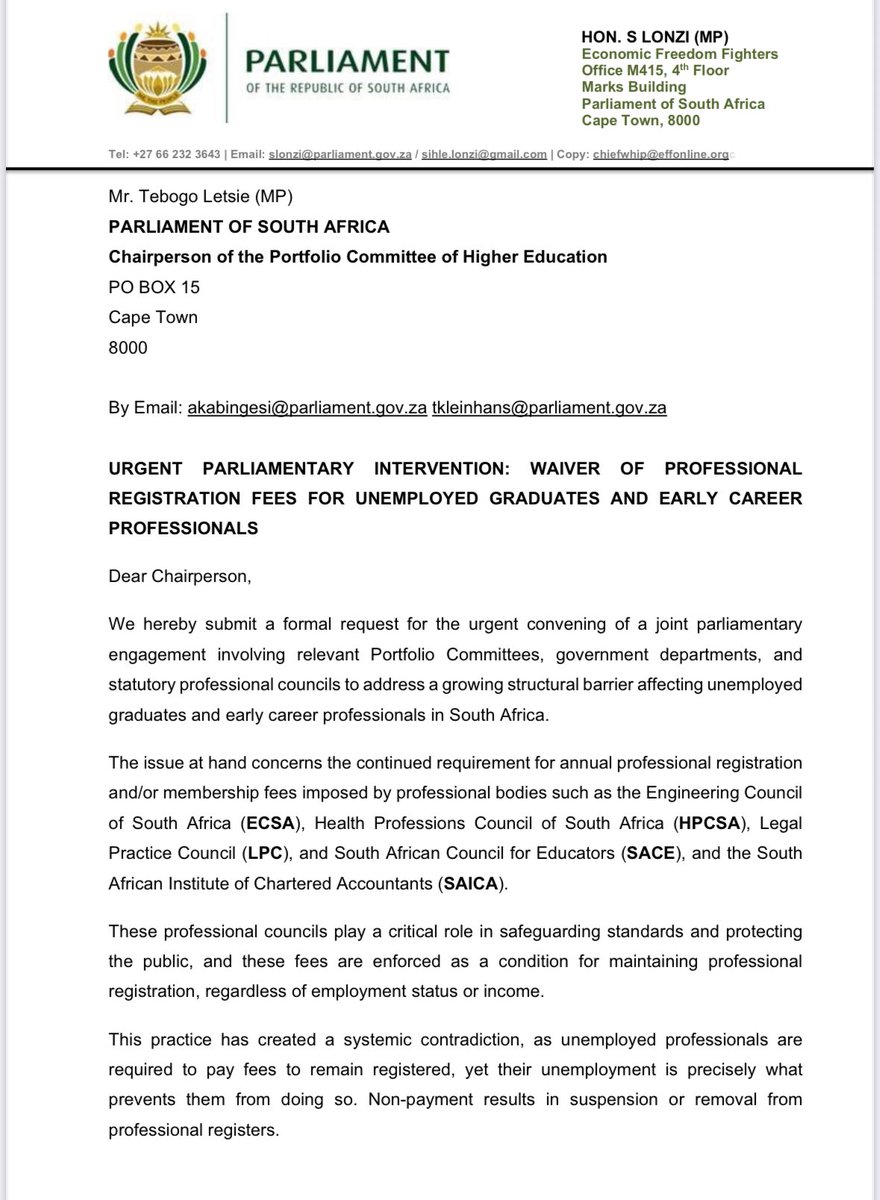
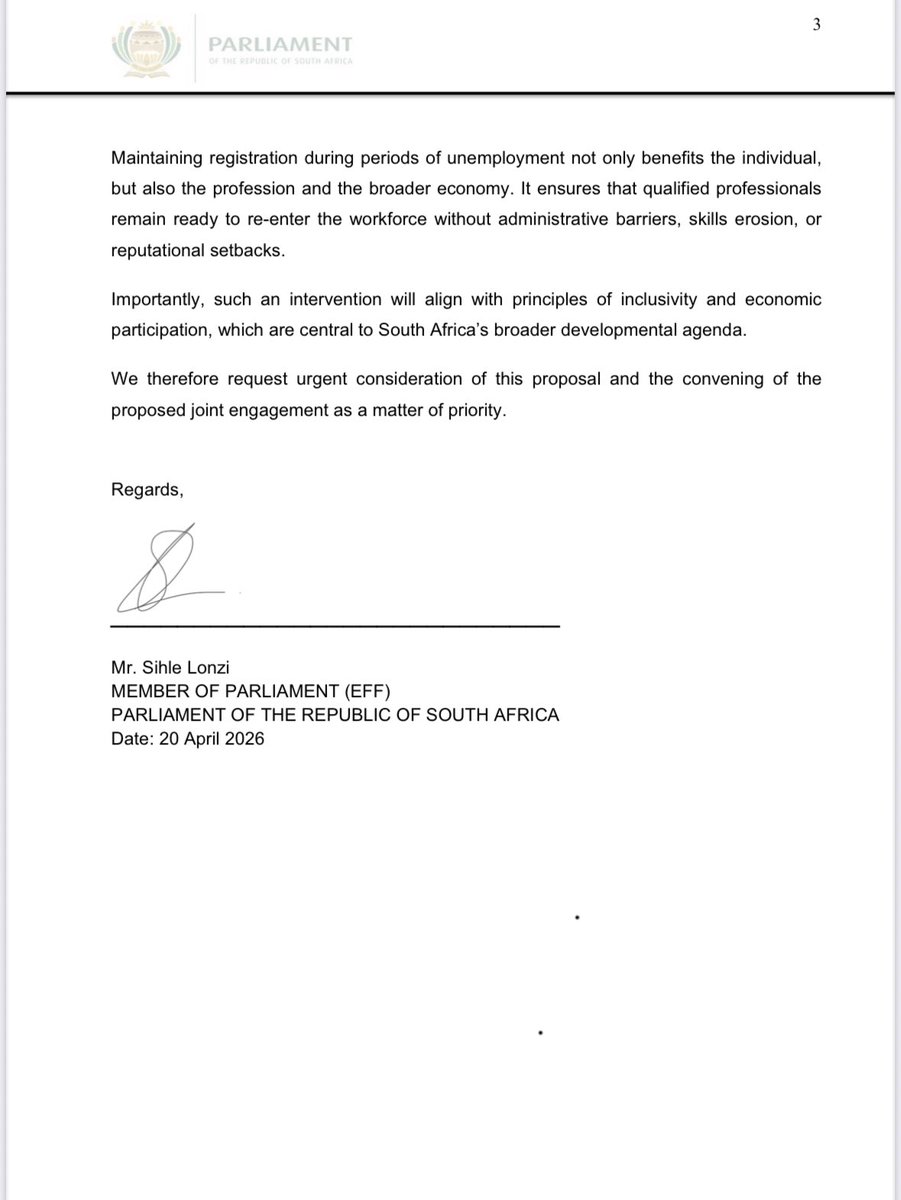
Young Professionals, Teachers, Doctors, Engineers, Lawyers, Accountants etc. have to pay membership fees to professional bodies like SACE, HPCSA, LPC, ECSA and SAICA, even when they are UNEMPLOYED.
The EFF is demanding parliamentary intervention to STOP this unjust practice!
From the Engineer's Desk
Some thoughts on South African engineering, unemployment, and where our graduates actually end up.
The unemployment rate gets plenty of airtime. Understandably so. But there's a quieter story underneath that's worth paying attention to—and it has to do with what kind of work our economy can actually sustain.
Here's the distinction that doesn't get made often enough.
Engineers with a BEng or BSc are trained for design, R&D, and setting assets to work—including plant modifications. Taking a concept from nothing and turning it into something physical. New mines. New factories. New aircraft. That kind of work requires an economy that's expanding, investing in the future, building things that didn't exist before.
Technologists with a BTech or Advanced Diploma are trained for operations, maintenance, and implementation. Keeping existing systems alive. That work doesn't dry up when the economy slows. If anything, it becomes more urgent. Infrastructure still ages. Plants still need to run. Planes still need to be serviceable.
You can see this playing out in renewable energy. The jobs created by REI4P sit in project execution, site supervision, installation, and long-term maintenance. It's implementation work. Necessary, valuable—but not design and R&D. Not the kind where you're figuring out what hasn't been built yet. And where design engineering roles do exist, the industry wants experience. A graduate with a degree but no solar project on their CV doesn't slot in easily.
The result is predictable. Engineering graduates wait. Technologists tend to find work sooner. And many of those waiting engineers eventually stop waiting.
The destinations tell their own story.
Austria. Sweden. Germany. The Netherlands. Places with active industrial policy. Places still designing and building new things. They need engineers, not just maintainers.
The UAE is another common landing spot. But the work there is different. It's high-level implementation. Fleet management for Emirates. Operations at a desalination plant. Project delivery on a new terminal. Sophisticated work, well paid—but still largely about running complex systems, not inventing them. The difference is that the systems actually exist there. The jobs are real.
China sits at the other end of the spectrum. They're building out the full engineering stack. Domestic aerospace programmes. New chemical plants. New materials research. They need designers and R&D engineers at enormous scale. But access for South African graduates is limited. The door isn't open the way it is in Europe or the Gulf. So the talent flows elsewhere.
What all this points to is something a standard jobs report won't capture. South Africa is not just losing people. It's losing a particular kind of capability. We're keeping the capacity to maintain and operate. We're exporting the capacity to design and create.
That shift matters. And it won't reverse itself just because the unemployment rate eventually moves. It requires an economy that decides to build again.
Until then, the planes will keep leaving.
Engineer Matshela Koko
BREAKING: Iranian State TV revealed the reasons for the failure of the talks with the U.S
Details:
- The U.S. tried to achieve at the negotiating table what it could not achieve through war
- The Americans demanded that Iran hand over enriched uranium and open the Strait of Hormuz without recognizing Iran’s sovereignty over it
- Iran has decided to defend its national interests by military means.