The APC Campaign Council: Nigerians Deserve a New Direction
I have taken note of the recently constituted APC Presidential Campaign Council, whose composition offers Nigerians a clear picture of the choice before us in the 2027 general election.
The council brings together many of the same political actors who have supported, defended or participated in the present administration. Their coming together raises a fundamental question: what exactly are they asking Nigerians to vote for in 2027, a new beginning, or the continuation of the same system that has brought severe hardship to our people?
The truth is, I see the 2027 election as a struggle between the oppressed Nigerian masses and those who have benefited from, defended and sustained the system responsible for their hardship.
It is concerning to all well-meaning Nigerians whose across the country, their families are struggling with the rising cost of food and basic necessities. Young Nigerians face unemployment and diminishing opportunities. Farmers and businesses are struggling to survive, while millions continue to live with insecurity. Our education, healthcare and other essential public services remain under enormous pressure.
This ruling campaign structure presents another scenario between the oppressors and the oppressed. We must use it come 2027 election to reject continued oppression and demand accountable, people-centred governance. If Osun people can do it, so can all other parts of the country.
I particularly appeal to my brother, Senator Abdul’aziz Yari, who has accepted to serve as Director-General of the APC Presidential Campaign Council, to reflect deeply and reconsider accepting this responsibility.
As a former governor of Zamfara State and a prominent leader from the North-West, I believe Senator Yari has a clear understanding of the devastating consequences of insecurity, poverty, unemployment, displacement and the destruction of livelihoods in the region and the country at large.
I therefore will be surprised if in his good conscience, will lead a campaign whose principal objective is to secure the continuation of a government under which many of the people he once governed, and other innocent Nigerians remain trapped in these challenges?
There is also a serious institutional question concerning the inclusion of the Executive Chairman of the Nigeria Revenue Service, Dr Zacch Adedeji, and the Director-General of the Budget Office of the Federation, Dr Tanimu Yakubu Kurfi, in the campaign’s fundraising and finance structures.
The leadership of critical public institutions demands neutrality, integrity and public confidence. It is therefore legitimate to ask whether the responsibilities of senior officials entrusted with managing public revenue and national finances can appropriately coexist with senior partisan campaign roles.
The government and the APC should explain how such arrangements are consistent with institutional neutrality and public trust.
Ultimately, no campaign council is more powerful than the Nigerian people. - RMK
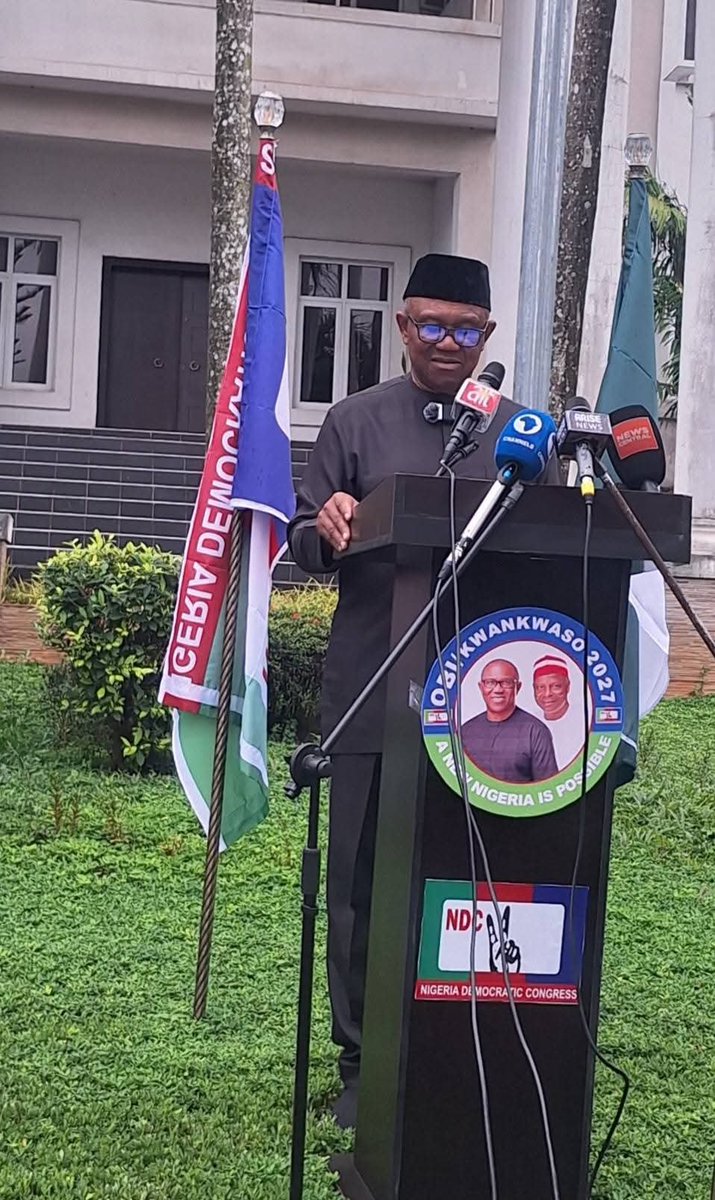
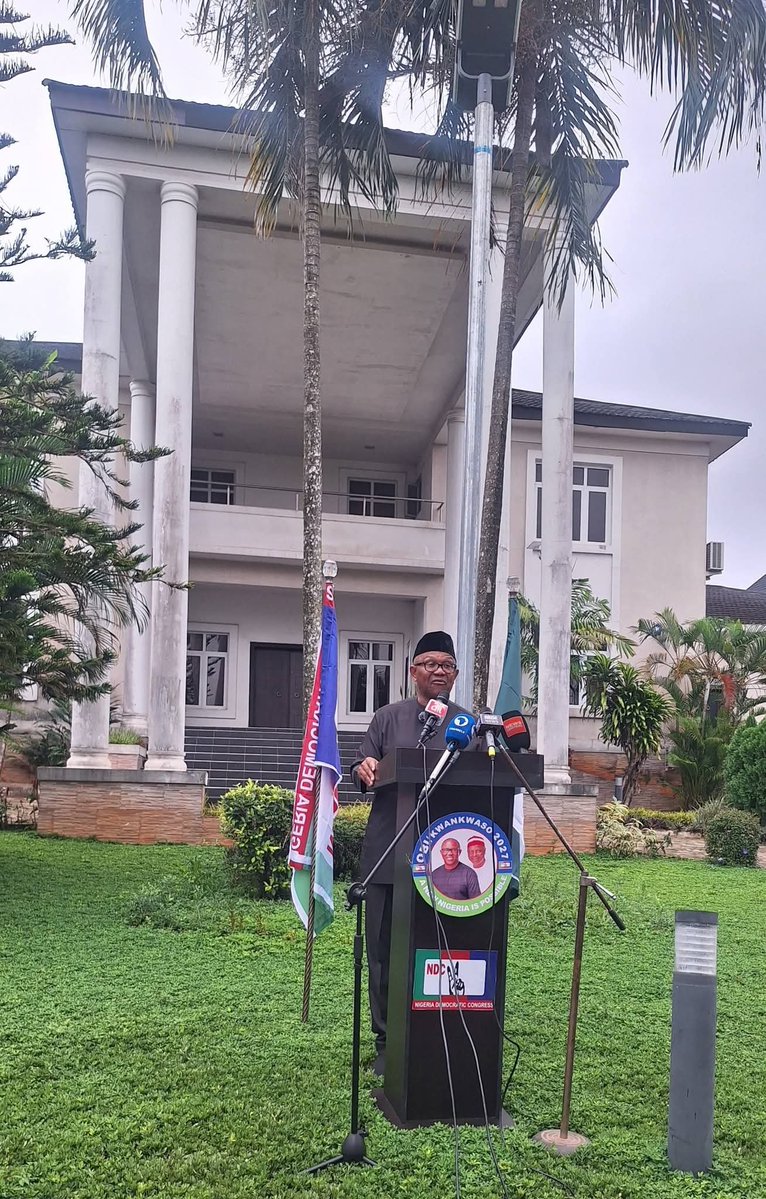
MY ADDRESS TO MARK THE COMMENCEMENT OF THE 2027 PRESIDENTIAL AND NATIONAL ASSEMBLY CAMPAIGNS
21 August 2026
Dear Compatriots,
Members of the Press,
Distinguished ladies and gentlemen,
Wednesday, 19 August 2026, marked the official start of the campaign period for the 2027 Presidential and National Assembly elections.
There is no doubt that this is a defining moment for our democracy. This moment gives Nigerians the opportunity to assess the records, ideas, and plans of those seeking their mandate to lead their country at a time of grave uncertainty in our rapidly changing world.
I consider myself quite privileged to be one of those seeking your mandate to deal with these challenges facing our country.
I enter this contest with one firm conviction: Nigeria can work, and Nigeria must work.
Nigeria faces several serious challenges. Some of them are indeed of existential proportions.
According to the IMF, 63%, or over 140 million Nigerians, live at or below the national poverty line, while humanitarian agencies estimate that 35 million people will need food assistance during the 2026 lean season. About 3.6 million Nigerians remain internally displaced, largely because of conflict and insecurity. Each year, millions of young people enter the labour market, yet too many struggle to find productive opportunities. Weak infrastructure, unreliable power, insecurity, and the excessive cost of doing business continue to burden households and constrain enterprise.
These are more than statistics. They reflect the daily realities of Nigerian families, farmers, workers, students, and businesses.
Yet I do not believe Nigeria lacks the ability to overcome these challenges. We have the people, resources, market, talent, and enterprise. What we must do now is turn these strengths into security, productivity, and shared prosperity.
LEADERSHIP MUST DELIVER RESULTS
My successful private-sector experience, studies in institutions of repute on policy and business matters, and my service as Governor of Anambra State have shaped my understanding of public leadership. Government must manage resources responsibly, set clear priorities, and measure the outcomes of its decisions. Public office is not a reward; it is a responsibility to the people.
In Anambra, I prioritised the foundations of long-term development: education, healthcare, infrastructure, fiscal discipline, and institutional capacity. I do not present that record as perfect, but as an experience from which Nigerians can draw their own conclusions.
Senator Rabiu Musa Kwankwaso brings a different but complementary governing experience.
As Governor of Kano State, he focused strongly on education, technical training, scholarships, infrastructure, and human-capital development. His administration’s investments in education and skills showed an understanding that the people are a state’s most important long-term resource.
Our experiences are different, but our conclusion is the same: Nigeria must invest in its people and manage public resources with discipline.
BUILDING AN ECONOMY THAT WORKS
Nigeria needs more than reactive reforms. We must focus on the questions that matter:
Are Nigerians better off than they were four years ago? Can they afford food, education, and healthcare? Can businesses produce, expand, and create jobs? Can young people find productive work? Can farmers work safely and get their produce to market?
Imagine telling someone that you got bitten by a dog in the course of doing your job and their response is that you should pray more??? No empathy or sympathy, just straight up asking you to pray.
Nigerians have a serious diagnosis of religious psychosis and it’s pandemic.
@Kingsleygeraldo@Demo4show@Therealfis05 It’s easier to graduate with better grades in a private uni. Not because private uni’s are easier, but because in public schools, the odds are against you by default.
@ozmoneyyy@General_Somto You are just a foolish insensitive human hustling for Elon’s coin.
And by the way, she never said she slept and woke up, but agenda must agend. IDIOT.