I had a similar experience two days back while flying from Fukuoka to New Delhi via Hanoi.
At Hanoi airport, apart from a few exceptions, many Indians were speaking very loudly, some of them playing music on their phones and creating unnecessary noise. What embarrassed me even more was seeing one person drink directly from a public water tap that was clearly meant for filling bottles.
Seeing such behaviour in public spaces is disappointing and frankly quite embarrassing.
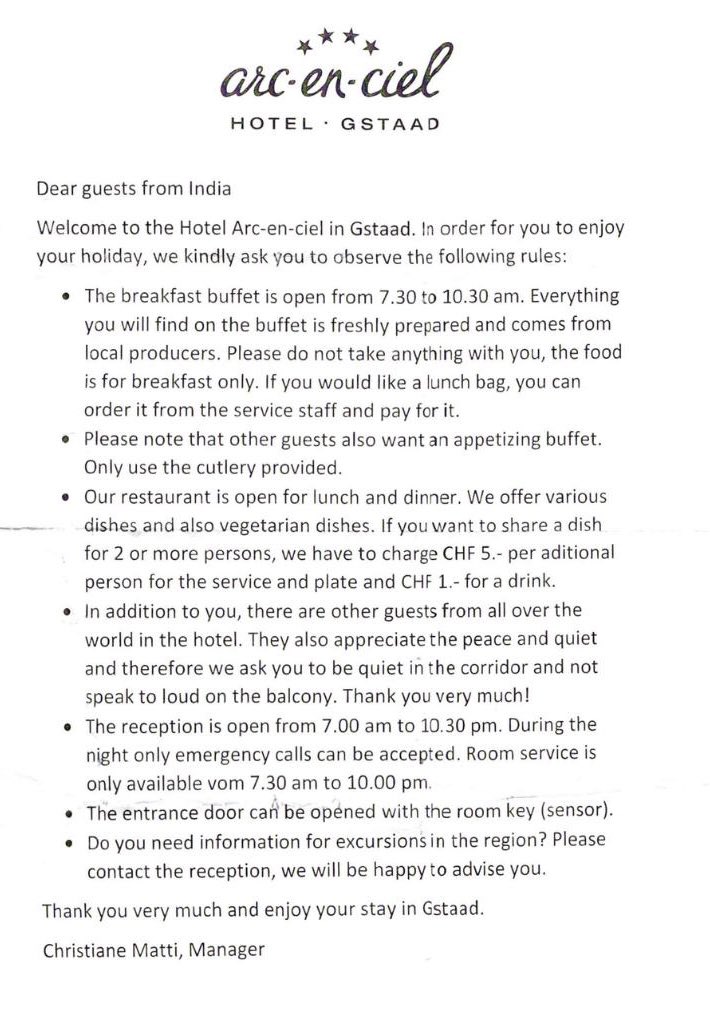
A Swiss hotel once displayed a list of special rules exclusively for Indian guests which I personally saw and was appalled.
Today, videos of garba in restaurants, loud conversations in airports, and turning aircraft cabins into picnic spots keep doing the rounds. Even in Davos, an Indian businessman blasted Punjabi music in a club so the whole town could hear it, calling it “soft power” but to everyone’s annoyance.
Japan earned global admiration through their courtesy and civic sense. If India wants to be a true global superpower, the world should remember Indians for its excellence, consideration and respect for others.
Our civic sense seriously needs to be upgraded.
I couldn’t agree more. I got back from Japan just last week and honestly I felt like I had landed on another planet. The cleanliness, the discipline, the respect people have for each other and how smoothly everything works. I have travel to many countries but Japan is just on a completely different level.
Once again sharing few things I wrote about Japan last year:
Very friendly people. Extremely clean country. Their public toilets are so clean, hygienic and tidy. Not all of us can maintain such standards even at our own homes. Zero trash.
A very high trust society. Their love for Indians are evident. Nice places to see. 80 years before they were totally destroyed. How amazingly they have rebuilt the entire nation.
In general, no one cheats you. Neither a street side vendor nor a cab driver. People greet you and thank you profusely.
Shintoism and Buddhism accounts for more than 95% of the country's population. Shintoism is extremely similar to Hinduism. Most Japanese practice blend of both Shintoism and Buddhism.
It is not exaggeration if the bullet train is at 10.03 am means, it is precisely 10.03 am. Nothing is late. Everything is on time. They have not only become an economic power but role model for cleanliness, trust, discipline and safety. One of the lowest crime rates in the world. Even women travelers visiting Japan can explore the cities in midnight.
Did not see a single traffic police or cop during the our stay in Japan. May sound exaggeration but the truth is no one violate any traffic rules. Being a high trust society, the role of the cops are less.
Bullet train stations, shrines and many public places are hugely crowded. Thousands and thousands of people assemble in very small area. You've to see the crowd at places like Shibuya crossing in Tokyo to believe it. You'll see no cop anywhere for crowd control. People automatically follow queue everywhere.
What you've heard is not exaggeration. If your cab time is 10 am and you are 2 minutes late, you would have missed the cab and have to look for next. There are instances where bullet train drivers have apologised for being half a minute late. The nation values punctuality a lot and it is non negotiable.
Many people live well beyond 100. The average life expectancy for women is 88 and for men is 84. Generally people look and act fit. They walk a lot.
Really surprising how discipline, cleanliness and trust comes so naturally to them.
Japanese have the highest IQ in the world too.
Few people from our group went separately in the middle of the night to Shibuya crossing to witness night life there. They lost their way. An elderly Japanese gentleman walked with them close to one kilometer to railway station, waited for them to board train going to right direction, mentioned how many stations after which they should get down and then only left. How many of us would do this to strangers at middle of the night?
A small boy, may be 3 or 4 years old, dropped a piece of ice cream wrapper on the ground in the bullet train station. The Japanese man following him immediately picked the trash, seeing no trash can near by, put it in his pocket to dispose of later.
As I said before, your ignorance is never exploited, not even by a street vendor or a cab driver. Your lack of awareness about pricing in the local economy, never make Japanese merchants exploit you. They don't even charge a yen more than what is actually due to them.
No pick pockets, stealing or any safety issues. Almost zero crime.
I'm unable to understand how they have made such a large nation practice ethics, cleanliness, discipline, trust, safety and courteous behaviour. Though it may be automatic for them, how much they wish and bow. More than economic prosperity, this national DNA appears miraculous.
What is very striking is the poorest of Japanese people have better quality of life than richest of Indians.
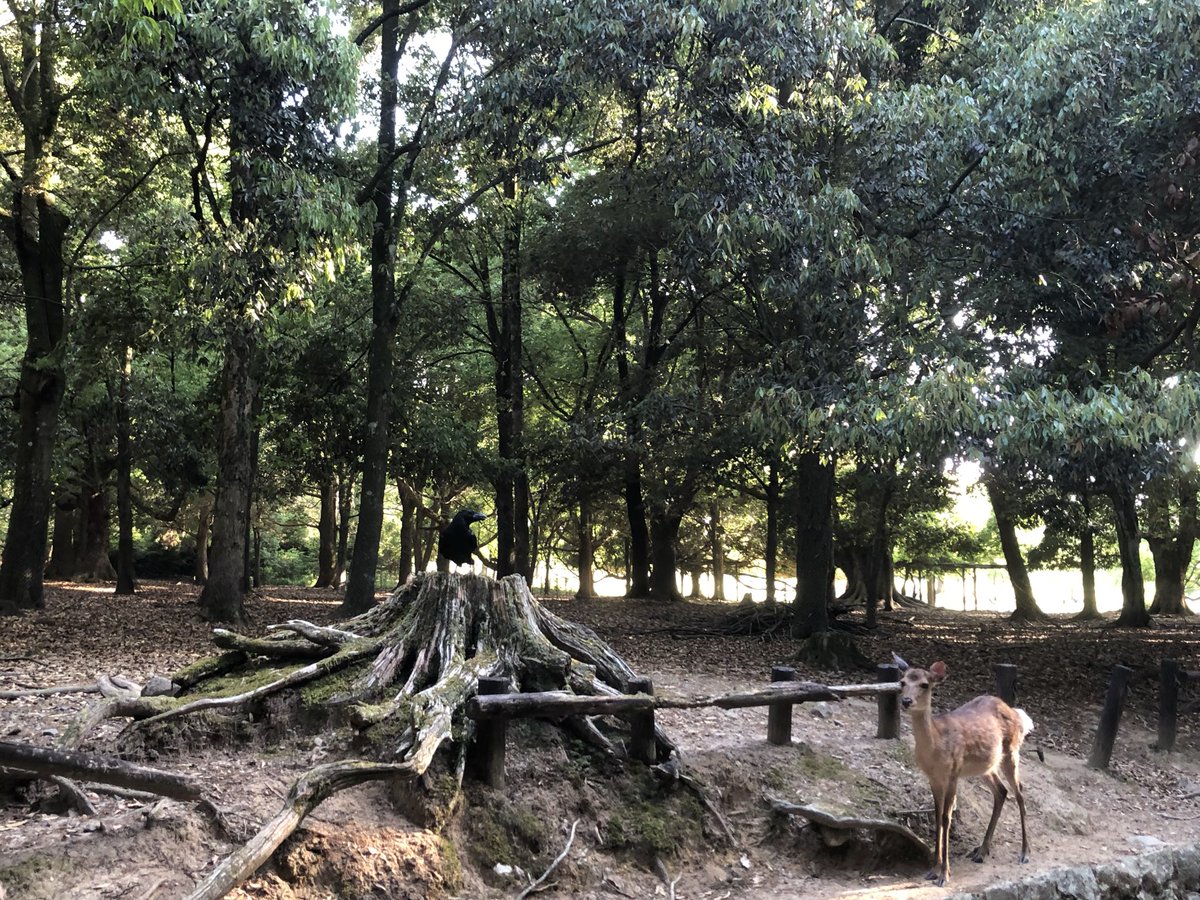
Something incredible I saw while walking across Nara Park.
A deer and a black crow standing quietly together, almost as if sharing a silent understanding. In Nara, deer are considered sacred and believed to be messengers of the gods in Shinto tradition. Black crows too hold a special place in Japanese culture, often linked to intelligence, mystery and sometimes even divine guidance.
As a traveller, this is one of those small, beautiful travel moments that stays with you.
Premier jour au Japon et sincèrement, j’ai presque l’impression d’être dans un autre monde. J’ai voyagé dans de nombreux pays, mais ici, il y a quelque chose de vraiment à part. Tout semble fluide, calme, presque silencieux. Les gens avancent avec respect, discrétion et une forme d’organisation qui force l’admiration. C’est un pays qui intrigue, qui surprend et qui donne envie d’observer chaque détail. #tokyo #japan #visitjapan
Une des réflexions les plus intelligentes que j’ai lues aujourd’hui:
« Le service est en noir et blanc. L’hospitalité, elle est en couleur. »
Le service, c’est faire son travail correctement, avec efficacité et professionnalisme. L’hospitalité commence lorsque l’on ajoute une dimension humaine à ce service.
Dans le voyage, par exemple, réserver un bon hôtel, organiser les transferts à l’heure et assurer une logistique fluide, c’est du service. Mais comprendre la personnalité du voyageur, se souvenir de ce qui l’émerveille, lui faire découvrir une famille locale, un petit café caché, ou ralentir le rythme pour lui permettre de vraiment ressentir un lieu, voilà ce qu’est l’hospitalité.
Un créateur de voyages ne se contente pas d’organiser un itinéraire; il façonne une expérience et crée des souvenirs qui restent longtemps après le retour.
Les gens oublient souvent les détails d’un programme mais ils n’oublient presque jamais ce qu’un lieu et les personnes derrière cette expérience leur ont fait ressentir. #UnreasonableHospitality
Visited Sonagiri yesterday afternoon. Quiet, powerful, almost timeless. Places like this remind us how little noise is needed for depth.
🇫🇷 La visite des temples jaïns de Sonagiri hier après-midi m’a profondément touché, c’était vraiment apaisant et presque hors du temps.
Ce lieu sacré, appelé la colline d’or est un important site de pèlerinage jaïn, avec plus d’une centaine de petits temples blancs répartis sur la colline. Il y règne un calme très particulier, presque silencieux, qui invite naturellement à la réflexion et à la paix intérieure. #sonagiri #sonagirijaintemples #mptourism
Dans le domaine du tourisme comme ailleurs, il y a une vérité simple que j’ai appris avec le temps : les meilleurs ambassadeurs ne sont pas ceux qui parlent le plus… mais ceux qui ont vraiment vécu l’expérience.
Un client satisfait, qui a parcouru les routes, rencontré les gens, ressenti les lieux — lui seul peut en parler avec justesse. Il n’y a pas de filtre, pas d’artifice. Juste du réel.
On peut investir dans la publicité, montrer de belles images, raconter de belles histoires… mais rien n’égale la parole sincère d’une personne qui a découvert, vu et ressenti.
C’est cette confiance que je cherche à construire, petit à petit, expérience après expérience.
Et au fond, c’est peut-être ça le vrai luxe : une expérience assez authentique pour donner envie de la partager naturellement.
Un homme… mais il ne s’arrête pas.
Un pont. Puis le silence.
Dans La Chute, Clamence laisse passer un moment important… et comprend qu’il n’est peut-être pas aussi juste qu’il le pensait.
Parfois, même nos bonnes actions cachent un peu d’orgueil.
Et quand personne ne regarde…
qui sommes-nous vraiment ?
« Celui qui attrape les tortues doit aussi les manger. »
Une vieille histoire raconte que des pêcheurs ont attrapé beaucoup de tortues. Après les avoir cuisinées, ils ont compris que ce n’était pas bon… et personne ne voulait en manger.
Quand Mercure est passé, ils l’ont invité, en espérant lui donner ce qu’ils ne voulaient pas. Mais il a compris et les a obligés à manger eux-mêmes.
Une règle simple : on ne devrait jamais donner aux autres ce qu’on refuse pour soi.
Très simple mais très essentiel.
Ce matin, en lisant Skin in the Game de Nassim Nicholas Taleb, je suis tombé sur une idée qui m’a vraiment parlé. Trop d’assistance peut, sans qu’on s’en rende compte, nous éloigner de l’essentiel. On passe plus de temps à expliquer, à coordonner, à répondre… qu’à faire réellement.
En tant qu’entrepreneur dans le voyage, ça m’a fait réfléchir. Notre métier est fait de terrain, de détails, de relations humaines. Plus on s’en éloigne, plus on perd ce qui fait la vraie valeur de notre travail. Être proche de ce que l’on fait, au final, c’est rester juste et efficace.
Ce n’est pas contre l’aide, elle est parfois indispensable. Mais trop d’intermédiaires peuvent faire perdre le sens. Une phrase m’a marqué : « Avoir un assistant (sauf pour le strict nécessaire) enlève une part de votre âme dans ce que vous faites. » Une bonne piqûre de rappel.
I visited the Virupaksha Temple in Hampi last week, a UNESCO World Heritage site dedicated to Lord Shiva. I loved It’s deeply spiritual atmosphere and intricate architecture.
📍Sri Pampa Virupaksheshwara Swamy Bramharathotsava, Hampi.
Hampi Brahmarathotsava, also popularly known as the Hampi Jatre, is the grand annual chariot festival of the historic Virupaksha Temple in Hampi, Karnataka.
#HampiBrahmarathotsava#HampiJatre#VirupakshaTemple
The pre-Covid peak of 2019 was 1.09 crore foreign tourists. We are not even able to reach that level again till now. This is despite the rupee sitting at historic lows against the dollar, which should make India a bargain for foreign visitors. But alas, foreign tourists are going elsewhere - despite more airports being built, more flight routes opening, better connectivity than ever. Despite all the "Incredible India" campaigns.
So what's going wrong? Basically everything that actually matters to a tourist.
Start with the e-visa portal. Just google search reviews of the Indian government's online visa process and you will find hundreds of travellers sharing their own nightmares: forms crashing mid-application, payments failing repeatedly, data not being saved, the site randomly displaying a list of India's tallest mountains in the middle of a visa form. You will see that some tourists just gave up and booked somewhere else.
Then when the foreign tourists actually arrive. Good luck getting a local SIM card without jumping through hoops. UPI, which Indians love to flex about, is practically unusable for foreign visitors. Hotels across India are required by law to report the arrival of foreign guests to the police, adding another layer of babu-raj hassle. Scams are rampant at every tourist spot from Agra to Rishikesh, harassment is common, and the less said about public hygiene in most cities the better.
And the hotels in Indian tourist destinations like Goa are completely overpriced compared to equivalent properties in Bangkok, Hanoi, or Colombo.
The irony is, Indians themselves have figured this out. Outbound travel hit a record 3.3 crore trips in 2025, up 21.5% from pre-Covid. The Indian middle class now finds it cheaper to holiday in Thailand, Vietnam, Sri Lanka, or the UAE than in Goa or Kerala.
We keep building airports and announcing new routes, but nobody wants to visit a country where the first interaction with the state is a government website that looks like it was coded in 2003 and the last interaction is an overpriced hotel room with subpar service.
The Civil Aviation Ministry should issue a directive that if a passenger refuses to turn off the volume of his/her phone or personal device or to use EarPods/ headphones in an aircraft when requested by the crew they should end up on the no-fly list for three months
« Cela semble toujours impossible… jusqu’à ce qu’on le fasse. »
Une phrase simple mais profondément vraie. Chaque pas, même petit, nous rapproche de l’impossible qui devient possible. Aujourd’hui, peut-être que c’est le bon moment pour oser.
— Nelson Mandela
Foreign visitors often talk about the same problem: cleanliness and honestly I agree with them. In many places there is garbage on the streets and public areas are not well maintained. It’s unfortunate because India has such amazing culture, history, food and hospitality but when tourists keep seeing trash, it creates a bad first impression.
As someone working in tourism, it’s frustrating because India has huge potential, yet such a basic issue continues to hold the country back. #CleanIndiaForTourism
Ce matin, j’ai lu une pensée qui m’a apporté une grande paix intérieure.
Elle nous rappelle quelque chose de très simple mais profondément juste: essayer d’être plus compréhensif envers les autres, garder des attentes réalistes et accepter que les difficultés sociales et politiques évoluent souvent par cycles.
Avec le recul, le passé nous paraît souvent plus doux et plus stable… mais c’est aussi parce que nous oublions facilement combien nous étions inquiets à l’époque. Chaque période de l’histoire porte ses incertitudes.
Cette réflexion m’a touché parce qu’elle invite à un peu plus de sagesse et de sérénité dans notre regard sur le monde et aussi sur les autres. Peut-être que la paix commence simplement par là : comprendre davantage, attendre un peu moins et garder confiance dans le passage du temps.