NIH-funded researchers investigated how a processed diet differing in sugar and fat content affected brain function in both young and older male rats. They found that just three days of a highly processed, fiber-poor diet can impair brain and memory function in older rats.
Read more about this discovery and how it could be used to develop interventions to improve human health: https://t.co/IO8YvS95qm
NEWS: An NIH-funded research team has uncovered new clues about diabetes risk and the genetic and cellular factors that contribute to it.
Read more ➡️ https://t.co/dxORU6y5wn
☀️ Protect your skin this #MelanomaAwarenessMonth:
🧴 SPF 30+ & reapply every 2 hrs
👒 Cover up, hat + shade
🚫 Skip the tanning booth
🩺 Talk to your doctor about a skin check
Not sure what to expect? Our Know Before You Go guide has you covered 👉
https://t.co/VQvWhZy0F6
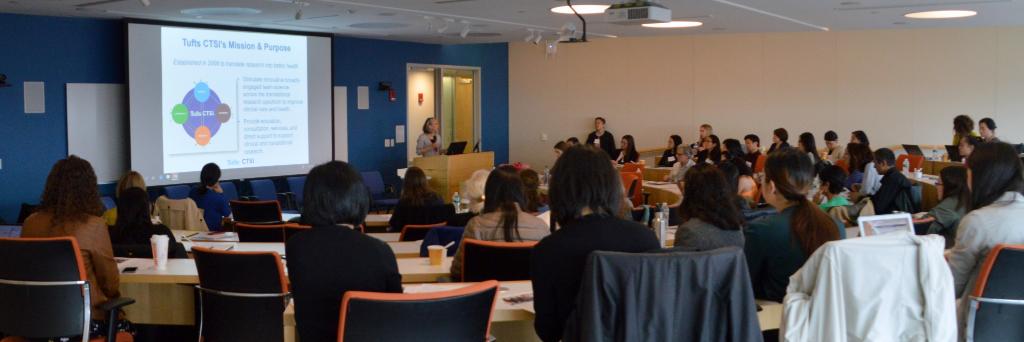
3rd annual Brain + Behavioral Research Day featured strong collaboration across @TuftsMedSchool and Tufts Medicine. Outstanding work spanning neuroscience, behavioral health and clinical research, from Alzheimer’s and stroke to brain tumors and implementation science.
This Patient Experience Week, we’re highlighting comments from patients and families about their care experiences at Tufts Medicine.
Thank you to the teams whose compassion and dedication made these moments possible.
You've been asking for this one for years. We heard you.
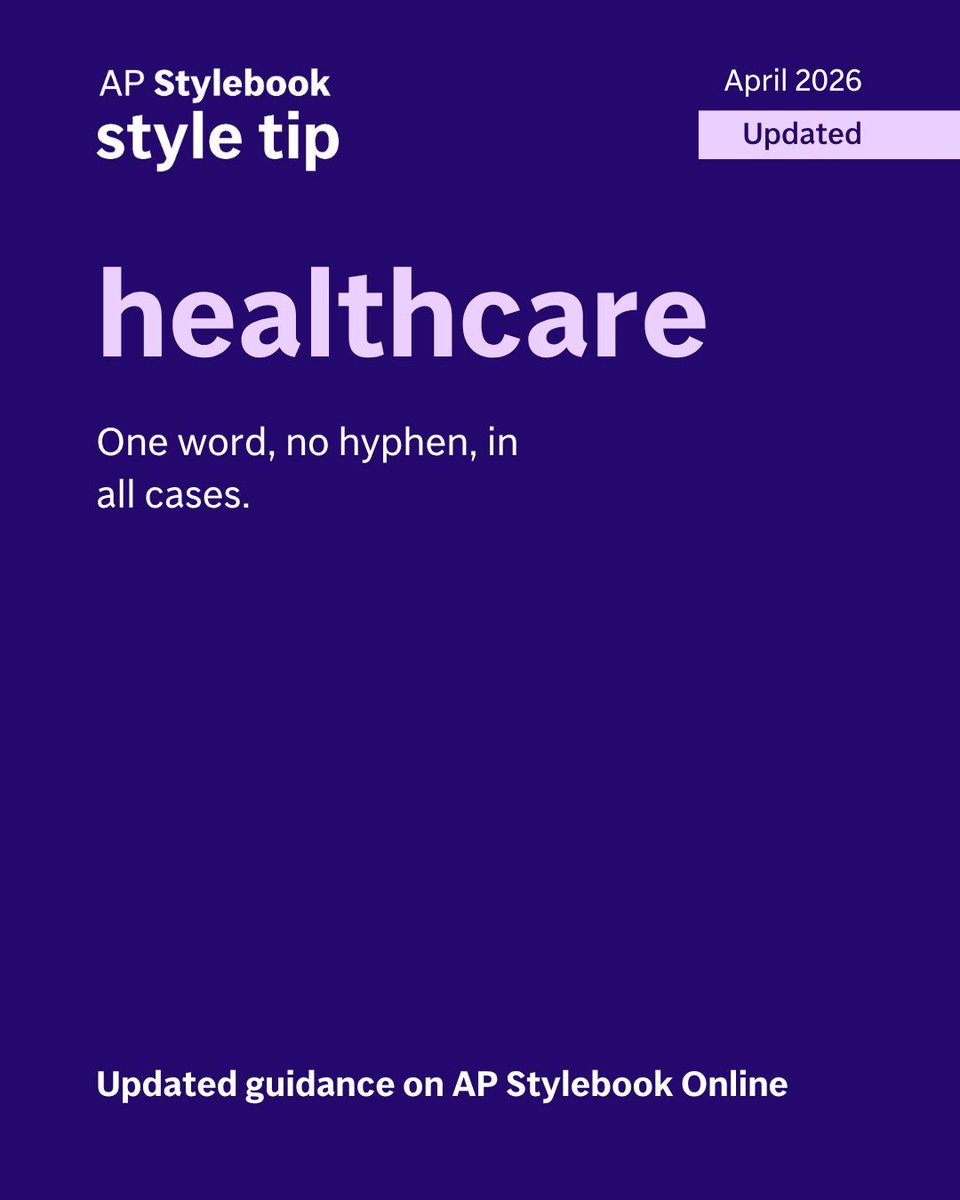
We announced a change in AP style at the @ACESEditors conference today: It's now healthcare, one word, in all uses.
We also changed childcare and daycare, closing them up to one word rather than two.
This guidance is live on AP Stylebook Online now.
Nearly every 40 seconds, someone in the United States has a heart attack—one of the leading causes of death for both men and women.
New NIH-funded research examines the role of sensory neurons and immune signals in a preclinical study of heart attacks. Scientists found that the heart and brain communicate through the nervous and immune systems during a heart attack, and this signaling may worsen heart damage.
Findings suggest that disrupting or disabling this crosstalk could help shape future treatments.
Learn more about this discovery: https://t.co/kpRRUhdrRV
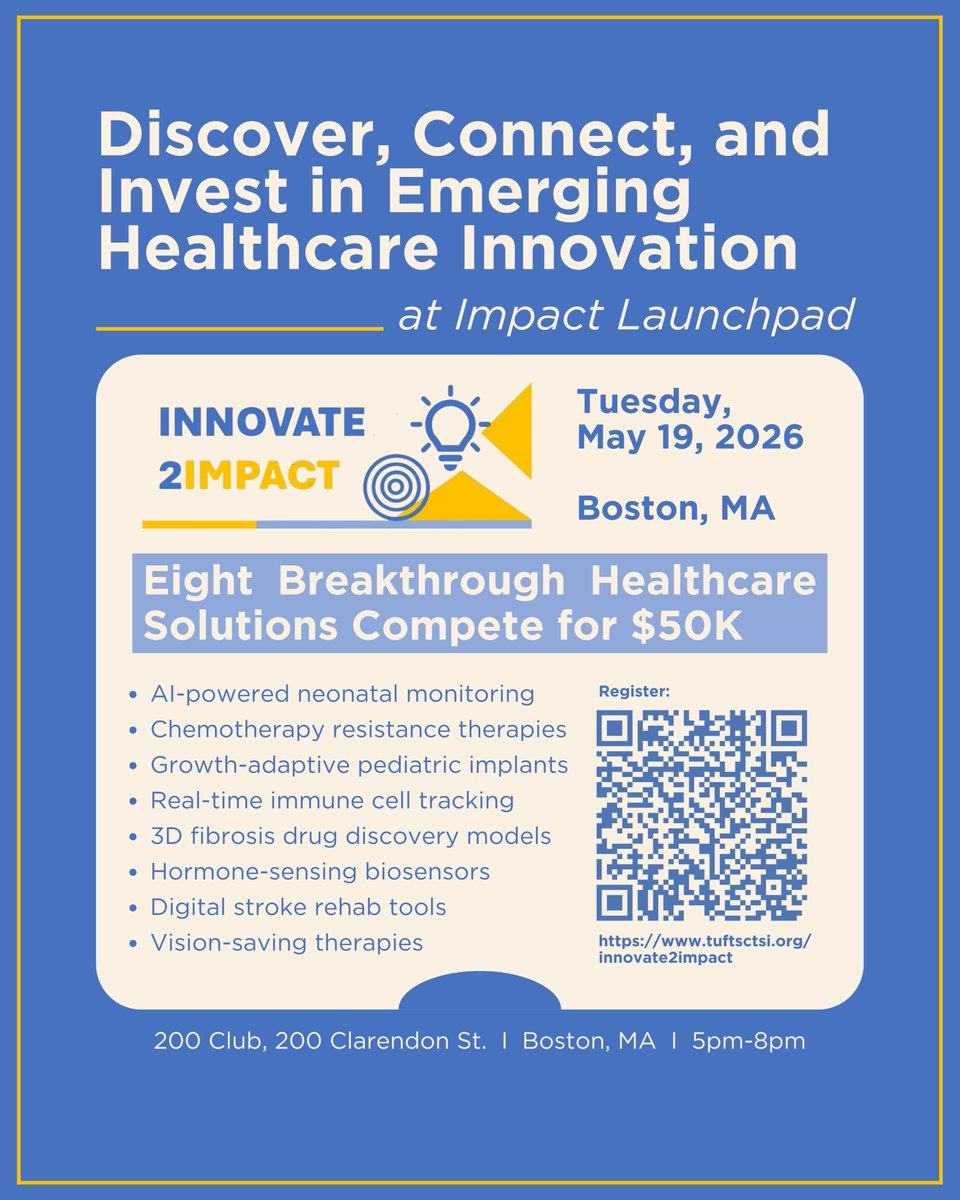
📣 Our Impact Launchpad Pitch Competition is now four weeks away! We look forward to seeing you on Tuesday, May 19 (5:00PM–8:00 PM).
🥇 Eight selected pitches will compete for $50K in funding.
📍 The 200 Club
200 Clarendon | Boston, MA
5:00PM-8:00PM
https://t.co/P9G8u5ulNn
Collaboration advances cancer research and care.
At the Converging on Cancer symposium, @TuftsMedSchool convened researchers, clinicians and industry partners to connect discovery with care focused on patients.
NIH-funded researchers have uncovered a key reason why immunotherapy has largely failed in pancreatic cancer — and identified a promising strategy to overcome that resistance.
Read on to learn more about this discovery: https://t.co/BoCHpLxp5g
The Big Teeth That Can Cause Big Trouble -- These molars don’t bring wisdom. But they can leave you smarting if not properly manage
https://t.co/dlny73bPjH @TuftsDental
LAST CHANCE to register for our virtual #TranslationalScience Day symposium next Friday!
You won't want to miss the keynote on "Machines of Healing Grace: The Future of #HealthAI” from Dr. Brian Anderson, CEO of the Coalition for Health AI.
https://t.co/fpPy6U6vu9
#CTSAProgram
LAST CHANCE to register for our virtual #TranslationalScience Day symposium next Friday!
You won't want to miss the keynote on "Machines of Healing Grace: The Future of #HealthAI” from Dr. Brian Anderson, CEO of the Coalition for Health AI.
https://t.co/fpPy6U6vu9
#CTSAProgram
A new study from Tufts Medical Center researchers finds that patients who continue taking blood pressure meds after a decline in kidney function may have better long-term outcomes than those who stop. Research led by Dr. Mark J. Sarnak. Learn more: https://t.co/dvjUeHI9Fe
New NIH-funded research is taking a closer look at neurogenesis—the process of creating new neurons—in the hippocampus and how it relates to cognitive function. The findings highlight important differences in the brains of adults across a range of ages and levels of cognitive function, offering new insight into how our brains change over time.
Read more: https://t.co/oDUtuDC1r3
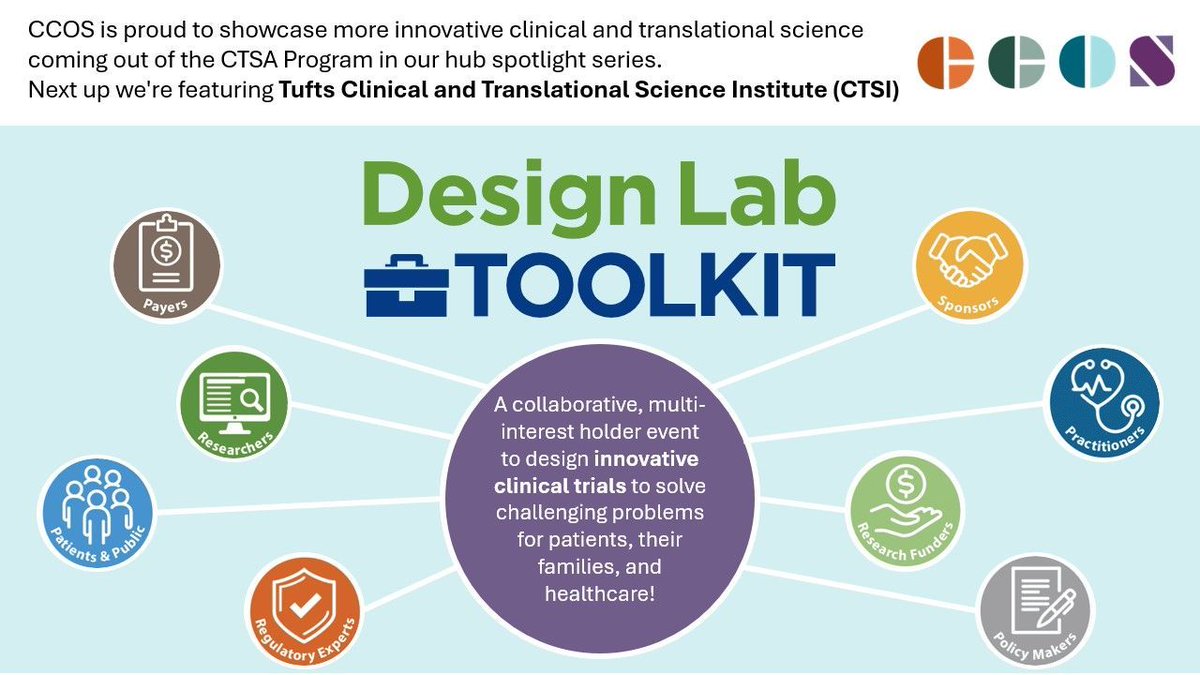
CCOS is continuing its Hub Spotlights for innovative clinical & translational science across the #CTSAProgram. Up next, @tuftsctsi and its Clinical Trial Design Lab Toolkit! Learn more and read the full article on our website: https://t.co/7uHPkSTpS9
Gene therapy was once theoretical.
Today, thanks to the work of NIH-funded vision researchers, it’s restoring functional vision for people with rare inherited retinal diseases.
See how NIH-supported science is bringing gene therapy to life: https://t.co/e90eeepagI