Gujarat’s Agricultural Transformation: The Modi Model
When Narendra Modi was Chief Minister of Gujarat, agriculture was approached not as a standalone department but as a convergent development mission—bringing together irrigation, water conservation, soil science, horticulture, technology, power and farmer extension.
The results were remarkable. Between 2001-02 and 2011-12, Gujarat recorded an average annual agricultural growth rate of 10.92%, substantially higher than the national average. This demonstrated that a state with significant water constraints could transform its agricultural economy through sustained policy intervention.
The approach began with water. Participatory irrigation management, watershed development, check dams, farm ponds and micro-irrigation expanded the availability and efficiency of water. The emphasis was not merely on creating irrigation infrastructure, but on involving farmers and communities in managing water resources.
The second pillar was soil and science. Soil testing and the promotion of Soil Health Cards encouraged farmers to understand the specific nutrient requirements of their land and adopt more scientific input use. At the same time, Gujarat pushed horticulture and crop diversification, helping farmers move beyond traditional cropping patterns towards higher-value agriculture.
The outcomes were visible in production. Gujarat’s foodgrain production crossed the 100 lakh metric tonne mark in 2011, an important milestone for a state better known historically for commercial crops.
Perhaps the most distinctive innovation was the annual, month-long Krishi Mahotsav. Instead of waiting for farmers to approach government offices, agricultural scientists, officials and experts travelled across villages, taking knowledge directly to farmers. Soil testing, modern farming techniques, horticulture, irrigation and new technologies were promoted at the grassroots.
The larger lesson from Gujarat was that agricultural transformation requires convergence. Water security, soil health, technology, diversification, infrastructure and last-mile extension, when brought together around the farmer, can create sustained agricultural growth and resilience. 4/n
#25Years25Reforms
#25YearsOfSeva
Before water security became a national mission, Narendra Modi was already transforming Gujarat’s water story.
• 1.53 lakh+ check dams were constructed by June 2012, alongside 2.61 lakh farm ponds and 1.22 lakh bori bundhs—creating a massive decentralised water-conservation network across Gujarat. (Narendra Modi)
• The focus was not merely on storing water, but recharging groundwater and expanding irrigation. Studies cited by the Gujarat government found a 55% increase in cultivated land and over 70% rise in cropping intensity through water-conservation interventions. (Narendra Modi)
• From check dams and watershed development to the Narmada project and Sujalam Sufalam, the Modi-era approach turned water conservation into a people’s movement—and laid the foundation for Gujarat’s transformation from chronic water scarcity towards greater water security.
The lesson was clear: conserve every drop, recharge every aquifer, and take water to every farm. 3/n
#25Years25Reforms
#PMModi25YearsofSeva
#AshirwadKaDiya
सरला बिरला विश्वविद्यालय राँची, झारखण्ड में ‘Modi@25: Naxal Mukt Bharat’ के अंतर्गत ‘नक्सल मुक्त भारत’पुस्तक के लोकार्पण का अवसर अत्यंत उत्साहपूर्ण और सार्थक रहा। सभागार में उपस्थित विद्यार्थियों, शिक्षकों, विद्वानों और प्रबुद्धजनों की सहभागिता ने कार्यक्रम को विशेष बना दिया।
कार्यक्रम के मुख्य अतिथि झारखंड के प्रथम मुख्यमंत्री एवं वर्तमान नेता प्रतिपक्ष, माननीय श्री बाबूलाल मरांडी जी ने झारखंड की शांति, स्थिरता और विकास की यात्रा पर अपने महत्वपूर्ण विचार साझा किए। उन्होंने उल्लेख किया कि नक्सलवाद के विरुद्ध संघर्ष केवल सुरक्षा का विषय नहीं है, बल्कि यह उन क्षेत्रों में विश्वास, विकास और बेहतर भविष्य की पुनर्स्थापना का भी प्रश्न है।
पुस्तक के सह-लेखक डॉ. आलोक कुमार द्विवेदी ने भी पुस्तक में प्रस्तुत शोध, अनुभवों, जमीनी वास्तविकताओं एवं भारतीय ज्ञान परम्परा के अनुरूप इसके विभिन्न पक्षों को उपस्थितजनों के साथ साझा किया।
भाजपा झारखंड के प्रदेश प्रवक्ता श्री अजय साह जी एवं श्री मृत्युंजय शर्मा जी ने भी अपने विचारों से चर्चा को समृद्ध किया। कार्यक्रम में सरला बिरला विश्वविद्यालय के डायरेक्टर जनरल प्रो. गोपाल पाठक जी, कुलपति प्रो. जगन्नाथन जी एवं रजिस्ट्रार श्रीधर दैदिन जी की गरिमामयी उपस्थिति रही।
भाजपा के राष्ट्रीय मंत्री एवं राज्यसभा सांसद श्री प्रदीप कुमार वर्मा जी संगठनात्मक दायित्वों के कारण कार्यक्रम में उपस्थित नहीं हो सके, किंतु उन्होंने अपनी शुभकामनाएँ प्रेषित कीं। ‘नक्सल मुक्त भारत’ केवल नक्सलवाद के विरुद्ध सुरक्षा अभियान की चर्चा नहीं करता, बल्कि उन व्यापक परिवर्तनों को समझने का प्रयास भी है जिनमें सुरक्षा के साथ शिक्षा, सड़क, स्वास्थ्य, आजीविका और विकास के अवसरों का विस्तार शामिल है। दशकों तक हिंसा और भय का सामना करने वाले क्षेत्रों में सामान्य जीवन की वापसी और विकास की संभावनाएँ इस परिवर्तन का महत्वपूर्ण पक्ष है।
#NaxalMuktBharat
#25YearsofSeva
सरला बिरला विश्वविद्यालय राँची, झारखण्ड में ‘Modi@25: Naxal Mukt Bharat’ के अंतर्गत ‘नक्सल मुक्त भारत’पुस्तक के लोकार्पण का अवसर अत्यंत उत्साहपूर्ण और सार्थक रहा। सभागार में उपस्थित विद्यार्थियों, शिक्षकों, विद्वानों और प्रबुद्धजनों की सहभागिता ने कार्यक्रम को विशेष बना दिया।
कार्यक्रम के मुख्य अतिथि झारखंड के प्रथम मुख्यमंत्री एवं वर्तमान नेता प्रतिपक्ष, माननीय श्री बाबूलाल मरांडी जी ने झारखंड की शांति, स्थिरता और विकास की यात्रा पर अपने महत्वपूर्ण विचार साझा किए। उन्होंने उल्लेख किया कि नक्सलवाद के विरुद्ध संघर्ष केवल सुरक्षा का विषय नहीं है, बल्कि यह उन क्षेत्रों में विश्वास, विकास और बेहतर भविष्य की पुनर्स्थापना का भी प्रश्न है।
पुस्तक के सह-लेखक डॉ. आलोक कुमार द्विवेदी ने भी पुस्तक में प्रस्तुत शोध, अनुभवों, जमीनी वास्तविकताओं एवं भारतीय ज्ञान परम्परा के अनुरूप इसके विभिन्न पक्षों को उपस्थितजनों के साथ साझा किया।
भाजपा झारखंड के प्रदेश प्रवक्ता श्री अजय साह जी एवं श्री मृत्युंजय शर्मा जी ने भी अपने विचारों से चर्चा को समृद्ध किया। कार्यक्रम में सरला बिरला विश्वविद्यालय के डायरेक्टर जनरल प्रो. गोपाल पाठक जी, कुलपति प्रो. जगन्नाथन जी एवं रजिस्ट्रार श्रीधर दैदिन जी की गरिमामयी उपस्थिति रही।
भाजपा के राष्ट्रीय मंत्री एवं राज्यसभा सांसद श्री प्रदीप कुमार वर्मा जी संगठनात्मक दायित्वों के कारण कार्यक्रम में उपस्थित नहीं हो सके, किंतु उन्होंने अपनी शुभकामनाएँ प्रेषित कीं। ‘नक्सल मुक्त भारत’ केवल नक्सलवाद के विरुद्ध सुरक्षा अभियान की चर्चा नहीं करता, बल्कि उन व्यापक परिवर्तनों को समझने का प्रयास भी है जिनमें सुरक्षा के साथ शिक्षा, सड़क, स्वास्थ्य, आजीविका और विकास के अवसरों का विस्तार शामिल है। दशकों तक हिंसा और भय का सामना करने वाले क्षेत्रों में सामान्य जीवन की वापसी और विकास की संभावनाएँ इस परिवर्तन का महत्वपूर्ण पक्ष है।
#NaxalMuktBharat
#25YearsofSeva
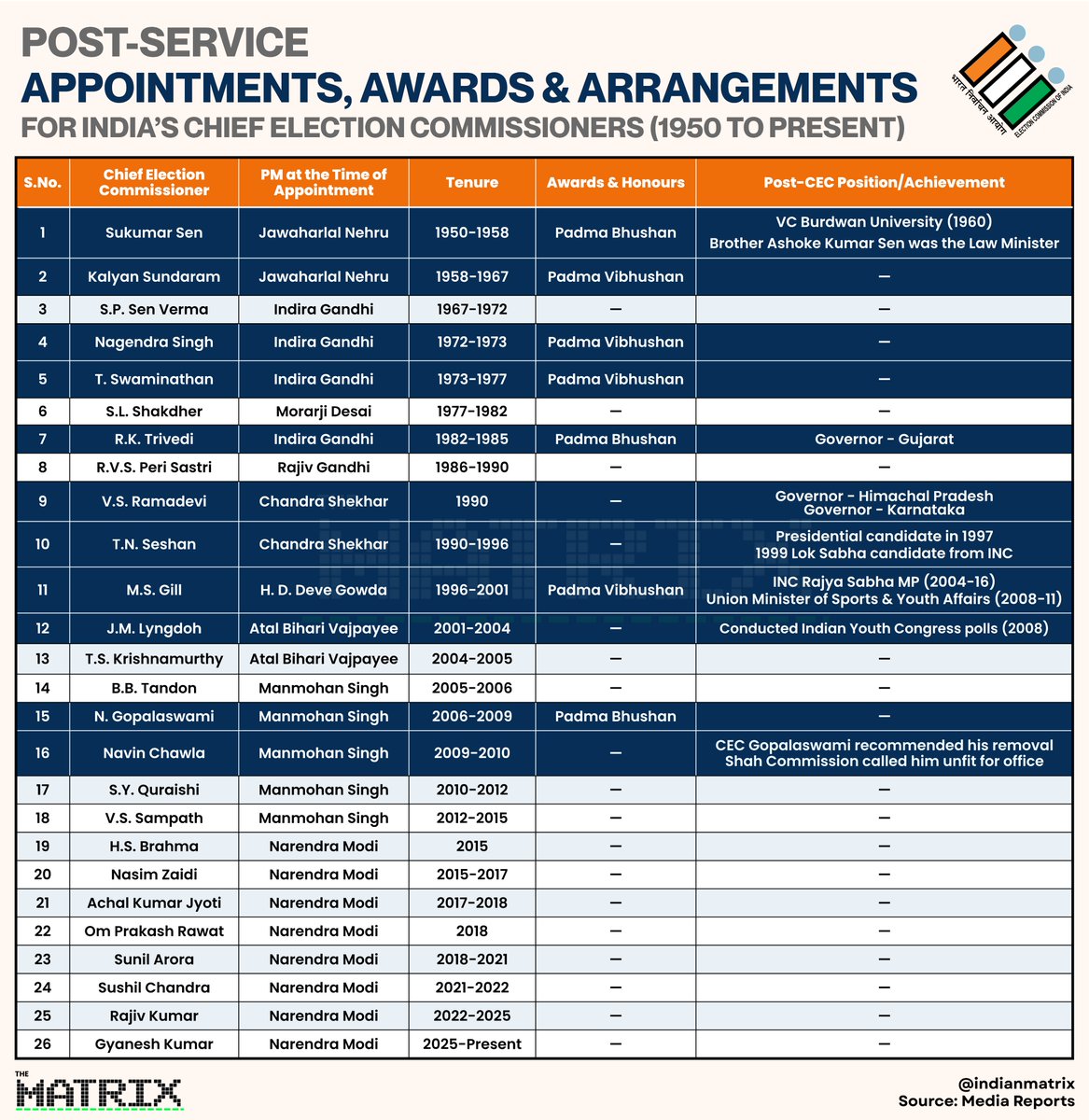
India’s Chief Election Commissioners have, over the decades, gone on to diverse post-service roles, from Padma Awards and governorships to Rajya Sabha seats, ministerial positions and political candidacies.
Before 2023, the President appointed the Chief Election Commissioner on the advice of the Union Cabinet.
Since 2023, the selection process has become more democratised and now includes the Leader of the Opposition in the Lok Sabha for the first time, alongside the Prime Minister and a Union Cabinet Minister.
Full credit to @RitikaChandola for this super report which bursts more than some myths — it puts paid to the organised campaign against SIR by those who want India’s electoral rolls to be stained by ghost voters, fake voters, illegal voters, foreign voters.
Those who claim to stand for democracy are actually gnawing away at its foundation — elections — because it serves their voodoo politics.
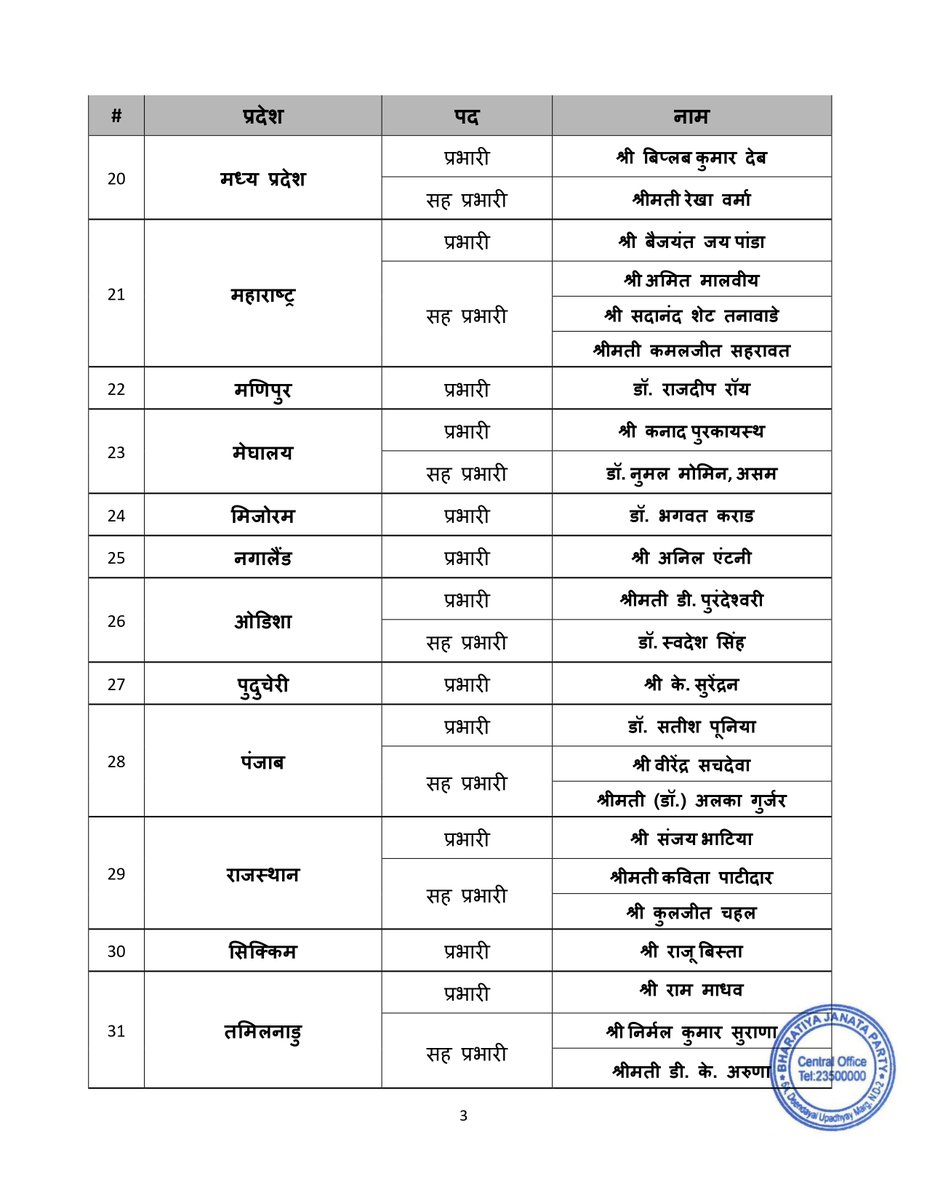
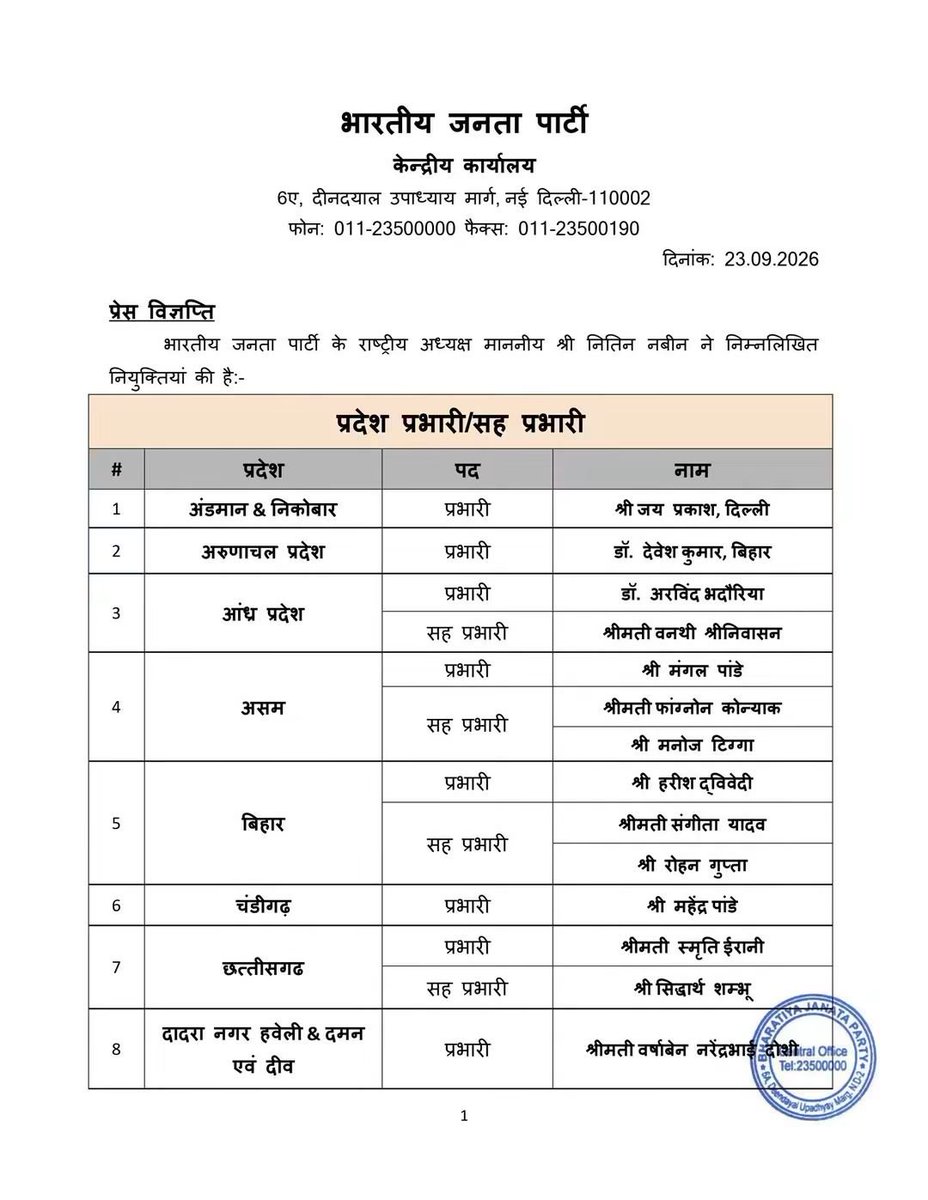
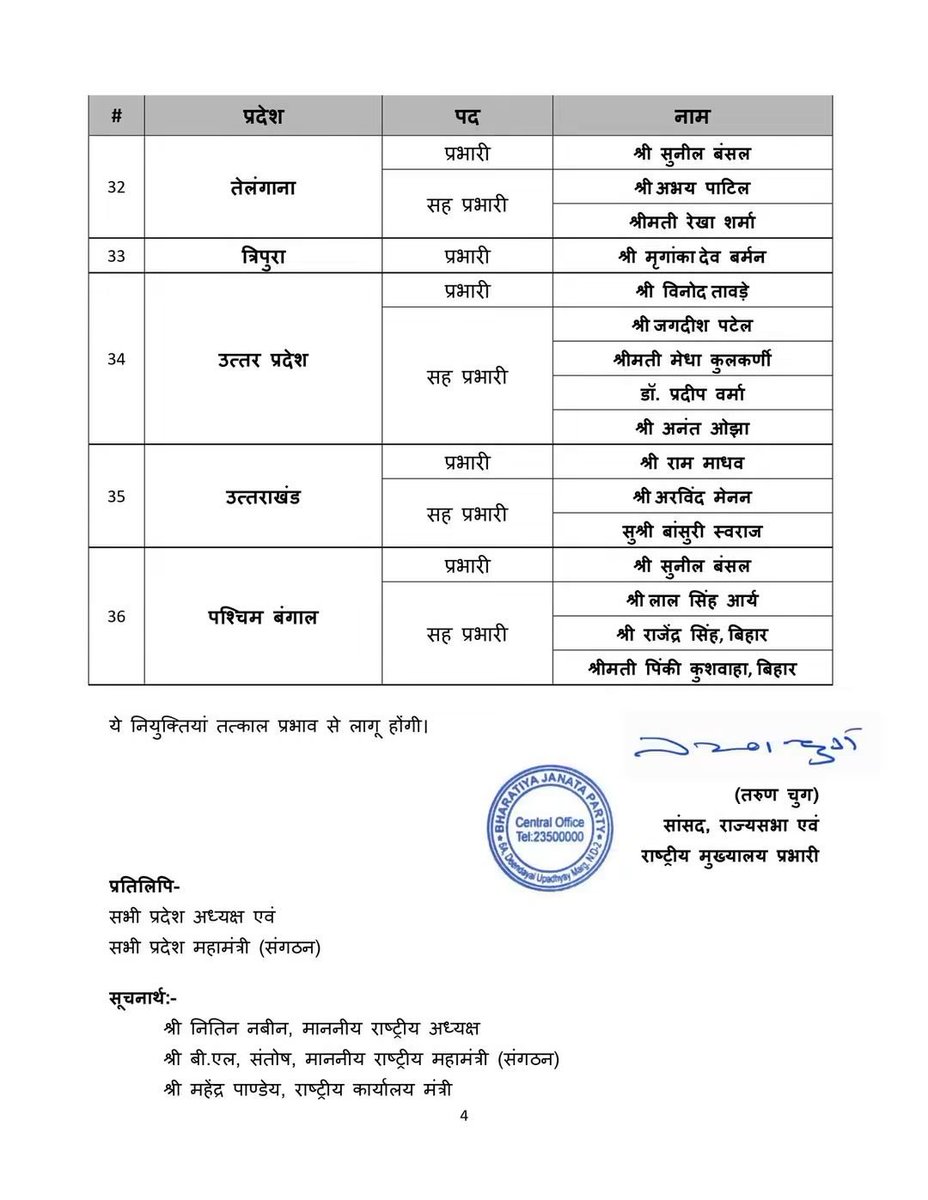
भारतीय जनता पार्टी के राष्ट्रीय अध्यक्ष श्री @NitinNabin ने विभिन्न राज्यों के निम्नलिखित प्रदेश प्रभारियों और सह प्रभारियों की नियुक्तियां की है।
ये नियुक्तियां तत्काल प्रभाव से लागू होंगी।
प्रधानमंत्री श्री @narendramodi 'सेवा संकल्प अभियान' के तहत 24 सितंबर, 2026 को वडनगर से वाराणसी जाने वाले दल के साथ वीडियो कॉन्फ्रेंसिंग के माध्यम से संवाद करेंगे।
लाइव देखें:
📺https://t.co/OaPd6HRrq3
📺https://t.co/KIA7CbEgXP
📺https://t.co/iRErStQZLn
📺https://t.co/maBRReCASb
#WATCH Ranchi, Jharkhand: On the book 'Naxal-Free India' by BJP national spokesperson Tuhin A Sinha, Jharkhand Assembly's Leader of the Opposition Babulal Marandi said, "... On August 15, from the ramparts of the Red Fort, Prime Minister Modi had said that we have eliminated armed Naxals, but even today, Dimagi Naxals exist in India. It is necessary to eliminate them. This is a battle of ideologies... We need to identify such people and eradicate their ideas."
Thank you LOP, Jharkhand Shri @yourBabulal ji, RS MP and BJP National Sec Shri @PKVarmaRanchi ji, @BJP4Jharkhand spokespersons Shri @ajaysahspeaks ji and Shri @MrityunjayS7 ji, my co author Shri @alokdup ji for a very encouraging launch of #NaxalMuktBharat at Sarla Birla University, Ranchi . The event was marked by a brilliant speech by Babulal ji recounting the dark days of Naxal horror two decades ago.
Naxal Mukt Bharat is one of the biggest achievements of PM @narendramodi ji and HM @AmitShah ji.
#WATCH Ranchi, Jharkhand: On the book 'Naxal-Free India' by BJP national spokesperson Tuhin A Sinha, Jharkhand Assembly's Leader of the Opposition Babulal Marandi said, "... On August 15, from the ramparts of the Red Fort, Prime Minister Modi had said that we have eliminated armed Naxals, but even today, Dimagi Naxals exist in India. It is necessary to eliminate them. This is a battle of ideologies... We need to identify such people and eradicate their ideas."
भारतीय जनता पार्टी के संचार विभाग के समन्वयक नियुक्त किए जाने पर श्री @anil_baluni जी तथा मीडिया विभाग के संयोजक नियुक्त किए जाने पर श्री @Ashish_HG जी को हार्दिक बधाई एवं शुभकामनाएँ।
आप दोनों के सफल कार्यकाल की मंगलकामना करता हूँ।💐🙏
भारतीय जनता पार्टी के राष्ट्रीय अध्यक्ष श्री @NitinNabin ने संवहन विभाग के समन्वयक पद पर श्री अनिल बलूनी एवं मीडिया विभाग के संयोजक पद पर श्री आशीष उषा अग्रवाल की नियुक्ति है।
ये नियुक्तियां तत्काल प्रभाव से लागू होंगी।
उत्तर प्रदेश के सह-प्रभारी के रूप में महत्वपूर्ण जिम्मेदारी प्रदान किए जाने पर आदरणीय प्रधानमंत्री श्री @narendramodi जी एवं भारतीय जनता पार्टी के राष्ट्रीय अध्यक्ष श्री @NitinNabin जी का हृदय से आभार।
यह दायित्व मेरे लिए सम्मान के साथ-साथ संगठन के प्रति एक बड़ी जिम्मेदारी भी है। मा. प्रधानमंत्री जी के मार्गदर्शन एवं मा. राष्ट्रीय अध्यक्ष जी के नेतृत्व में संगठन की विचारधारा, नीतियों और जनसेवा के संकल्प को उत्तर प्रदेश में और अधिक सशक्त बनाने के लिए पूरी निष्ठा एवं समर्पण के साथ कार्य करूंगा।
भारतीय जनता पार्टी के समर्पित कार्यकर्ताओं के साथ मिलकर संगठन को मजबूत करने और जनसेवा के संकल्प को आगे बढ़ाने के लिए प्रतिबद्ध हूं।
जय भाजपा.. तय भाजपा..!
@blsanthosh@BJP4India@BJP4Jharkhand@BJP4UP@NitinNabin
भारतीय जनता पार्टी के राष्ट्रीय अध्यक्ष श्री @NitinNabin ने विभिन्न राज्यों के निम्नलिखित प्रदेश प्रभारियों और सह प्रभारियों की नियुक्तियां की है।
ये नियुक्तियां तत्काल प्रभाव से लागू होंगी।
Ranchi, Jharkhand: BJP National Spokesperson Tuhin Sinha says, "Dimagi Naxal is a major problem. The Naxal insurgency has almost been eliminated from India. Under the leadership of Union Home Minister Amit Shah, India is now almost Naxal-free, except for two or three districts. Naxalism has claimed the lives of more than 25,000 people over the past 50 years, and states like Jharkhand were severely affected by it. There were several areas where travelling after evening was difficult...''
𝐈𝐧𝐝𝐢𝐚’𝐬 𝐞𝐜𝐨𝐧𝐨𝐦𝐢𝐜 𝐭𝐫𝐚𝐧𝐬𝐟𝐨𝐫𝐦𝐚𝐭𝐢𝐨𝐧 𝐢𝐬 𝐧𝐨 𝐥𝐨𝐧𝐠𝐞𝐫 𝐣𝐮𝐬𝐭 𝐚 𝐝𝐨𝐦𝐞𝐬𝐭𝐢𝐜 𝐬𝐭𝐨𝐫𝐲. 𝐓𝐡𝐞 𝐰𝐨𝐫𝐥𝐝 𝐢𝐬 𝐭𝐚𝐤𝐢𝐧𝐠 𝐧𝐨𝐭𝐢𝐜𝐞. 📈
Over a decade of reforms, investment and execution under PM Modi is reshaping India’s growth story.
🔹 Global confidence: Moody’s raised India’s growth forecast from 6% to 7%, while Japan’s JCR upgraded India from BBB+ to A−.
🔹 GST collections: July 2026 collections crossed ₹2.11 lakh crore.
🔹 Digital empowerment: UPI processed 23.66 billion transactions in July.
🔹 Manufacturing: Electronics exports reached $47 billion, with 12 semiconductor projects approved.
🔹 Services: 2,100+ global capability centres employ 2.3 million professionals.
🔹 Infrastructure: Public capital expenditure reached ₹12.2 lakh crore.
This progress is not overnight. It reflects more than a decade of sustained reforms, investment and execution.
𝐓𝐡𝐞 𝐟𝐨𝐮𝐧𝐝𝐚𝐭𝐢𝐨𝐧 𝐢𝐬 𝐬𝐭𝐫𝐨𝐧𝐠𝐞𝐫. 𝐓𝐡𝐞 𝐦𝐨𝐦𝐞𝐧𝐭𝐮𝐦 𝐢𝐬 𝐛𝐮𝐢𝐥𝐝𝐢𝐧𝐠. 𝐍𝐨𝐰, 𝐥𝐞𝐭’𝐬 𝐭𝐮𝐫𝐧 𝐭𝐡𝐢𝐬 𝐩𝐫𝐨𝐠𝐫𝐞𝐬𝐬 𝐢𝐧𝐭𝐨 𝐭𝐡𝐞 𝐧𝐞𝐱𝐭 𝐜𝐡𝐚𝐩𝐭𝐞𝐫 𝐨𝐟 𝐈𝐧𝐝𝐢𝐚’𝐬 𝐠𝐫𝐨𝐰𝐭𝐡 𝐬𝐭𝐨𝐫𝐲. 🇮🇳
Ranchi, Jharkhand: BJP National Spokesperson Tuhin Sinha says, "When Home Minister Amit Shah says something, he ensures that it is implemented. He had earlier said that India would be free from Naxalism, and today, Naxalism has been eradicated from India. Similarly, drug addiction is a major problem. Drug use and addiction are a major concern among the youth. The day before yesterday, I also visited a de-addiction centre in Delhi. Nearly seven crore people across India are affected by drugs in different forms, of whom around one crore are severely affected and require immediate treatment..."
Eight years ago, Ayushman Bharat was rolled out with the idea that every Indian should have access to top-quality and affordable healthcare.
Today, more than 60 crore beneficiaries have access to Rs. 5 lakh annual health cover, making it the largest healthcare scheme in the world.
It has enabled record savings on medical expenses, thus benefitting the poor and middle class.
And healthcare is moving closer to every doorstep. Ayushman Arogya Mandirs have already recorded over 500 crore visits, strengthening primary healthcare at the grassroots.
My best wishes to all Ayushman Bharat beneficiaries.
#8YearsOfAyushmanBharat
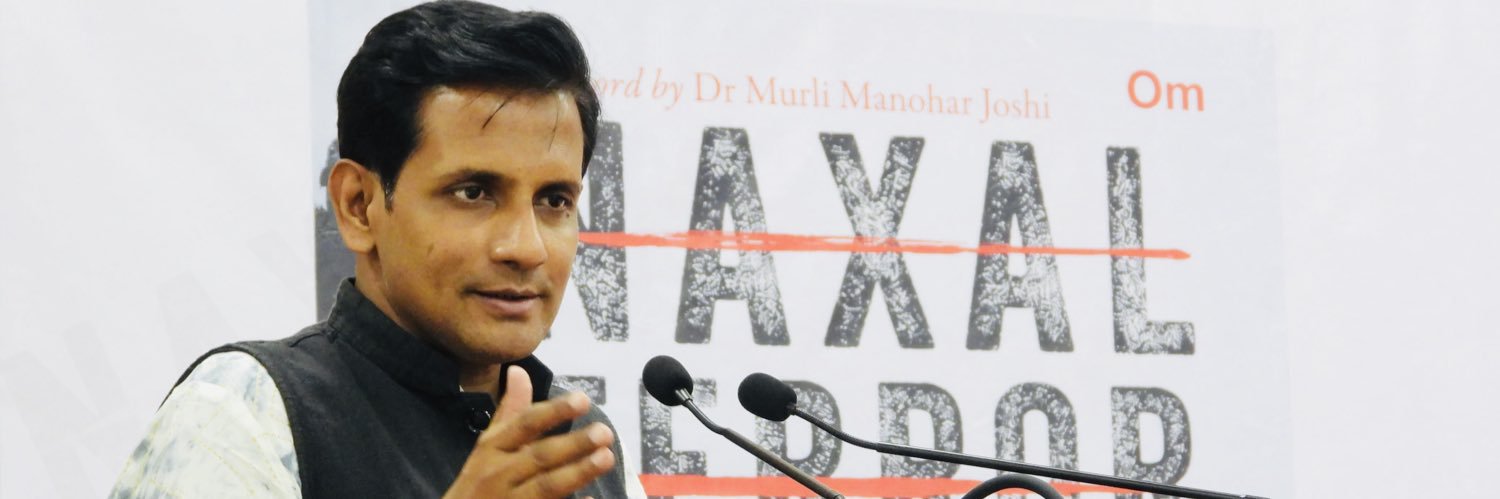
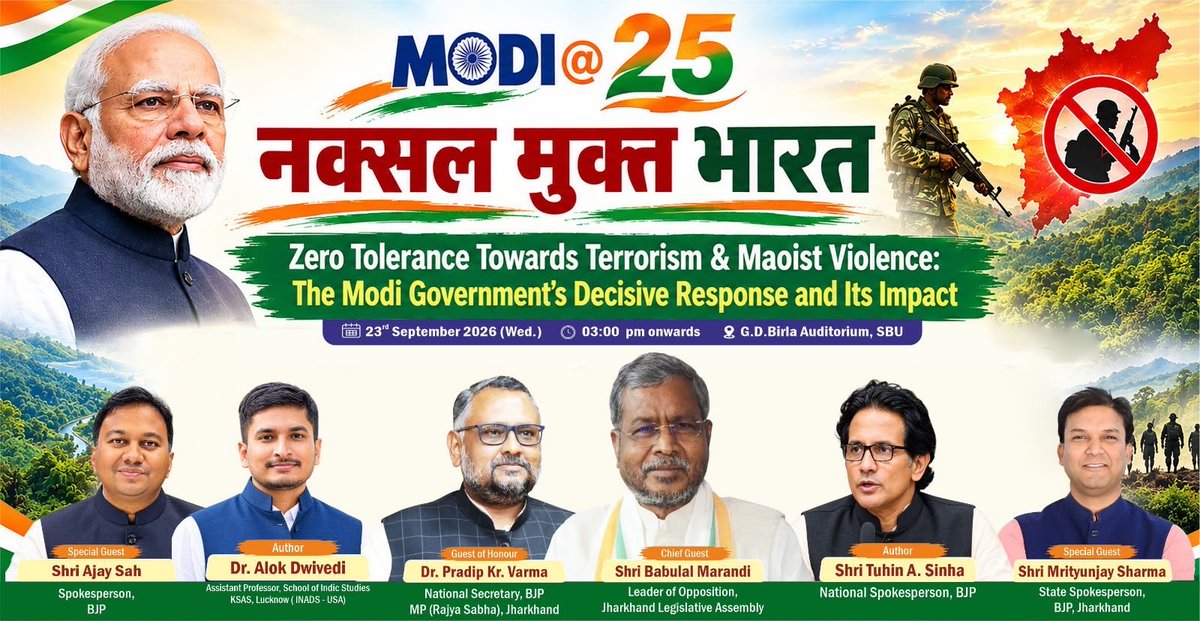
Pleased to be part of the upcoming discussion on “Zero Tolerance Towards Terrorism & Maoist Violence: The Modi Government’s Decisive Response and Its Impact” under the MODI@25: नक्सल मुक्त भारत initiative. The occasion will also feature the launch of our book Naxal Mukt Bharat, co-authored by Shri Tuhin A. Sinha and me.
Looking forward to sharing my thoughts and hearing fruitful discussions along with National Spokesperson, @BJP4India , Shri Tuhin A. Sinha ji, and esteemed guests, Shri Babulal Marandi Ji (Former Chief Minister of Jharkhand & Leader of Opposition), Shri Pradeep Kumar Verma Ji (National Secretary, BJP & MP, Rajya Sabha), Shri Mrityunjay Sharma Ji (Spokesperson, BJP, Jharkhand), and Shri Ajay Sah Ji (Spokesperson, BJP, Jharkhand).
Venue- G.D. Birla Auditorium, Sarla Birla University, Ranchi, Jharkhand
Date - 23 September 2026
Time - 3:00 PM onwards
Looking forward to an engaging discussion.
@tuhins@yourBabulal@PKVarmaRanchi@ANI@AHindinews@PTI_News@ians_india@MrityunjayS7@ajaysahspeaks@itssuniltiwari
From a Gujarat initiative to a national model of investment promotion.
In 2003, as Gujarat’s Chief Minister, Narendra Modi institutionalised investment promotion by launching the Vibrant Gujarat Global Summit. The idea was simple but transformative: make investor engagement a continuous governance process, not an occasional event.
The scale of the transformation is striking:
• 2003: Vibrant Gujarat began with just around 300 international participants. By 2019, participation had expanded to 135+ countries.
• 2024: The 10th edition brought together 34 partner countries and 16 partner organisations, underlining the summit’s evolution into a major global business platform.
• 2026: The first three Vibrant Gujarat Regional Conferences alone generated 9,499 MoUs representing investment proposals of approximately ₹13.30 lakh crore.
But Vibrant Gujarat’s biggest legacy extends beyond the numbers.
Over the past 23 years, its success has inspired states across India to create their own structured investor summits and investment-promotion platforms—turning the competition for capital, technology and enterprise into an important dimension of competitive federalism. The Government of India itself has described Vibrant Gujarat as a role model for the country.
What began in Gujarat in 2003 became a governance innovation whose influence travelled across India.
That is the lasting legacy of Vibrant Gujarat. 5/n
#25Years25Reforms
#25YearsofSeva
Gujarat’s Agricultural Transformation: The Modi Model
When Narendra Modi was Chief Minister of Gujarat, agriculture was approached not as a standalone department but as a convergent development mission—bringing together irrigation, water conservation, soil science, horticulture, technology, power and farmer extension.
The results were remarkable. Between 2001-02 and 2011-12, Gujarat recorded an average annual agricultural growth rate of 10.92%, substantially higher than the national average. This demonstrated that a state with significant water constraints could transform its agricultural economy through sustained policy intervention.
The approach began with water. Participatory irrigation management, watershed development, check dams, farm ponds and micro-irrigation expanded the availability and efficiency of water. The emphasis was not merely on creating irrigation infrastructure, but on involving farmers and communities in managing water resources.
The second pillar was soil and science. Soil testing and the promotion of Soil Health Cards encouraged farmers to understand the specific nutrient requirements of their land and adopt more scientific input use. At the same time, Gujarat pushed horticulture and crop diversification, helping farmers move beyond traditional cropping patterns towards higher-value agriculture.
The outcomes were visible in production. Gujarat’s foodgrain production crossed the 100 lakh metric tonne mark in 2011, an important milestone for a state better known historically for commercial crops.
Perhaps the most distinctive innovation was the annual, month-long Krishi Mahotsav. Instead of waiting for farmers to approach government offices, agricultural scientists, officials and experts travelled across villages, taking knowledge directly to farmers. Soil testing, modern farming techniques, horticulture, irrigation and new technologies were promoted at the grassroots.
The larger lesson from Gujarat was that agricultural transformation requires convergence. Water security, soil health, technology, diversification, infrastructure and last-mile extension, when brought together around the farmer, can create sustained agricultural growth and resilience. 4/n
#25Years25Reforms
#25YearsOfSeva