Our latest article, published in Discover Agriculture, proposes a framework for diagnosing collaboration in agroecology networks using social network analysis (SNA). Key actors were identified, revealing opportunities for enhanced coordination. Read the full paper in the comments
𝗔𝗙𝗦𝗔 𝗣𝗥𝗘𝗦𝗦 𝗦𝗧𝗔𝗧𝗘𝗠𝗘𝗡𝗧
𝙂𝙚𝙣𝙤𝙢𝙚 𝙀𝙙𝙞𝙩𝙞𝙣𝙜 𝙄𝙨 𝙉𝙤𝙩 𝙖𝙣 𝘼𝙛𝙧𝙞𝙘𝙖𝙣 𝙋𝙧𝙞𝙤𝙧𝙞𝙩𝙮 – 𝙄𝙩 𝙄𝙨 𝙖 𝘾𝙤𝙨𝙩𝙡𝙮 𝘿𝙞𝙨𝙩𝙧𝙖𝙘𝙩𝙞𝙤𝙣
The Alliance for Food Sovereignty in Africa (AFSA) issues this statement in response to the international workshop on genome editing and its applications in agricultural crops that took place in Senegal on 17 and 18 November 2025.
While presented as a neutral scientific exchange, this workshop forms part of a much wider continental push to normalise, deregulate, and ultimately commercialise genome editing technologies in Africa – without public debate, without independent oversight, and without regard for the continent’s seed sovereignty, biodiversity, or long-term food security. Africa does not need genome editing to feed its people. Africa needs bold public policies that strengthen farmer-managed seed systems, protect biodiversity, secure farmers’ rights, and scale #agroecology – the proven pathway to food sovereignty.
Extensive analysis from the African Centre for Biodiversity @_ACBIO has documented a well-funded, well-coordinated campaign to promote genome editing across the continent, including support from powerful external actors, AUDA-NEPAD-driven efforts to harmonise permissive regulatory frameworks, and a parallel communication infrastructure designed to shape public opinion in favour of genome editing. Many African countries are being encouraged to exempt gene-edited organisms from biosafety regulation if they do not contain “foreign DNA”, creating dangerous loopholes where gene-edited organisms can enter seed systems with no risk assessment, off-target effects or unforeseen ecological consequences may go undetected, patented genomic changes allow companies to claim ownership over naturally occurring genetic sequences, farmers’ rights to save, exchange, and sell seed are undermined, and Africa’s biodiversity becomes vulnerable to enclosure through intellectual property regimes. This is not scientific progress – it is the quiet restructuring of Africa’s #seed systems in favour of private interests.
AFSA calls on African governments and policymakers to declare a moratorium on the release and deregulation of #genome-edited organisms until transparent, independent biosafety systems are in place; apply the precautionary principle and strengthen biosafety regulation in line with the Cartagena Protocol; guarantee farmers’ rights, including the right to save, exchange, improve, and sell seed; redirect public resources toward agroecology, local markets, and farmer-led research; and protect Africa’s genetic heritage from biopiracy and corporate monopolies.
The future of African agriculture must not be decided in closed-door meetings. It must be built by farmers, Indigenous Peoples, pastoralists, fisherfolk, women, youth, and the communities who feed the continent. Africa has the right to choose a #foodsystem grounded in biodiversity, justice, resilience, and sovereignty.
AFSA stands firm: Our seeds, our food, our future.
To read the full statement
https://t.co/k4sl5hLpRn
#SeedIsLife
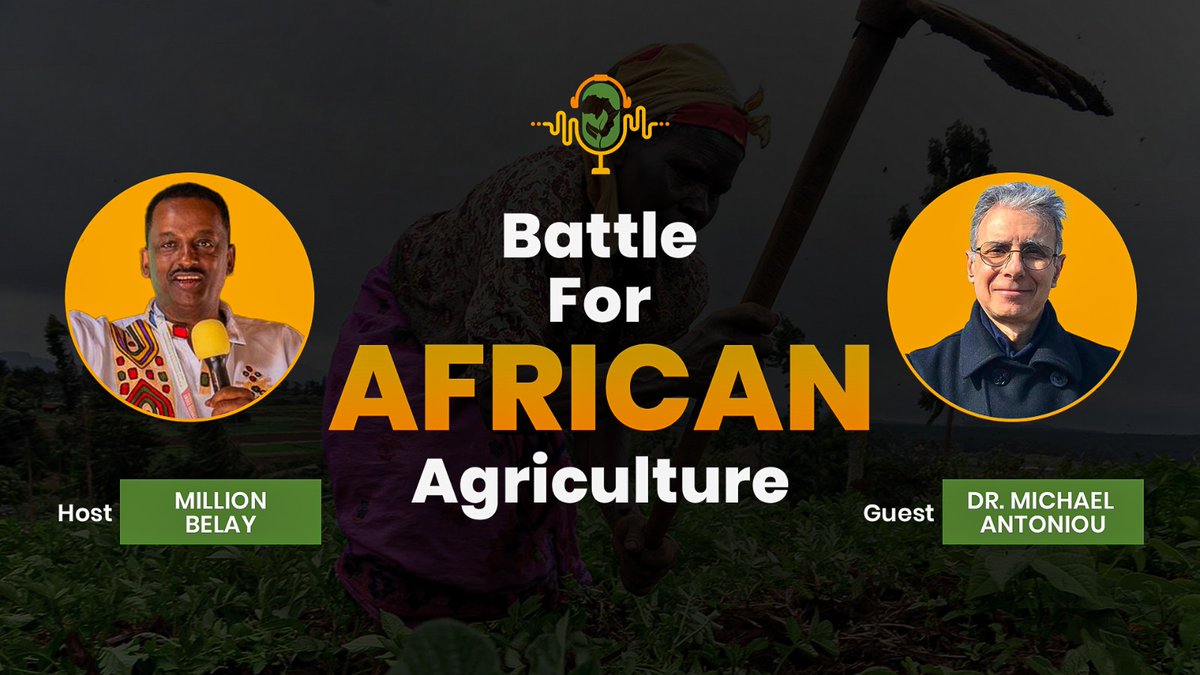
𝐓𝐡𝐞 𝐁𝐚𝐭𝐭𝐥𝐞 𝐟𝐨𝐫 𝐀𝐟𝐫𝐢𝐜𝐚𝐧 𝐀𝐠𝐫𝐢𝐜𝐮𝐥𝐭𝐮𝐫𝐞 𝐏𝐨𝐝𝐜𝐚𝐬𝐭 || 𝐄𝐩𝐢𝐬𝐨𝐝𝐞 𝟏𝟒 - 𝐖𝐢𝐭𝐡 𝐃𝐫 𝐌𝐢𝐜𝐡𝐚𝐞𝐥 𝐀𝐧𝐭𝐨𝐧𝐢𝐨𝐮
In this episode of The Battle for African Agriculture, Professor Michael Antoniou, a leading molecular geneticist from King's College London, draws a stark contrast between the controlled use of genetic engineering in medicine and its risky application in agriculture. He explains that while clinical gene therapies operate under strict containment and regulation, genetically modified crops are released into the environment despite being imprecise and unpredictable.
Professor Antoniou firmly rejects the notion that #GMO crops are "substantially equivalent" to their conventional counterparts and dispels the myth that gene editing techniques like #CRISPR are clean, highlighting that they still cause hundreds of off-target mutations that go unexamined.
He also dismantles the core narratives promoting #GMOs in Africa, arguing that the claim they are needed to "feed the world" is misleading. He points to FAO and World Bank data showing the world already produces enough food for 14 billion people, asserting that hunger is a problem of poverty and access, not production. He notes that GM crops have not increased inherent yields but have instead driven up herbicide use and locked farmers into corporate-controlled systems of patented seeds and chemicals. Citing his report for the Mexican government, which used evidence of organ and immune damage to justify restrictions on GM corn, he warns that newer stacked trait crops only heighten these risks.
He concludes that the true path to climate resilience and food sovereignty lies not in these "yesterday's news" genetic fixes, but in #agroecology and farmer-managed seed systems (#FMSS), a hopeful vision already being realized by small-scale #African farmers practicing diverse, independent agriculture.
Listen to the full conversation 👇🏿
YouTube
https://t.co/FFLTfYVOhv
Spotify
https://t.co/ER3Dww2oRI
Apple Podcasts
https://t.co/SBmz6PkxGE
𝐓𝐡𝐞 𝐁𝐚𝐭𝐭𝐥𝐞 𝐟𝐨𝐫 𝐀𝐟𝐫𝐢𝐜𝐚𝐧 𝐀𝐠𝐫𝐢𝐜𝐮𝐥𝐭𝐮𝐫𝐞 𝐏𝐨𝐝𝐜𝐚𝐬𝐭 || 𝐄𝐩𝐢𝐬𝐨𝐝𝐞 𝟏𝟎 | 𝐖𝐢𝐭𝐡 𝐌𝐢𝐜𝐡𝐚𝐞𝐥 𝐓𝐞𝐭𝐭𝐞𝐲
In this episode of The Battle for African Agriculture, Dr. Million Belay speaks with theologian and activist Michael Tettey about how colonialism and Christianity came to Africa “hand in hand,” reshaping not only land and politics but also the African soul.
Drawing on decades of work across Ghana, the UK, Sierra Leone, Benin, and Togo, Michael recalls how indigenous spirituality once guided everyday life — from sacred groves and seasonal taboos to communal farming and harvest rituals that honored both the land and the divine. He reflects on what was lost — self-belief, shared leadership, and respect for nature — and how imported systems were accepted without asking whether they truly served African communities.
Michael challenges the idea that faith gives humans “dominion” over nature, insisting that true power comes with responsibility — to protect, restore, and care for the land. He calls on churches to use their influence to rebuild dignity and reconnect people with African spiritual and ecological wisdom: to decolonize language, rituals, and food, to value local bread and wine, and to embrace #agroecology as both spiritual and practical renewal.
His message to youth is practical and direct: free the mind from colonial thinking, blend faith with indigenous knowledge, embrace farming as skilled, modern, and viable—and press governments to create the policies, funding, and incubation that make this possible. The spirit of his closing note is simple: recovery begins with remembering who we are.
Listen to the full conversation 👇🏾
YouTube
https://t.co/EOAw59aDHA
Spotify
https://t.co/QRqYAz8tvn
Apple Podcasts
https://t.co/cE95Sghr32
RSS
https://t.co/ybujo6ih4v
𝗧𝗛𝗘 𝗩𝗢𝗜𝗖𝗘 𝗢𝗙 𝗔𝗙𝗦𝗔 || 𝗠𝗘𝗘𝗧 𝗦𝗘𝗡𝗔 𝗔𝗟𝗢𝗨𝗞𝗔, 𝗘𝗫𝗘𝗖𝗨𝗧𝗜𝗩𝗘 𝗗𝗜𝗥𝗘𝗖𝗧𝗢𝗥, 𝗝𝗩𝗘-𝗧𝗢𝗚𝗢
𝘼𝒏 𝑨𝙛𝒓𝙞𝒄𝙖𝒏 𝒕𝙧𝒂𝙞𝒍𝙗𝒍𝙖𝒛𝙚𝒓 𝒇𝙤𝒓 𝒄𝙡𝒊𝙢𝒂𝙩𝒆 ��𝙪𝒔𝙩𝒊𝙘𝒆 𝒂𝙣𝒅 𝒚𝙤𝒖𝙩𝒉 𝒆𝙢𝒑𝙤𝒘𝙚𝒓𝙢𝒆𝙣𝒕
At the backdrop of the Second Africa Climate Summit (#ACS2) in Addis Ababa, we are proud to release the powerful story of Sena Alouka @senalouka.
For over two decades, Sena has stood at the frontline of Africa’s struggles for climate justice, energy democracy, food sovereignty, biodiversity protection, and meaningful inclusion of civil society. From village roots in #Togo to international negotiating tables, his voice has carried the urgency and dignity of #African communities to the world.
As the founder and Executive Director of Jeunes Volontaires pour l’Environnement (JVE) @JVE_Int, one of Africa’s largest youth-led environmental movements active in over 30 countries, Sena has inspired thousands of young people to take action for their future. His journey is not just about advocacy but about building a generation of climate leaders rooted in responsibility, innovation, and solidarity.
Today, as African leaders and citizens converge at #ACS2, Sena’s story reminds us that youth voices are not tomorrow’s hope—they are today’s force.
Dive into The Voice of AFSA and meet the trailblazer who became a pan-African champion for #climate and #agroecology.
Read the full story
https://t.co/ARfhHUUC8W
Listen to the whole conversation
https://t.co/MiESQmAvJK
Why Agroecology?
Participants are engaging in a thought-provoking session led by Mr. Robert Guloba, an experienced agroecologist and farmer.
Mr. Guloba emphasizes that agroecology is far more than farming techniques; it is a holistic approach to building resilient food systems that work in harmony with nature.
Key Highlights from the session:
✅ Restoring ecosystem health by minimizing harmful chemical inputs and promoting biodiversity.
✅ Building climate resilience through practices like crop diversification, soil conservation, and agroforestry.
✅ Reducing input dependency by empowering farmers to rely more on locally available, natural resources.
✅ Integrating traditional knowledge with scientific innovation for sustainable food production.
✅ Promoting food sovereignty and healthier communities through environmentally, socially, and economically sound systems.
“Agroecology goes beyond farming—it’s about integrating nature’s principles into our food production systems,” Mr. Guloba tells participants.
This session is setting the stage for deeper technical discussions later today on tools such as @FAO's Tool for Agroecology Performance Evaluation (TAPE) and the Farm Agroecology Criteria Tool (FACT), designed to help participants assess and apply agroecological principles on their farms.
Organized by: @ASARECA
🇪🇺Funded by: European Union (EU) @EU_Commission under the DeSIRA initiative managed by @IFAD
#Agroecology #SustainableFarming #ClimateResilience #CAADPXP4 #ASARECA #FarmersFirst #DeSIRA #IFAD
Check out my latest article: Ngũgĩ wa Thiong’o Has Died—But Leaves Behind a Legacy That Awakened Generations Like Mine. May His Soul Rest in Peace. https://t.co/d2NeJwXBBF via @LinkedIn
Honored to host the @Afsafrica team and @SwedBio team members Pamela and Sara from Sweden at our office this morning! We had exciting discussions on soil health as they toured our bio-fertilizer unit, seed bank, and met with farmers in Mukono. #HealthySoil#SustainableAgriculture
The Healthy Soil, Healthy Food project of @Afsafrica has 15 designated centers of excellence across Africa, dedicated to advancing agroecological practices and innovations while building the capacity of farmers, to scale up the practices.
On the 12th of November 2024, we are organising a virtual tour of Bio Gardening Innovations (BIOGI) in Vihiga, Western Kenya that will be streamed live on Zoom and AFSA YouTube &Facebook platforms starting at 3 pm East African Time.
Click here to register: https://t.co/k0S8D4d2jy
Take advantage of this opportunity to engage with the dynamic BIOGI team led by Ferdinand Wafula and explore their agroecological innovations and advocacy efforts to enhance livelihoods in Kenya.
@TumuheC
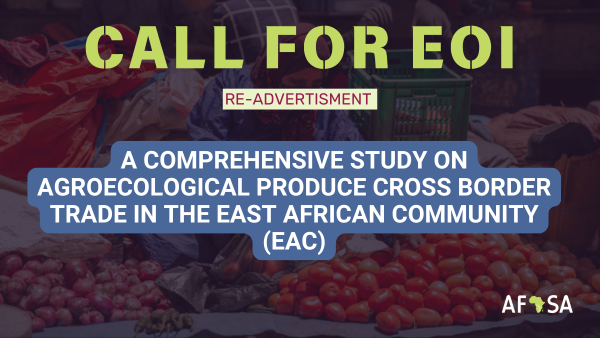
We are pleased to announce the re-advertisement of the Request for Expression of Interest (EOI) to undertake a comprehensive study on Agroecological Produce Cross-Border Trade within the East African Community (EAC).
The Alliance for Food Sovereignty in Africa (AFSA), with support from the Swedish International Development Cooperation Agency (SIDA), is inviting suitable consultants or firms to submit proposals for this important study.
The study aims to facilitate cross-border trading in agroecologically produced food among Eastern African countries and to provide actionable insights that will inform policy and practice in the region.
The initial round of submissions did not meet the required standards, and we are now reaching out to a broader pool of qualified candidates, regardless of their location. Consultants or firms outside the East African Community (EAC) region are strongly encouraged to apply if they meet the qualifications.
Click here to download the Terms of Reference (ToRs)
https://t.co/tvd4vc63YX