after the civil war, mass imagery of black people destitute, systematically excluded from civic participation, being killed by cops and found hung from trees by vigilante whites funded and supported by confederate capital and local police, didn’t force an immediate moral/political awakening.
it wasn’t until the cold war ramped up, and the united states was losing international appeal as the righteous alternative to growing global communist struggle, when the US would respond with civil rights concessions that would, in effect, leave many of the far-right and confederate forces that were murderously illiberal with a level of capital, power, and influence to spend the next half-century rolling back all the legislative gains of that period, with a continued significant base of support from the general populous.
this is the type of american liberal historical mythology about the civil rights period that has obscured more than it has clarified about the tumultuous bloodstained long 60s that remains severely unresolved on large account of the fact that cold war liberals, who were more invested in the maintenance of liberal imperial-capitalism than permanent transformation of the nations treatment of racial/ethnic minorities and its broader working-class, won out while those who saw those gains as impermanent & flimsy, were purged!
the big problem facing the american humanist liberals, progressives, and the socialist left today is there is no USSR whose mere towering counterhegemonic presence in the global arena could force the american government into concessions it was unwilling to conceded until the very last minute. sorry!!! we can’t rely on the corpse of the civil rights project and the industrial economy it emerged in to take advantage of! we’ve gotta put our heads together and coming up with something entirely different!!! the economy has evolved, labor has evolved, as has the global order, it’s your turn now socialist left!!! evolved!!!! the twentieth century is OVER
Please stop talking. Desegregation was not popular. The level of historical revisionism here is absurd. And the idea that the left should only advocate policies that are already popular is such a red herring. If your politics are constrained by whatever happens to poll well at a given moment, what exactly is the point of being a socialist?
Do y’all find it strange that Congo has spent centuries being the place where the West’s next technological leap “just happens” to find its raw materials, while the Congolese people get the misery?
- At the start of the transatlantic slave trade, the Portuguese encounter one of the densest populations in Africa in the Congo region. The greater Congo region ends up supplying nearly half of all the enslaved people shipped across the Atlantic.
- When the inflatable tire and the rubber boom arrive, Europeans find some of the world’s richest wild rubber vines growing in the Congo rainforest. The result is Leopold’s Congo Free State and its industrial-scale horror.
- At the dawn of the nuclear age, the purest, highest-grade uranium ore on the planet turns out to be sitting in the Belgian Congo’s Shinkolobwe mine. Uranium ore that powered the Manhattan Project.
- Now, in the age of smartphones and electric vehicles, the Democratic Republic of Congo holds the largest cobalt reserves on Earth (roughly half the world’s total) and major deposits of tantalum/coltan.
Each time a new technology needs a critical resource, Congo has it in abundance. Each time, the wealth flows outward and the violence, extraction, and poverty stay behind. The pattern is too consistent to call coincidence.
When MLK Jr took a stance against the Vietnam War damn near every liberal faction/organization abandoned him including the SCLC.. SNCC was one of the only few orgs to stand by him. It just shows you that it’s just not the right that’s in the way of change but liberals too
The Democratic Party will recalibrate its messaging after its well-funded senate candidate in a Michigan primary lost to Abdul El-Sayed, who by his own admission is a capitalist, not a socialist, and a supporter of U.S. wars. El-Sayed is following in the footsteps of another charismatic neo-liberal imperialist.
https://t.co/cJCUH2JPyx
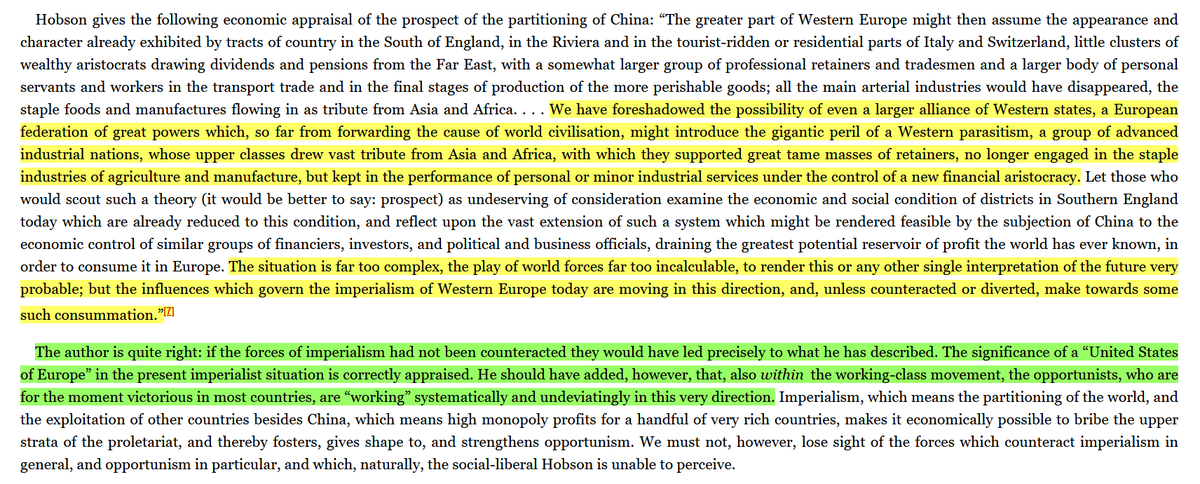
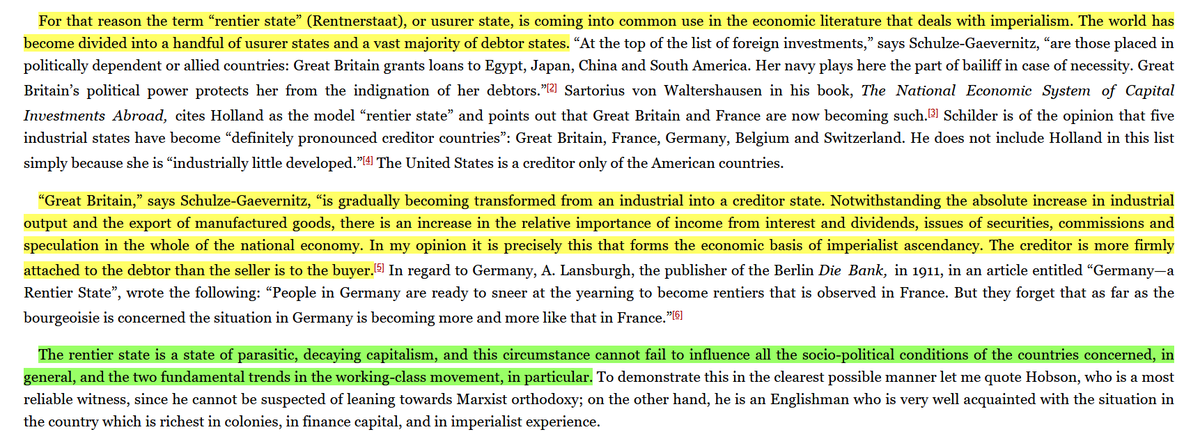
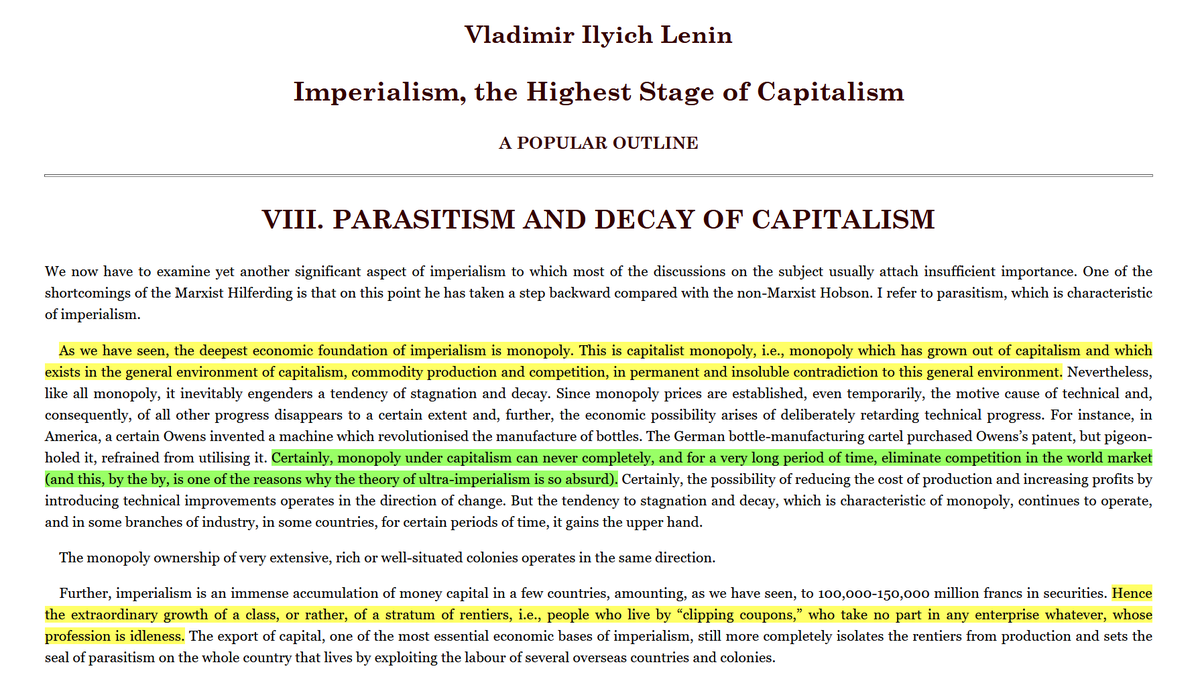
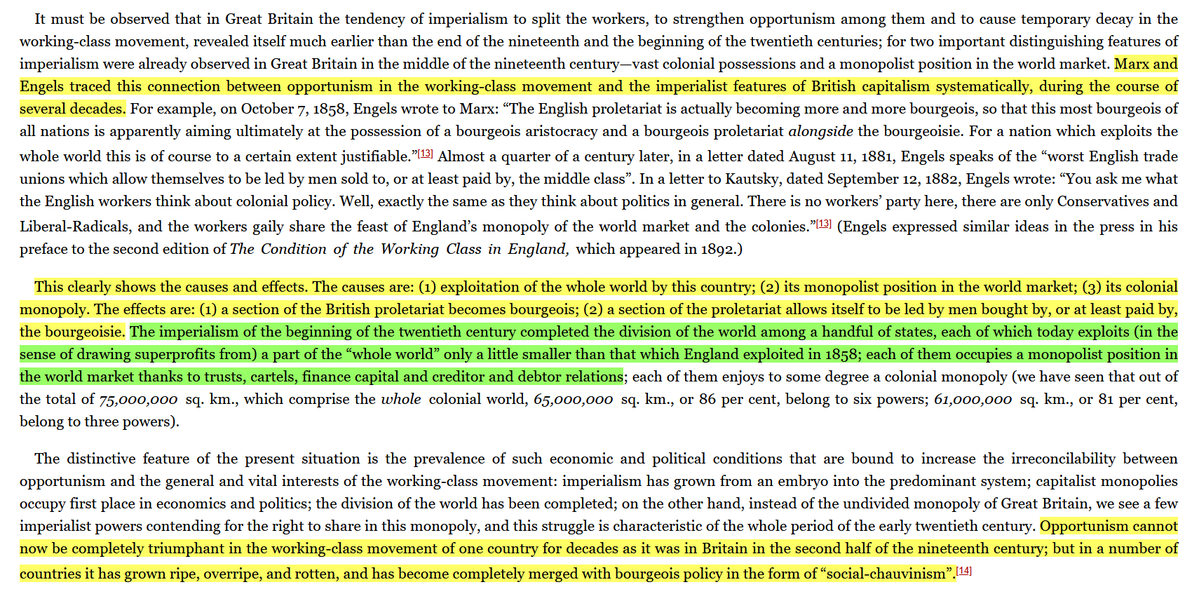
Hudson's analysis of neo-rentier PolEcon is founded upon Lenin's analysis of imperialism and its post-1917 developments.
The historical development of capitalist competition leads to the reproduction of abstract rentier logic in the concrete form of monopoly finance capital.
“[insert revolutionary project] shouldn’t do this because [insert moralism]” - A service/white collar worker with no skills and leverage to bring about their worldview
I have no issues with ethnic pride, we all should respect our uniqueness, I have all the issues with lies and people attempting to change who we are or say that slavery didn’t happen, that we don’t come from Africa, or that we are the true natives of America. Thats just not true
Douglass argued that abolitionists should shut the fuck up publicizing the methods used to aid escaping slaves, bc they were turning the underground railroad into the “upperground railroad”
🦔Oracle is planning another round of layoffs this month, on top of the 21,000 jobs it already cut last year, a 13% drop in headcount. The reason isn't a failing business. Oracle spent $55.7 billion on AI data centers last year, up from $21 billion, and burned through $23.7 billion more cash than it made. To cover it, the company borrowed $43 billion, sold $5 billion in stock, and plans to raise about $40 billion more. Oracle openly tied some of the job cuts to AI. The stock is down 26% this year.
My Take
Oracle is cutting workers to help pay for its AI buildout. Revenue is growing, cloud is up 77%, and the company is still firing people, because the capex bill opened a $24 billion hole in its cash flow. Payroll is the fastest lever a company can pull to soften that, so the people go. Management gets to call it an AI efficiency story, which sounds better than admitting the spending outran the money coming in.
Oracle is also the customer at the other end of these AI financing deals. It borrowed tens of billions to build data centers for demand it's betting will show up, and a huge chunk of that bet rides on OpenAI honoring a $300 billion compute deal. If the demand arrives slower than hoped, Oracle is stuck with the debt, the depreciating hardware, and a workforce already cut to the bone. Larry Ellison told analysts the AI threat to software hits everyone but Oracle. Borrowing $40 billion more while cutting staff is a strange way to show confidence.
Hedgie🤗
Zhu Rongji has died in Beijing, aged 97. Premier of China from 1998 to 2003, he was one of the most consequential figures of the reform era.
He was born in Changsha in 1928. His father died before he was born and his mother when he was nine; he was raised by an uncle who paid for his schooling. He got into Tsinghua to study electrical engineering in 1947, became a student leader, and joined the Communist Party in 1949.
Purged during the Cultural Revolution and sent for five years to a cadre school – where he raised pigs and planted rice – he was rehabilitated in 1978, and rose on the basis of his proven competence. Deng Xiaoping’s assessment was that, of the leadership at the time, “Zhu Rongji is the only one who understands economics”.
Zhu led the 1994 tax-sharing reform, which rebuilt the central government’s fiscal capacity, at a time when Beijing controlled only a fraction of national revenue. Without that reform there is no poverty alleviation campaign, no massive development program of the western and central regions, no high-speed rail network.
He pursued “grasp the large, release the small”, consolidating the strategic state sector while letting smaller loss-making firms go. And in 1998 he ordered the People’s Liberation Army out of commercial business entirely – which is part of the reason why China’s military has never become the sort of corrupt political force that has plagued other countries.
Zhu managed China’s response to the Asian financial crisis in 1997, keeping capital controls firmly in place, refusing to devalue the renminbi, and expanding fiscal spending into infrastructure. Devaluing would have triggered a cascade of competitive devaluations across a region already in collapse. Much of Southeast Asia owes China a significant debt on this score.
The short-term costs to the restructuring of the SEOs were substantial. State enterprise employment fell from 77 million in 1995 to 42 million by 2003. Roughly 40 million people lost access to the “iron rice bowl”. But alongside the restructuring, China put in place the basic living security system for laid-off state enterprise workers, the unemployment insurance system, the minimum living guarantee for urban residents, sustained campaigns against wage arrears and for re-employment.
Compare that with what happened in Russia in the 1990s. Yeltsin and his cronies handed control of the economy to a few dozen oligarchs, output halved, male life expectancy fell to around 57, and millions fell into unemployment, destitution and misery. China kept the commanding heights in public hands, kept capital controls in place, kept the Party’s authority over capital, and put a safety net under the people who lost out. In the process, it emerged as the workshop of the world.
Zhu was well-known for his hatred of corruption, and his initiatives in that field prefigure the systematic campaign launched by President Xi. “I will prepare 100 coffins for the corrupt, and one for me, for I will die of fatigue”. He is reported to have read some 16,000 letters a year from ordinary citizens in order to understand people’s concerns. He raged at “bean curd construction” – building projects where corruption had led to dangerously poor quality. In retirement he gave away tens of millions of yuan in book royalties to rural education.
Asked by Western journalists in 1990 whether he was China’s Gorbachev, he replied: “No, I am China’s Zhu Rongji”. A very good thing too. Rest in power.
Chad Announces Visa-Free Entry for Africans in 2027
Chad has announced that from January 1, 2027, African nationals will no longer need a visa to enter the country.
For a country sitting at the crossroads of North, West, East and Central Africa, this is a practical step towards making movement, trade and connection across the continent easier.
It also speaks directly to the wider goals of the African Continental Free Trade Area. If Africa is serious about deeper economic integration, then Africans need to be able to move more freely across African borders.
More countries should be thinking in this direction. A more connected Africa is a stronger Africa.
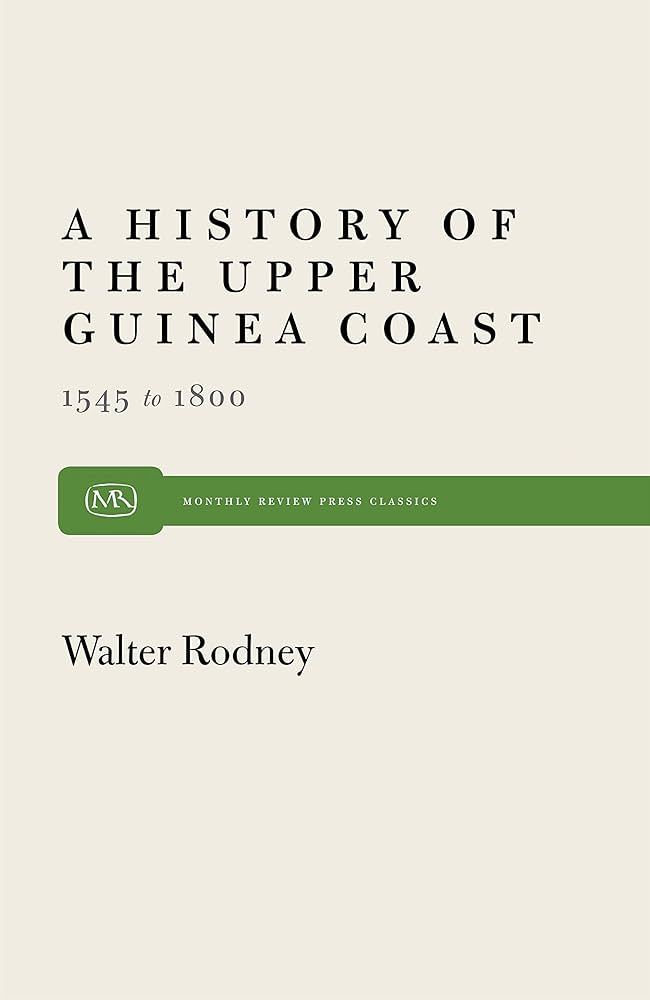
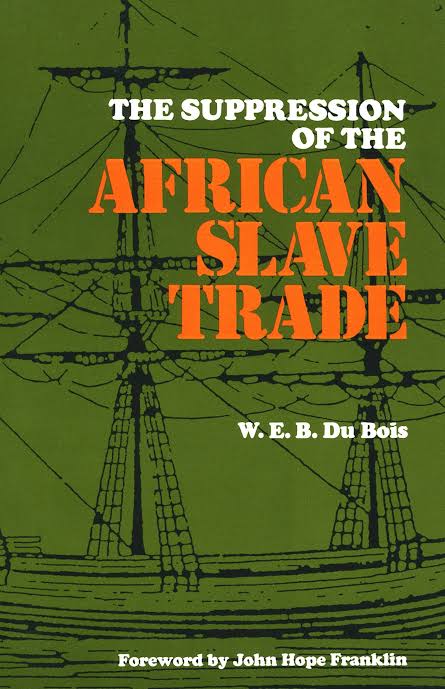
These are four books that I always recommend for those who are interested in understanding the history of the Atlantic slave trade and the adverse impact that it had on Africa. There are a lot of individuals who wish to misrepresent or oversimplify this history, so it's important that we have a clear understanding of this history.
@BlvckJxsus The part that people don't catch is that the reason the empire has trillion is due to the military (imperialism). If there is no military to propogate then everything falls on its head