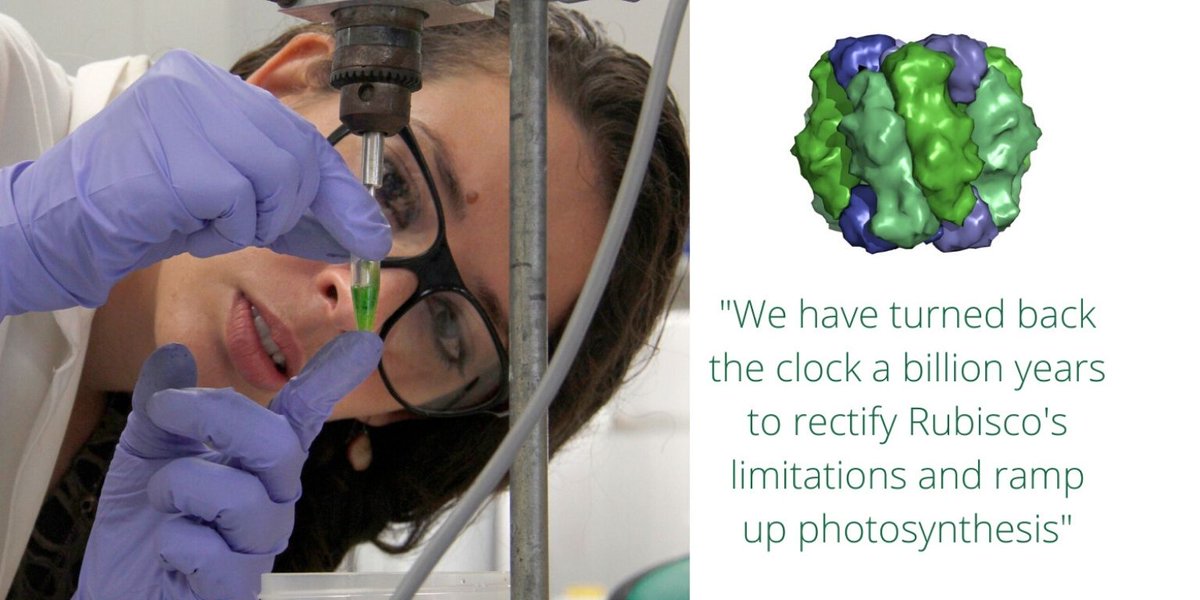
Centre Scientists @E_MartinAvila, Spencer Whitney and team, have traveled back on time to fix #Rubisco limitations and improve #photosynthesis, which could lead to a major increase in crop production, read @ThePlantCell paper https://t.co/1yYJKU5sHF Image: Charles Tambiah.
Exploring gibberellin as a novel target to control #wildradish in crops. https://t.co/c5EcSCbfMz and https://t.co/bRUrM2UyQu. New insights into GA reproductive development and characteristics of GA metabolic and signaling proteins. Involved @PlantSci_ANU@CSIRO@Sciences_UTAS
@JaishriRDas No, we have not looked at AQP sub-cellular localization specifically in tomato tissues. However, given the conserved targeting behavior of AQP subfamilies across the plant kingdom, you could make confident predictions for your AQPs of interest.
The first of our upcoming publications on #aquaporins - gatekeepers that control traffic of vital substrates in and out of plant cells. Media summary https://t.co/YCCB3VEeMH. Paper @BioMedCentral here: https://t.co/5dhOBb67Z7 @PlantSci_ANU@leaf2field@RIPEproject
Great to get a Plant Physiology 'On the Inside' summary https://t.co/jDSaxTQzks, of our recent Plant Phys paper where we uncovered an important role for the Peptide Hormone Receptor CEPR1 in controlling seed size and yield. @PlantSci_ANU@leaf2field
On the Inside: A Peptide Hormone Receptor Controls Seed Size and Yield https://t.co/DYHuTEocEa, summary of The Peptide Hormone Receptor CEPR1 Functions in the Reproductive Tissue to Control Seed Size and Yield https://t.co/hrMACm2DZ7
#hormone#Arabidopsis