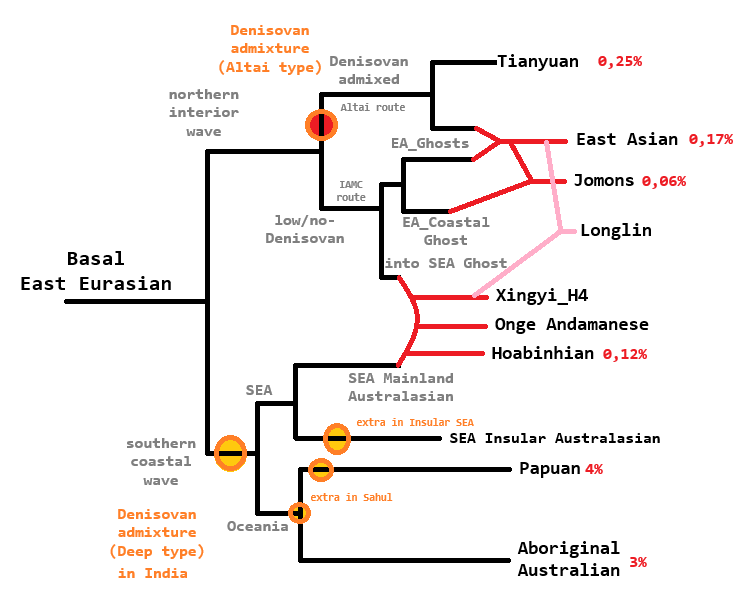
@Tatsuya9JP@nrken19@AnthroA36331@Tatsuya9JP see, Onge/Hoabinhian's Denisovan component can not be from Tianyuan, otherwise they would be identical to East Asian. It should be shared with Australasian, but diluted.
East Asian=Tianyuan+IAMC, Onge=Australasian+IAMC
Thats my current suggestion, but not final:
Peopling of East Eurasia:
southern wave via India (proto-Australasian; high Denisovan)
northern wave via Altai and the IAMC (Tianyuan-like, medium & low/no Denisovan)
East Asians are variable mix of the two northern interior waves
Andamanese Onge a mix of interior and coastal
@Tatsuya9JP@nrken19@AnthroA36331 East Asian/Jomon have high Tianyuan affinity, Onge/Hoabinhian is closer to Australasian, but still shifted to Tianyuan and closer to East Asians/Jomon. This strongly suggests that a northern low/no Denisovan group contributed to both, and is a clade with Tianyuan against Australo
Amazing X. Chang et al. 2026, full aDNA of Ningxia. Interesting is Zhou period (2.7 - 2.1k BP) nomadic part, mostly derived from Slab-Graves and all males are Q1a-M120, this is the same stock as Ordos culture that is long called Scythian but aDNA says otherwise
@AnthroA36331 I think so too, northern interior route I (Denisovan admixture) likely C2, NO (and K2b), northern interior route II (low/no Denisvoan) D1. One of the two or both had P1.
Southern coastal route (proto-Australo) likely C1, F, MS, P2.
Onge=mix of low/no Denisova interior + coastal
@KinderheimRune Whatever this is, it is not West Eurasian ancestry🤣
Indians have barely 50%, even for Europe the maximum is 80% bc of Basal and East Eurasian admixtures. Middle East has 30% Basal and 5-10% East Eurasian.
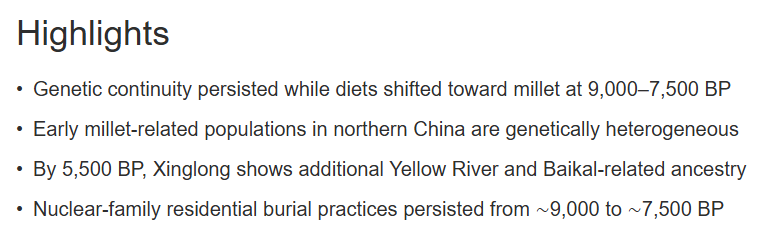
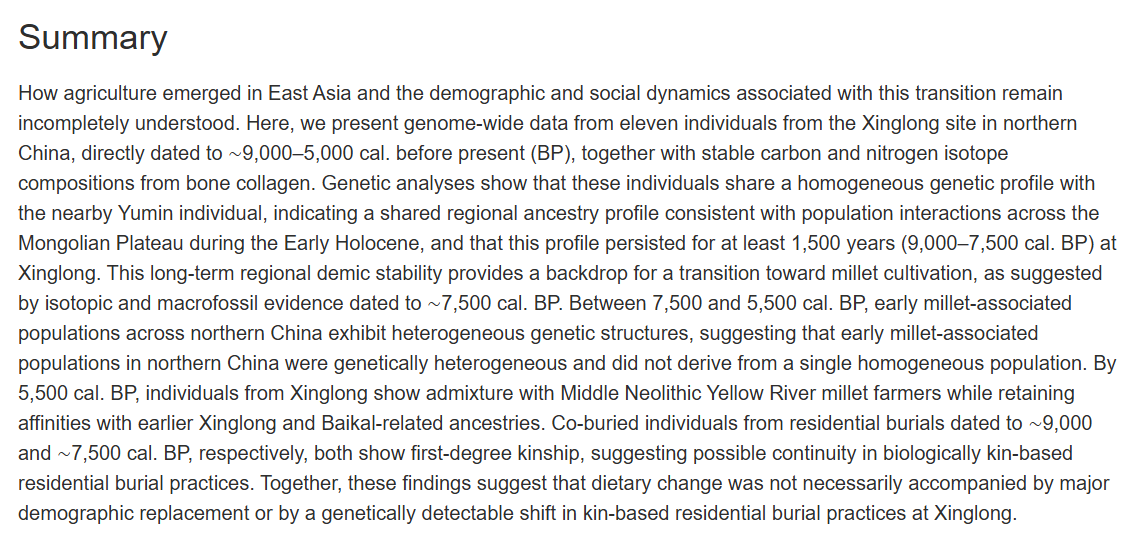
@DanTabin It is the first time iirc that Yellow River farmers are modeled in qpAdm. YR_MN is modeled here as 56% Liangdao_EN and 44% Xinglong (XL9_7.5k). It is the main source for present-day Chinese. This makes me think that yDNA O was the ASEA main, while ANEA had mostly N, C2, and Q.
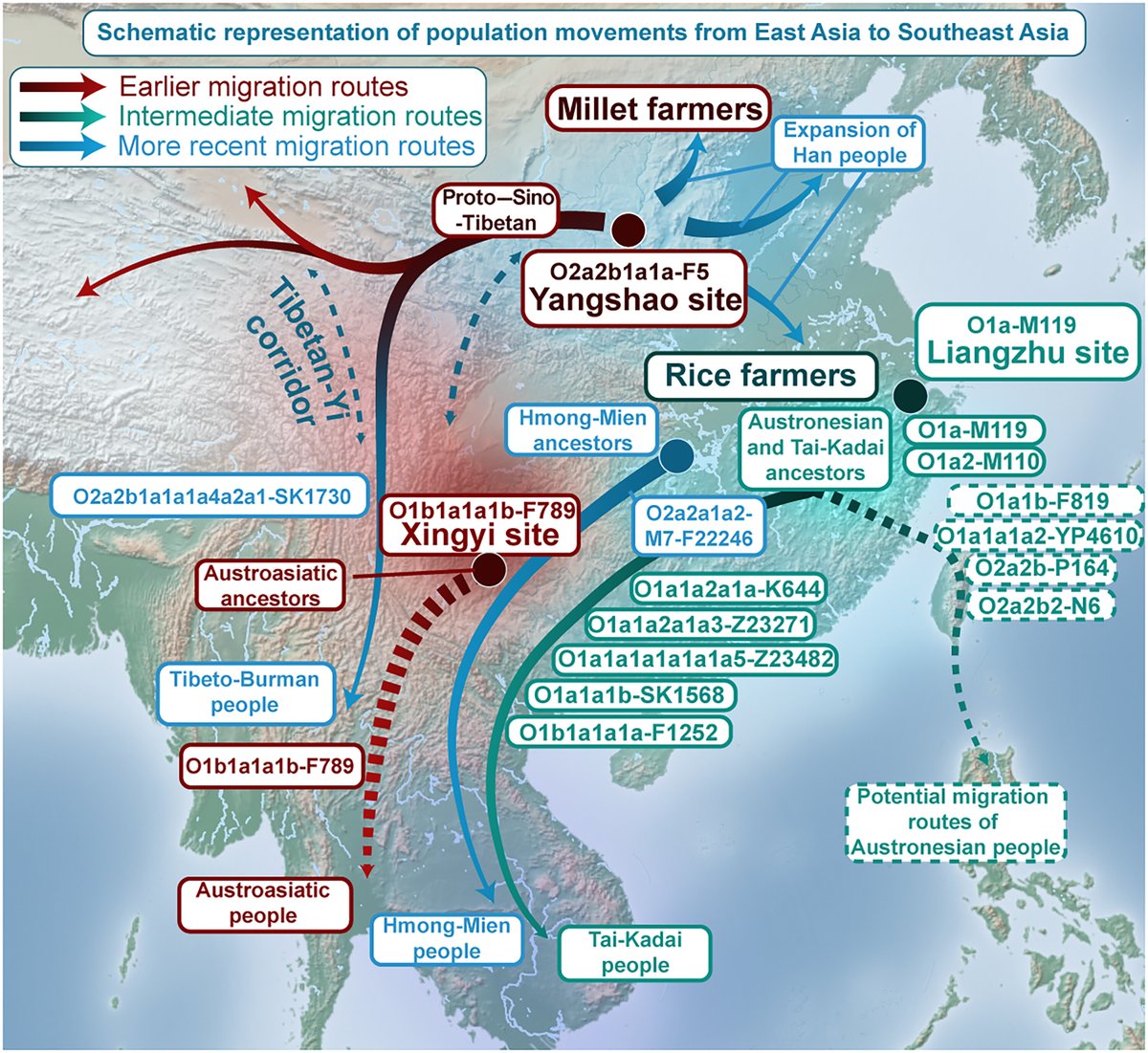
Expansions of ancient Eastern Asian groups in the last 10k years southwards (Yellow River farmers & ASEA types), replacing/merging with their deeply diverged HG cousins (Hoabinhians)
Based on previous data from CC Wang et al. 2021 & Yang et al. 2025 (Genomic Insights into the Formation of Human Populations in East Asia & An early East Asian lineage with unexpectedly low Denisovan ancestry)
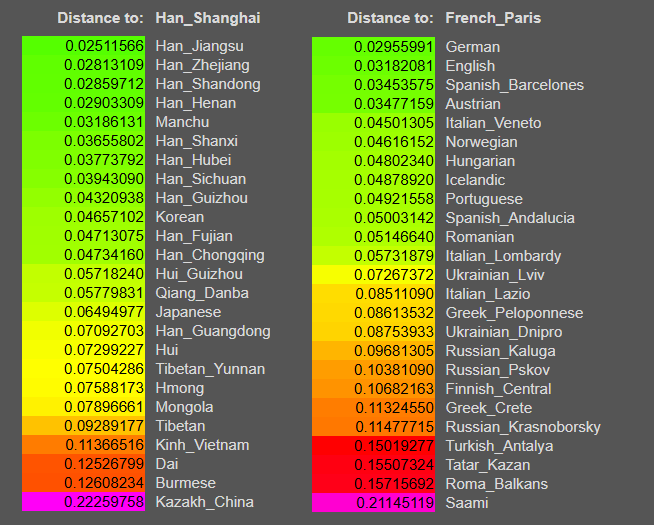
@Jam1377@H0M3b If the Roman empire or another large nation controlled most of Europe and surived until today, the different groups would perhaps have adopted a single language/dialect continuum and ethnic identity. In the sense of Roman_Paris, Roman_Austria, Roman_Iberia. Roman mirroring Han.
@Tatsuya9JP I dont think it is correct. I can model East Asians as 70% Tianyuan + 30% Onge. The exact opposite, of yours, but similar to Yang et al. 2025.
@VSkotheim73298@Tatsuya9JP What? 40% for Yana has frequently been reported in both qpGraph and qpAdm models by both academic and hobbyist reseachers. 36-42% Tianyuan ancestry. All new models do so. Earlier ones may have been 29-32%. Mine do at 35-42% too. Also in line with their Denisovan component!