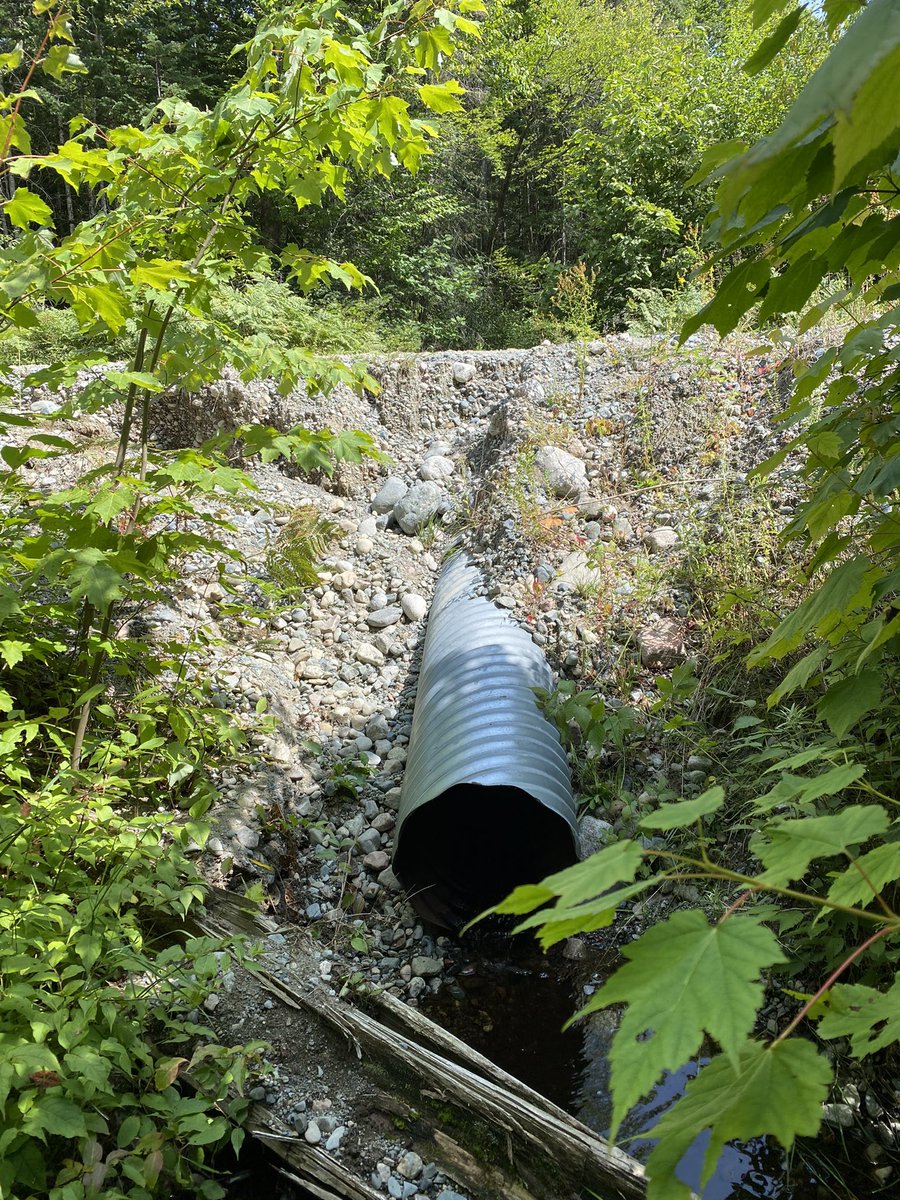
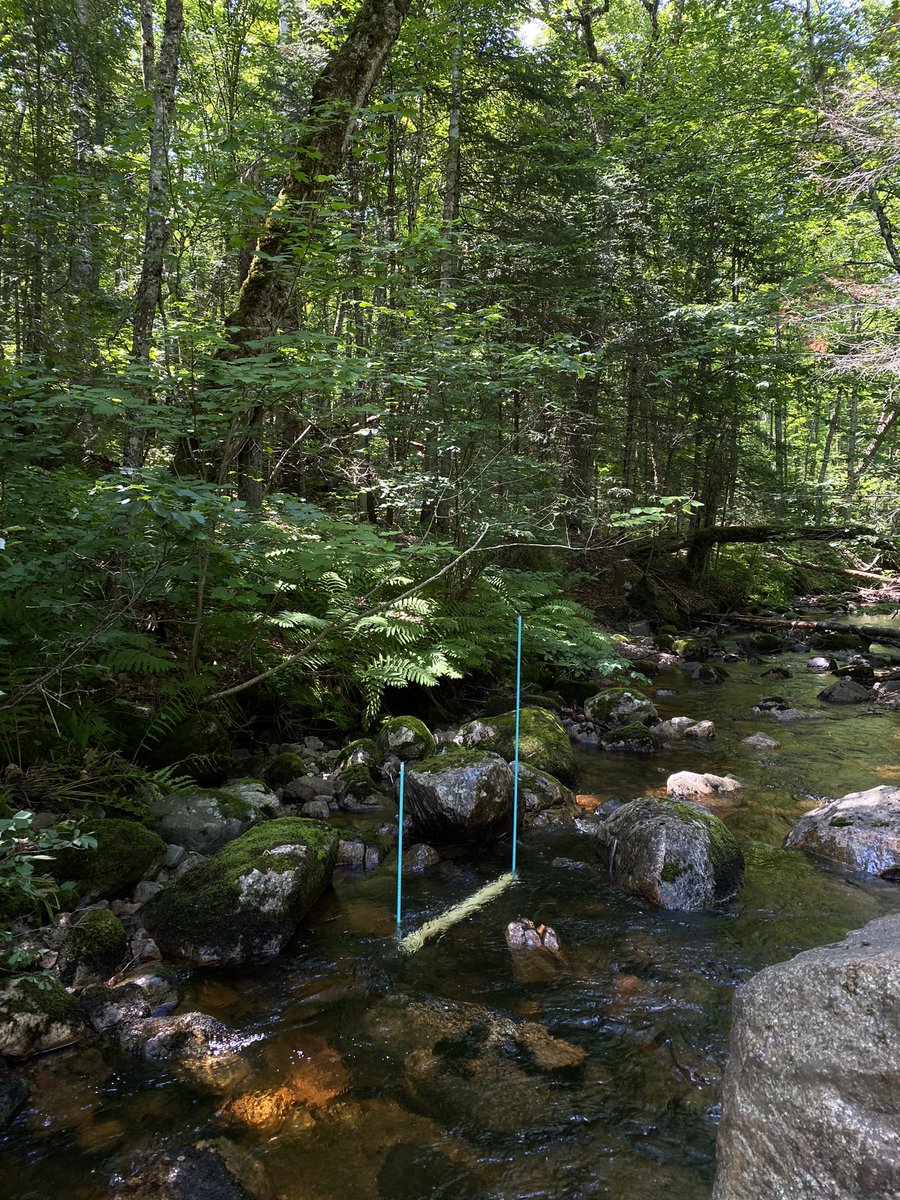
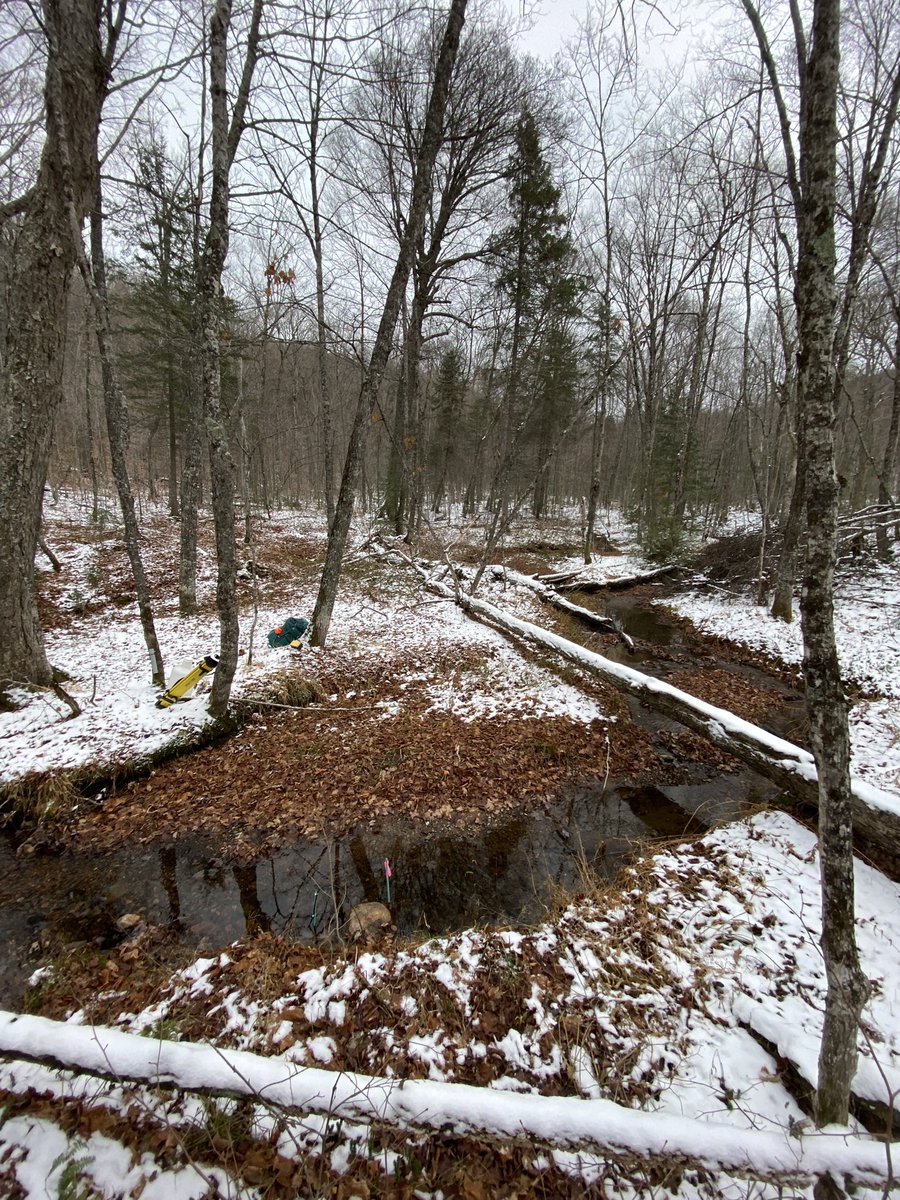
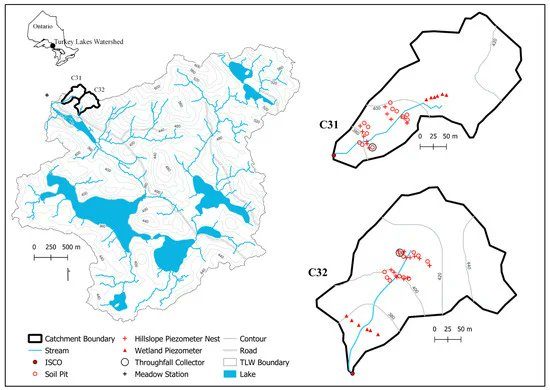
Follow along with the scientific research going on at the Turkey Lakes Watershed, an experimental basin located just north of Sault Ste. Marie, Ontario. It was established in the early 1980s for the purpose of acid rain research, and has evolved into much more since then!
Happy #WorldAlgaeDay! Enjoy this video of my summer sampling @TurkeyLakes with Anna, Tim, Emma, Chenelle, and Liam! We collected sediment and planktonic samples to study cyanobacteria. Thank you Jamie Broad, Dr Kara Webster, Dr Müller, and my committee for helping with planning!
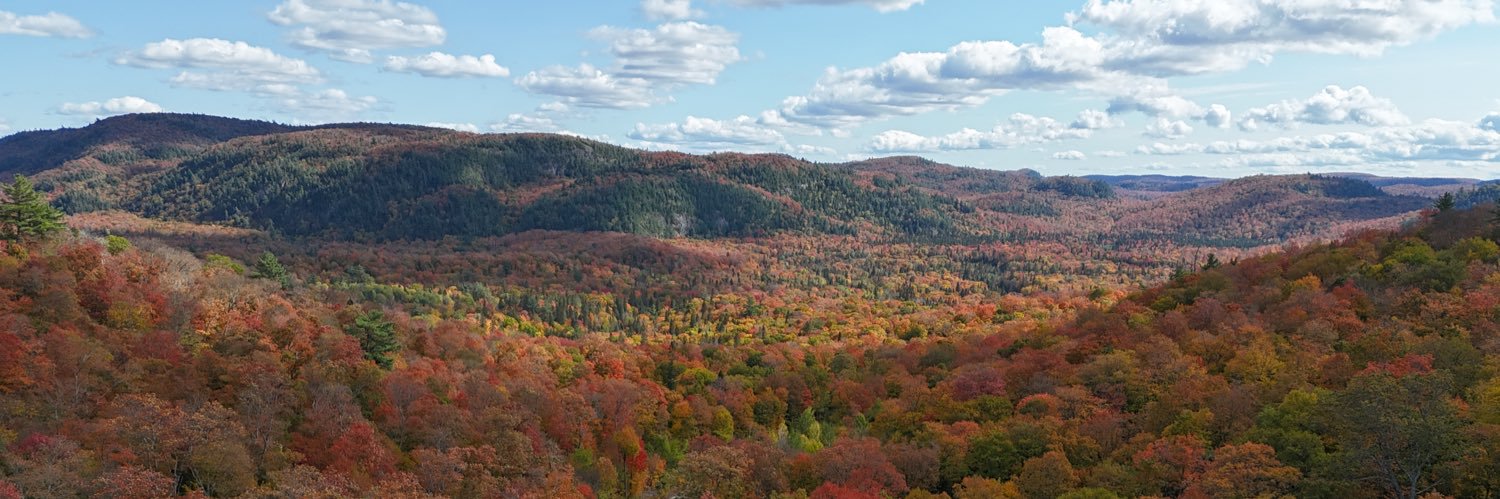
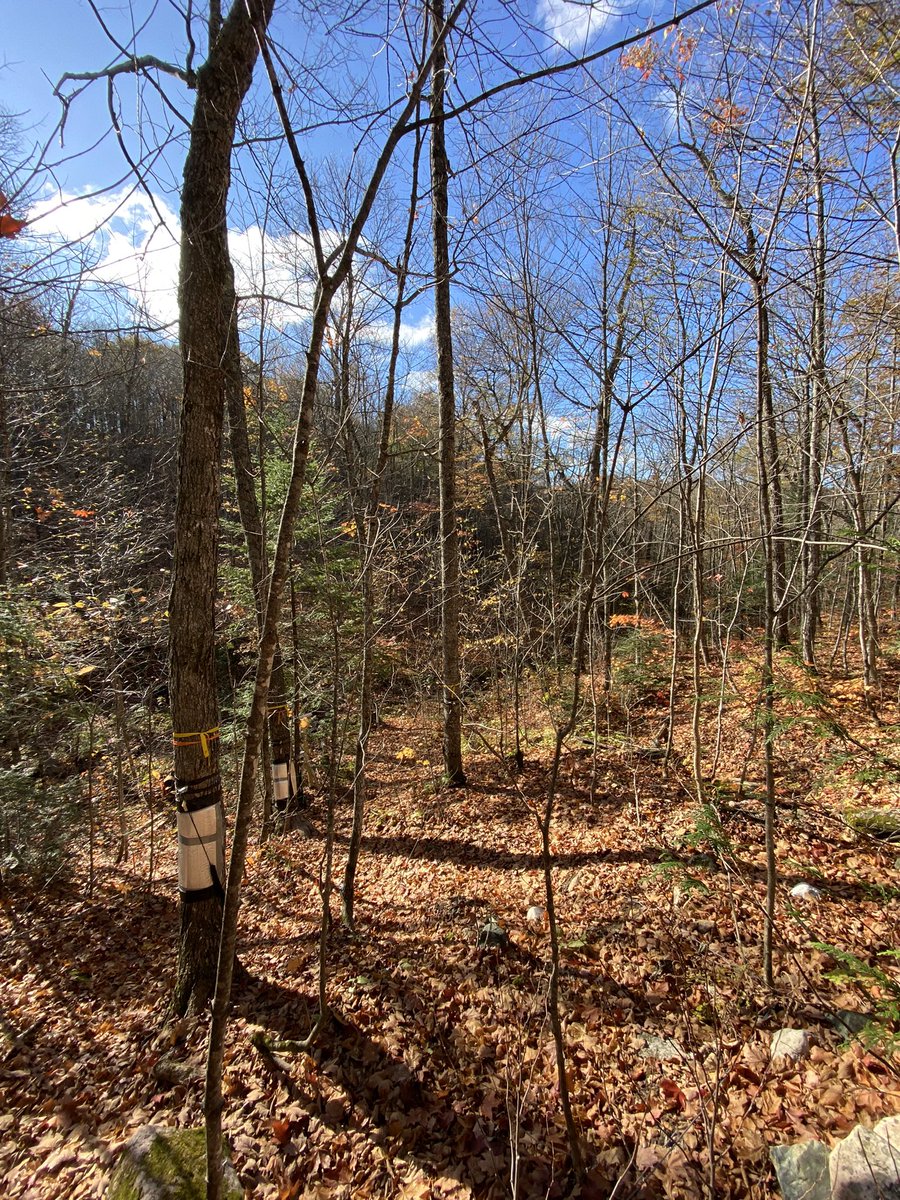
The field season is still going strong up at the #turkeylakeswatershed and we’re feeling so lucky that we get to experience the peak of fall colours in Northern Ontario! Starting to button up our sites over the next couple of weeks. P.s. stay tuned for some amazing video content!
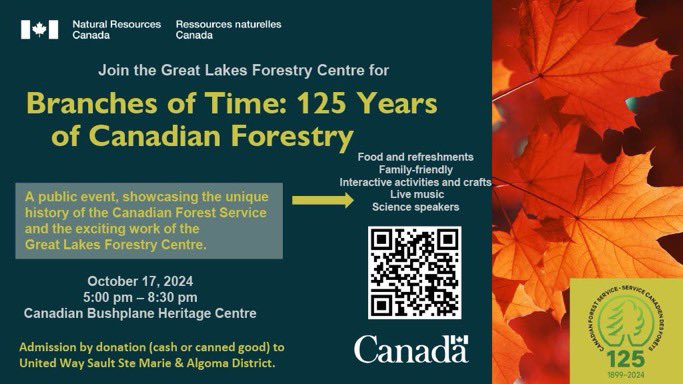
Come out to the @BushplaneCentre on Thursday to learn about what we do at GLFC, and there will be an exhibit about @TurkeyLakes of course. See you there!
Local friends, are you curious what we do at GLFC ( or “bug lab” as it is locally known)? Stop by the @BushplaneCentre to see a display of 125 years of forestry science in Canada. And join us next Thursday for talks and family-friendly events. Info in QR.
🚨New research alert!
Annie Gray, Micheal Stone, Monica Emelko from @UWaterloo & partners from @TurkeyLakes share seasonal- and event-scale dissolved organic carbon dynamics from catchments impacted by forest harvesting in the journal Water.
Read more: https://t.co/L5sd1IDufD
New interview featuring retired TLW researcher & renowned soil scientist, Dr. Paul Hazlett. Paul shares the interesting history of TLW and the importance of the site for Canadian environmental policy. Thanks to Nicole & the SSM Museum for documenting TLW!
https://t.co/uoX1ElDQAT
Did you know that well over 400 publications have come out of @TurkeyLakes? These research findings inform policies about Canada's air, water, and forests. Check out this recent article by Kara Webster et al. https://t.co/mFZ6dp1GA8
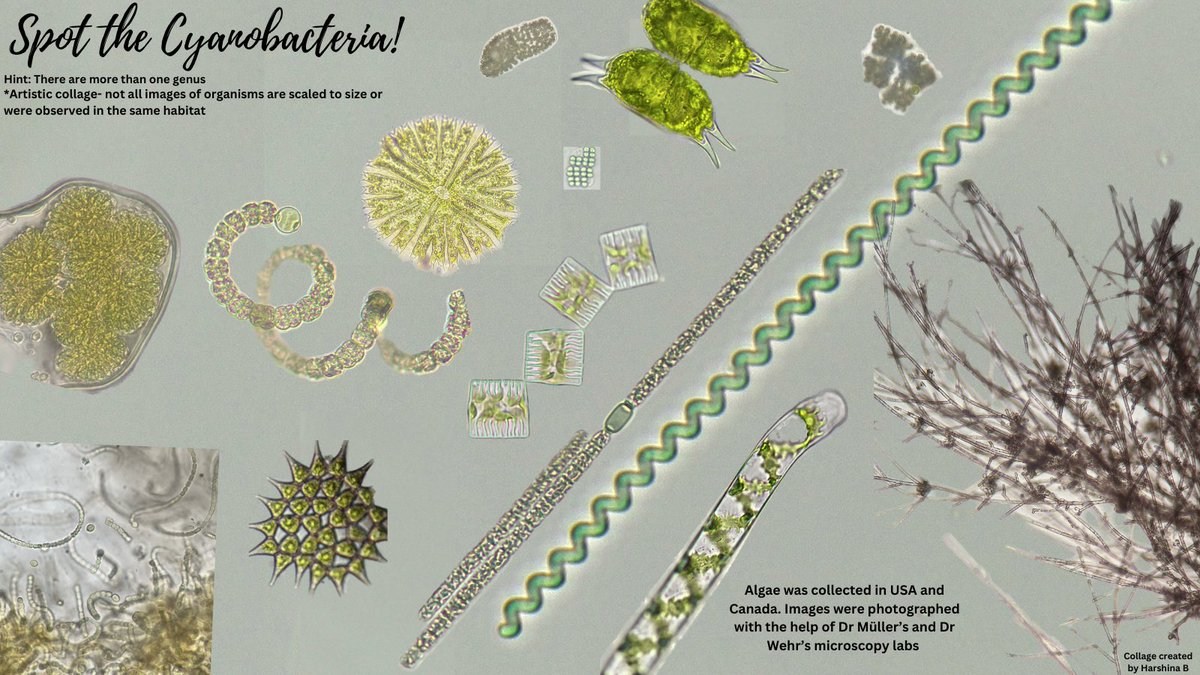
Happy #WorldAlgaeDay! Cyanobacteria (blue-green algae) are single celled #algae.
**How many cyanobacteria genera can you spot?**
#forWaterHQP in the Müller lab at @WaterlooBio study how cyanobacterial communities impact #drinkingwater reservoirs in a changing climate.
This summer we've completed installation of ~200 temperature sensors and supplemental instruments across the greater @TurkeyLakes area. These installations are part of a new project investigating forest roads & stream interactions, lead by Jason Leach. #streamtemperature#roads
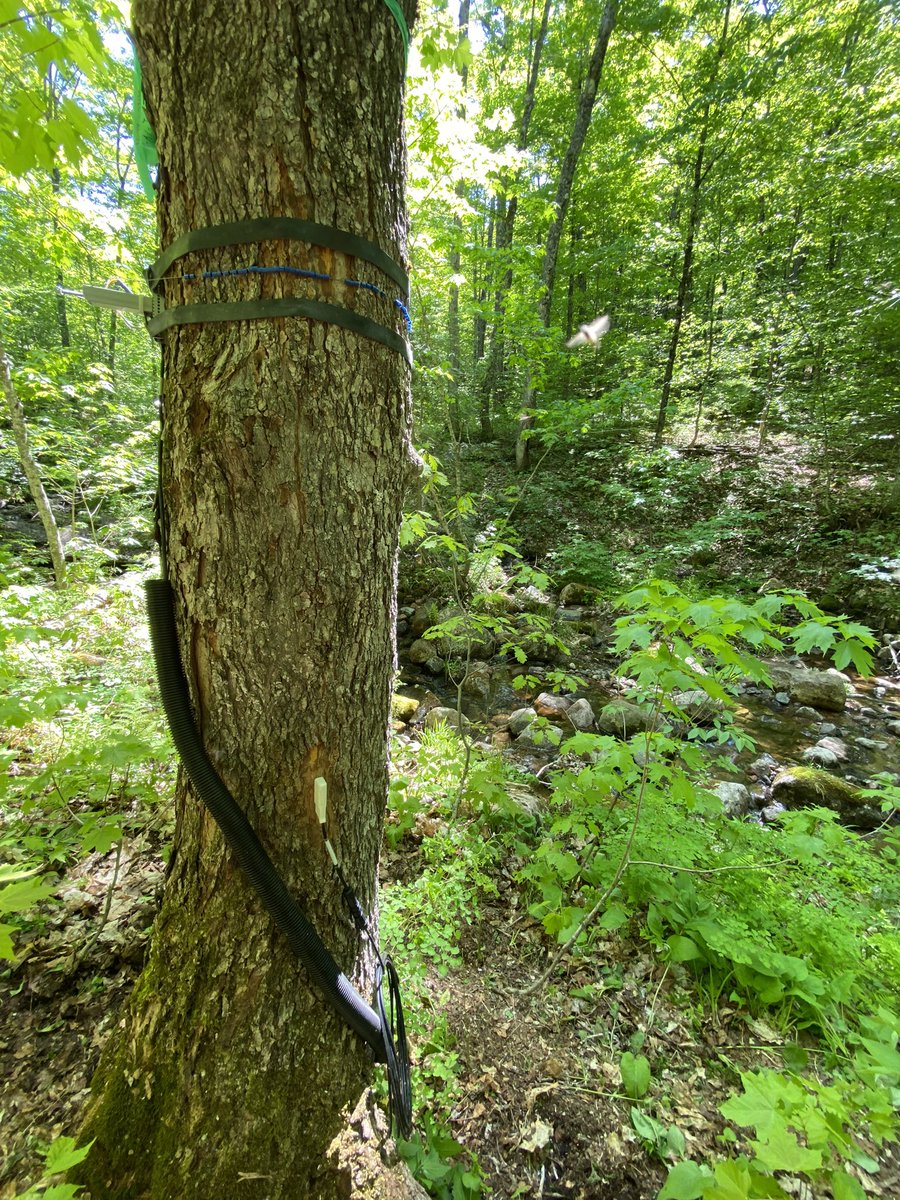
Ready for the weekend after a big week @TurkeyLakes. Under the guidance of @MagaliNehemy, @TrentUniversity students & CFS staff took hillslope isotope samples. Goal is to determine where our maple trees are getting their water from & improve our understanding of tree stress.
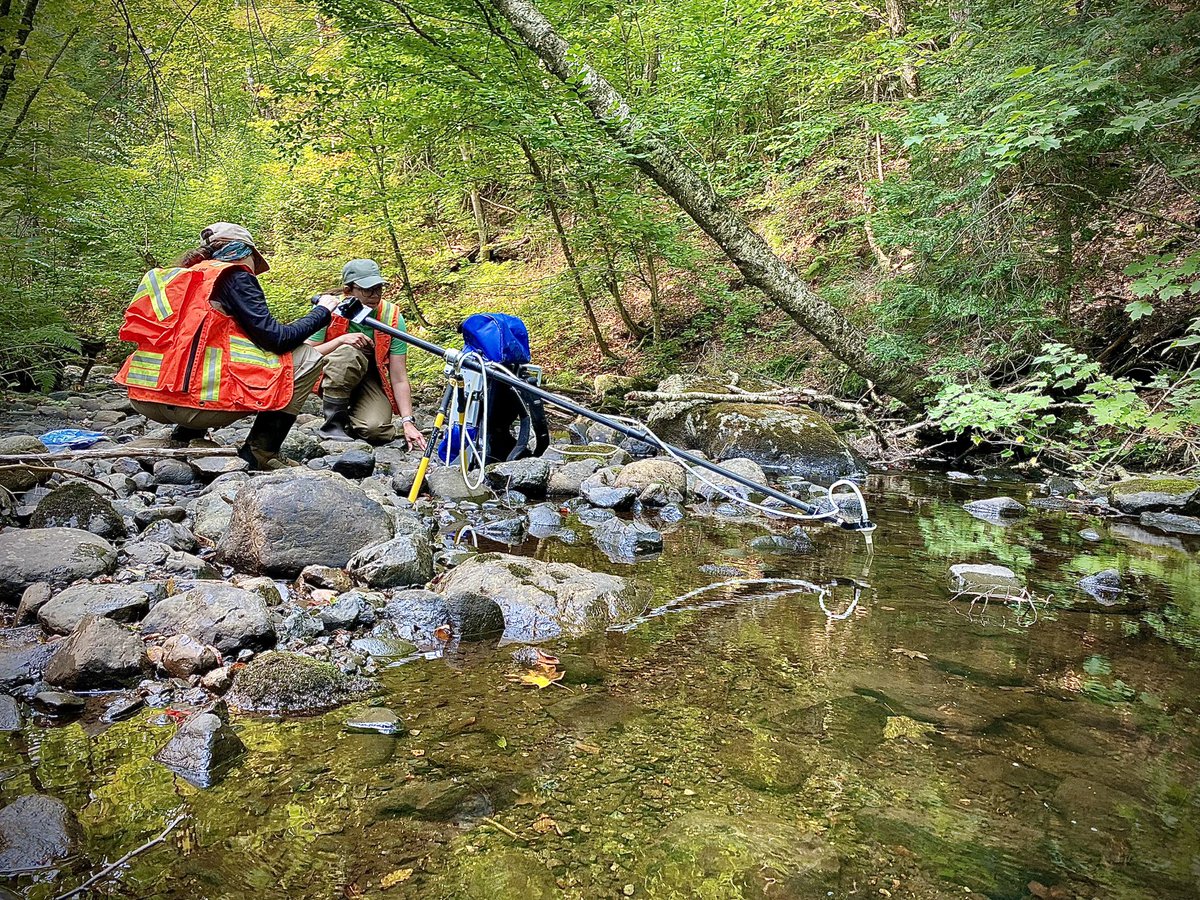
Had a great day out at the #TurkeyLakesWatershed last week collecting water samples at 13 different long-term catchments. These samples will be analyzed for DOC, N, P, isotopes and more. We also grabbed manual water temp as well as water level to support flow calculations.
At @TurkeyLakes we’ve been busy buttoning up our hillslope monitoring sites for a long winter. However, streamflow, water chemistry and meteorological measurements continue year round.
Our latest paper from @TurkeyLakes was recently published. Using a 36 yr stream temperature dataset we found that our groundwater-fed streams have had a spring warming trend while lake-fed streams have warmed in the fall. Take a read for all the details!
https://t.co/7NL980rP9V
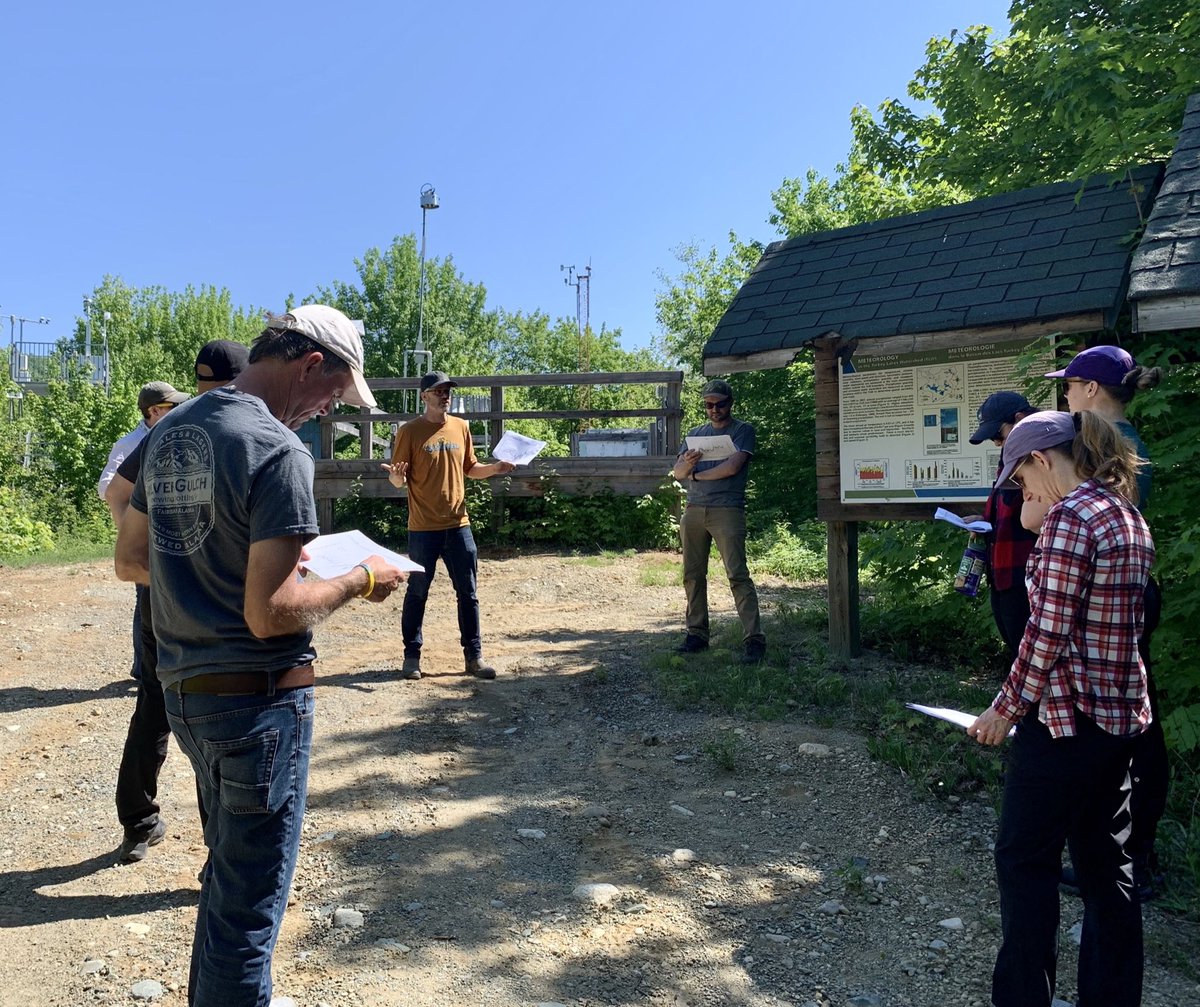
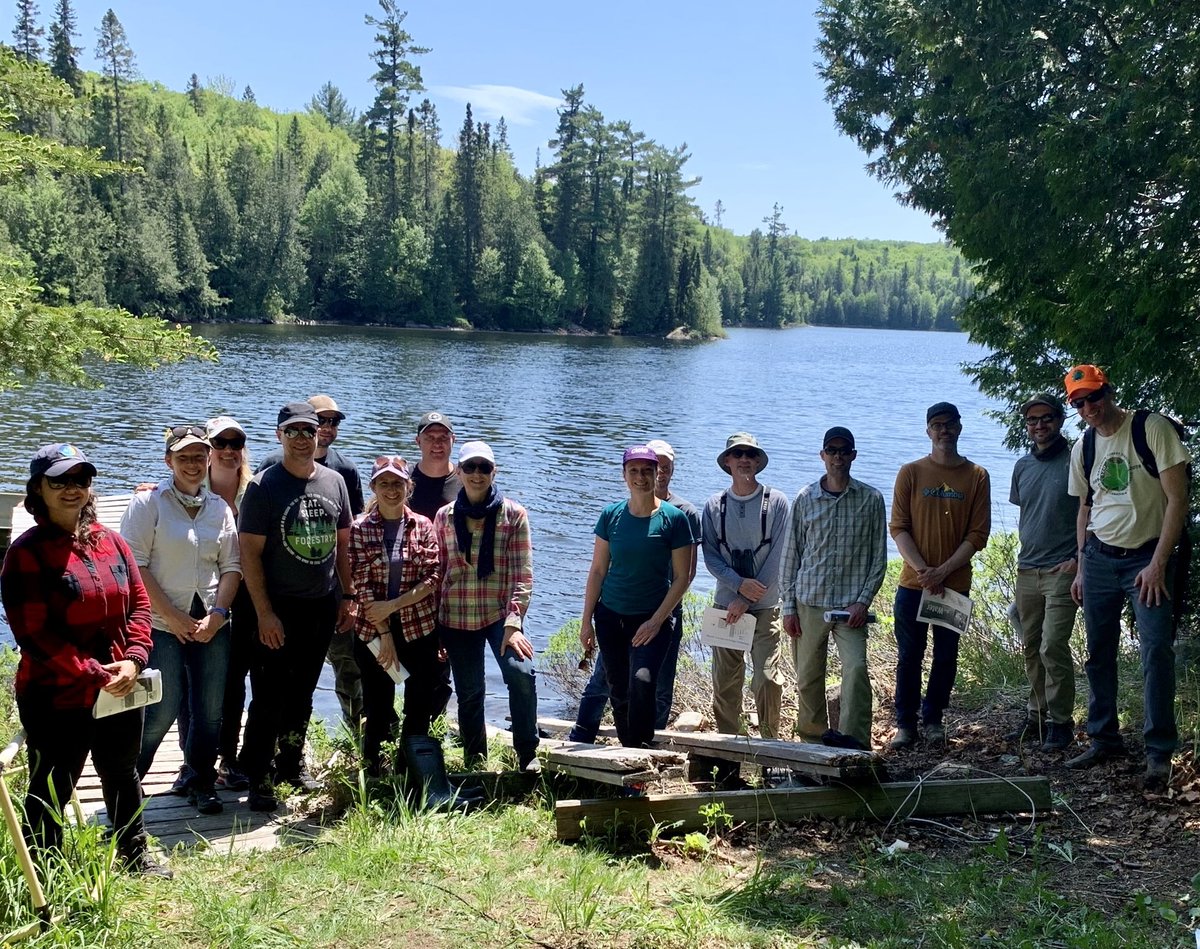
A couple weeks ago I had the fantastic chance to lead a tour (w Jason Leach) of the Turkey Lakes Watershed. We spent the day talking with NRCan-CFS DGs, directors, & managers about past, present, & future of the important long term ecosystem research site. #nrcansci#glfcscience
New study out of the #turkeylakeswatershed by Will Fines, a recent graduate from @forWaterNetwork
Evaluation of Legacy Forest Harvesting Impacts on Dominant Stream Water Sources and Implications for Water Quality Using End Member Mixing Analysis
https://t.co/Qmtabm6MQu
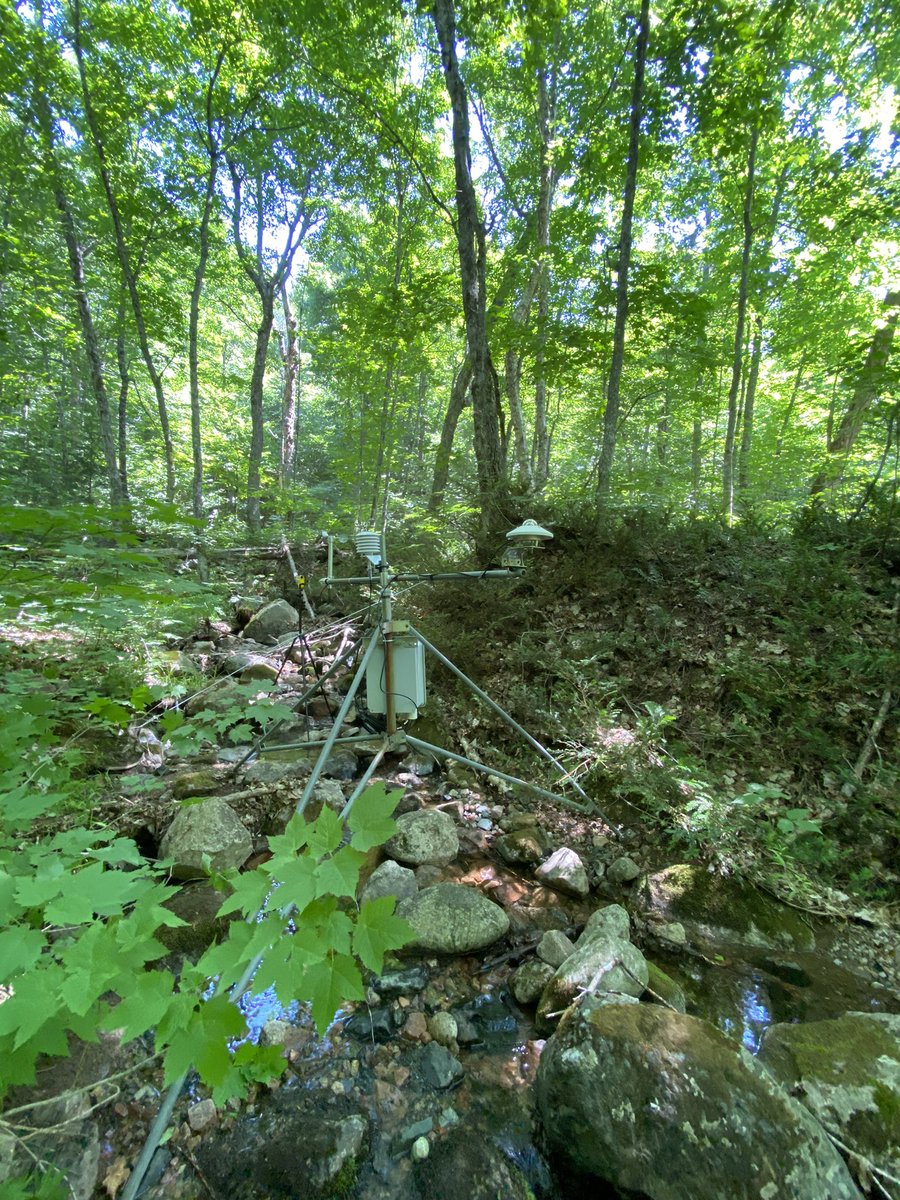
We recently installed 7 above stream Met stations and an additional hydrometric station in one of our #experimentalwatersheds. Along with our detailed stream temp measurements we’re hoping to pin down (and model) the energy balance of the stream reach.
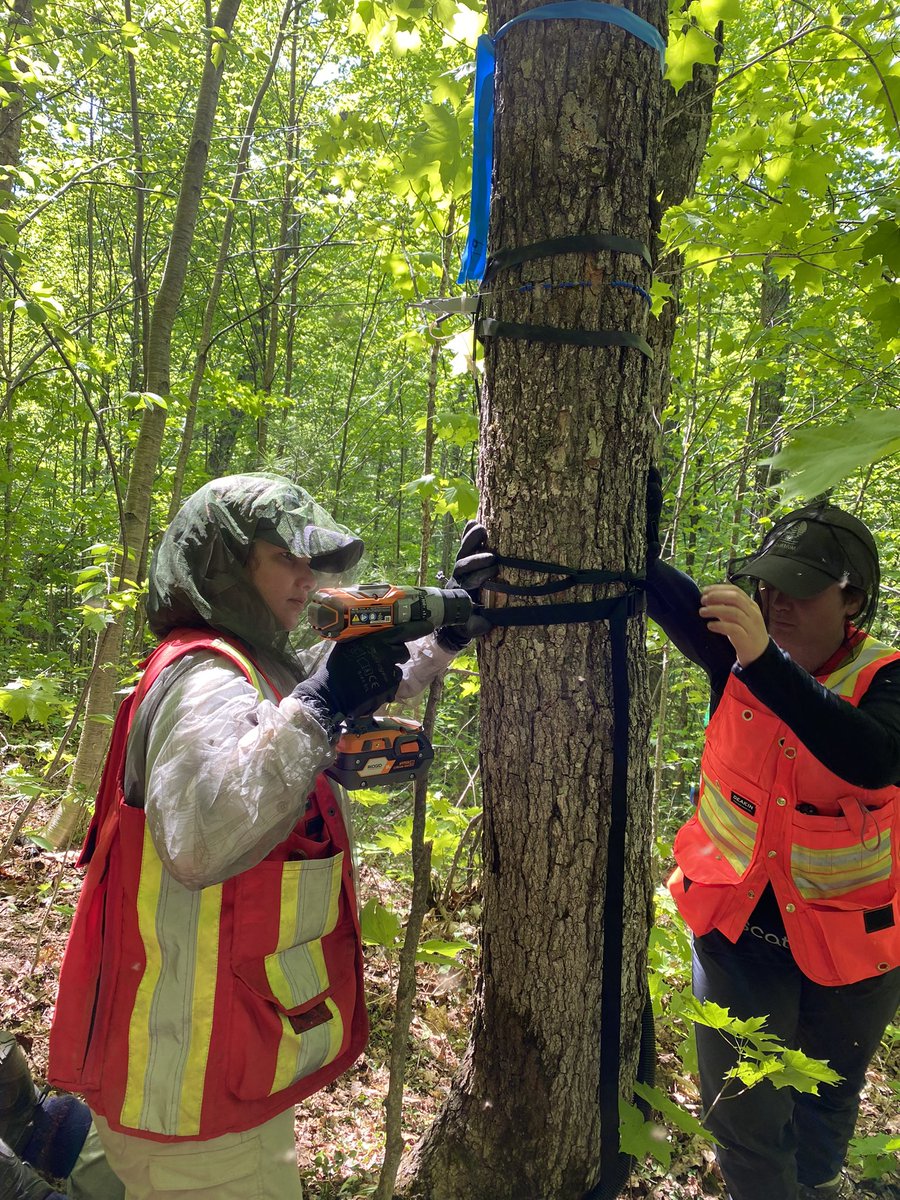
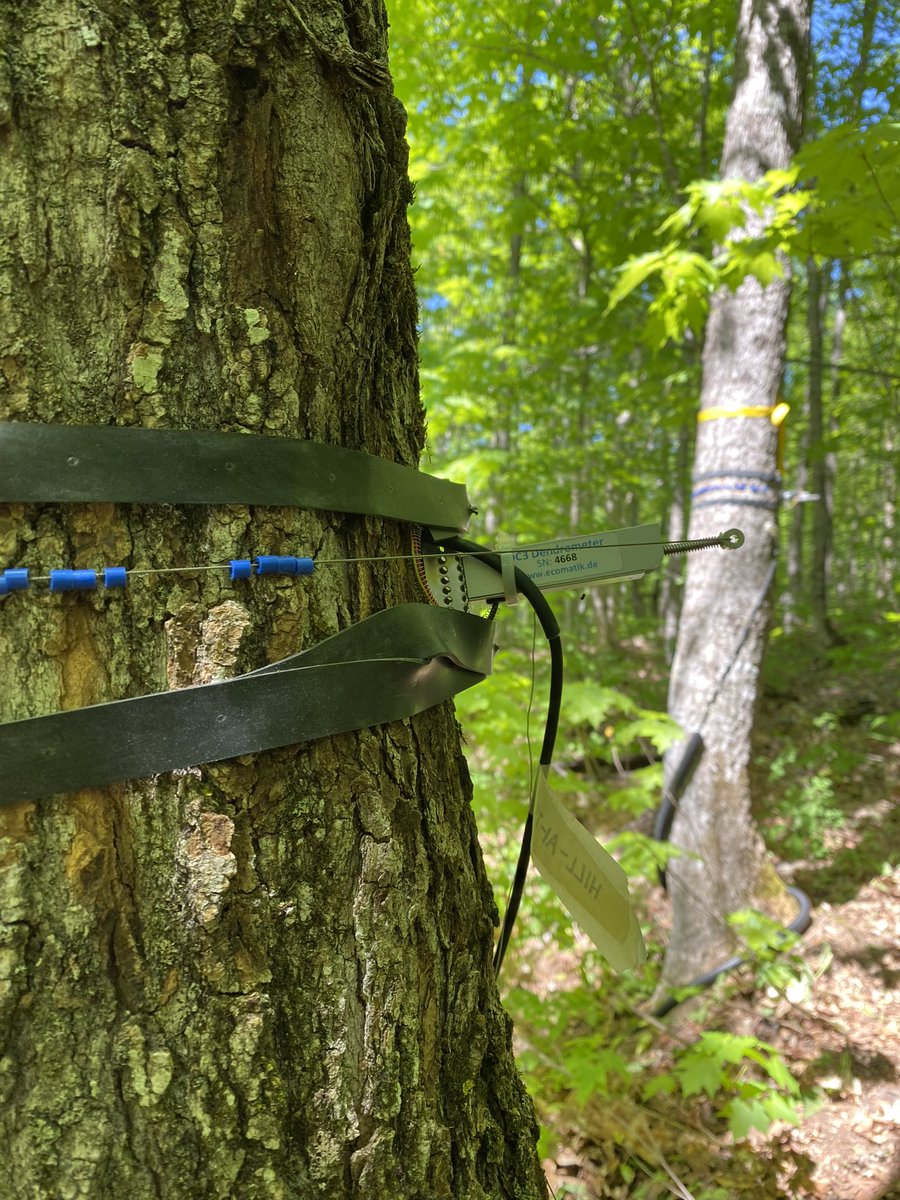
Last week we helped @MagaliNehemy from @TrentUniversity install dendrometers and sap flow sensors in one of our gauged watersheds. We can’t wait to see the data and to start understanding how much water these stream side trees are using!