Prepare for damaging flooding and strong winds Nov. 24–25. Street flooding could be worse than on Nov. 18, depending on how much rain falls and how quickly. Expect significant coastal flooding, especially at high tide along the Bay. Go around floodwater. Before water rises, move belongings off the floor in basements and other low-lying areas.
https://t.co/UStoe8fQTo
In 1989 JOHNNY CARSON surprised BOB NEWHART by appearing on his sitcom as a friend of Larry, Darryl and Darryl.
It was the only time Johnny appeared on another show outside of the Tonight Show.
Antonio Vivaldi's "La Folia" (Madness), reimagined by Jeannette Sorrell based on Sonata XII.
First published in 1705, "La Folia" has endured for more than three centuries, retaining its vitality and continuing to captivate listeners across generations.
Here's how the AI bubble bursting will make Elon Musk and SpaceX win.
Let's start with what Democrats figured out.
In the midterms, they won by running against data centers. Bernie Sanders wants a national moratorium. And they understood one thing: AI can't really be regulated anymore. The models are everywhere, many of them are open source, and they run on millions of machines.
But a bubble can be popped.
And today's AI sits on a mountain of debt. The labs lose more money than they make. Big Tech will spend over $800 billion on infrastructure this year, more than their businesses generate in cash. Lenders are getting nervous. Blocking data centers is aiming exactly where it hurts.
I think some of them have run the math, consciously or not.
First, superintelligence is going to become a commodity. Like an operating system. Like Linux. When ten models do the same thing and open source is six months behind, there's no moat at the model layer. Nobody pays a premium for intelligence that can be copied.
Second, value is going to move to infrastructure. Chips, energy, cooling, launch. The ones who own the atoms, not the ones renting someone else's.
And two players stand out. Google on Earth, with its own chips, its own cloud, and twenty years of ad money funding it all. And Elon Musk in space, with SpaceX, which absorbed xAI in February for one reason: to put compute in orbit, where the sun almost never sets.
Third, the two big labs, OpenAI and Anthropic, are the most exposed. Massive valuations, massive losses, rising debt. If the money stops flowing, they could go down.
So the logic is simple: if you can't regulate AI, starve it of capital. And if the American economy, which now leans heavily on that investment, goes down with it, so be it. When your power rests on scarcity, you'd rather have a recession than abundance.
But they forgot one thing.
A bursting bubble doesn't kill a technology. It kills the fragile.
In 2000, the dot-com bubble burst. https://t.co/vAW0rIhzhu shut down. Then WorldCom and Global Crossing went bankrupt. Amazon lost more than 90% of its value. Everyone declared the internet dead.
Twenty years later, Amazon is worth trillions, and the fiber laid by the companies that went bust carries the entire web.
The crash didn't kill the internet. It sorted the winners from the losers. And it handed the keys to the most antifragile.
This time will be no different. The labs living off fundraising will suffer. The ones who own the infrastructure will buy up assets at fire-sale prices and come out stronger.
And the most antifragile of them all is Elon. SpaceX has a business that runs without AI: launch and Starlink. And his bet is compute that needs neither the power grid nor a local building permit.
You can vote a moratorium in every county on Earth.
You can't vote one in orbit.
Elon Musk pulled his five sons out of one of the most expensive private schools in Los Angeles and built a secret school inside SpaceX headquarters. There were no grades. No grade levels. And the first problem the students solved was how to design a rocket engine.
In 2014, Elon looked at the curriculum his kids were being taught at their elite Bel-Air school and decided it was useless. The school separated students by age, taught subjects in isolation, and tested them on memorization. Elon thought all of it was wrong.
So he hired one of the school's best teachers, a man named Joshua Dahn, and gave him a room inside SpaceX headquarters. The school was called Ad Astra, which is Latin for "to the stars." It had no grades, no standardized tests, and students of different ages worked together.
Instead of learning physics from a textbook, students were given real engineering problems. One group was asked to design a heating system. Another was told to figure out the most efficient way to distribute water on Mars. The problems were real. The constraints were real. And the students were between seven and fourteen years old.
Dahn described Elon sitting in on a class where ten year olds were debating the ethics of artificial intelligence. Elon didn't interrupt. He just listened. When asked later what he thought, he said: "They're asking better questions than most adults I know."
The man who is trying to put humans on Mars started by rebuilding how we teach children to think. Because he understood that the future isn't built by people who memorize answers. It's built by people who learn to ask questions that don't have answers yet.
Carl Jung believed the people who irritate you are showing you yourself.
He called it the shadow: every trait you refuse to admit you have, you start hunting in everyone else. That’s why the reaction is always too big for the crime.
Jung, in 5 minutes on Deepstash.
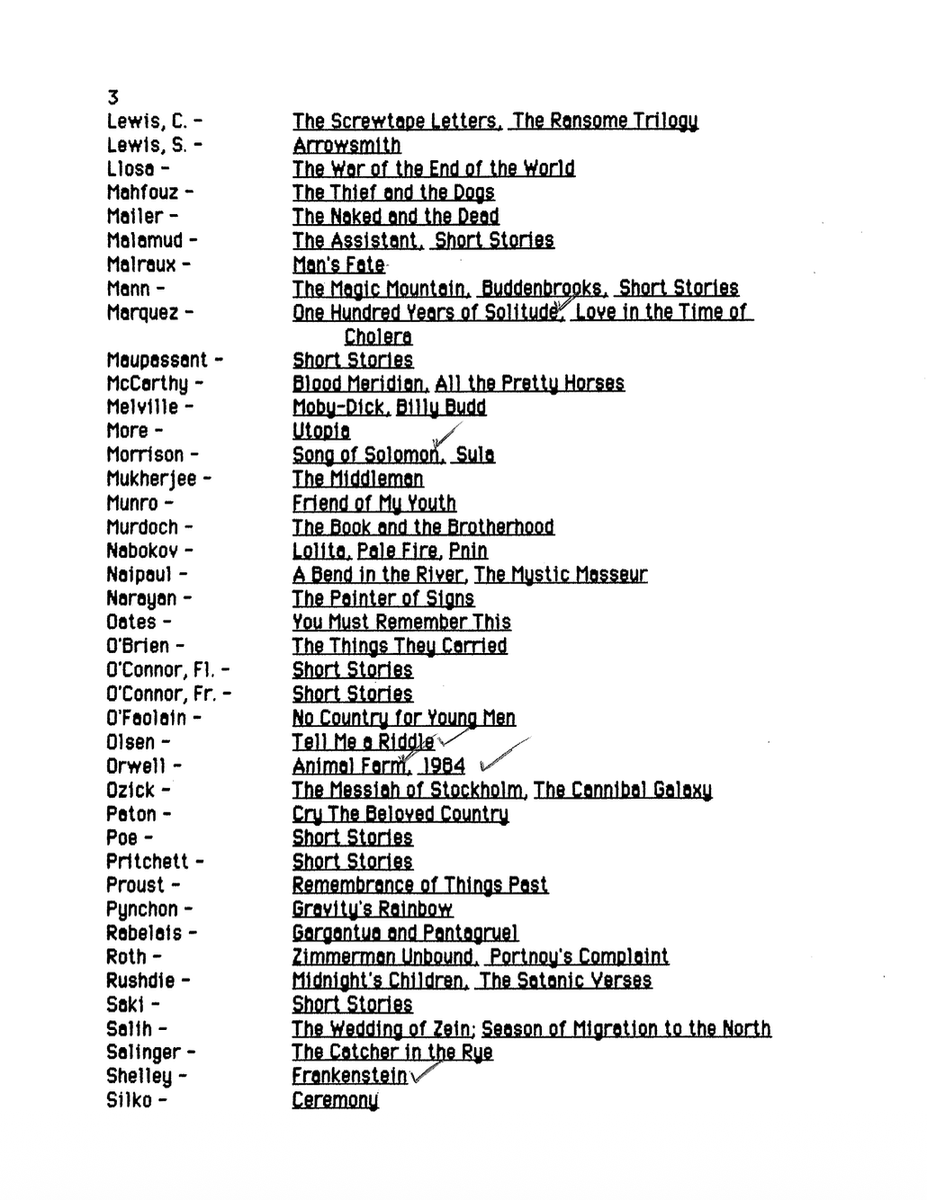
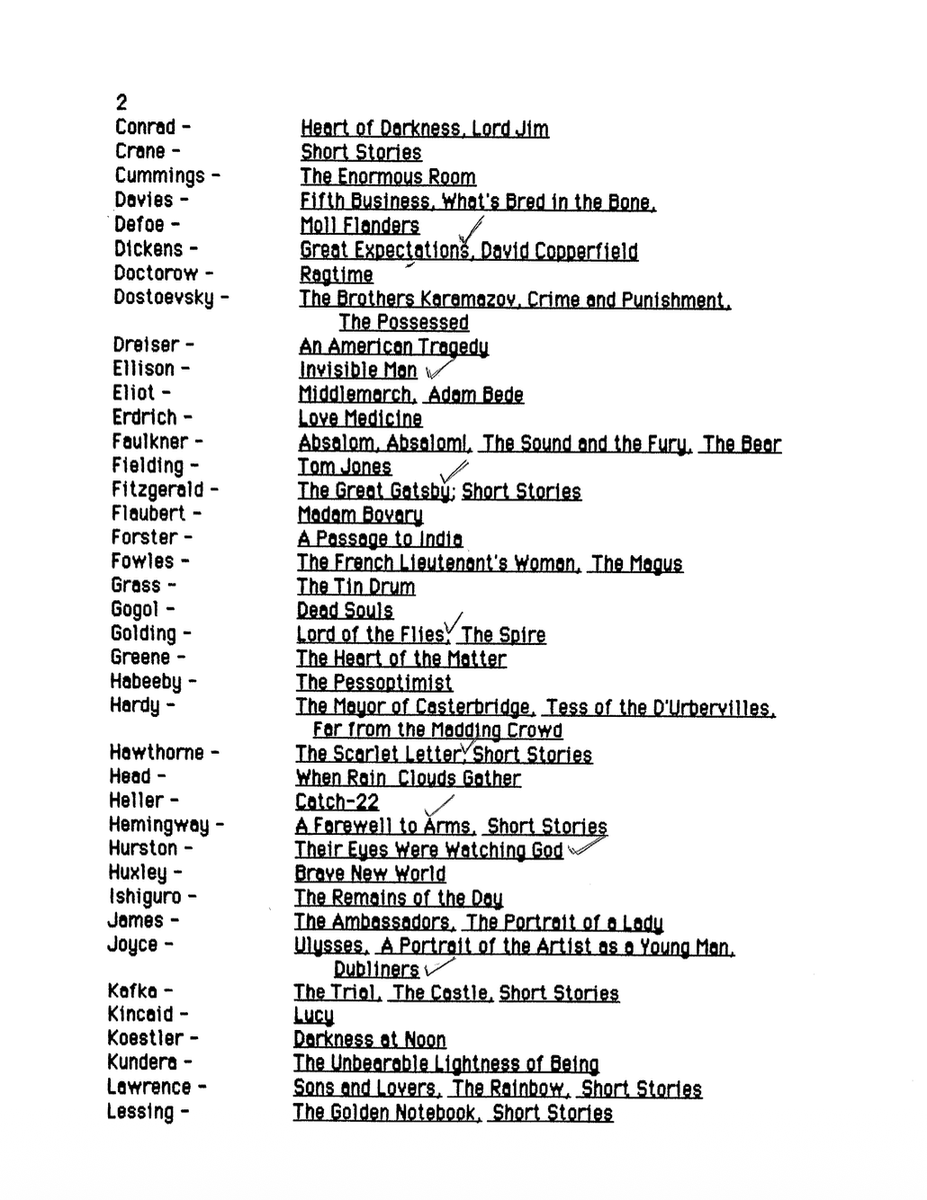
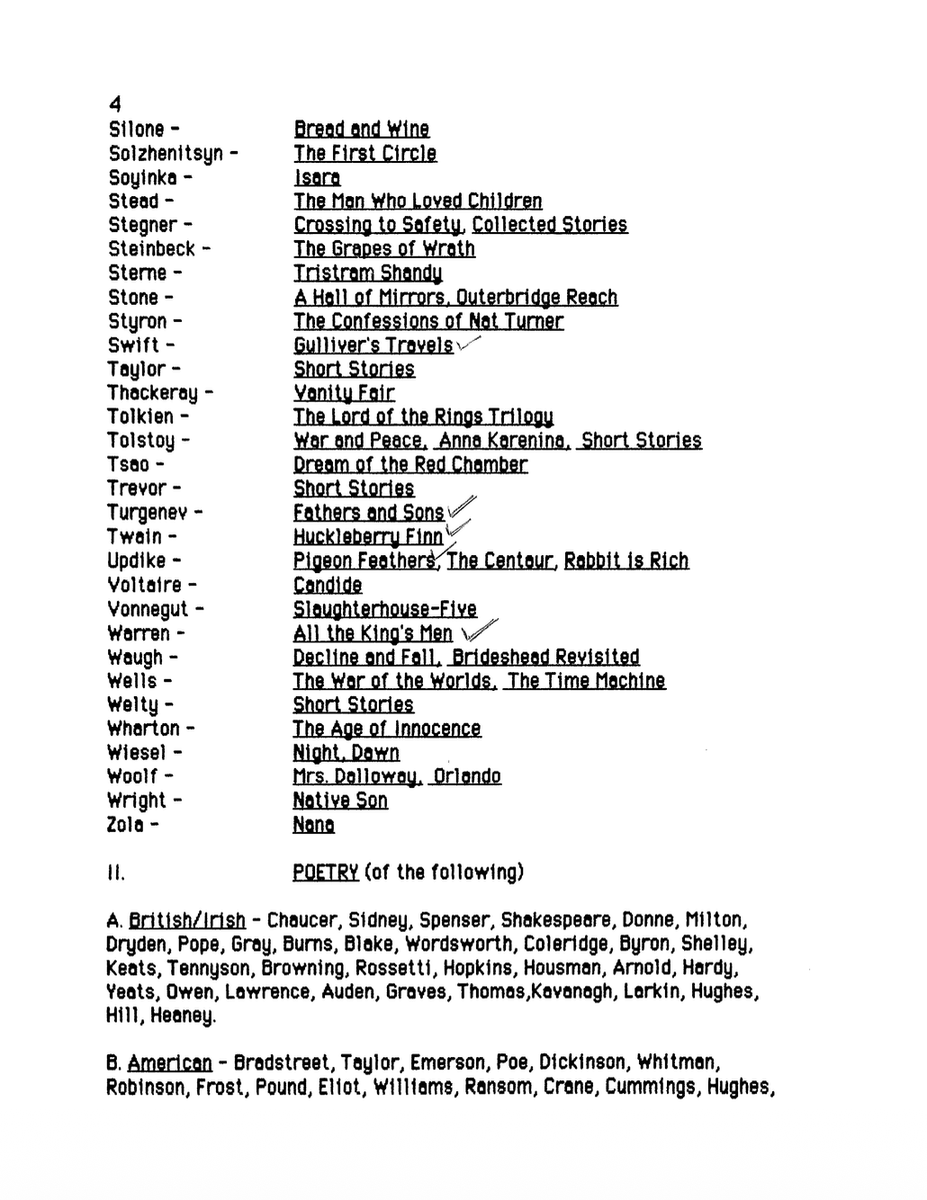
I'm sharing the lifetime reading list from my high school English teacher. He loved books, thought deeply, and told us that during the War he always had a paperback in his back pocket to escape into.
*not my checkmarks, had to get a copy from a friend after losing mine