Another post published!
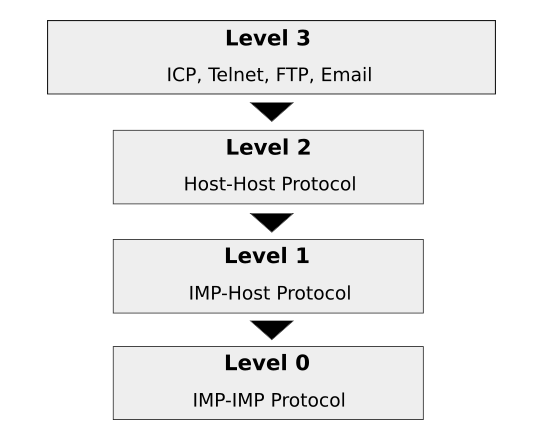
Hope you find the ARPANET interesting, because it seems I'm doing a bit of a series on it. This latest post is a deeper dive into the ARPANET protocols and how they might have influenced TCP/IP.
https://t.co/5UfiYQqJpc
Another post published!
Hope you find the ARPANET interesting, because it seems I'm doing a bit of a series on it. This latest post is a deeper dive into the ARPANET protocols and how they might have influenced TCP/IP.
https://t.co/5UfiYQqJpc
I usually just use vim and grep too (seems like that’s common!). But can’t help feeling like there’s room for a tool specifically meant for reading rather than editing code. Maybe that tool is a debugger, but I’m not about to try to get a 40-year-old codebase to run
Something I'm curious about—how do people go about *reading* an unfamiliar codebase? Tool-wise, do you just use your regular editor or something else? I gave Sourcetrail a go (https://t.co/R7f7Pl6TVl) but couldn't get it to work out of the box
@_wodin_ I love this. Thank you so much. Honestly the gender dynamics are my favorite part. The way they totally ignore the female programmer in favor of the hardware! Because men weren’t programming yet so it wasn’t worth examining
Thinking about getting an ACM membership just to have access to the digital library. I get hit with that paywall when trying to do research pretty often. Is an ACM membership worthwhile? I don't know enough about academic publishing to be sure
@pgayed@sinclairtarget Thanks, Peter! That’s very kind of you to say. I’ve got my hands full at the moment just trying to keep to my blogging schedule but if I’m able to do that a while I’ll definitely start thinking about branching out
Trying to get back on this horse!
My latest post is my take (surprising and clever, of course) on why the ARPANET was such an important breakthrough, with a fun focus on the conference where the ARPANET was shown off for the first time:
https://t.co/8SRY39c3St
@larsbrinkhoff Okay, thanks a lot. This is extremely useful info! I've only been able to find University of Illinois one, but good to know there are others
The other neat source that I found for my ARPANET post was the scenario booklet used to demo the ARPANET at the 1972 ICCC. I mentioned four of the scenarios in the post but there are a bunch of other ones that I didn't find room to describe:
https://t.co/YIjzn50LCA
Bob Woodward and Carl Bernstein had already started publishing articles about the Watergate break-ins a few months before the ARPANET demo at the October 1972 ICCC, so there were probably quite a bit of Watergate news in that database!
There was a related program called "ape" (perhaps for AP explorer?) that allowed you to query a database of past AP news stories that came through the hotline. The demo used the keyword "Nixon" to return news stories about the then-president
Also, fun fact, if you come across an important source while doing research, and you just save the cloudfront URL for the source, you will have an awful time later trying to remember where you actually found the source
So a fun source that I found for my ARPANET post is from "Box 42" of the collected papers of Clay T. Whitehead, who served as the Director of the Office of Telecommunications Policy in the Nixon White House. This guy:
https://t.co/olwgn3AKR4
But there's other stuff in the PDF too! One of the coolest things is a bunch of drafts for the speech that Whitehead gave, with hand-written corrections and everything. If you ever wanted to read about how people were thinking about regulating big tech in 1972, it's a great read