There’s a new permanent position at the USDA Cereal Disease Lab on the University of Minnesota Twin Cities campus. If you want to help protect cereal crops from rust fungi— it’s a great place to work! #fungi
https://t.co/NtBcTKcMp3
Holly heck: $80 for a bacterial genome.
If four scientists had a 15 min meeting to decide on IF they should send samples, $80 of wages would be used up.
Get onto it.
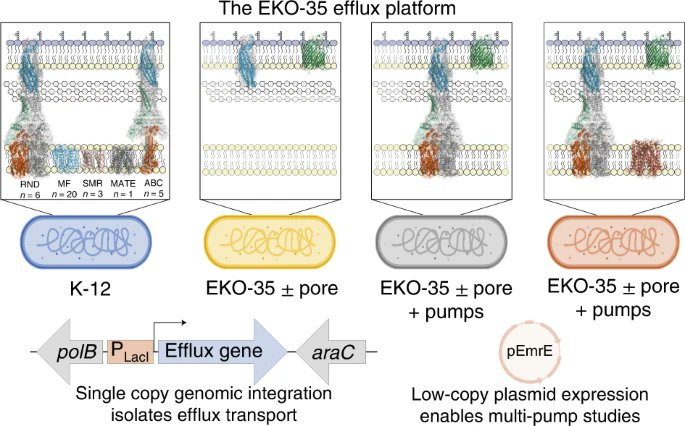
Interesting and important work to address challenges in working with highly redundant bacterial efflux systems. Reminds me of D36E - a similarly-motivated effector deficient P. syringae mutant strain
A new paper from @GeoCox44, @laurakthompson and @tanishatamara12 developed a tool kit to study bacterial efflux pumps and the movement of compounds across the cell envelope to profile efflux pump inhibitors and substrate specificities. Free to read link at https://t.co/EF2l4lqGlJ
Are you an undergraduate student looking to shape the future of agriculture? Get boots on the ground experience through our Summer Research Scholars Program: https://t.co/DMKRynBKvH
If I could, I'd have every college Bio1A student watch this superbly cogent explanation by Dr Cynthia Wolberger @CWolberger of what Rosalind Franklin's X-ray crystallographic dataset told us about DNA structure. Two minutes of magnificence. #WomenInSTEM
https://t.co/TflJn8BrjL
Happy to share the first preprint of my postdoc. We constructed #RBTnSeq libraries in 3 #Dickeya soft rot strains, and tested them in tubers of 3 commercial potato cultivars. This project is hopefully just getting started! @FiliatraultLab
Genome-wide identification of genes important for growth of Dickeya dadantii and D. dianthicola in potato (Solanum tuberosum) tubers https://t.co/GrP8Wdb7Qo #biorxiv_micrbio
#PlantHealth2021 I'll be presenting my work on Dickeya potato soft rot Thursday 1:30 EDT during the Host-Microbe Interactions session. A lot #RBTnSeq a little comparative genomics