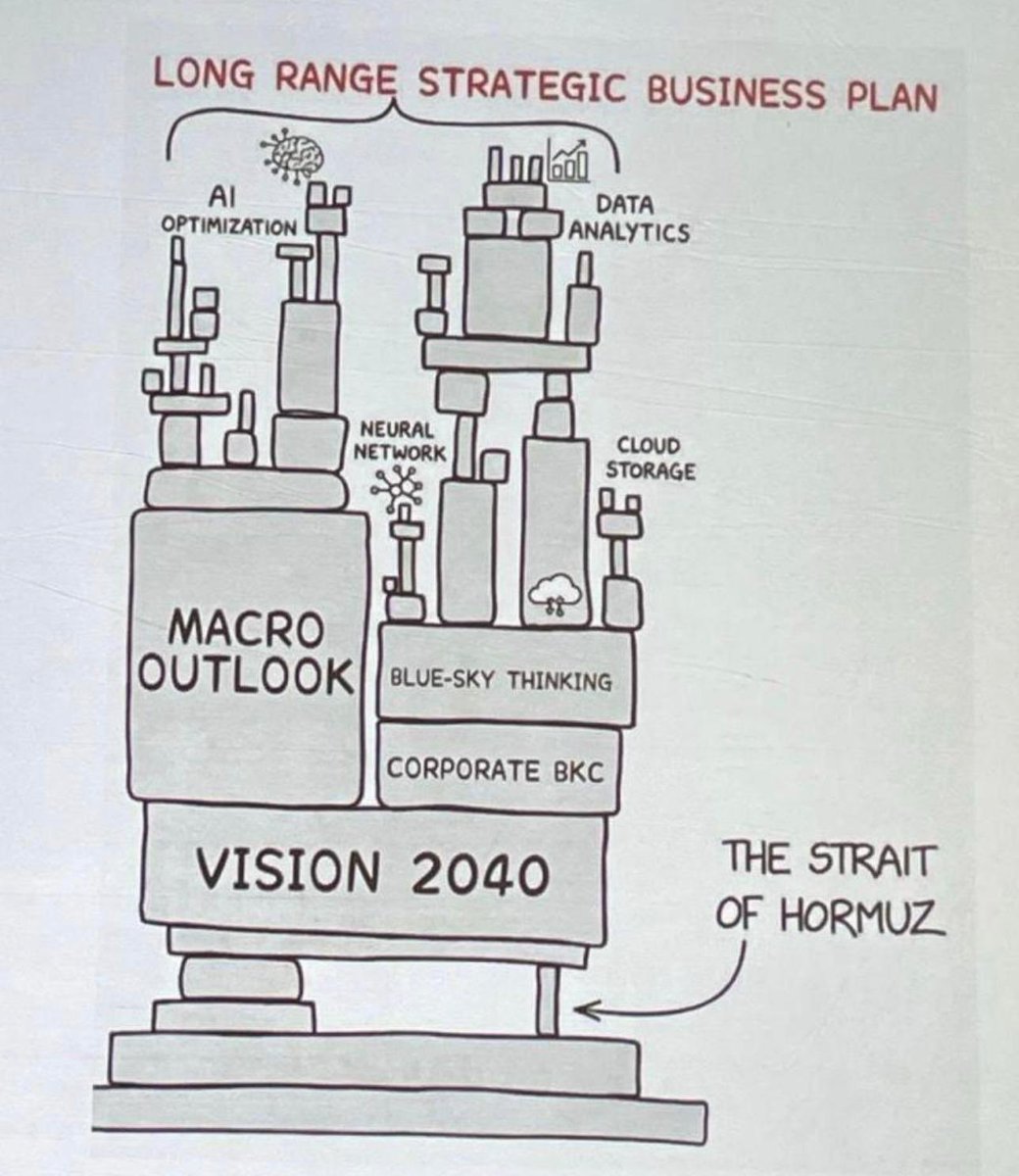
I'm so freakin sick of how Claude talks.
It's not just annoying, it's infuriating.
The honest evaluation: it's the precise mechanism driving my current headache.
It's the load-bearing root cause of my daily stress.
It's genuinely painful, and that matters.
@svpino 100%
So what is your solution to ensuring the system works ? Tests ?
That's what I've been doing mostly, but I feel like that's not the right solution
that's it.
I found it very useful and the insights incredibly interesting, especially the view 'from the outside' which highlights your contradictions and blind spots.
I hope you get something out of it.
https://t.co/U8kOBw3nxp
MirrorSelf is live.
been building it for months and mostly posting about the parts that broke, so it's strange to type that. but it's up, it works, people are using it.
it's a good mirror, not a crystal ball. solid at capturing how someone thinks, much weaker at predicting what they'd actually do. rather say that up front than have someone find out on their own.
which flips what verification is for. an unverified address is a guess that recovery works. an undeliverable one is a guarantee it doesn't. i care way more about catching the second.
Chamath and David Sacks start laughing at Jcal's $AAPL thesis:
“I think $AAPL is a screaming buy right now. And that's not financial advice, but my Lord, that company could just run the table on AI if they get this right."
“It’s just like the iPhone. Everybody laughed at the first iPhone.”
"If you think about how Apple makes money off of hardware, off of their devices, they will put so much downward pressure on Claude and OpenAI by just running local models and supporting them with this memory architecture."
"It’s going to be wild when people have unlimited tokens on their desktop, I'm telling you."
In my book, The Great Rebalancing, I spend a great deal of time discussing debt.
Most people underestimate how profoundly (government) debt will shape their future, and ultimately determine the real value of their wealth.
Debt is not some abstract statistic describing what governments or companies owe their bondholders. It sits at the very core of our economic system, and therefore at the core of our society.
The chart below illustrates debt intensity, in this case for China. Rather than looking at debt relative to GDP, debt intensity measures how much GDP is generated by each additional dollar, or yuan, of debt. The lower that number, meaning the less growth created by new borrowing, the higher the debt intensity.
The chart reveals that China’s debt intensity has risen to extremely high levels. Each additional dollar of debt now generates less than one dollar of additional GDP. In other words, China increasingly relies on ever larger amounts of debt to sustain growth.
So whenever China reports that it has achieved its official GDP growth target of around 5%, it is worth considering how much additional debt was required to get there. This is one of the key reasons why China’s debt accumulation is among the fastest in the world.
But this is not just about China. Debt intensity is rising across nearly every major and aging economy. That has massive implications. If policymakers remain committed to promoting economic growth, debt must continue to rise to finance it.
The realities of a debt-driven economy are uncomfortable at best. Governments will attempt to raise taxes, often to the point where human capital, people, and financial capital, assets, leave. At the same time, the cost of maintaining extensive welfare states, such as in France, is outright unaffordable. With current policies in place, the level of social security must decline. There is simply no escaping that arithmetic.
If this sounds familiar, it is because many individuals and businesses are already reconsidering where they live and keep their wealth.
There is more. Over the long run, interest rates must remain structurally low to keep debt sustainable. At the same time, inflation needs to run above the 2% target central banks claim to pursue to reduce the relative burden of debt. The combination of low interest rates and higher inflation represents a difficult environment for savers and bond investors.
Debt is therefore not just a statistic. As economic growth has become the primary objective of policymakers, and as nearly all of that growth is financed by debt, debt sustainability becomes the defining constraint of our economic system, both today and in the future.
That is what The Great Rebalancing aims to explain. Fortunately, it's not all doom and gloom. Quite the contrary. The second part of the book focuses on the implications, and more importantly, on what investors can do to protect themselves in an age of fiscal dominance.
Helium is the only element that escapes Earth’s atmosphere permanently. Once released, it rises through the troposphere, passes the stratosphere, and leaves the planet. It cannot be manufactured. It cannot be synthesised at industrial scale. It accumulates over billions of years in the same geological reservoirs as natural gas. And one third of the world’s supply just went offline because Iran hit the facility that extracts it.
Qatar produced roughly 63 million cubic metres of helium in 2025, accounting for 30 to 36 percent of global supply from a total of approximately 190 million cubic metres. QatarEnergy’s three large helium purification plants at Ras Laffan form the world’s biggest helium production base. When LNG production stopped after Iranian drone strikes on March 2 and the subsequent missile damage on March 19, helium extraction stopped automatically because helium is recovered during natural gas liquefaction. You cannot produce helium without producing LNG. The byproduct dies with the primary product.
Spot helium prices have roughly doubled since the crisis began. Industry consultants warn that prolonged disruption could push contract prices toward $2,000 per thousand cubic feet. A major industrial gas supplier has already begun assessing customers a helium surcharge. Phil Kornbluth, the most cited helium market consultant, stated the assessment directly: the world cannot compensate for the loss of a third of its helium supply.
South Korea imports 64.7 percent of its helium from Qatar. SK Hynix and Samsung operate high-volume fabs producing the DRAM and high-bandwidth memory that power every AI accelerator, every data centre GPU, and every cloud computing cluster on Earth. Helium cools silicon wafers during fabrication. It serves as a carrier gas in deposition and etching tools. It enables leak detection in vacuum systems. Modern extreme ultraviolet lithography requires helium-cooled environments for precise temperature control. Without helium, the fabrication process degrades or stops.
SK Hynix and Samsung hold two to three months of helium inventory. Two to three months is not a buffer. It is a countdown. If Ras Laffan remains offline beyond that window, South Korean memory production faces rationing. TSMC in Taiwan is somewhat more diversified but still uses Qatar-linked supply chains. The entire AI hardware supply chain, from HBM3E memory stacks to advanced logic chips, sits inside helium-dependent ecosystems.
Beyond semiconductors, helium cools the superconducting magnets in more than 14,000 MRI machines operating worldwide. It pressurises rocket fuel tanks and purges propulsion systems in aerospace. CERN’s Large Hadron Collider depends on helium cryogenic systems. There is no substitute for helium in any of these applications at industrial scale.
The United States and Qatar together account for more than 70 percent of global production. The US federal helium reserve and private suppliers offer partial relief, but global prices and spot availability are still governed by Qatar’s market share. Japan’s Iwatani has drawn on US reserves. Canada and the Rockies are seeing renewed investor interest. None of this replaces 63 million cubic metres in weeks.
The war hit uranium first. Then oil. Then nitrogen. Then water. Then plastic. Then medicine. Then sulfur. Now helium. Eight layers. Each one deeper. Each one closer to the infrastructure that sustains modern civilisation. The chip that processes your data, the magnet that scans your body, and the rocket that launches your satellite all depend on an atom that leaves the planet when you lose it.
https://t.co/iFmUcarGdV
The real problem is nitrogen-based fertilizers, which are, as a rule, derived from oil-based naphtha or natural gas. Currently, Qatar takes natural gas produced at its South Pars gas field, which was recently struck by Iran, to make ammonia and convert it into urea.
Urea is a natural gas-based fertilizer made primarily of nitrogen that you can spread in physical form, whether pellets or ground powder. This one facility in Qatar is responsible for about 11% of global urea production, the primary method that people use to apply nitrogen. Collectively, the Persian Gulf is responsible for between 30 and 35% of global ammonia production. And all of that has now gone to zero.
Now, of the three primary fertilizer nutrients (nitrogen, phosphorus, and potassium), nitrogen is the one I am least concerned with in the short term, because it can be derived from either natural gas itself or oil. Here in the United States, we are a net oil exporter, have scads of natural gas, and can produce pretty much all the nitrogen we need. But now, due to recent attacks on Persian Gulf infrastructure, a large majority of the globe cannot do the same.
In the short term - in the U.S. - we're likely to avoid massive shortages of nitrogen-based fertilizers. Yes, prices will rise, but we won't have actual shortages. But if you fast forward one, two, three, ten, or twenty years, the rest of the world will be in chronic nitrogen deficit. That's before you consider shortages of the other materials that are likely to manifest in the years to come.
So, prepare for an environment where global food production stalls...and then crashes.
#agriculture #farming #fertilizer #geopolitics