Just out! “The astrocytic ensemble acts as a multiday trace to stabilize memory.” We identified astrocytic ensembles that link experiences across days to stabilize memory https://t.co/po9zIlZvPb. New astrocyte tools are openly available at Addgene: https://t.co/OXCmcYSleI. 1/8
My first solo author publication was out last week. It is a short journal club piece on Clayton & Dickinson (1998). I discuss the seminal study and why it is important in current Neuroscience research on engrams https://t.co/NS4XYJhFIz
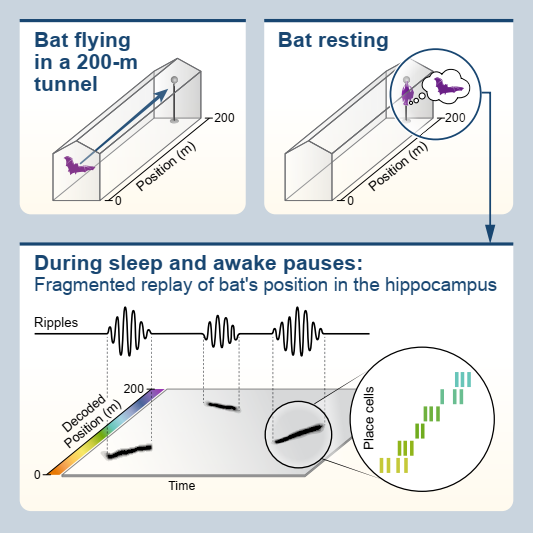
🚨New in @CellCellPress
We discovered that hippocampal replays in natural-scale environments are highly fragmented, not full-length.
https://t.co/TzLyARF80d
👇🧵
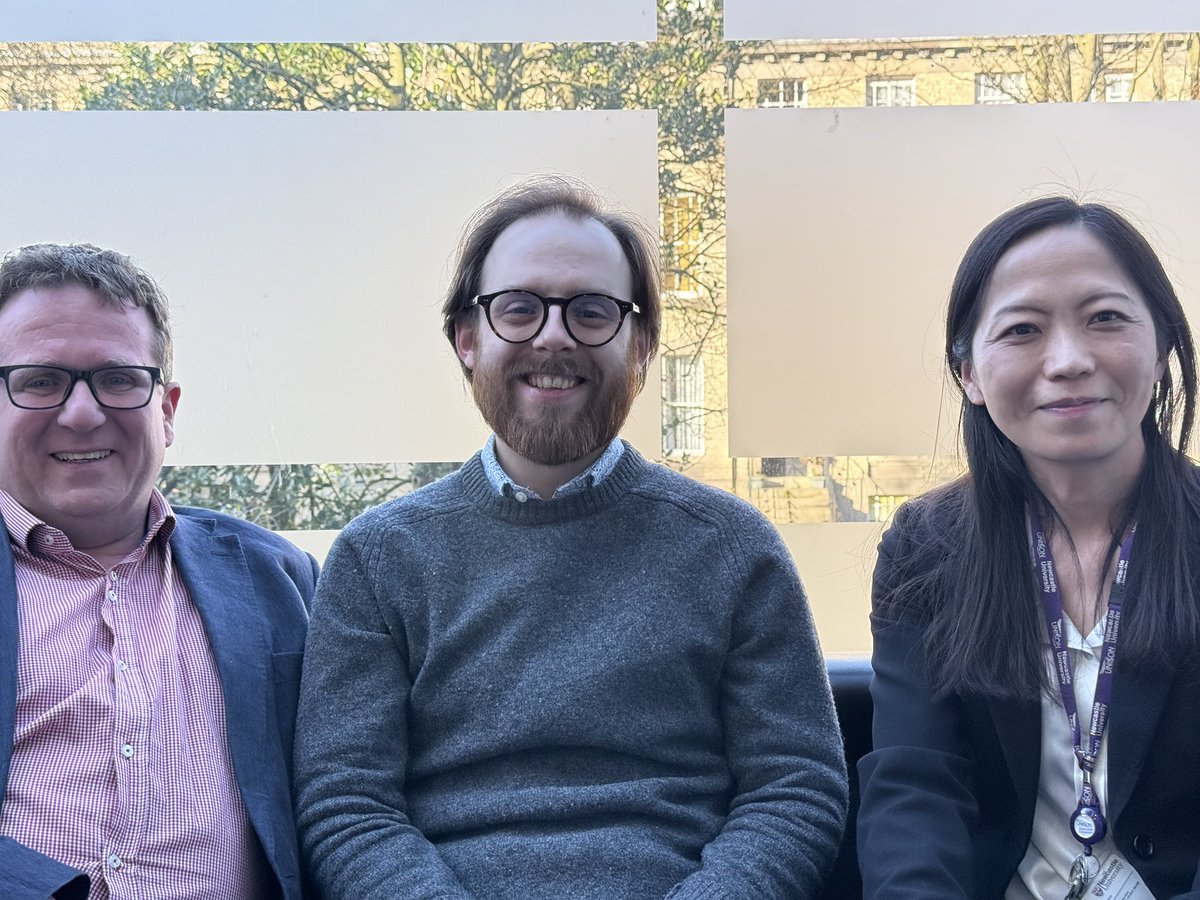
Congrats to the newly minted DR @BenSlaterNeuro. Not just his viva passed but his first first author paper accepted too. The definition of a good week. Well done Ben. @yukiko_kikuchi and Chris Petkov too as joint supervisors
Differences and similarities between human hippocampal low-frequency oscillations during navigation and mental simulation https://t.co/9mnEYthfXW #biorxiv_neursci
Excited to have this paper out. Exploring how we can use behavioural responses to understand event segmentation with evidence that event segmentation is driven by repeating activity and can become more meaningful over time. @BenSlaterNeuro@TylerWRoss
https://t.co/7h1Srb4nZh
Repulsion of CA3 / dentate gyrus representations is driven by distinct internal beliefs in the face of ambiguous sensory input https://t.co/j40f1MD07w #biorxiv_neursci
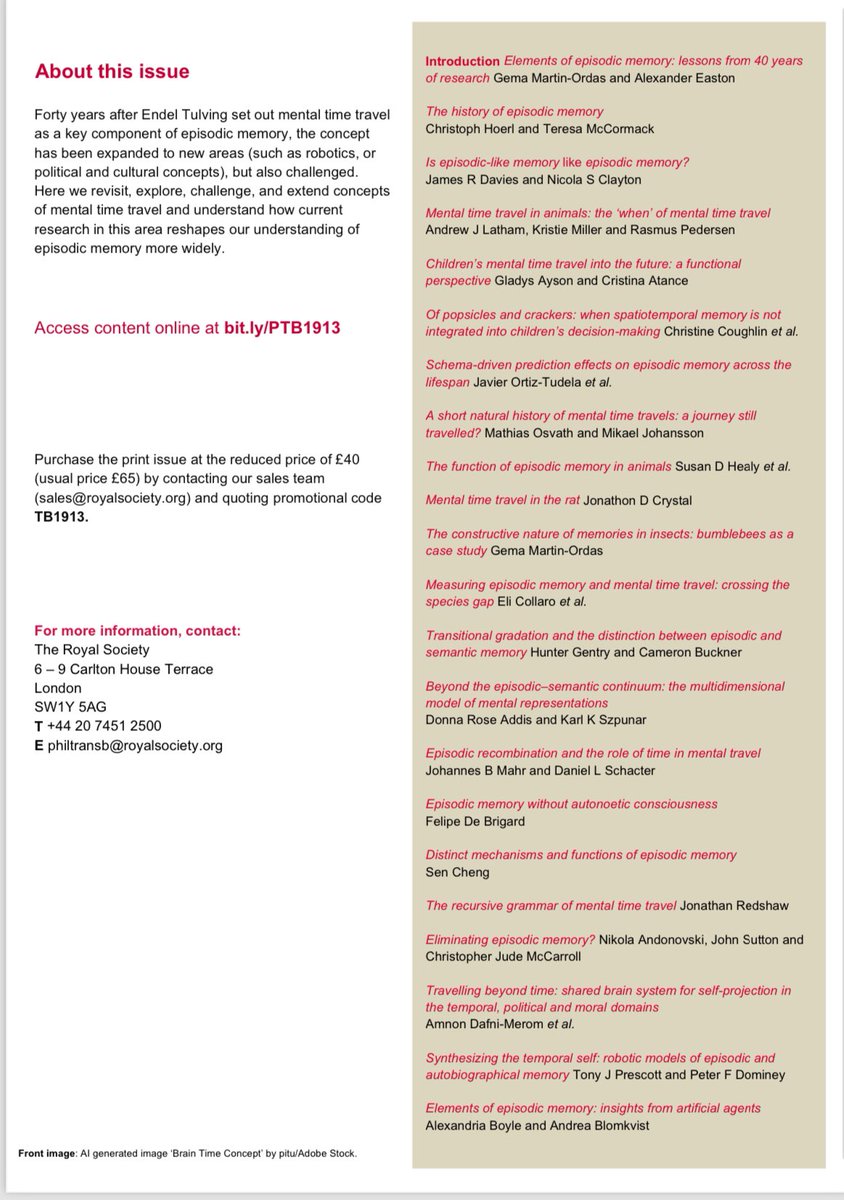
Excited that our special issue of @RSocPublishing PhilTransB is now out online. What an incredible group of authors with a fascinating set of papers reviewing, exploring, extending and challenging our concepts around mental time travel. https://t.co/zi3Li9Bkup
🎉Congrats to Sam and @brainrhythms lab on their @CellReports paper identifying the mechanisms of representational drift in the hippocampus! https://t.co/hnVOSQ8Iu0