Plummeting birth rates will hollow out cities and deflate the housing market. Meanwhile, artificial intelligence will force humans to find ways to stand out, writes Tyler Cowen. https://t.co/O9hClXpLvP
We can finally say AI isn't killing jobs.
A new paper from me, @tryramp, and @RevelioLabs uses firm-level spend and workforce data across 21K U.S. businesses to measure AI's impact on jobs.
Firms that adopt AI heavily grow headcount 10% over two years following adoption. Low adopters see no statistically significant change.
I’m reading The Death and Life of Great American Cities for an upcoming book club episode of the podcast with @JerusalemDemsas and I’m genuinely shocked by how bad this book is — total opposite of Silent Spring being more reasonable than my stereotyped view.
Tyler Cowen on the silver lining of falling fertility rates. Using AI to decipher a 2,000-year-old scroll. And much more, in today's Front Page. https://t.co/74YzNUQGhZ
What should I ask @DAcemogluMIT? Please leave your suggestions for podcast questions in the comments section of this blog post: https://t.co/2Xcy0yNv1M
His musicals draw a direct line between the slapstick comedy of vaudeville and the ambivalence of high modernism—and they could only have grown out of the fertile soil of American showbiz, writes Scott Wheeler. https://t.co/k1jyjLZm3G
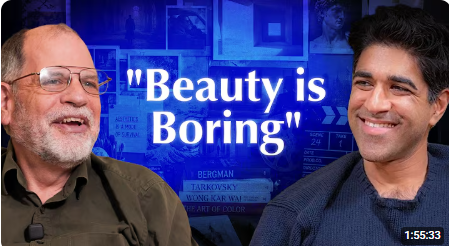
Dialectic ep. 50: Tyler Cowen & Nabeel Qureshi!
You could talk to @tylercowen and @nabeelqu about anything and it would be interesting.
Nabeel is a former guest and a true polymath who can go wide and deep. He'd long suggested I interview his friend and mentor Tyler: the epitome of that archetype.
I wanted to do something special for 50, so I paired them together and hoped for some magic. I think we got some, and a few laughs, too.
Despite their day jobs, Tyler and Nabeel are unlikely aesthetes who became friends in part through their shared love of film and art.
So I spoke to them about how great art is often strange, aesthetic evolution, and a tour through some of their favorite artists (especially musicians).
We also discussed sacred commitments, AI acceleration, good group chats, mentorship, whether Tyler will stop writing books, creating a bat signal for talent, becoming a great interviewer, Twitter's virtues, New York City, and more.
Timestamps
0:00 - Opening highlights
1:18 - Intro to Tyler & Nabeel
4:38 - Sacred commitments, AI, markets & acceleration
20:36 - How art moves us
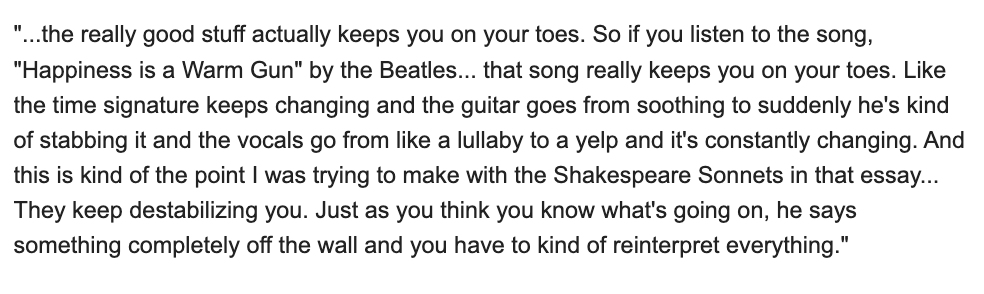
27:22 - Beauty, strangeness, great art & The Beatles
44:35 - Film, critics, learning to appreciate depth & "lowbrow" art
1:02:55 - New aesthetics, inspiration, optimism & pessimism
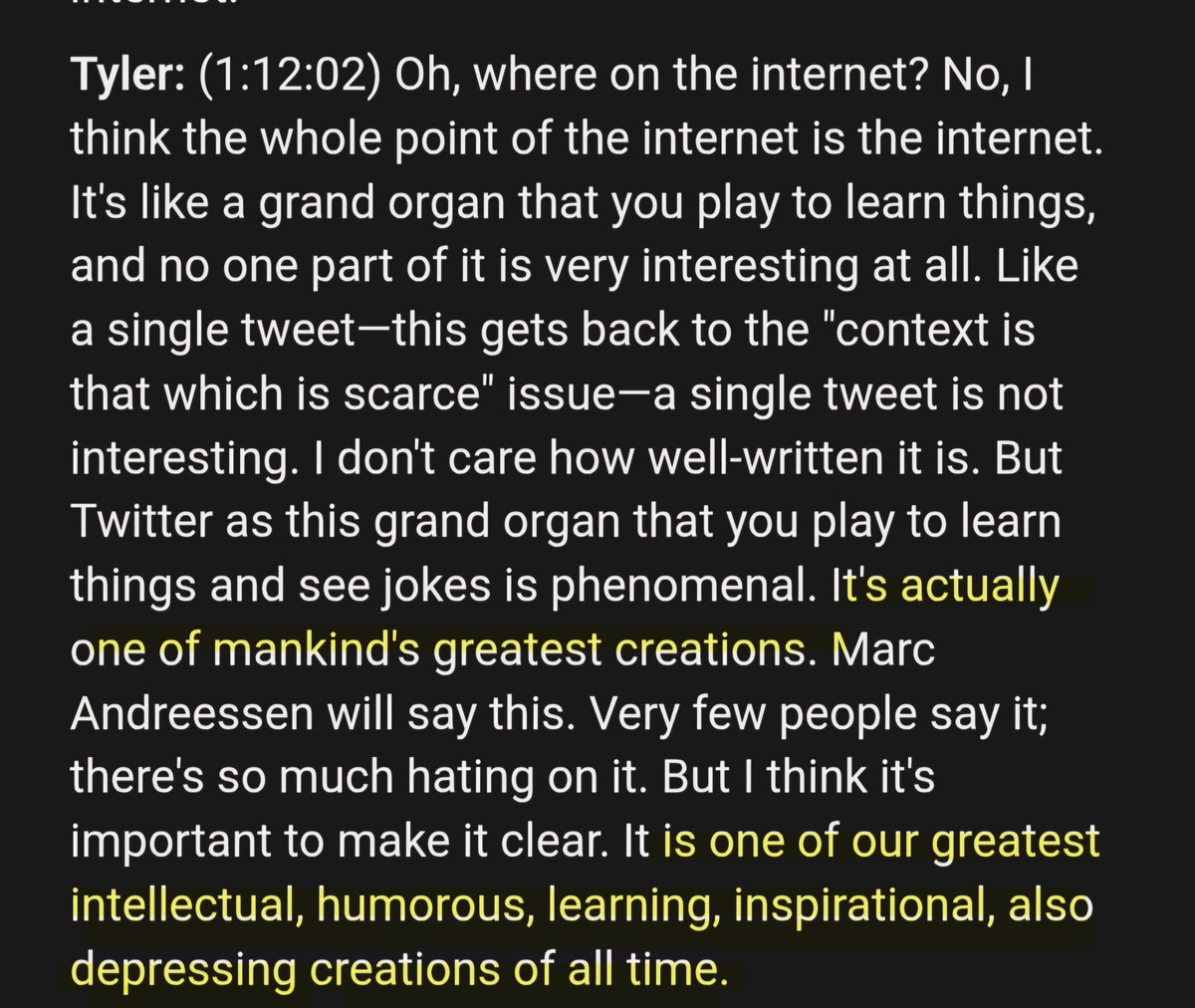
1:11:52 - The internet & Twitter's virtue, group chats, cities
1:22:06 - Mentors, (maybe quitting) writing books, friendship
1:35:27 - Interviewing, identifying talent & agency
1:47:21 - Closing questions
@DialecticPod 50: Tyler Cowen & Nabeel Qureshi - An Appetite for More - is available below and on all platforms. Links in reply.
Depending on the definition, maybe 3-5% of the US population is smart but seriously mentally unstable. That group heavily selects into politics, though. So maybe you're getting more like 10-15% among certain political types. That's enough to have a real influence on movements.
What a time to be an economist! AI is creating new datasets—and new questions—about productivity, labor markets, firms, and economic growth.
Want to help answer them? We’re hiring a PhD economist to join the growing Economic Research team at OpenAI.
https://t.co/rPMSnJdyzq
Just wrapped up the kickoff episode of my new Reading Economics Together series — with a conversation about Adam Smith of course. Total joy! What a great salon 😍 Superb participants!
We talked about so much: materialism and incentives, AI and innovation, second tier cities, the Enlightenment, the Church, Hume, Bayes, Quesnay, Jared Diamond and Tim Marshall, Baumol and Veblen, Ostrom, altruism, Darwin, @tylercowen and marginalism, network theory and RIVERS, Kahneman, Leibniz, Jane Austen!!, genius vs scenius, @stripepress and @_brianpotter, how new disciplines get started, Europe vs China, Scotland!
The next episode will be about MARX - July 25: https://t.co/sIJObNo8GV (we will go both left and right from Hegel in fact: Marx, Horkheimer, Kojeve — but also @FukuyamaFrancis and Zizek)
In this series, we read the primary texts that you hear referenced all the time (and lied about), but few people actually sit down and read them. Well, now you will! Same as we do with the classics of literature and philosophy on Interintellect.
This is the magic of clear and generative writing, the communication of ideas so people can learn from and build on them for hundreds of years!
In other series, you’re reading Tocqueville, Homer, the Federalist Papers. Come join us 💪
His musicals draw a direct line between the slapstick comedy of vaudeville and the ambivalence of high modernism—and they could only have grown out of the fertile soil of American showbiz, writes Scott Wheeler. https://t.co/LJbhuuXCsV
Journalism at its dumbest: Someone hacks into the guest list of a "secret exclusive right-wing Thiel-associated cabal which plots 'navigating WWIII' with 'their sex lives on the agenda.'" Turns out the meeting is not secretive, not right-wing, has nothing to do with Thiel, has had hundreds of journalists, bloggers, academics, artists, musicians politicians, scientists, etc., from all over the political spectrum, discussing thousands of topics. But no matter - someone said there was a furor, therefore there must have been a furor, therefore let's make it a furor!
https://t.co/yggS5erVzF
I am excited to announce that, starting July 1, I will join Tulane University as the Celia Scott Weatherhead Presidential Chair in Economics.
Beyond the honor of holding Tulane's highest faculty distinction, what attracted me most is the University's remarkable upward trajectory and its ambition to continue building one of the nation's leading research universities. I very much look forward to being part of that effort.