@yourgirlhils "Sometimes your life arranges itself so that you’re in repeated contact with data and have no choice but to engage with it — and the point of view develops on its own."
Dialectic ep. 50: Tyler Cowen & Nabeel Qureshi!
You could talk to @tylercowen and @nabeelqu about anything and it would be interesting.
Nabeel is a former guest and a true polymath who can go wide and deep. He'd long suggested I interview his friend and mentor Tyler: the epitome of that archetype.
I wanted to do something special for 50, so I paired them together and hoped for some magic. I think we got some, and a few laughs, too.
Despite their day jobs, Tyler and Nabeel are unlikely aesthetes who became friends in part through their shared love of film and art.
So I spoke to them about how great art is often strange, aesthetic evolution, and a tour through some of their favorite artists (especially musicians).
We also discussed sacred commitments, AI acceleration, good group chats, mentorship, whether Tyler will stop writing books, creating a bat signal for talent, becoming a great interviewer, Twitter's virtues, New York City, and more.
Timestamps
0:00 - Opening highlights
1:18 - Intro to Tyler & Nabeel
4:38 - Sacred commitments, AI, markets & acceleration
20:36 - How art moves us
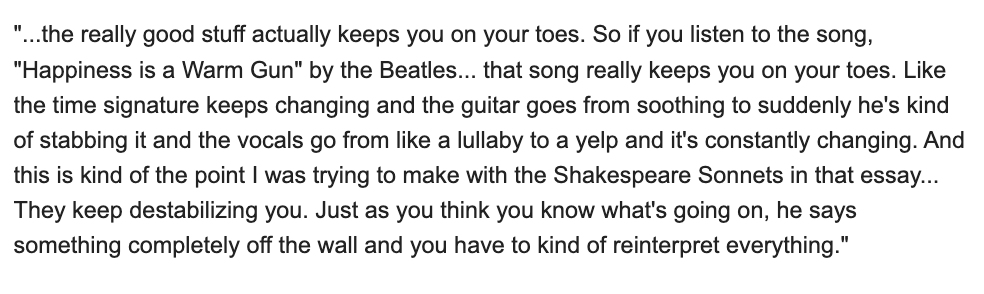
27:22 - Beauty, strangeness, great art & The Beatles
44:35 - Film, critics, learning to appreciate depth & "lowbrow" art
1:02:55 - New aesthetics, inspiration, optimism & pessimism
1:11:52 - The internet & Twitter's virtue, group chats, cities
1:22:06 - Mentors, (maybe quitting) writing books, friendship
1:35:27 - Interviewing, identifying talent & agency
1:47:21 - Closing questions
@DialecticPod 50: Tyler Cowen & Nabeel Qureshi - An Appetite for More - is available below and on all platforms. Links in reply.
@Scholars_Stage "Do people become smarter because they’ve discovered the secret curiosity mode, or do they discover it because they’re already smarter?"
@Scholars_Stage "Do people become smarter because they’ve discovered the secret curiosity mode, or do they discover it because they’re already smarter?"
@Scholars_Stage "Do people become smarter because they’ve discovered the secret curiosity mode, or do they discover it because they’re already smarter?"
"I’ve always found the notion that you don’t need to know as much stuff when you can just google everything to be silly. I’ve found the opposite to be true.
The more there is to know, the more you need to know."
"Richard Hamming once wondered whether computers might think think thoughts humans cannot think.
The complementary thought is: Can humans adopt perspectives for which LLMs cannot offer ready views?"
https://t.co/lfBl3X5mMK
🚨 NEW EPISODE 🚨
@deanwball is joining @OpenAI to build and lead a new team called Strategic Futures—with a mandate to help senior leadership shape frontier AI policy as we enter the era of recursive self-improvement.
@labenz sat down with him for a wide-ranging "podcast sprint" just before he steps into this world-shaping role.
They cover:
America's AI Action Plan one year later—what Dean would change, and where the administration has departed from its spirit
The Anthropic supply chain risk designation, the ongoing litigation, and why the government "contains multitudes" on this
China declining to buy American chips even after export controls eased—and what's really happening behind the policy
The Fable ban: the three factors driving the government's reaction, the shifting official story, and how much Dean misses it as a user
Recursive self-improvement: his "more continuity than discontinuity" base case, and why you should plan for the discontinuous leap anyway
Character vs. corrigibility—and the Confucian philosophy behind his instinct toward character
Equity sharing proposals from Bernie and Trump, and why giving the government a stake could be "disastrously bad"
What success looks like in this role, and the red lines that would make him quit
A frank conversation about entering a "main character energy" period of history. 🎧
@zetalyrae if this rests on "all white collar work will be automated by ai at which point there is no social mobility", would you not see a shift to skilled trades and other blue collar work as the new path for upward mobility?
The thing about books, contra Derrida, is that they have beginnings and ends. Yes they are porous objects but they still have structural integrity. LLMs have no such structure and this reality, I believe, is the challenge education systems need to address and soon.