IDC reports that only 9% of organisations have fully mature AI FinOps practices. As GPU clusters drive AI infrastructure costs, leaders need visibility into accelerator usage, queues and capacity. The key is connecting GPU demand and infrastructure costs: https://t.co/qZhgAWWXRw
A shared GPU cluster needs more than accelerator monitoring. Teams need a management blueprint that connects availability, allocation, queues, ownership and outcomes. This infographic shows the operating questions behind effective GPU Resource Management: https://t.co/2VCvQMmJGo
GPU count is a capacity number, not an operating metric. Queue time, failed jobs, fragmented resources and project-level demand reveal much more about whether a shared GPU environment is working efficiently. Here are seven metrics worth tracking: https://t.co/OFAqeTOHux
.
#Tyrone
GPU count is only the starting point. Shared AI and HPC environments also need visibility into queue time, resource fit, node health and who is consuming accelerator capacity. Our latest article looks at the operating model behind GPU Cluster Management: https://t.co/HyLJgEM5u9
Gartner reported that fewer than 44% of organisations have up-to-date, tested IT business continuity plans. While not HPC-specific, the finding highlights a key question: has the recovery process been tested? https://t.co/qZhgAWWq1Y
.
.
#NetwebTyrone#HPC#BusinessContinuity
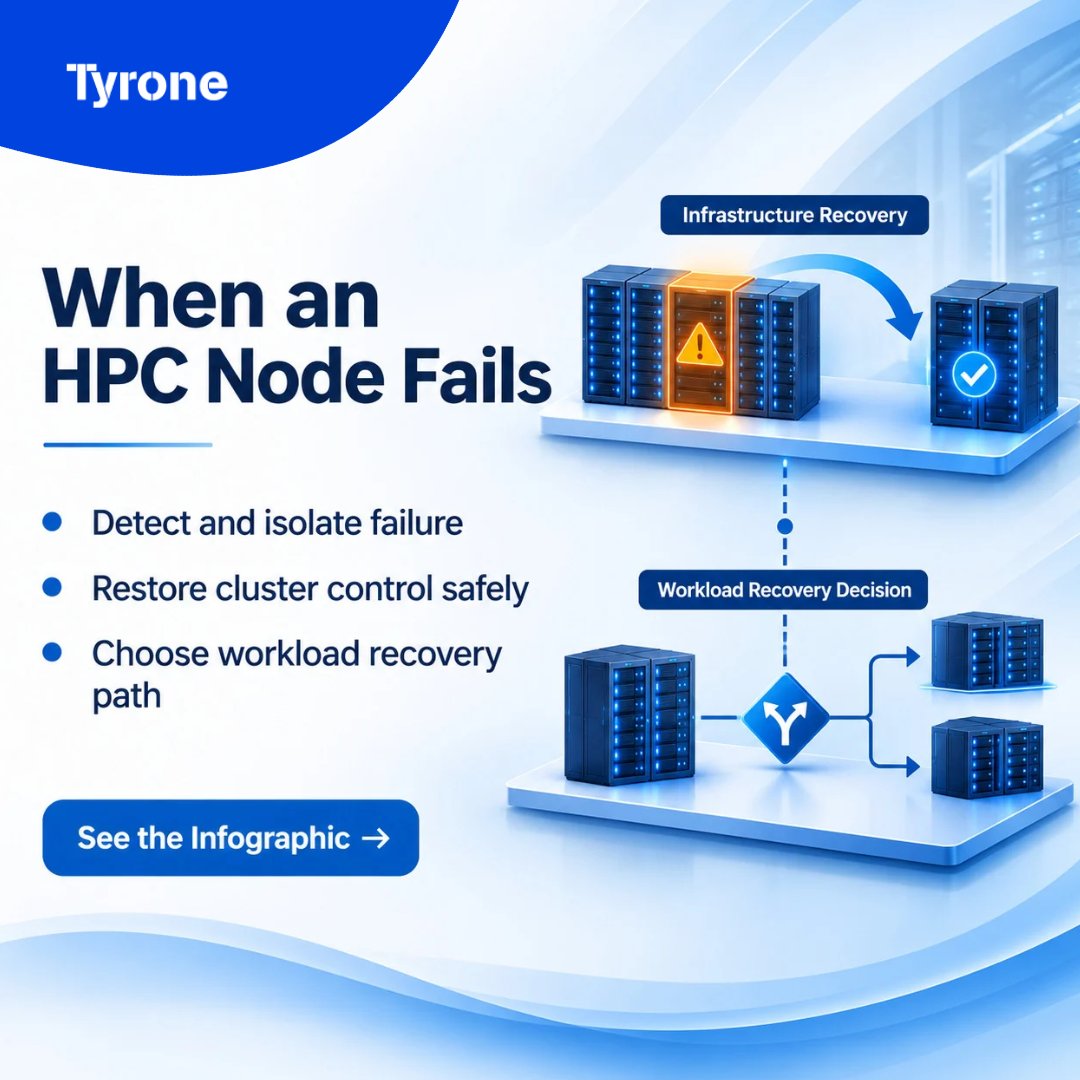
When an HPC node fails, the recovery path crosses several layers: detection, cluster control, node replacement and application recovery. This infographic separates those decisions so infrastructure high availability is not confused: https://t.co/5cs95NbI1P
.
.
#NetwebTyrone#HPC
High availability is only useful when teams know what it protects. These seven questions help infrastructure teams test whether their resilience plan is specific enough for real HPC failures: https://t.co/MIyxGh6btH
.
.
#NetwebTyrone#HPC#HighAvailability#FutureOfTech
A recovery plan is strongest when the team has exercised it under controlled conditions.
How often is your cluster recovery plan tested?
#BusinessContinuity#HPCManagement#Resilience
HPC resilience is not one failover switch. Management services, compute nodes and long-running applications can all fail differently — and each layer needs its own recovery path. Our latest article breaks down cluster failover management: https://t.co/zUY7sjlV4m
.
.
#NetwebTyrone
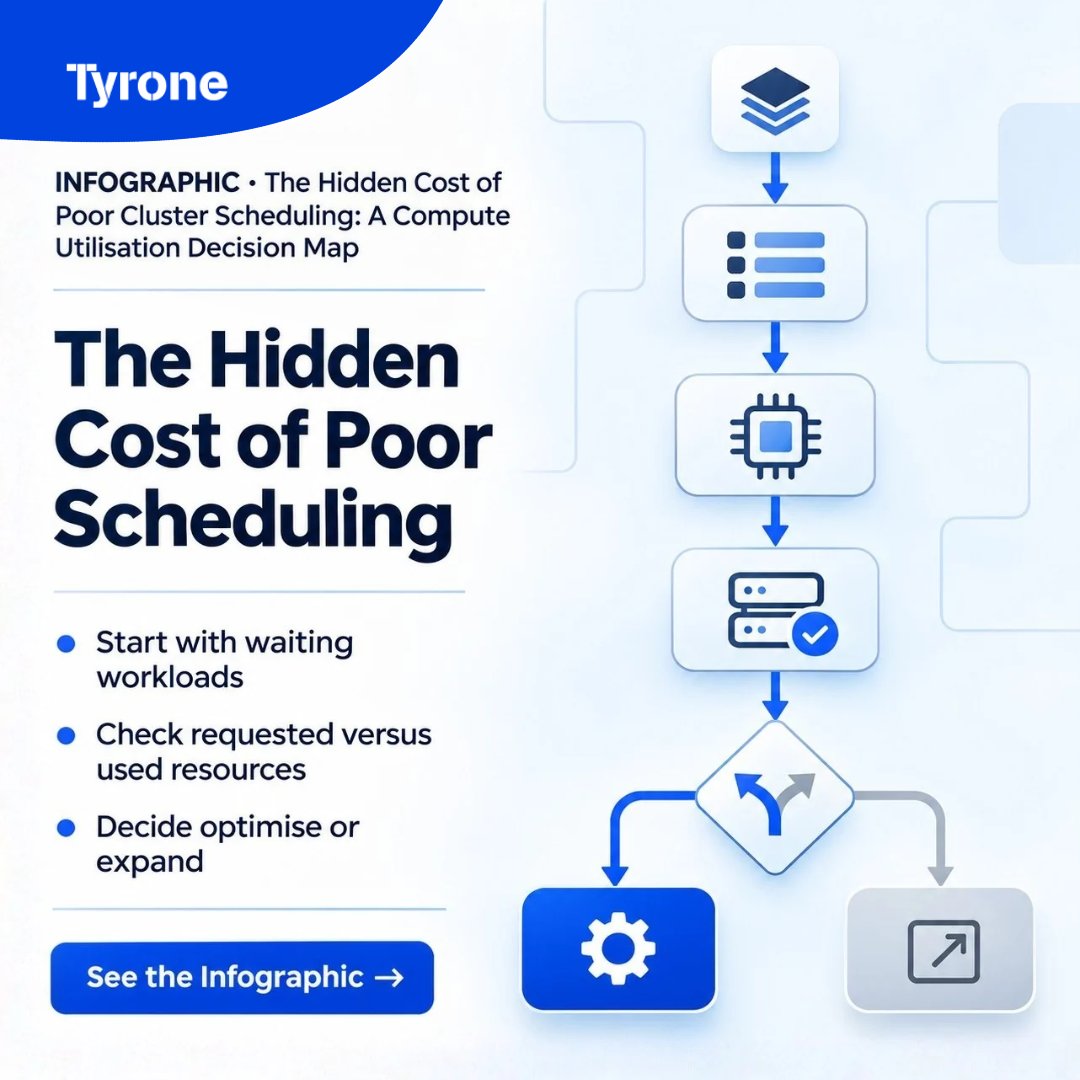
A long HPC queue does not automatically mean you need more servers. This decision map shows how to check resource requests, fragmentation, queue policy and node health before deciding whether the right move is optimisation or expansion: https://t.co/X6w9oo6Bmj
#NetwebTyrone#HPC
Queue time is often treated as a hardware problem. But idle resources, oversized requests, manual administration and outdated scheduling policies can all create the same symptom. Here are seven cluster-management bottlenecks worth checking: https://t.co/0B3jrCU1Kg
.
#Tyrone#HPC
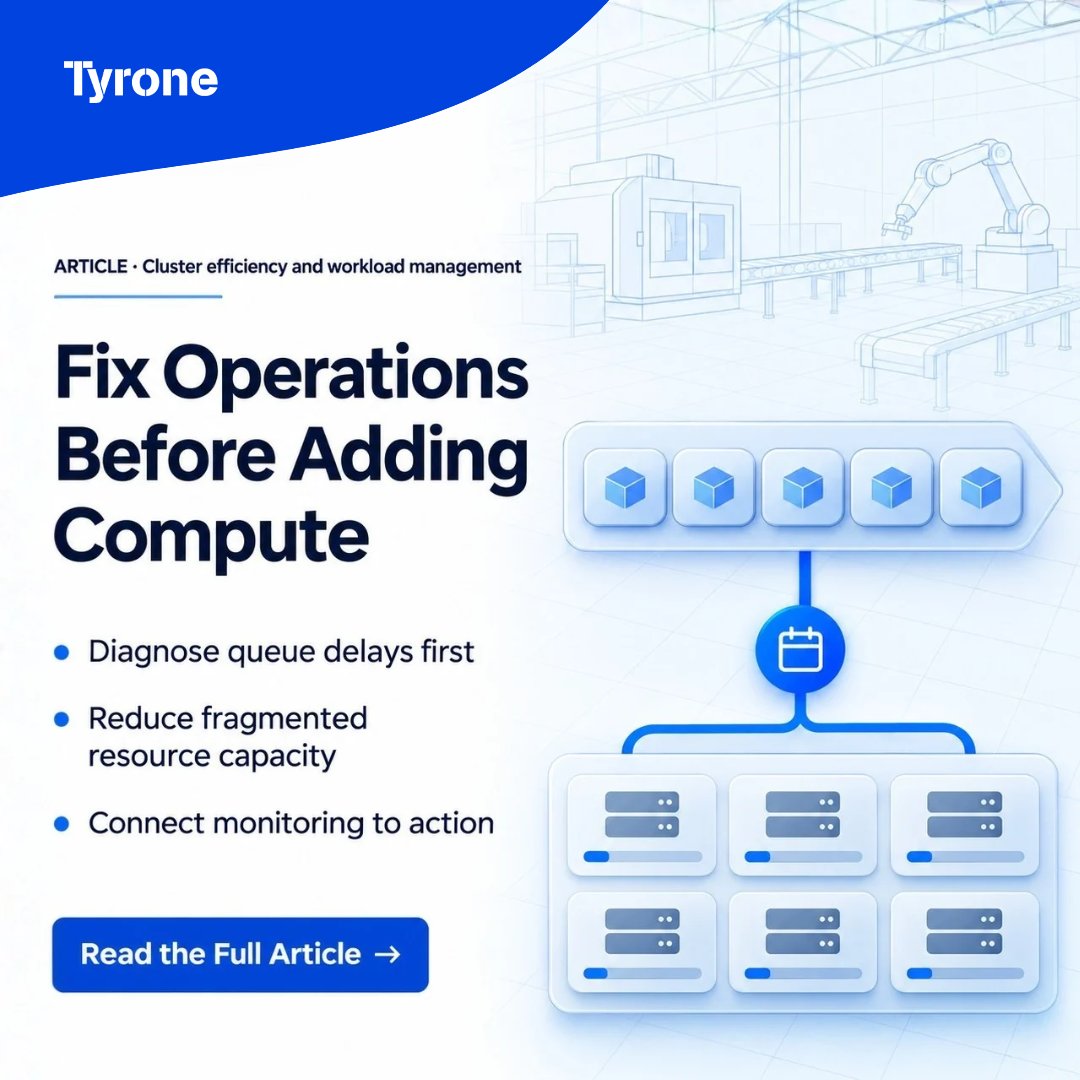
More hardware is not always the first answer to an HPC queue problem. Utilisation, scheduling, monitoring and administration can all create delays between available capacity and useful compute. Our latest article looks at the cluster-management challenges: https://t.co/CjohM92AML
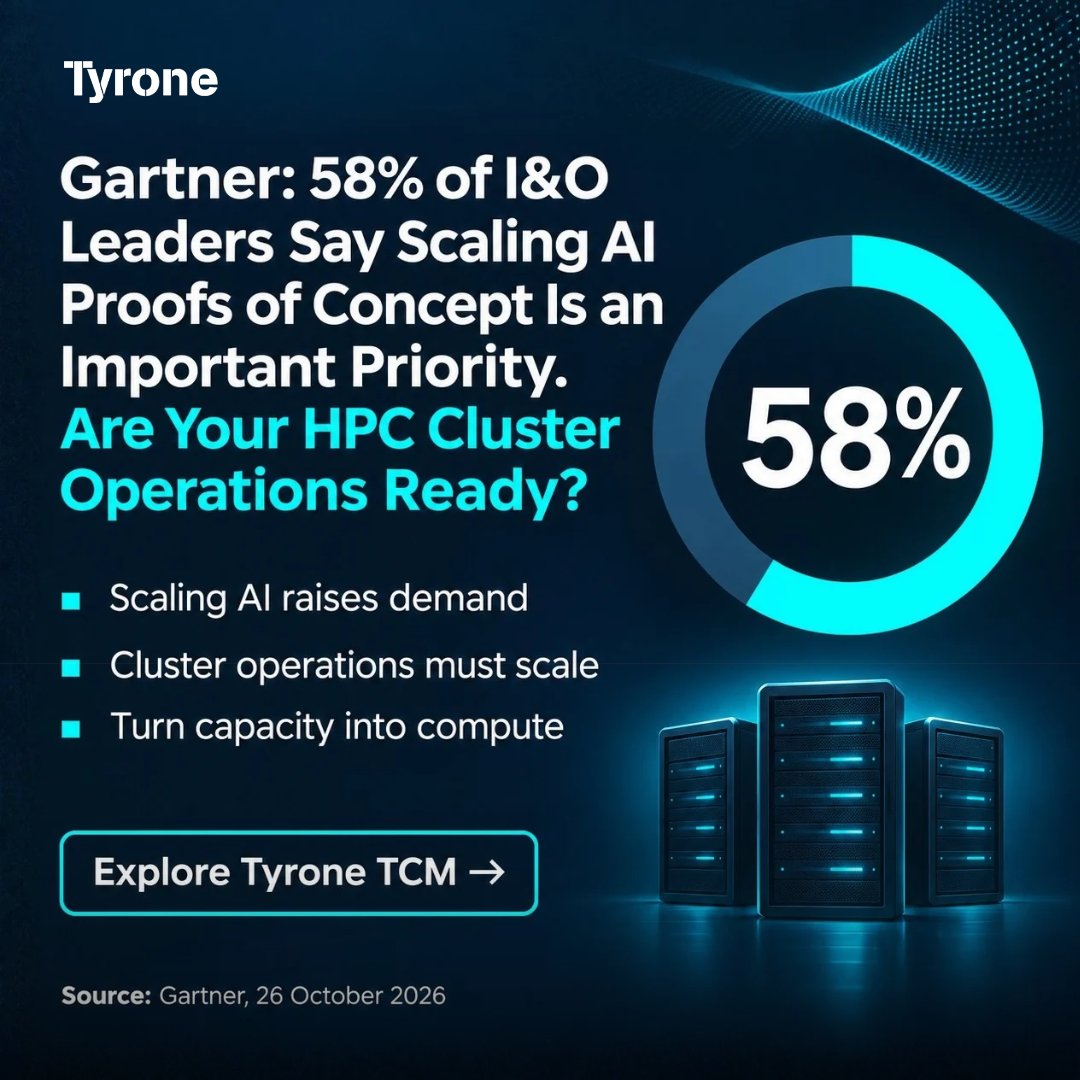
Gartner reports that 58% of surveyed I&O leaders prioritise scaling AI adoption over the next 12 months. As compute demands grow, efficient provisioning, and workload management become essential.
Explore how TCM can support your growing compute needs: https://t.co/qZhgAWWq1Y
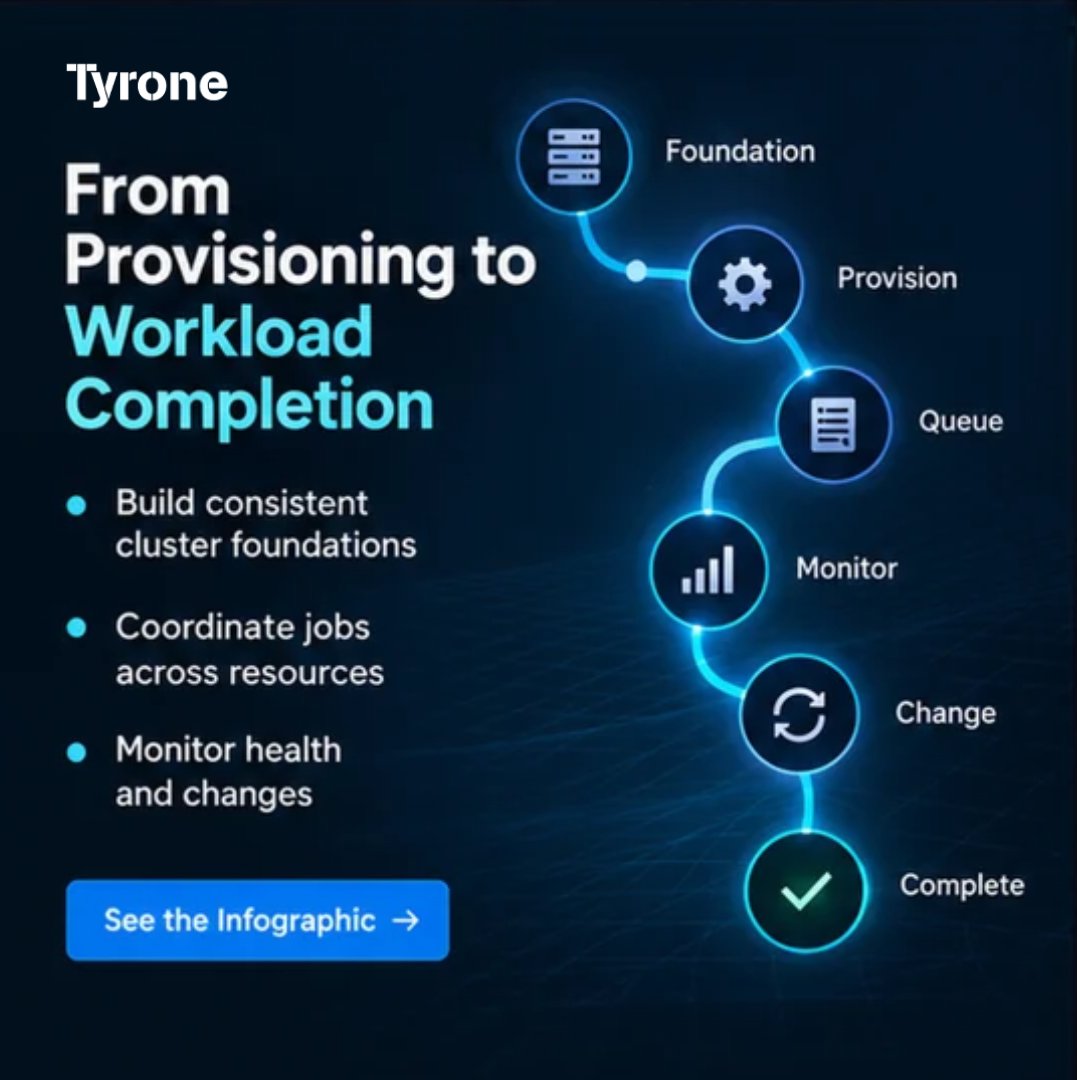
An HPC job does not move directly from submission to result. Provisioning, workload coordination, monitoring & operational response all sit in between. Our latest infographic maps the cluster-management path from node setup to workload completion: https://t.co/x6Od9lXTn0
#Tyrone