Il y a 12 ans, le MH17 était abattu au-dessus de l'est de l'Ukraine, causant la mort de 298 civils.
En 2025, le Conseil de l'OACI et la Cour européenne des droits de l'Homme ont confirmé la responsabilité de la Russie dans la destruction de l'appareil.
La France demeure pleinement engagée en faveur du droit international, de la justice et de la lutte contre l'impunité.
🇺🇦 Une attaque russe dans la nuit de lundi à mardi a fait au moins 18 morts et plus d'une centaine de blessés dans plusieurs villes du pays, dont Kiev, la capitale.
📺 L'ancienne directrice de la chaîne de propagande russe RT France débarque... sur CNews ! @SophiaAram s'étonne qu'un média censé défendre la souveraineté française rouvre « tranquillement » le canal de la désinformation prorusse.
➡️ https://t.co/Vfe7UxqOmy
Elice Lucet, c’est @knafo_sarah qui en parle le mieux : « c’est l’exemple de la prétendue rebelle qui est en fait une fonctionnaire. C’est l’une des égéries des black bocks, ces milices d’extrême gauche tiennent des pancartes avec écrit « Elise Lucet m’a radicalisé », cette photo, Elice Lucet l’a mise dans son bureau. Elle en est fière, pour elle, c’est une rebelle, ce sont des rebellocrates, ils sont payés par l’Etat et ils nous font croire qu’ils sont subversifs ».
Une rebelle payée 25000 € par mois, égérie de milices d’extrême gauche, ca veut tout dire…
🇺🇦 🎾 On va mettre fin au mythe de la "méchante Ukrainienne" à Madrid
J’ai vu beaucoup de larmes de crocodile parmi des commentaires, parce que la jeune Ukrainienne Marta Kostyuk aurait manqué de fair-play en n’allant pas serrer la main de la Russe Mirra Andreeva après sa victoire en finale du WTA 1000 de Madrid (ni en citant son nom lors de son discours)
C’est fatigant de voir à quel point ces gens ont la mémoire courte quand ça les arrange ! Alors, il est plus que temps de passer en mode dépolissage 🧠, et c’est par ici que ça se passe 👇
➡️ POURQUOI KOSTYUK NE LUI A PAS SERRÉ LA MAIN
Parce que 🇷🇺 Mirra Andreeva n'a eu aucun problème ou remords, du haut de ses 16 ans (en 2023), à liker des vidéos de propagande pro-Poutine sur Instagram ou des posts se moquant de l'Ukraine. Quand Dayana Yastremska 🎾 🇺🇦 l'a signalé à la WTA, l'instance sportive a littéralement répondu "qu'il n'y avait rien à faire" 🤐
Surtout que Marta n'est pas "anti-russes par principe". La preuve en est qu'après un match, l'Ukrainienne n'a pas hésité à serrer la main 🤝🇷🇺🇺🇦 de la joueuse russe Daria Kasatkina et l'a FÉLICITÉE PUBLIQUEMENT. Tout simplement parce que Kasatkina a eu le courage de dénoncer l'invasion de Poutine, de renoncer à sa citoyenneté sportive russe, et d'appeler la Russie "L'AGRESSEUR".
➡️ LE VRAI RESPECT SE MÉRITE
Comme l'a dit Kostyuk elle-même : "Quand quelqu'un dit la vérité et agit, ça mérite le respect."
S'indigner qu'une joueuse ukrainienne dont le pays est sous les bombes, et dont le peuple se fait massacrer, refuse de serrer la main d'une athlète qui like les discours du dictateur responsable de ces bombes, c'est le sommet de l'indécence ! Certains exigent du "fair-play" sportif de la part de victimes envers ceux qui valident silencieusement (ou par des likes) leurs BOURREAUX.
Bravo à Marta Kostyuk 💙💛 pour sa victoire à Madrid, et surtout pour sa colonne vertébrale... Slava Ukraini 🇺🇦💪
#MadridOpen #Kostyuk #Ukraine #Mirra #WTA
@AllaPoedie@AmourskyCyrille
Trump is once again groveling before Putin.
Russia has been invited to the G20 summit in the US, – Deputy Foreign Minister of the Russian Federation Alexander Pankin.
Inviting a country with 217,000 documented war crimes to the G20 summit in the US is not diplomacy – it's a disgusting trivialization of mass murder. While Putin and his cronies are already wanted in The Hague on arrest warrants, Trump grovels before the war-criminal state and rolls out the red carpet for it.
This is a disgrace, a slap in the face to every Ukrainian child, every raped woman, and every bombed city. Anyone who brings mass murderers to the table instead of bringing them to justice has lost all moral legitimacy and is spitting on the graves of the victims.
🇷🇺🇭🇺‼️ C’est une bombe atomique.
La Hongrie travaille pour le compte de la Russie.
Le média “The Insider” vient de publier un appel entre le ministre des affaires étrangères hongrois Szijjarto et son homologue russe Lavrov.
Dans celui-ci, Lavrov demande à son homologue hongrois de faire retirer le nom de la sœur d’un oligarque sous sanctions.
Il accepte de s’en occuper, et ça sera chose faite 7 mois plus tard.
Ce processus a fonctionné pour d’autres personnes sous sanctions également, avec l’aide de la Slovaquie du pro-russe Fico.
Ce niveau de compromission dans la plus haute sphère du pouvoir hongrois est accablant. Orban et sa clique de traîtres doivent être battus le 12 avril !
La Hongrie saborde les sanctions européennes, bloque l’aide à l’Ukraine et fait fuiter le contenu des conversations privées entre dirigeants européens aux Russes.
C’est un scandale sans nom ! Il faut se débarrasser de ce cheval de Troie en urgence !
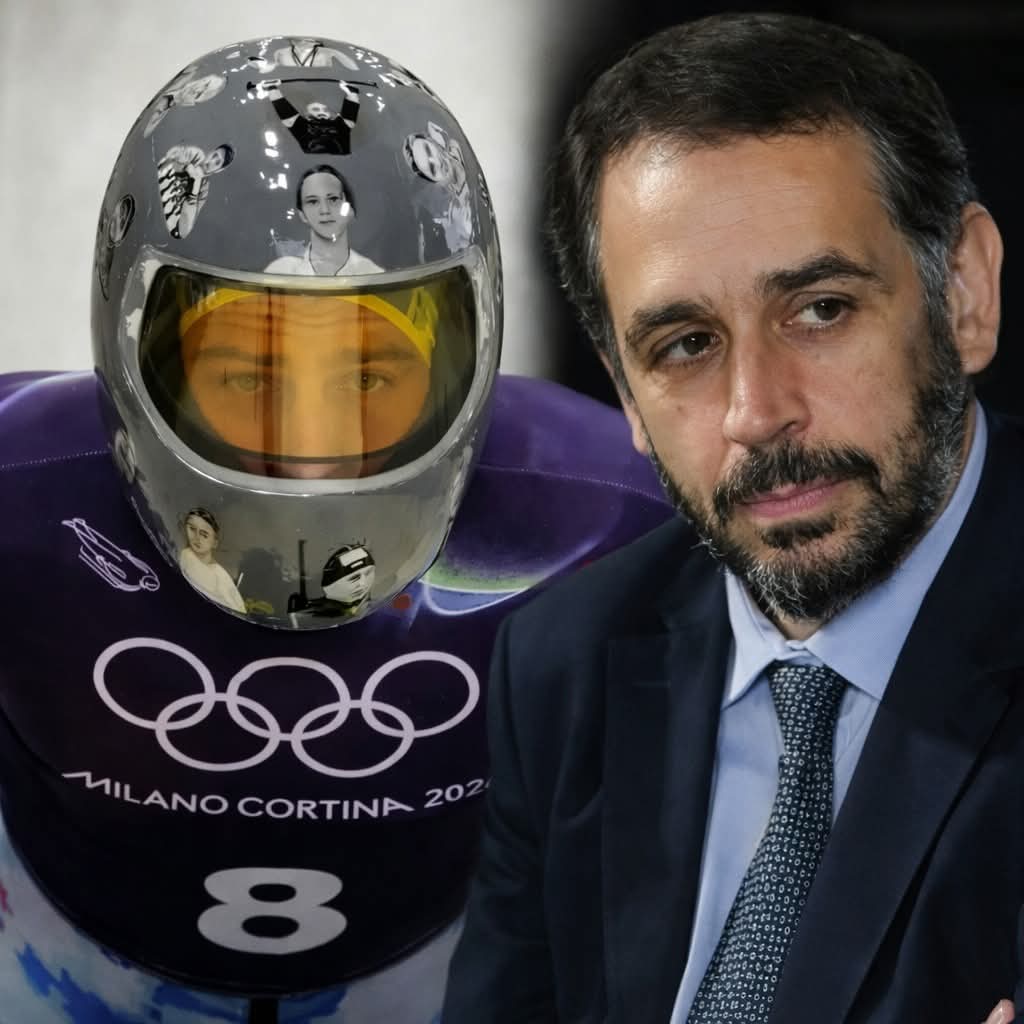
🇮🇹 The speech that all of Italy heard. And that the world must hear.
In a country that will host the Olympic Games, Italian Senator and Vice President of the Human Rights Commission Filippo Sensi took the floor and said what should have been said out loud long ago.
He called it a disgrace that the International Olympic Committee disqualified Ukrainian skeleton athlete Vladyslav Heraskevych.
Not for doping.
Not for violating fair play.
But for… memory.
For a helmet bearing the faces of Ukrainian athletes — his friends, colleagues, champions — killed by Russia.
The IOC stated that the helmet “did not comply with regulations.”
And then Sensi asked a question that brought silence to the chamber:
Does aggressive war comply with regulations?
Is there a separate technical protocol for it?
The correct angle of a missile strike?
The permissible size of a crater?
An athlete prepares for the Olympics for years.
A Ukrainian athlete trains between air raid sirens, in shelters, under news of the dead.
He overcomes fear, exhaustion, and loss.
And he steps to the start line not only for a medal — but for the right to exist.
And he is suspended… for remembering.
Because memory is the most dangerous substance. It is hard to add to a prohibited list. But apparently, someone would very much like to.
The senator named names. Just a few among more than 650 Ukrainian athletes killed by Russia:
▪️ Yevhenii Malyshev, 19, biathlete — killed in Kharkiv.
▪️ Mariia Lebid, 15 — missile strike in Dnipro.
▪️ Dmytro Sharpar, 25, figure skater — killed in Bakhmut.
▪️ Volodymyr Androsiuk, 22, track and field athlete — also Bakhmut.
▪️ Daria Kurdel, 20 — missile strike in Kharkiv.
▪️ Alina Perehutova, 14 — standing in line for water with her mother in Mariupol.
▪️ Maksym Halinichev, 22, boxer — killed defending Luhansk region.
▪️ Viktoriia Ivashko, 9, judoka — missile strike in Kyiv.
▪️ Kateryna Diachenko, 11, gymnast — airstrike on Mariupol.
▪️ Karina Bakur, 17, world kickboxing champion — shielded her father with her body.
These were the faces Heraskevych wanted to carry with him to the start line.
So that they would “compete” alongside him.
So that their dream would not die with them.
And for that, he was punished.
Because it turns out that the faces of murdered athletes violate regulations.
But their absence on the track does not.
In his speech, Sensi said the most important thing:
The Olympic Committee did not lose an athlete.
It lost its most valuable medal — its conscience.
Sport without memory is just a show.
Sport without humanity is just decoration.
Sport that fears truth is not about peace.
The Olympic movement was born from the ideals of honor, dignity, and unity.
Yet today Ukrainian athletes must prove not only their strength — but their right to remember their fallen.
And if memory becomes a violation of regulations — then the problem is not the helmet.
The world must hear this.
Because silence is also a position.
And indifference is also a choice.
Memory cannot be disqualified.
And conscience cannot be added to a prohibited list.
🇺🇦 We remember every one of them.
And we will not allow their names to be erased.
Shocking moment as a russian ‘Molniya’ drone struck an apartment building in Kharkiv today ‼️
Pure and simple terrorism with no military goals. Bloody russian terrorists bastards‼️
Excellente analyse (encore une fois) d'@emma_ducros sur l'opposition à un élevage de saumons. On importe 99,9% de notre consommation de saumons (300.000 t), et dès qu’il s’agit de relocaliser la production (là pour 10.000 t de saumons), la nébuleuse écologiste est contre. Avec cette logique, parler de souveraineté alimentaire restera longtemps un vœu pieux...
‼️🇺🇦 La centrale nucléaire de Tchernobyl a perdu toute alimentation électrique extérieure, annonce l'AIEA.
Cela est dû aux frappes contre l’infrastructure énergétique de l’Ukraine au cours de cette nuit et début de matinée.
La Russie est un État terroriste.
Dans la nuit de jeudi à vendredi, l'armée russe a lancé dans la nuit 36 missiles et 242 drones sur l'Ukraine. Dans la capitale, la moitié des logements sont désormais privés de chauffage, d'électricité et d'eau, alors que la température extérieure va atteindre les -20°.
💪🇺🇦 Point faible : trop fort.
Gary Kasparov, le célèbre champion d’échecs, est toujours aussi pertinent au sujet de la menace russe.
Il ne passe pas par quatre chemins : l’Ukraine se bat pour toute l’Europe.
Voici son discours à Halifax :
« C’est le meilleur spectacle dont Poutine n’aurait même pas osé rêver.
Ce n’est pas une question de quantité d’armes ou de munitions.
C’est une question de volonté de se battre et de mourir.
Oh, merveilleux, vous avez une brigade canadienne en Lettonie.
Quel est l’ordre donné à cette brigade ? Ouvrira-t-elle le feu si les Russes franchissent la frontière ?
Nous connaissons la réponse. Vous allez délibérer, et cela prendra une éternité.
Je ne comprends pas comment on peut sérieusement discuter d’un accord rédigé par un partenaire commercial de Trump !?
C’est une transaction immobilière destinée à enrichir la famille Trump et à vendre l’Ukraine !
Comment peut-on sérieusement discuter du fait que l’Ukraine devrait céder des fortifications qui protègent l’Europe !?
Vous fêtez l’anniversaire de l’OTAN… L’OTAN est faible, l’OTAN n’existe pas, c’est un fake, ce ne sont que quatre lettres : ‘n’, ‘a’, ‘t’, ‘o’.
La seule raison pour laquelle vous êtes encore ici à célébrer cela, c’est que l’Ukraine meurt chaque minute. C’est un sacrifice gigantesque !
Si l’Ukraine ne tenait pas, les chars russes seraient déjà en Pologne !
Vous pensiez tous que l’Ukraine se rendrait. Vous avez proposé un taxi à Zelensky. Et il a répondu : je n’ai pas besoin d’un taxi, j’ai besoin de munitions.
Depuis quatre ans, l’Ukraine se bat pour toute l’Europe !
L’OTAN a été créée pour une seule guerre – pas pour l’Afghanistan, pas pour la Syrie – pour une seule guerre : protéger l’Europe libre de l’agression russe.
L’Ukraine est le seul pays qui combat réellement, et nous sommes encore en train de discuter : faut-il les intégrer à l’OTAN ou pas !?
L’Ukraine est le seul pays qui incarne la raison d’être de l’OTAN !
Et nous lui devons tout. Non, au contraire, on préfère la sacrifier !
Zelensky fait face à un choix… je ne sais même pas comment l’expliquer.
En tant que Russe, je ressens aussi ma part de culpabilité, et je ne peux donc pas lui conseiller d’adresser un doigt d’honneur à Trump.
Combien de sénateurs avons-nous ici ? Allez-vous dire à Donald Trump de ne pas faire ça !?
Vous avez 85 voix, 85 – c’est plus que les deux tiers (donc un veto impossible), alors pourquoi ce projet de loi traîne-t-il encore sous une table du Sénat, sans être adopté !?
Poutine, Xi Jinping et les autres – ils célèbrent tout ça !
Et la Russie, qu’a-t-elle ? Des Nord-Coréens, des Cubains, des « volontaires » africains. Et nous parlons encore d’escalade !?
Nous avons tout de notre côté – la force militaire, politique, économique – et nous sommes pourtant en train de perdre la guerre.
Grâce à l’Ukraine, la Russie n’a pas encore réalisé le rêve de Poutine : restaurer l’Empire russe.
Mais si, Dieu nous en préserve, l’Ukraine est contrainte d’accepter cet accord, alors il est absolument évident que Poutine réalisera son rêve.
Et vous, les gars, vous serez les prochains. Mais vous n’oserez pas vous battre. »
J’applaudis debout.
L’apiculture française-t-elle bénéficié de l’interdiction des phytos dits "tueurs d’abeilles" ? Voilà l’épineuse question à laquelle je réponds dans ce nouveau volet de la série « Droit d’inventaire ».
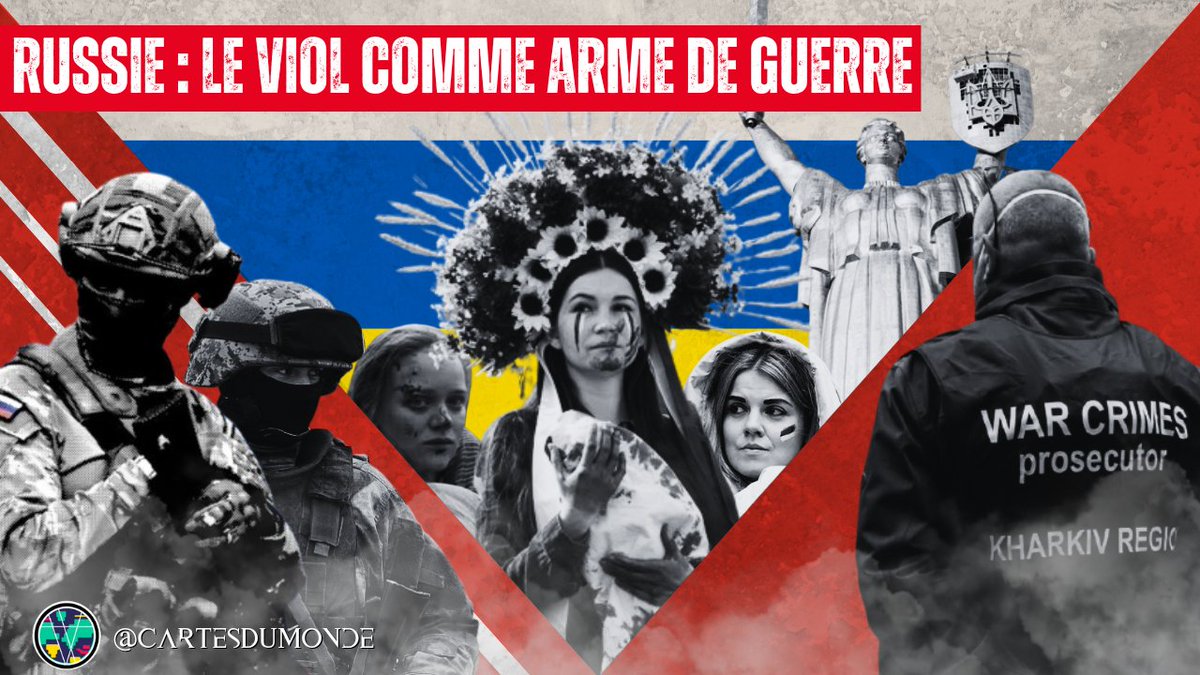
Russie 🇷🇺 : Le viol comme arme de guerre 🧵
Le Kremlin se dit défenseur des valeurs traditionnelles de la famille. Pourtant, la violence sexuelle est une arme, une arme qui est utilisée par Moscou pour briser les Ukrainiens et les soumettre par la violence⤵️
1/24
Illarionov says he learned of the Trump administration decision to cut off all military support to Ukraine on February 25th, before Zelensky's White House meeting on February 28th.
Zelensky's visit was then blamed retroactively in the March 4th announcement of the decision.