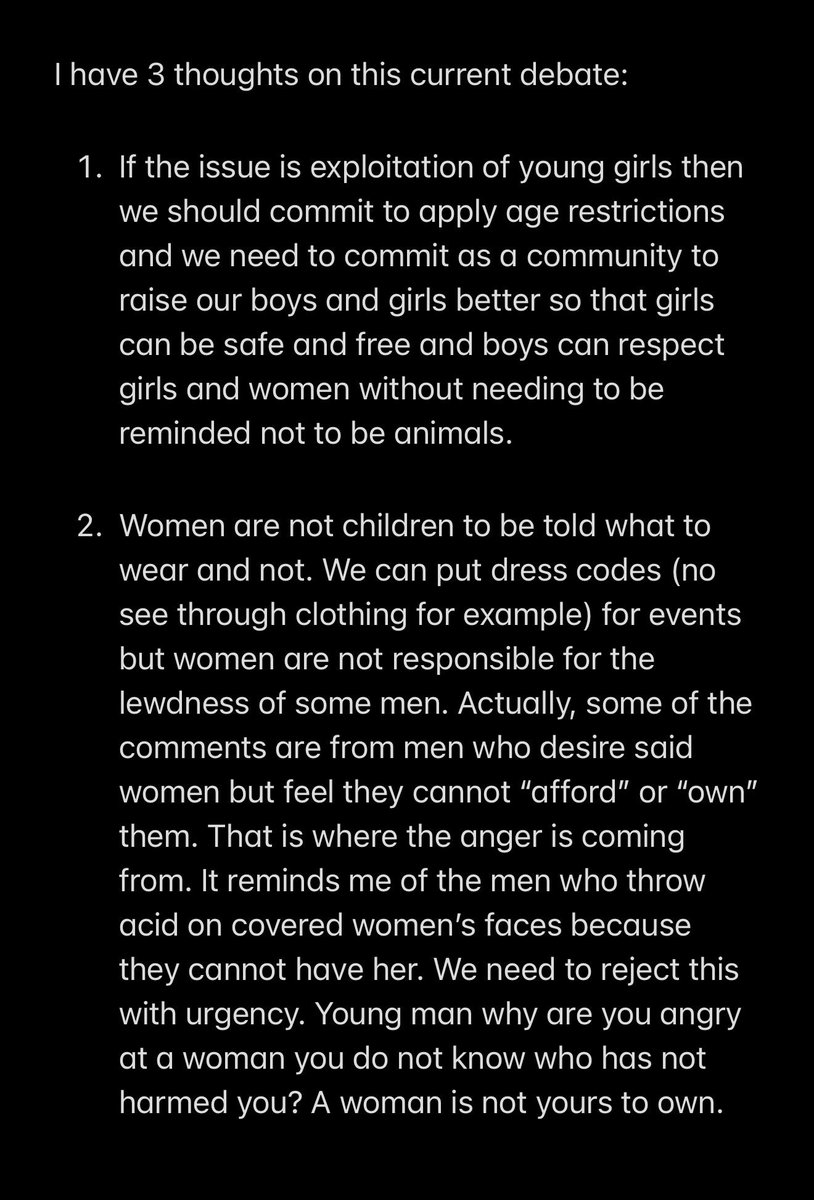
This is a thoughtful argument for a societal conversation, not necessarily an argument for police enforcement.
We can question the commercialization and sexualization of women's bodies, promote Rwandan cultural identity and encourage young people to think critically about fashion all without giving individual police officers the discretion to decide what is "appropriate" clothing.
If the State believes certain forms of dress should actually be prohibited in public spaces, policymakers should define those limits clearly, transparently and consistently. Otherwise, we risk turning an important cultural conversation into arbitrary enforcement, particularly against women.
When the warning signs are in plain sight!
There is an ongoing national conversation about youth delinquency. Government leaders have been meeting citizens across the country to discuss the issue and explore possible solutions. That is encouraging. But i sometimes wonder whether we are paying enough attention to what is happening right in front of us.
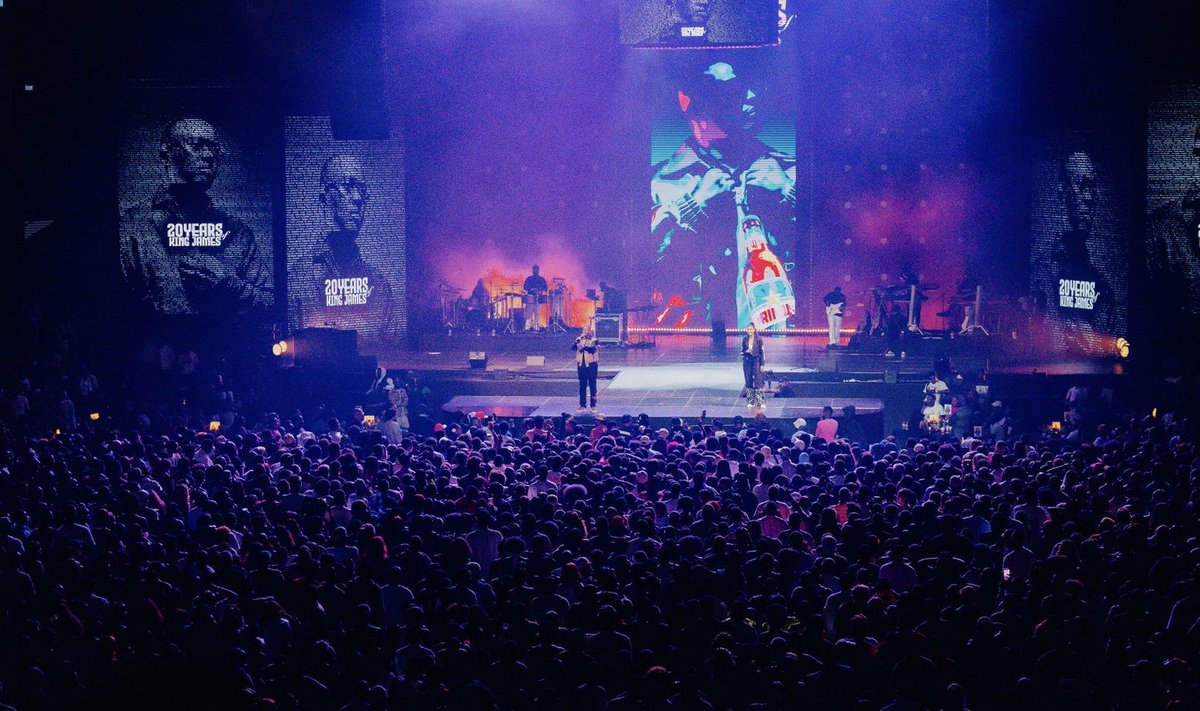
Yesterday, one of Rwanda’s biggest artists performed at Kigali Arena. Looking around, i would estimate that nearly two-thirds of the audience were young people between the ages of 17 and 35. Many were students, while others were already working. One observation stood out to me. Those below 18 were mostly with friends and peers, not with their parents. That is understandable, as parents cannot be everywhere.
What concerned me more was what happened after the concert. Many young people walked away carrying heniken and petite mizing bottles and cans of alcohol, while others had alcoholic syrups. It raised a simple question: should alcohol be sold inside venues that attract such a large number of young people?
In many countries, alcohol is consumed in controlled environments like homes, bars, restaurants, hotels, or private events. Some even prohibit people from openly carrying alcohol in public spaces. Yet at large entertainment venues where thousands of young people gather, access can be remarkably easy.
At the same time, we cannot ignore another reality. In many rural communities and urban suburbs, the bigger problem is not commercially sold alcohol, but illicit and unregulated brews. These products continue to harm lives and, in some cases, cause permanent damage to people’s health. Addressing youth substance abuse therefore requires looking at both ends of the problem: what happens in our cities and what happens in our villages.
Youth behaviour also reflects changing social and economic realities. Many of us grew up in households where resources were scarce. Our parents, relatives, and neighbours expected us to study hard, work hard, and contribute to lifting our families out of poverty. That responsibility shaped our choices.
Today’s young people face different circumstances. Some from middle- and upper-income families grow up without the same economic pressures, so social recognition can easily become a substitute for purpose. Others, especially those from disadvantaged communities, face unemployment, limited opportunities, and inadequate guidance, making them far more vulnerable to alcohol and drug abuse. These are different backgrounds, but they present equally critical challenges.
This is why I believe we need a deeper societal conversation. During Umuganda, citizens’ assemblies, parents’ evenings at schools, youth forums, and even meetings of registered political parties, how much time do we actually spend discussing the issues quietly shaping the next generation?
Rwanda does not lack spaces for dialogue. What we sometimes lack is the willingness to use those spaces to confront the real issues affecting our communities. Preventing youth delinquency is not only the responsibility of parents or the police. It requires families, local leaders, schools, religious institutions, businesses, and communities to work together. When warning signs are visible but go unaddressed, we should all pause and ask whether we are paying enough attention to the future we are shaping.
This feels rushed @CityofKigali! Hotel Gloria - Nyarugenge Market - City Plaza corridor already struggles with limited parking. Removing parking will spill congestion into nearby streets, choke access to businesses, and hurt traders who rely on quick stops. Why don’t you phase it before moving to a full ban. For example, why not start with peak-hour restrictions. This gives people and businesses time to adjust🤷🏽.
OYA PE! Hano twihuse cyane @Jadouwihanganye
Lately, i have become very cautious about attending weddings. Last year, three couples i knew got married, and i happily attended all their ceremonies, fully dressed and ready to celebrate with them. This week, i was shocked to learn that all three marriages have already ended in divorce. It really made me pause and think.
More than 500 people attended those weddings. If each ceremony lasted about eight hours, that means around 12,000 hours of people’s time went into celebrating unions that did not even last a year and then there is the money. Each wedding reportedly cost as much as building a five bedroom house. When you put it that way, it feels painful to think about how much was spent and how little remained.
It makes me wonder, are people marrying people they barely know? Are we rushing into marriage without truly understanding each other’s values, character, and how we handle conflict? When i think about our grandparents and our parents, their marriages were not perfect. They struggled, they argued and life was hard. It was never a bed of roses. But they stayed, they tried and they raised families.
Today, we are seeing more single parents and more children growing up between two homes. Some children can only meet one parent at the gate because the other is not allowed inside. These are not just personal stories. They shape the kind of society we are becoming.
If we keep quiet about this, we risk raising a generation that is emotionally broken. We need to talk honestly about marriage, about preparation, about patience, and about what commitment really means. Otherwise, we will keep celebrating beautiful weddings while quietly ignoring the heartbreak that follows. #Society
Once upon a time, I knew a man called Ladislas. At one point, he presented himself as a great patriot, someone who loved this country more than the rest of us. He often told me, and others in CSOs, that we were too critical simply because, during technical working group discussions, we asked questions for clarification. Once, in a heated moment, he even told me he would crash me. I looked at him and calmly said, time will tell. And indeed, wherever he is today, time has taught him its own lessons.
Which country on earth has ever failed to develop simply because it had critics? Since when did honest conversations become the enemy of progress? A moving car doesn’t stop just because a dog is barking behind it.
Constructive criticism demands critical thinking. Critical thinking requires the ability to question, to listen, and to reflect. Why are we so uncomfortable with tough questions, and so quick to shut them down? Progress is not built on praise alone. If we only listen to good stories, we risk ignoring the hard truths that are meant to help us move forward.
Development can only be achieved through innovation, and innovation happens when people question what is working and why certain things are not working. At university, we were taught analytical tools for this very purpose: to think critically, to examine assumptions, and to improve outcomes.
In Isaiah 1:18, the Lord says, “Come now, let us reason together,” reminding us that faith is not the absence of thought. God invites dialogue, logic, and moral reasoning.
What an achievement! What a milestone!
This morning, First Lady Mrs. Jeannette Kagame attends the @Kepler_College inaugural graduation ceremony, honoring the Kepler College’s first Class graduates since 2022 and celebrating their dedication and academic achievements.
You can follow live the event here: https://t.co/kDlQBNZj0S
#KeplerGrad