This research is part of a big project funded by the EU (GREENH2CM) to study hydrogen combustion, and we are looking for a postdoc to study the dynamics of these flames in a high-pressure environment. If you are interested, see details below
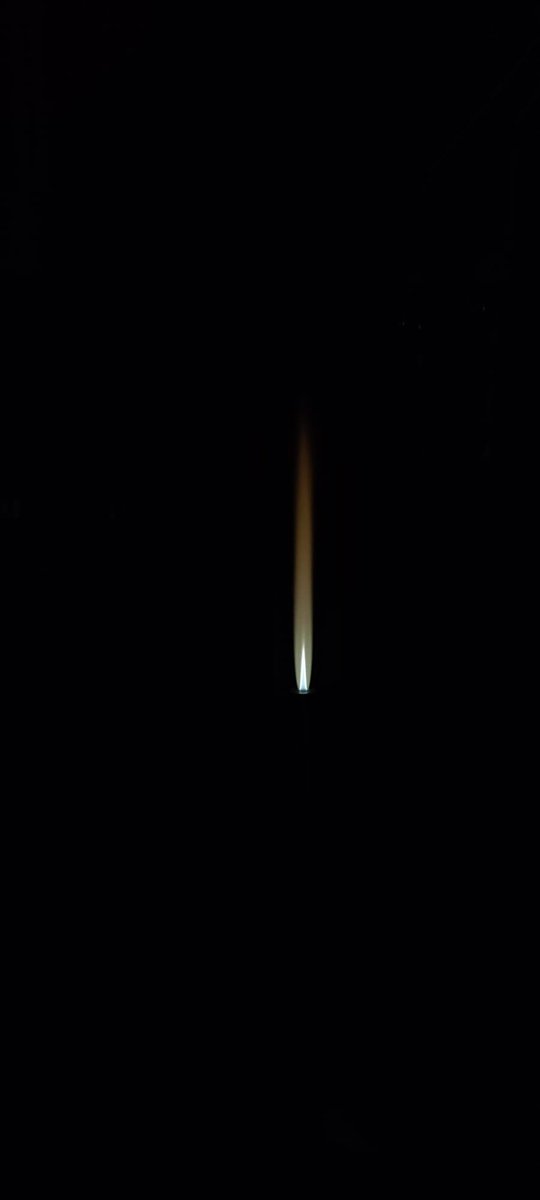
Hydrogen flames are “almost” invisible. A lot more information can be extracted from this footage using more advanced visualization techniques. Using them, we can reveal the intricate complexity of the propagation of hydrogen flames. Do not miss the second half of the video
The second part of the video shows a very different situation. Now the ignition takes place at the open end and the reactive front propagates towards the closed end of the chamber. The much slower velocity let us appreciate how hydrodynamic instabilities deform the flame.
The video below shows the propagation of a premixed flame in a narrow gap (<1 cm). The ignition is induced by a cable that spans the whole width of the combustion chamber. In the video, you can easily identify the yellowish glowing cable at the top of the images.
The first few seconds illustrates the (very) fast propagation of a flame that is ignited near the closed end of the chamber and propagates towards the open end. Gas expansion accelerates the reactive front that becomes up to ten times faster than freely propagating flames.
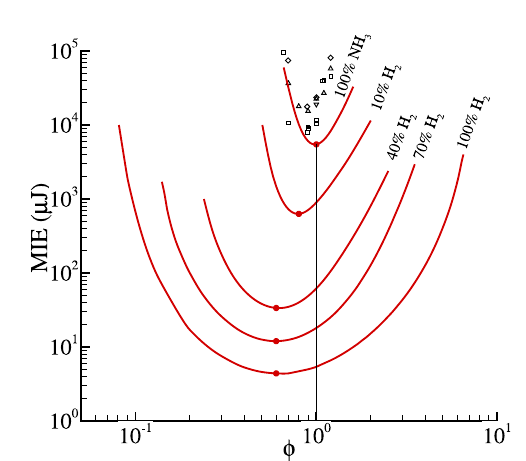
Minimum ignition energy as a function of equivalence ratio for different mixtures of hydrogen and ammonia in air. Solid lines (symbols) are numerical (experimental) results. https://t.co/JGE7YN7uN1
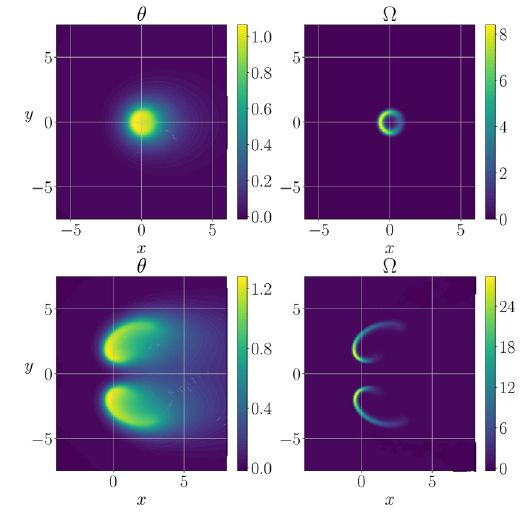
The formation of isolated flame fronts is controlled by the balance between heat losses and the heat released by the flame. Both flame structures are stable and may occur simultaneously. Details: https://t.co/y0Nr2vWwio